How Types of Wood Names Determine Treatment and Preservation Needs
Learn how specific types of wood names dictate preservative uptake, AWPA treatability classes, and chemical retention rates for structural longevity.

The Treatability Spectrum: Why Exact Wood Names Matter
When sourcing structural timber or exterior cladding, generic categorizations like "pine" or "cedar" are insufficient for predicting long-term durability. The specific types of wood names—both botanical and commercial—dictate cellular structure, extractive content, and how effectively the lumber will absorb chemical preservatives. According to the American Wood Protection Association (AWPA), treatability varies drastically even within the same genus. A builder specifying "fir" for a ground-contact retaining wall will face catastrophic failure if they receive Douglas Fir heartwood instead of a treatable sapwood variant, as the former is virtually impermeable to standard pressure treatments.
Understanding the exact wood name allows project managers to align the species with the correct AWPA Use Category (UC) and preservative chemistry, ensuring the material meets the required pounds per cubic foot (pcf) retention rates for its specific environmental exposure.
AWPA Treatability Classes Mapped to Commercial Wood Names
The USDA Forest Products Laboratory and the AWPA classify wood species into five distinct treatability zones based on how deeply preservatives can penetrate the cellular matrix. This penetration is largely governed by the presence of tyloses (balloon-like outgrowths in hardwood vessels) and resin canals in softwoods.
| Treatability Class | Penetration Depth | Common Wood Names (Species) | Preservation Strategy |
|---|---|---|---|
| Class 1: Easy | Full sapwood penetration | Southern Yellow Pine (SYP), Hem-Fir (sapwood) | Standard pressure treatment (MCA, ACQ) |
| Class 2: Moderate | Partial to full sapwood | Ponderosa Pine, Redwood (sapwood) | Extended pressure cycles, mild incising |
| Class 3: Difficult | Shallow sapwood only | Douglas Fir, Spruce-Pine-Fir (SPF) | Mandatory deep incising, specialized solvents |
| Class 4: Very Difficult | Surface level only | White Oak, Sweetgum | Thermal modification, surface coatings only |
| Class 5: Extremely Difficult | Negligible | Douglas Fir (heartwood), Cedar (heartwood) | Rely on natural extractives; avoid ground contact |
Decoding Lumber Names for Chemical Uptake and Retention
The commercial names stamped on lumber yard inventory directly correlate to specific chemical retention requirements. Here is how the most common structural wood names interact with modern preservative chemistries in 2026.
Southern Yellow Pine (SYP)
SYP is the gold standard for pressure-treated lumber in North America. Its wide sapwood band and lack of tyloses allow for deep, uniform penetration of waterborne preservatives. For UC4B (ground contact) applications, SYP requires a minimum retention rate of 0.40 pcf of Micronized Copper Azole (MCA-C). In 2026, a 2x6x16' MCA-treated SYP board typically retails between $18.50 and $22.00, reflecting the high cost of copper-based biocides.
Douglas Fir and the Incising Mandate
Douglas Fir is highly prized for its structural load-bearing capacity (high modulus of elasticity), but its heartwood is highly refractory. If a project specifies Douglas Fir for a deck joist or exterior beam, the lumber must be incised—a process where rollers with metal teeth puncture the wood surface to create pathways for the preservative.
Spruce-Pine-Fir (SPF)
SPF is a marketing grouping, not a single botanical species. It typically includes White Spruce, Engelmann Spruce, Lodgepole Pine, and Alpine Fir. Because spruce and true firs possess closed bordered pits that restrict fluid flow, SPF is notoriously difficult to treat. It is generally restricted to UC3B (above-ground, coated) or interior applications unless heavily incised, which compromises its structural grading by reducing its bending strength (Fb) by up to 10%.
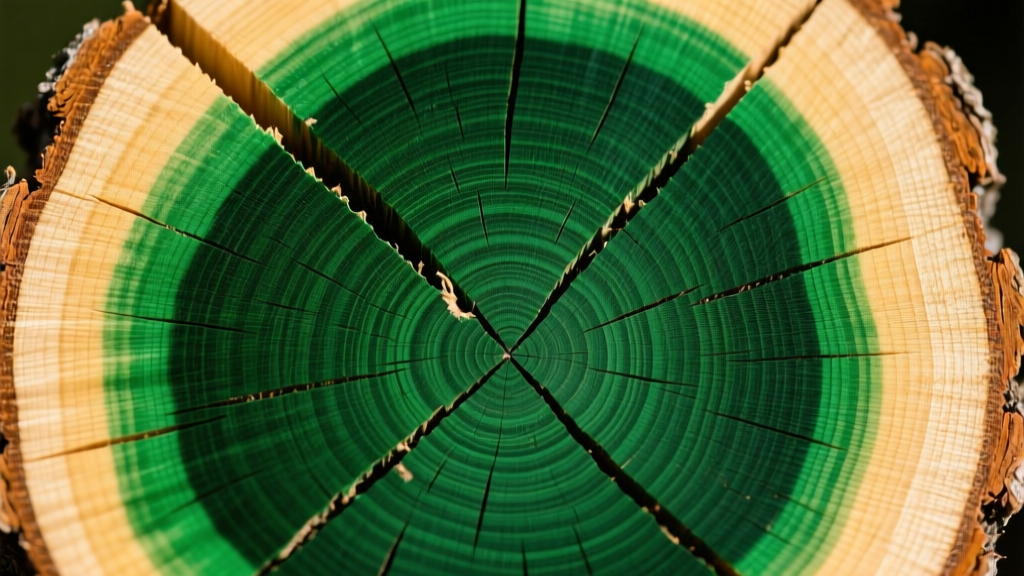
Preservative Chemistries Matched to Wood Profiles
Matching the wood name to the correct chemical formulation prevents premature leaching and structural degradation. The era of Chromated Copper Arsenate (CCA) for residential use has long passed; modern preservation relies on nuanced copper and borate systems.
- Micronized Copper Azole (MCA-C / MCA-D): The dominant chemistry for SYP and incised Douglas Fir. The micronized copper particles lodge in the wood pits rather than dissolving, reducing leaching. Ideal for UC4A and UC4B. Expect a 15-20% price premium over older ACQ formulations.
- Alkaline Copper Quaternary (ACQ): Still used for specific marine and heavy-duty agricultural applications. Highly corrosive to standard fasteners; requires hot-dipped galvanized (HDG) or stainless steel hardware. Works exceptionally well with the high permeability of SYP sapwood.
- Disodium Octaborate Tetrahydrate (DOT / Borates): Used primarily for SYP and Hem-Fir destined for interior framing or termite-prone above-ground zones (UC2). Borates do not leach in dry environments but will wash out if exposed to liquid water. Priced competitively at roughly $14.00 per 2x6x16' board.
Natural Extractives: When Wood Names Mean "No Treatment Needed"
Not all wood names require chemical intervention. Certain species produce high concentrations of natural extractives—thujaplicins in cedars, tannins in oaks, and robinetin in locusts—that act as potent biological fungicides and insect repellents.
Western Red Cedar and Heart Cypress
The heartwood of Western Red Cedar contains water-soluble extractives that provide natural decay resistance equivalent to UC3B (above-ground) chemical treatments. However, once the sapwood is exposed, that zone remains highly vulnerable. For 2026 exterior cladding, specify "All Heart" or "Clear Heart" grades of Western Red Cedar to ensure uniform natural durability without the need for toxic surface biocides.
Black Locust (Robinia pseudoacacia)
Black Locust heartwood is rated for 50+ years in direct ground contact (UC4B and UC4C) without any chemical treatment. Its dense, interlocked grain and high flavonoid content make it virtually impervious to rot and termites. While initial material costs are high (often exceeding $12.00 per board foot for rough-sawn timbers), the lifecycle cost undercuts chemically treated SYP when factoring in zero maintenance and a multi-decade lifespan.
Thermal Modification: Altering the Wood Name's Properties
When architectural designs demand the aesthetic of a Class 4 or 5 refractory wood name (like Ash or Oak) in an exterior setting, thermal modification offers a non-chemical preservation route. By baking the lumber in an oxygen-depleted kiln at 400°F to 450°F (200°C–230°C), the hemicelluloses are caramelized and broken down. This removes the food source for decay fungi and reduces the wood's equilibrium moisture content (EMC).
Thermally modified Ash (often sold under brand names like Thermory) achieves Class 1 durability ratings for above-ground exterior use. The trade-off is a 20% to 30% reduction in modulus of rupture (MOR), meaning thermally modified woods must never be used for structural load-bearing joists or beams, but rather strictly for cladding, decking, and millwork.
Frequently Asked Questions
Can I treat refractory wood names like Douglas Fir on the job site?
No. Surface-applied brush treatments (like copper naphthenate) only penetrate 1-2 millimeters into refractory species. True preservation requires industrial pressure vessels operating at 150+ PSI to force chemicals into the cellular matrix. Job-site treatments are only acceptable for sealing end-cuts on pre-treated lumber.
Does the "treated" stamp guarantee the wood name inside is correct?
The AWPA stamp verifies the chemical retention and use category, but misidentification of species at the sawmill does occur. If you require Douglas Fir for structural reasons but receive treated SYP, the SYP will be adequately preserved but will lack the required structural stiffness (Fb and E values) for your engineered span. Always cross-reference the species stamp with the treatment stamp.
Are borate-treated woods safe for interior framing in 2026?
Yes. Borate treatments (DOT) are exceptionally low-toxicity to mammals and are widely specified for interior sill plates and wall framing in termite-heavy regions like the US Southeast. They emit zero VOCs once the wood is kiln-dried post-treatment (KDAT).
Written by
Sarah WhitfieldSarah Whitfield is a chartered quantity surveyor (MRICS) and construction cost analyst with 15 years of experience in material pricing, procurement strategy, and project budgeting. She earned her degree in Construction Management from the University of Reading (UK) and has worked on projects ranging from $2M custom homes to $180M mixed-use developments across North America and Europe. Sarah currently leads cost estimating for BuildMat Insight, maintaining a proprietary database of 4,000+ material price points updated quarterly. She is a frequent contributor to RSMeans cost data panels and has presented at the International Cost Engineering Council (ICEC) congress. Based in Denver, CO, Sarah is an avid trail runner and volunteer mentor for Women in Construction.
More from Sarah Whitfield
View all
Wood & Lumber
What Are the Different Types of Wood? A Builder's Guide
Compare structural softwoods, finish hardwoods, and engineered lumber. Analyze Janka ratings, MOE values, and 2026 pricing for construction.
Aug 4, 2026

Walls & Panels
Steel Framing vs Wood Framing: Corrosion and Moisture Defense
Compare steel framing vs wood framing for moisture resistance. Learn about galvanized coatings, condensation risks, and corrosion protection strategies.
Jul 21, 2026

Stone & Masonry
How to Cut Stone Veneer: Wet Saw vs Grinder Comparison
Compare the best tools for cutting stone veneer. We review wet saws, angle grinders, and chop saws to help you achieve clean, chip-free cuts.
Jul 21, 2026