CDX Plywood Durability: Real-World Lifespan & Failure Analysis
Analyze CDX plywood durability, exposure limits, and real-world lifespan. Learn failure modes, moisture management, and application-specific lifespans.
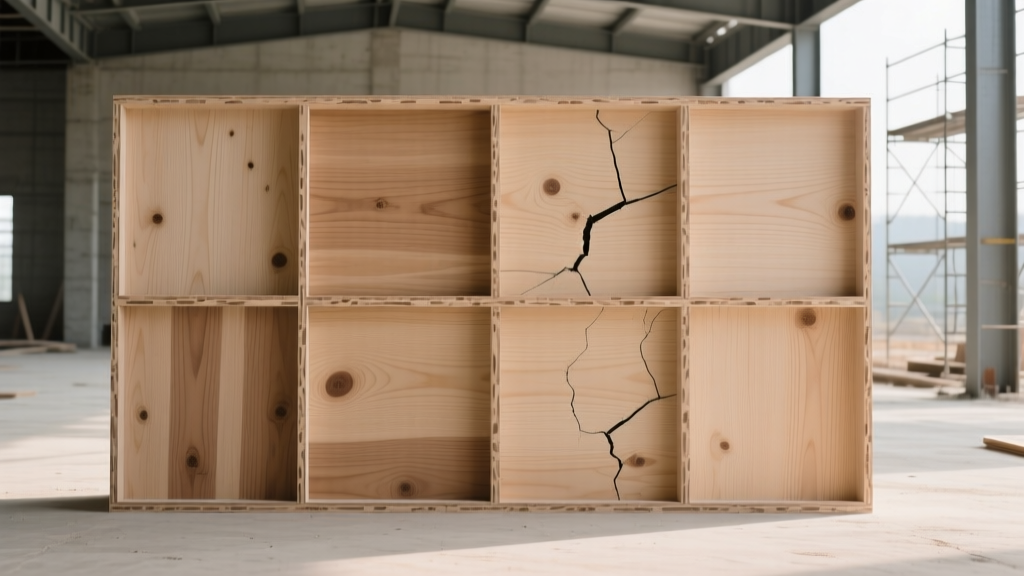
The 'X' Misconception: Exposure 1 vs. Exterior Ratings
CDX plywood is the most widely used structural sheathing in North American construction, but its name generates persistent confusion regarding its durability. The 'C' and 'D' refer to the veneer grades on the face and back, respectively. The 'X' is universally misinterpreted as 'eXterior.' In reality, according to The Engineered Wood Association (APA), the 'X' designates 'Exposure 1.' This is a critical distinction for lifespan analysis.
Exposure 1 panels (CDX) are manufactured with waterproof phenol-formaldehyde (PF) glue lines, meaning the adhesive will not fail when wet. However, the C and D grade veneers themselves contain knots, splits, and core gaps. CDX is designed to withstand construction delays and temporary weather exposure, not permanent outdoor installation. True 'Exterior' rated plywood (like ACX or Marine grade) uses higher-grade veneers without open defects that can trap water.
Because the wood fibers in C and D veneers are susceptible to moisture absorption, the lifespan of CDX plywood is entirely dictated by its ability to remain dry after the building envelope is sealed. When protected from bulk water and UV radiation, CDX sheathing will easily outlast the 50-year structural design life of a modern building.
Application-Specific Lifespan Matrix
The expected lifespan of CDX plywood varies drastically based on its structural application and the specific moisture risks inherent to that location. The table below outlines real-world durability expectations assuming standard building code compliance.
| Application | Expected Lifespan | Primary Threat | Critical Mitigation Strategy |
|---|---|---|---|
| Roof Sheathing | 50-80+ Years | Trapped condensation, ice dam backups, and attic moisture. | Install continuous ridge/soffit ventilation and use ice/water shield at eaves. |
| Subflooring | 50+ Years | Plumbing leaks, spills, and edge swelling causing floor squeaks. | Seal panel edges during construction; maintain 1/8-inch expansion gaps. |
| Wall Sheathing | 50-100 Years | Bulk water intrusion behind cladding and capillary action at the bottom plate. | Maintain a minimum 6-inch clearance above finished grade; integrate WRB properly. |
| Unprotected Job Site | 30-90 Days | UV degradation of face veneers and catastrophic edge delamination. | Store flat, elevate 4 inches off grade, and cover with breathable tarps. |
Anatomy of CDX Failure: Delamination and Edge Swelling
When CDX plywood fails prematurely, it is rarely the glue line that gives way. The USDA Forest Products Laboratory notes that phenol-formaldehyde resins are highly stable and waterproof. Instead, failure occurs at the physical wood-to-wood interfaces and the panel edges.
Edge Swelling and Thickness Expansion
The most common failure mode in CDX subflooring and roof sheathing is edge swelling. When the unprotected edges of the panel absorb moisture, the wood fibers expand perpendicular to the grain. Unsealed CDX edges can experience thickness swelling of 10% to 15% after prolonged wetting. This swelling creates 'ridges' at the panel seams, which telegraph through roofing shingles or cause hardwood flooring to buckle. Once the panel dries, the edges rarely compress back to their original dimensions, resulting in permanent structural ridges and fastener pop.
Face Checking and Veneer Splitting
D-grade back veneers contain numerous knots and splits. When exposed to cyclic wetting and drying (such as an unprotected roof deck during a rainy framing phase), the veneer shrinks and swells. This differential movement causes 'face checking'—micro-fractures in the wood grain. While face checking does not immediately compromise the panel's shear strength, it creates pathways for water to infiltrate the inner plies, accelerating fungal decay if the moisture content remains above 20% for extended periods.
Job Site Protocols for Maximizing CDX Durability
Preserving the structural integrity of CDX plywood begins long before the building envelope is closed in. Implementing these specific site protocols prevents irreversible moisture damage during the critical framing phase:
- Elevate and Isolate: Never store CDX panels directly on soil or concrete. Use 4x4 dunnage spaced no more than 24 inches apart to prevent panel sagging and ground-moisture wicking.
- Edge Sealing for Delays: If the project schedule indicates the sheathing will be exposed to weather for more than 30 days, apply an exterior-grade acrylic latex paint or a specialized end-sealant (like Anchorseal) to the panel edges. This reduces edge swelling by up to 60%.
- Mandatory Expansion Gaps: The APA mandates a 1/8-inch gap between all panel edges and end joints. Use a 10d nail as a spacer during installation. Panels installed tight will buckle when they absorb ambient humidity, permanently compromising the diaphragm strength of the shear wall or roof deck.
- Sweep and Dry: Before installing underlayment or flooring, sweep the panels to remove standing water and construction debris. Trapped organic debris holds moisture against the panel face, creating localized micro-climates that trigger wood rot.
When to Upgrade: CDX vs. Alternative Sheathing
While CDX is cost-effective (typically ranging from $45 to $65 per 4x8 sheet for 1/2-inch thickness in 2026), specific high-risk environments warrant an upgrade to more durable alternatives.
Upgrade to ACX or Marine Plywood
Scenario: Permanent outdoor structures, exterior soffits, or marine docks.
Why: ACX uses A-grade face veneers with no open knots, preventing water from pooling in surface defects. Marine plywood uses solid core veneers with zero gaps, eliminating internal water traps.
Upgrade to AdvanTech or Premium OSB
Scenario: Subflooring in high-humidity climates or projects with long construction delays.
Why: Engineered subfloor panels like Huber AdvanTech use advanced resin systems that limit edge swelling to less than 2%, even after 30 days of continuous water exposure, far outperforming standard CDX.
Frequently Asked Questions
Can I paint CDX plywood and use it as permanent exterior siding?
No. While painting provides a temporary moisture barrier, the C and D grade veneers have surface defects (knotholes and splits) that will eventually allow water infiltration. Once water gets behind the paint film, it becomes trapped, causing the veneers to delaminate and the paint to blister and peel. For painted exterior applications, use MDO (Medium Density Overlay) or HDO (High Density Overlay) plywood, which features a resin-treated fiber face specifically designed for exterior paint adhesion and moisture blocking.
How long can CDX sit exposed to rain before it loses its structural warranty?
Most manufacturers warrant Exposure 1 panels against manufacturing defects, but they explicitly exclude damage caused by prolonged weather exposure. Generally, CDX can withstand normal construction weather (rain followed by drying) for up to 90 days without significant loss of structural strength. However, if the panels remain continuously saturated, or if water pools in the core gaps of the D-grade back ply, fungal decay can initiate in as little as 3 to 4 weeks in warm climates. If panels show severe edge delamination or a spongy texture when walked on, they must be replaced regardless of the time elapsed.