Types of Wood Siding for Houses: 2026 Cost & Species Guide
Compare the top types of wood siding for houses in 2026. Expert analysis of cedar, redwood, cypress, and modified wood costs, grades, and lifespan.
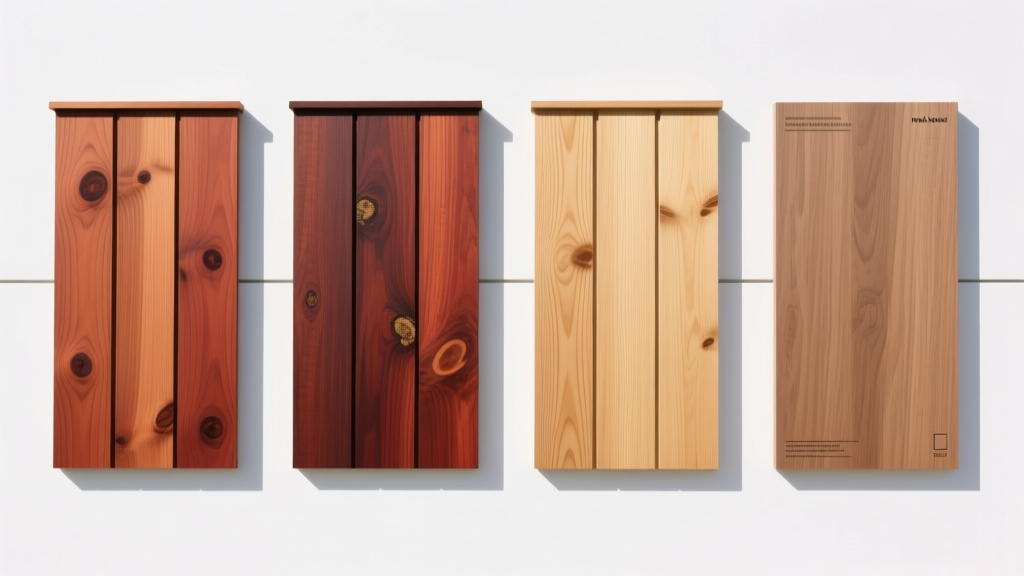
When evaluating the types of wood siding for houses, builders and homeowners must navigate a complex matrix of timber species, grading standards, milling profiles, and chemical treatments. While synthetic alternatives like fiber cement have captured significant market share, natural wood remains the premium choice for architectural authenticity, thermal insulation, and carbon sequestration. In 2026, the wood siding market is defined by a sharp bifurcation: ultra-premium old-growth equivalents (like clear heart redwood) and high-tech thermally modified species that offer rot resistance without chemical preservatives.
This guide provides a deep-dive comparison of the most viable wood siding species available today, breaking down exact grading terminology, real-world pricing, and the specific failure modes that contractors often overlook.
The Hierarchy of Wood Siding Species
Not all timber is suited for exterior cladding. The natural presence of extractives (like tannins, oils, and resins) dictates a wood's baseline resistance to decay and insect infiltration. Below is the definitive ranking of siding species based on longevity and structural stability.
1. Western Red Cedar (The Industry Benchmark)
Western Red Cedar (Thuja plicata) remains the gold standard for wood cladding. Its cellular structure contains thujaplicins, natural fungicides that provide exceptional decay resistance. According to the Western Red Cedar Lumber Association (WRCLA), the wood's low density also grants it superior dimensional stability, meaning it is less prone to cupping or warping when exposed to seasonal moisture swings.
- Best Grades for Siding: 'Clear B' (allows minor, tight knots on the back face) or 'Select Knotty' (for a rustic aesthetic).
- Lifespan: 30–50 years (with proper detailing and finish maintenance).
- 2026 Material Cost: $7.50 – $14.00 per square foot (depending on grade and profile).
2. California Redwood (The Luxury Tier)
Redwood (Sequoia sempervirens) offers a richer, deeper hue and slightly higher dimensional stability than cedar. However, its decay resistance is strictly concentrated in the heartwood. 'All Heart' or 'Heart B' grades are mandatory for siding; sapwood grades will rot within a decade if left unprotected.
3. Cypress (The Southern Moisture Champion)
Grown primarily in the Southeastern U.S., Cypress (Taxodium distichum) produces 'cypressene', a preservative oil that makes it virtually impervious to water rot. It is the premier choice for coastal or high-humidity climates. Old-growth cypress is incredibly stable, but second-growth cypress (more common in 2026) requires stricter attention to sealing end-grains.
4. Thermally Modified Wood (The 2026 Innovator)
Thermal modification involves baking lesser-used, fast-growing species (like Ash, Pine, or Spruce) in an oxygen-deprived kiln at temperatures exceeding 400°F (210°C). This process caramelizes the wood sugars, rendering them indigestible to fungi and insects, while permanently reducing the wood's equilibrium moisture content (EMC). Brands like Accoya (which uses acetylation rather than heat) and Kebony dominate this space. The Accoya durability data shows a 50-year above-ground warranty, matching premium tropical hardwoods without the deforestation footprint.
5. Pine and Spruce (The Budget Tier)
Eastern White Pine and Spruce lack natural decay resistance. To be used as siding, they must be either pressure-treated with micronized copper azole (MCA) or factory-primed on all six sides with a high-build acrylic primer. Finger-jointed pine siding is the most economical option on the market, but the glue lines can become visible if the siding is stained rather than painted.
Siding Profiles: How Geometry Dictates Performance
The species you choose is only half the equation; the milling profile determines how water sheds from the wall assembly. The USDA Forest Products Laboratory emphasizes that profile geometry directly impacts moisture retention and UV degradation rates.
| Profile Type | Water Shedding Efficiency | Installation Complexity | Best Suited For |
|---|---|---|---|
| Bevel / Clapboard | High (overlapping sheds water effectively) | Low (standard nail placement) | Traditional, Colonial, and Cape Cod styles |
| Tongue & Groove (T&G) | Moderate (relies on tight joinery) | High (blind nailing required) | Modern, Craftsman, and interior-exterior transitions |
| Board and Batten | High (vertical orientation prevents pooling) | Moderate (requires precise batten spacing) | Farmhouse, Barndominium, and Gothic Revival |
| Shingles / Shakes | Low to Moderate (capillary action risks) | Very High (labor-intensive weaving) | Shingle Style, Cape Cod, and accent gables |
2026 Cost Breakdown: Material vs. Installed
Pricing for wood siding fluctuates based on regional timber yields and transportation costs. The table below reflects Q1 2026 national averages for material costs and professional installation labor. Note that installation costs assume a standard two-story, rectangular footprint with minimal architectural detailing.
| Wood Species & Grade | Material Cost (per sq. ft.) | Installed Cost (per sq. ft.) | Expected Maintenance Cycle |
|---|---|---|---|
| Finger-Jointed Pine (Primed) | $3.50 – $5.00 | $8.00 – $11.50 | 5–7 years (repaint) |
| Cedar (Select Knotty, Bevel) | $7.50 – $9.50 | $13.00 – $16.50 | 7–10 years (restain) |
| Cedar (Clear B, T&G) | $11.00 – $14.00 | $18.00 – $24.00 | 10–12 years (restain) |
| Thermally Modified Ash | $9.50 – $13.00 | $16.00 – $21.00 | Unfinished (weathers to silver-gray) |
| Redwood (All Heart, Clear) | $14.00 – $19.00 | $22.00 – $28.00 | 10–15 years (re-oil/stain) |
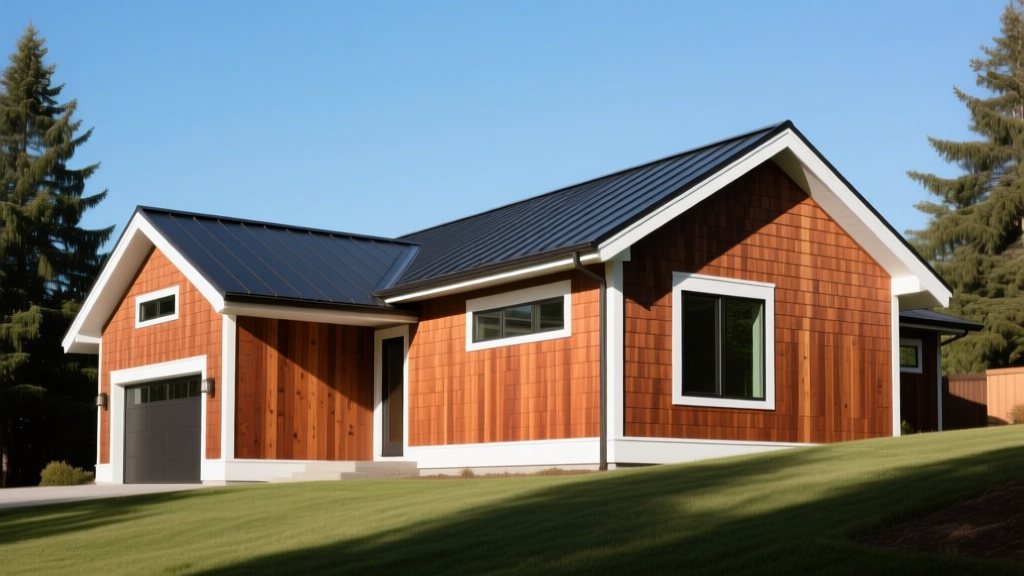
Critical Failure Modes and Installation Gotchas
Wood siding rarely fails because of the wood itself; it fails because of poor detailing. If you are specifying wood cladding, you must enforce the following protocols with your general contractor:
1. The Back-Venting Requirement
Never install wood siding directly against a weather-resistive barrier (WRB) or rigid foam. Wood must be able to dry to the exterior and the interior. Furring strips (minimum 1/4-inch thick, ideally 3/8-inch) must be applied vertically over the WRB to create a drainage and ventilation gap behind the siding. Without this capillary break, moisture trapped behind the boards will cause rapid cupping and paint delamination.
2. Fastener Corrosion and Tannin Reaction
Cedar and Redwood are highly acidic. Using standard galvanized nails will result in black streaks running down the siding within months as the zinc reacts with the wood tannins. You must specify 304 or 316 stainless steel ring-shank siding nails. Hot-dipped galvanized is acceptable only if the siding will be immediately painted with a heavy primer coat, but stainless steel remains the only fail-safe option for stained or clear-finished applications.
3. End-Grain Sealing
Wood absorbs moisture up to 50 times faster through its end-grain than through its face. Every cut made on-site—especially around windows, doors, and corners—must be immediately sealed with a wax-based end-grain sealer or a heavy coat of oil-based primer before the board is nailed to the wall.
Final Decision Framework: Which Wood Should You Choose?
Selecting the right material requires aligning your budget, architectural style, and willingness to perform ongoing maintenance.
- Choose Western Red Cedar if: You want the best balance of natural rot resistance, wide availability, and traditional aesthetics. It is the most forgiving species for DIY staining and offers the widest variety of milling profiles.
- Choose Thermally Modified Wood if: You desire a modern, dark-stained or naturally weathering facade with zero chemical treatments, and you want to eliminate the 10-year maintenance cycle associated with traditional softwoods.
- Choose Primed Finger-Jointed Pine if: You are building on a strict budget, plan to paint the house a solid, light color (which hides the finger joints), and are committed to a 7-year repainting schedule.
- Choose Cypress if: Your build is located in the Deep South, the Gulf Coast, or any region with extreme humidity and heavy driving rains, where its natural water-repellent oils will outperform cedar.
Ultimately, the longevity of any wood siding is dictated by the roof overhangs and the drainage plane beneath it. A modest pine siding system protected by 24-inch eaves and a ventilated rainscreen will easily outlast premium clear cedar installed flush against a flat roof with zero overhang. Design for water management first, and select your timber species second.
Written by
David NakamuraDavid Nakamura is a licensed architect (AIA) and construction technology writer focused on sustainable building methods, mass timber engineering, and high-performance building envelopes. He holds a Master of Architecture from the University of Washington and is a certified Passive House Consultant (CPHC). David spent eight years at the Seattle firm Mithun, where he led the design of three LEED Platinum projects, before founding his own practice specializing in net-zero residential design. He serves on the editorial advisory board of GreenBuilder Magazine and has authored peer-reviewed papers on cross-laminated timber (CLT) connections for the Journal of Structural Engineering. In his spare time, David teaches woodworking at Pratt Fine Arts Center and kayaks the Puget Sound.
More from David Nakamura
View all
Construction Cost
Labor Cost to Build a Deck Per Sq Ft: 2026 Installation Guide
Discover the exact labor cost to build a deck per sq ft in 2026. This installation guide breaks down contractor rates, complexity factors, and hidden fees.
Aug 4, 2026

Construction Cost
How Much Does It Cost to Build a 3 Bedroom House? Financing Guide
Learn exactly how much it costs to build a 3 bedroom house and explore 2026 financing options, construction loan types, and budget frameworks for your build.
Aug 4, 2026

Construction Cost
Cost to Build a Tennis Court: 2026 Guide
How much does it cost to build a tennis court in 2026? Breakdowns for asphalt, concrete, and synthetic surfaces plus fencing and lighting.
Jul 30, 2026