Cedar Shake Roof Performance Ratings and Technical Specifications
Analyze cedar shake roof performance ratings, including CSSB grading, fire classifications, wind uplift limits, and dimensional exposure specs.
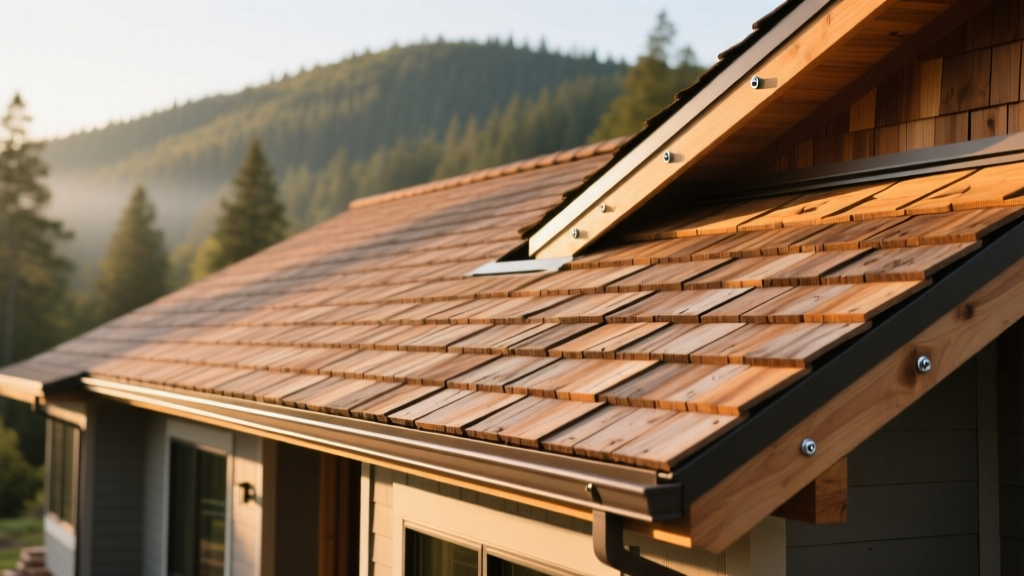
Decoding Cedar Shake Roof Grading and Material Standards
When specifying a cedar shake roof for structural longevity and weather resistance, the baseline performance is dictated by the Cedar Shake & Shingle Bureau (CSSB) grading system. Unlike sawn shingles, shakes are split along the natural grain, yielding a thicker, more textured profile that inherently resists splitting but requires strict grading to ensure uniform performance. The highest performing products carry the CertiLabel certification, which guarantees the wood is 100% Western Red Cedar or Alaska Yellow Cedar heartwood.
CSSB Shake Grade Classifications
Performance varies drastically across grades due to the presence of sapwood, flat grain, and knots. Sapwood lacks the natural tannins and extractives that provide decay resistance, making it highly susceptible to fungal degradation and moisture ingress.
| CSSB Grade | Designation | Heartwood Content | Grain Orientation | Performance Application |
|---|---|---|---|---|
| Number 1 | Premium | 100% Heartwood | 100% Edge Grain | Primary roofs, high-wind zones, historic restorations |
| Number 2 | Standard | Min. 90% Heartwood | Mixed Edge/Flat Grain | Secondary roofs, sheds, non-critical outbuildings |
| Number 3 | Utility | Unspecified | Mixed, knots permitted | Sidewall applications only (never for roofing) |
Fire Performance Ratings: Achieving Class A, B, and C
Untreated, natural cedar shakes inherently carry a Class C fire rating (effective against light fire test exposure). However, modern building codes in Wildland-Urban Interface (WUI) zones frequently mandate Class A or Class B assemblies. Achieving these ratings requires specific material treatments and underlayment configurations.
Pressure-Impregnated Fire Retardant (PIFR) vs. Topical Treatments
To achieve a standalone Class B or Class C rating without specialized underlayments, shakes must undergo Pressure-Impregnated Fire Retardant (PIFR) treatment. PIFR forces fire-retardant salts deep into the wood cellular structure. According to the Cedar Shake & Shingle Bureau's fire guidelines, topical coatings or spray-on retardants are strictly prohibited for certified roofing assemblies because they degrade under UV exposure and wash away within 1 to 3 years, leaving the roof unprotected and voiding the manufacturer's warranty.
Constructing a Class A Cedar Shake Assembly
A Class A rating (effective against severe fire test exposure) for a cedar shake roof is rarely achieved by the wood alone. It requires a composite assembly. The most reliable method specified by the Insurance Institute for Business & Home Safety (IBHS) involves combining standard or PIFR shakes with a specialized fire-resistant underlayment.
- Underlayment: Use a non-combustible, fire-rated underlayment such as VersaShield or Fireline. Standard #15 asphalt felt is combustible and will compromise the Class A rating.
- Interlayment: For 18" and 24" shakes, 18-inch wide strips of fire-rated underlayment must be woven between courses to protect the keyways (gaps between shakes).
- Flashing: All valley and step flashing must be minimum 24-gauge steel or 16oz copper; aluminum melts at temperatures reached during standard Class A ASTM E108 testing.
Wind Uplift and Impact Resistance Specifications
Cedar shakes possess a unique structural advantage: their thick, split profile and overlapping application create a highly interlocking matrix that dissipates kinetic energy. When installed to CSSB installation manual specifications, cedar shake roofs routinely achieve exceptional wind and impact ratings.
Wind Uplift (ASTM D3161 / D7158)
Standard cedar shake assemblies are rated for ASTM D3161 Class F, withstanding sustained wind speeds up to 110 mph. To achieve this rating, the fastening pattern must be strictly enforced:
- Apply exactly two fasteners per shake, regardless of width.
- Place fasteners 1 inch from each side edge.
- Position fasteners exactly 2 inches above the exposed butt line of the succeeding course.
- Drive nails flush—over-driving crushes the wood fibers, compromising the withdrawal resistance, while under-driving prevents the overlapping shake from seating flat, creating a wind-catchment lip.
Impact Resistance (UL 2218)
Cedar shakes naturally achieve a UL 2218 Class 4 impact rating—the highest possible classification. Unlike rigid materials such as slate, clay, or concrete tile, which shatter upon impact from a 2-inch steel ball dropped from 20 feet, the cellular structure of Western Red Cedar compresses and absorbs the kinetic energy. This makes cedar shakes the optimal specification for regions prone to severe hail (e.g., Texas, Colorado, the Midwest), often qualifying the property owner for significant insurance premium reductions.
Dimensional Specifications and Weather Exposure Limits
Shakes are manufactured in three standard lengths: 16-inch (Perfection), 18-inch (Royal), and 24-inch (Handsplit). The maximum weather exposure (the portion of the shake exposed to the elements) is strictly governed by the roof pitch and the length of the shake. Exceeding these limits reduces the headlap (the triple-layer overlap), compromising wind-driven rain resistance.
| Shake Length | Roof Pitch (4:12 or steeper) | Roof Pitch (3:12 to <4:12) | Required Headlap |
|---|---|---|---|
| 16" (Perfection) | 5.5 inches max | 5.0 inches max | Minimum 1.5" over underlying course |
| 18" (Royal) | 6.5 inches max | 5.5 inches max | Minimum 1.5" over underlying course |
| 24" (Handsplit) | 10.0 inches max | 8.5 inches max | Minimum 2.0" over underlying course |
Note: On roof pitches below 3:12, cedar shakes are strictly prohibited by the International Residential Code (IRC) due to the high risk of capillary action drawing water upward into the keyways.
Fastener and Ventilation Specifications
The two most common causes of premature cedar shake roof failure are fastener corrosion and inadequate underside ventilation. Addressing these during the specification phase is non-negotiable.
Fastener Metallurgy
Western Red Cedar contains high levels of tannic acid, which aggressively corrodes standard metals. You must specify 3d or 4d stainless steel ring-shank nails (minimum 1-1/2" length for standard sheathing, longer if penetrating spaced sheathing). Hot-dipped galvanized nails are the absolute minimum acceptable alternative, but they will eventually rust and stain the cedar with black iron-tannin streaks. Electro-galvanized or aluminum nails are strictly prohibited; aluminum reacts chemically with cedar tannins, causing rapid fastener degradation and severe wood staining.
Underside Ventilation Frameworks
Cedar shakes must dry evenly from both the top and bottom surfaces. If the underside is trapped against a solid deck with felt paper, moisture accumulates, leading to cupping, curling, and fungal rot. There are two code-compliant methods to ensure adequate airflow:
- Spaced Sheathing (Skip Sheathing): Installing 1x4 or 1x6 boards with gaps equal to the weather exposure. This is the traditional, highest-performing method, allowing direct air circulation against the back of the shakes.
- Solid Deck with Cedar Breather: If solid plywood/OSB decking is required for structural shear or seismic reasons, a continuous matrix underlayment (such as Cedar Breather) must be installed over the roofing felt. This creates a 1/4-inch air channel between the deck and the shakes, facilitating capillary breaking and convective drying.
"A cedar shake roof is a breathing system. If you seal the underside, you trap the moisture, and the roof will rot from the inside out long before the weather face degrades." — CSSB Installation Manual, Section 4: Ventilation Requirements
Troubleshooting Early-Stage Performance Degradation
Even with premium materials, improper installation can manifest as physical defects within the first 24 months. Inspect for the following failure modes:
- Longitudinal Splitting: If shakes split down the center, they were likely nailed too tightly without the recommended 1/16-inch expansion gap between adjacent shakes. Cedar expands laterally when wet; without a gap, the compressive force fractures the wood.
- Cupping and Curling: Caused by uneven moisture content. If the top face dries in the sun while the bottom face remains damp against unventilated felt, the differential shrinkage pulls the edges upward. Verify the presence of Cedar Breather or skip sheathing immediately.
- Tannin Bleed Streaking: Dark, vertical streaks indicate the use of incompatible fasteners (aluminum or standard steel) reacting with the wood's natural acids. This requires localized board replacement and fastener extraction.