What Type of Cancer Does Liz Woods Have? Wood Dust Risks Compared
Addressing the query 'what type of cancer does liz woods have' by pivoting to a critical lumber industry comparison: hardwood dust carcinogens and safety.

The Algorithm vs. The Lumber Yard: Contextualizing the Query
When the phrase what type of cancer does liz woods have trends in search algorithms, it typically points toward celebrity health updates, medical gossip, or viral news cycles. However, for safety officers, lumber yard managers, and custom millwork professionals, the intersection of the words "Woods" and "cancer" points to a far more pressing, heavily documented occupational crisis: the carcinogenic nature of airborne timber dust. As a leading authority on building materials and construction safety, BuildMatInsight approaches this search query not as medical gossip, but as a critical entry point to discuss the very real, life-threatening hazards of lumber processing. In 2026, with CNC routing and high-speed planing generating sub-micron particulate matter at unprecedented volumes, understanding the oncological risks of specific wood species is mandatory for any commercial or residential woodworking facility.
IARC Group 1: The Hardwood Dust Carcinogen Profile
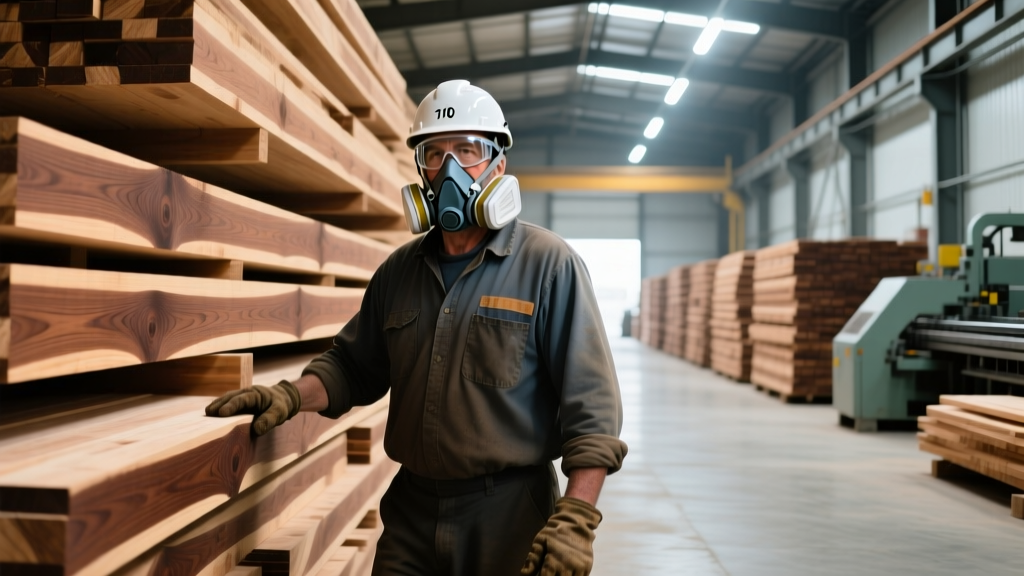
The International Agency for Research on Cancer (IARC) classifies wood dust as a Group 1 Carcinogen, meaning it is definitively known to cause cancer in humans. The primary oncological threat associated with hardwood dust exposure is adenocarcinoma of the nasal cavity and paranasal sinuses. This is not merely a physical irritation issue; it is a chemical one. Hardwoods contain complex organic compounds—including tannins, stilbenes, alkaloids, and quinones—that act as cellular mutagens when aerosolized and lodged in the nasal mucosa.
Toxicity Matrix: Comparing Lumber Species and Engineered Woods
Not all lumber poses the same oncological or respiratory risks. The toxicity profile varies wildly depending on the species' botanical defenses and the chemical binders used in engineered products. Below is a comparison of common building materials and their associated health risks.
| Material / Species | Primary Toxin / Irritant | Cancer Risk Level | Secondary Respiratory Risks |
|---|---|---|---|
| European Oak / Beech | Tannins, Quercetin | High (Group 1) | Asthma, Hypersensitivity Pneumonitis |
| Ipe / Cumaru (Exotics) | Lapachol, Saponins | Moderate | Severe contact dermatitis, Bronchospasm |
| MDF (Medium-Density Fiberboard) | Urea-Formaldehyde Resins | High (Group 1) | Nasopharyngeal cancer, Chemical burns |
| Douglas Fir / SPF (Softwoods) | Terpene resins, Plicatic Acid | Low | Occupational asthma, Chronic rhinitis |
| Pressure-Treated Lumber (Modern) | Copper Azole / Propiconazole | Low (when dry) | Heavy metal toxicity if burned or sanded |
Engineering Controls: Cyclone vs. Cartridge Dust Extraction
To mitigate the risks that prompt severe health inquiries, facilities must invest in proper engineering controls. The OSHA Woodworking eTool mandates that dust capture occur at the source. When outfitting a modern lumber mill or custom cabinet shop, the debate between cyclone separators and traditional cartridge/canister collectors is central to safety and efficiency.
Airflow Dynamics and Static Pressure
A common failure mode in 2026 shop designs is prioritizing high CFM (Cubic Feet per Minute) while ignoring Static Pressure (SP). A system might boast 2,000 CFM in free air, but drop to 400 CFM when connected to 20 feet of 4-inch flex hose and a cyclone separator.
- Cyclone Separators (e.g., 3HP to 5HP models): Utilize centrifugal force to drop 95% of heavy wood chips into a drum before the air hits the filter. Best for: High-volume planing, jointing, and CNC nesting operations where bulk material removal is required to prevent filter blinding.
- Cartridge/Canister Collectors (e.g., 2HP models): Rely entirely on pleated media (often PTFE-coated polyester) to catch dust. Best for: Fine-dust generation like wide-belt sanding and MDF routing, provided the filter is rated to 0.5 microns and features an automated pulse-jet cleaning system.
Personal Protective Equipment (PPE) Comparison
Even with state-of-the-art HVAC and source-capture systems, ambient dust levels in lumber yards frequently exceed the ACGIH Threshold Limit Value (TLV) of 0.5 mg/m³ for hardwoods. This makes respiratory PPE the final line of defense. According to NIOSH Wood Dust Guidelines, relying on disposable paper masks is a critical safety failure.
| Respirator Type | Filtration Efficiency | Seal Integrity | Verdict for Lumber Professionals |
|---|---|---|---|
| N95 Disposable | 95% of non-oil particulates | Poor (degrades with sweat/movement) | Unacceptable for MDF routing or exotic hardwoods. |
| Half-Mask P100 (Silicone) | 99.97% of all particulates | Excellent (requires annual fit-testing) | Mandatory for all indoor power sanding and sawing. |
| PAPR (Powered Air-Purifying) | 99.99% (HEPA) | Supreme (positive pressure hood) | Required for enclosed spray booths and heavy MDF fabrication. |
"The assumption that wood dust is merely a nuisance rather than a potent chemical mutagen is responsible for decades of preventable oncological tragedies in the timber trade. Sub-micron hardwood dust bypasses the body's natural cilia defenses entirely." — Industrial Hygiene Review, 2025
2026 Compliance and Shop Safety Frameworks
For lumber yard operators and construction managers, addressing the hazards implicit in queries like what type of cancer does liz woods have requires a proactive, documented safety framework. In 2026, OSHA enforcement has increasingly targeted facilities that fail to maintain ductwork or ignore filter differential pressure gauges.
The 3-Step Mitigation Protocol
- Source Capture Audit: Ensure every table saw, miter saw, and edgebander has a dedicated shroud connected to a minimum 4-inch duct running at 4,000 FPM (Feet Per Minute) transport velocity to prevent dust settling in the pipes.
- Ambient Air Filtration: Install ceiling-mounted ambient air cleaners with MERV 17 or HEPA final filters, cycling the shop's total air volume at least 4 times per hour.
- Mandatory Fit-Testing: Implement annual qualitative fit-testing (Bitrex or Saccharin) for all employees required to wear P100 half-masks, ensuring facial hair policies align with ANSI/ASSP Z88.2 standards.
Final Assessment
While the internet may use the phrase what type of cancer does liz woods have to chase celebrity headlines, the reality of cancer in the "woods" is a matter of occupational science, fluid dynamics, and rigorous material handling. Whether you are milling European White Oak for flooring or routing MDF for custom cabinetry, the carcinogenic risks are real, measurable, and entirely preventable with the correct extraction technology and PPE. Protect your workforce by treating wood dust not as sawdust, but as a hazardous chemical byproduct demanding industrial-grade containment.
Written by
David NakamuraDavid Nakamura is a licensed architect (AIA) and construction technology writer focused on sustainable building methods, mass timber engineering, and high-performance building envelopes. He holds a Master of Architecture from the University of Washington and is a certified Passive House Consultant (CPHC). David spent eight years at the Seattle firm Mithun, where he led the design of three LEED Platinum projects, before founding his own practice specializing in net-zero residential design. He serves on the editorial advisory board of GreenBuilder Magazine and has authored peer-reviewed papers on cross-laminated timber (CLT) connections for the Journal of Structural Engineering. In his spare time, David teaches woodworking at Pratt Fine Arts Center and kayaks the Puget Sound.
More from David Nakamura
View all
Construction Cost
Labor Cost to Build a Deck Per Sq Ft: 2026 Installation Guide
Discover the exact labor cost to build a deck per sq ft in 2026. This installation guide breaks down contractor rates, complexity factors, and hidden fees.
Aug 4, 2026

Construction Cost
How Much Does It Cost to Build a 3 Bedroom House? Financing Guide
Learn exactly how much it costs to build a 3 bedroom house and explore 2026 financing options, construction loan types, and budget frameworks for your build.
Aug 4, 2026

Construction Cost
Cost to Build a Tennis Court: 2026 Guide
How much does it cost to build a tennis court in 2026? Breakdowns for asphalt, concrete, and synthetic surfaces plus fencing and lighting.
Jul 30, 2026