Cleaning Hardwood Floors: Bona Product Taxonomy & Selection
Master cleaning hardwood floors with Bona. Compare product taxonomies, match cleaners to polyurethane or oil finishes, and avoid residue damage.
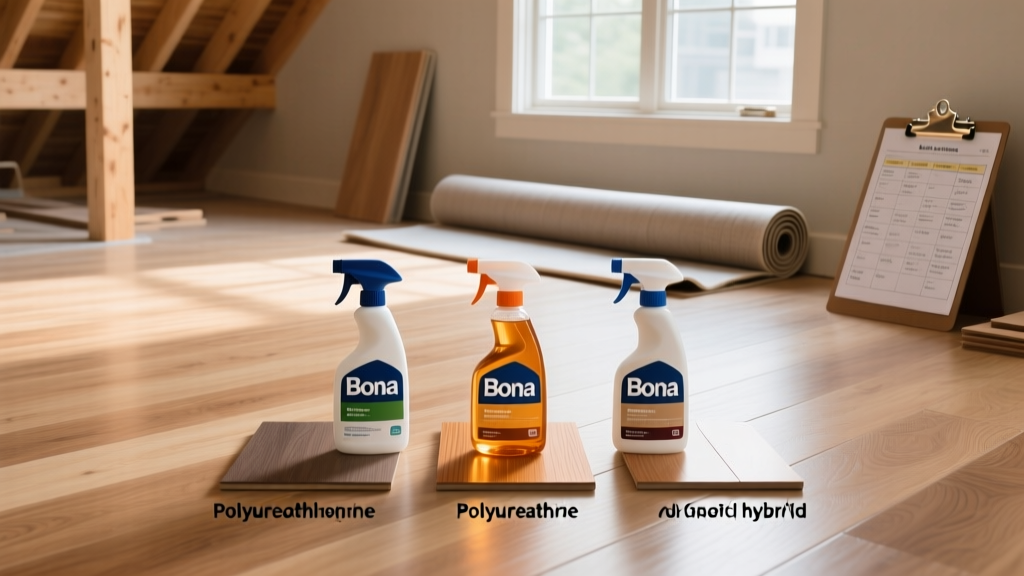
The Material Science of Hardwood Maintenance
When it comes to cleaning hardwood floors, Bona has established itself as the industry baseline for professional and residential maintenance. However, treating all wood floors as a single material category is a critical error. Hardwood flooring is defined by its surface finish taxonomy—ranging from moisture-cured urethanes to penetrating hardwax oils—and selecting the correct Bona formulation requires matching the cleaner's chemical profile to the floor's specific coating. Using a water-based pH-neutral cleaner on a penetrating oil finish will cause immediate grain raising and water spotting, while using heavy surfactants on aluminum oxide coatings will leave dulling residues.
The National Wood Flooring Association (NWFA) explicitly mandates that cleaners must be compatible with the specific finish type to avoid voiding manufacturer warranties. This guide deconstructs the Bona product ecosystem, mapping specific chemical formulations to hardwood finish taxonomies to ensure optimal selection, application, and long-term material preservation.
Hardwood Finish Taxonomy: Matching the Cleaner to the Coating
Before selecting a Bona product, you must identify the floor's finish. The table below maps common hardwood finish types to their compatible Bona cleaning solutions.
| Finish Taxonomy | Common Brand Examples | Compatible Bona Product | Chemical Profile Required |
|---|---|---|---|
| Surface-Sealed Polyurethane | Bona Traffic HD, StreetShoe | Bona Hardwood Floor Cleaner | pH 7.0-8.0, Water-based, Zero VOC |
| Aluminum Oxide (Factory Prefinished) | Bruce, Shaw, Mohawk | Bona Hardwood Floor Cleaner | pH Neutral, Non-streaking surfactant |
| Hardwax Oil (Penetrating) | Rubio Monocoat, Osmo Polyx | Bona Craft Oil Cleaner | Low-moisture, oil-emulsion surfactant |
| Penetrating Tung Oil / Wax | Waterlox, Minwax Paste Wax | Not Recommended (Use Solvents) | Mineral spirits, naphtha (Avoid Bona water-based) |
The Bona Cleaning Ecosystem: Product Breakdown & Specifications
Bona’s consumer and professional lines are segmented by soil load and finish condition. Understanding the exact specifications of each product prevents over-application and chemical buildup.
Bona Hardwood Floor Cleaner (Standard Formulation)
The flagship product is engineered exclusively for surface-sealed floors (polyurethane and aluminum oxide). It carries the EPA Safer Choice certification, indicating it contains no harsh solvents, ammonia, or petroleum distillates. The formula relies on mild, biodegradable non-ionic surfactants that lift particulate dirt without stripping the urethane topcoat. It is a ready-to-use (RTU) solution with a flash-dry time of approximately 90 seconds at standard room temperature (70°F / 21°C), which is critical for preventing moisture intrusion into the wood seams.
Bona PowerPlus Antibacterial & Deep Clean
For floors suffering from embedded grime, pet accidents, or pre-existing residue from improper cleaners, the standard formula is insufficient. Bona PowerPlus utilizes a hydrogen peroxide-based oxygenating agent combined with stronger anionic surfactants. This formulation breaks down carbon-based stains and biological matter. It is strictly a restorative cleaner and should not be used for daily maintenance, as the higher surfactant load requires thorough microfiber capture to prevent streaking.
Bona Hardwood Floor Polish (High Gloss / Low Gloss)
While not a cleaner, the Polish is a vital part of the material selection taxonomy for aging polyurethane floors. It utilizes a urethane-acrylic emulsion that cross-links upon drying to fill micro-scratches. It must only be applied after a thorough cleaning with the standard Bona Cleaner; applying it over dirt or oil-soap residue will permanently trap the particulate matter under the acrylic layer, requiring a full mechanical screen-and-recoat to fix.
⚠ Warning: The "Oil Soap" Trap
Never use Murphy’s Oil Soap, Orange Glo, or any product containing linseed or mineral oils on surface-sealed polyurethane floors. These products leave an acrylic and lipid residue that prevents Bona Hardwood Floor Cleaner from making contact with the floor. If a floor has been treated with oil soap, you must strip the residue using a dedicated hardwood floor stripper or a diluted ammonia solution (1 cup ammonia to 1 gallon water) before introducing the Bona system. Applying Bona over oil soap will result in immediate, severe streaking and hazing.
Application Mechanics: Microfiber Pad Selection
The chemical efficacy of Bona cleaners is entirely dependent on the mechanical action of the applicator. Bona’s proprietary microfiber pads are engineered with specific loop densities for different stages of the cleaning taxonomy.
- Dusting Pad (Green/White Loop): Designed for dry capture. Uses electrostatic charge to trap silica dust and pet dander. Must be used before any wet application to prevent creating an abrasive mud slurry on the floor.
- Sweeping Pad (Blue Loop): Features a slightly higher nap for capturing larger debris and hair. Ideal for high-traffic entryways.
- Wet Mopping Pad (Red/Blue Dual-Zone): Engineered with a scrubbing zone for breaking surface tension of dried spills and an absorbing zone for pulling the Bona solution and suspended dirt off the floor. This pad must be washed without fabric softener after every 2-3 uses; fabric softener clogs the microfiber capillaries, rendering the pad hydrophobic and causing the cleaner to streak.
Troubleshooting Common Bona Application Failures
When users report that Bona leaves a hazy or streaky film, the failure is rarely the chemical itself, but rather a mismatch in application mechanics or pre-existing floor conditions. Use this decision framework to diagnose the issue:
- Symptom: Immediate streaking upon drying.
- Cause A: Over-application. The Bona spray mop dispenses a precise 0.5 oz per trigger pull. Spraying more than one pass per 16-inch swath overwhelms the microfiber pad's absorption capacity.
- Cause B: Saturated pad. If the pad is not swapped or rinsed every 300 square feet, it simply redistributes suspended soil.
- Symptom: Cloudy, hazy finish that won't wipe away.
- Cause: Previous wax or oil soap buildup. The Bona cleaner is lifting the old residue but not fully dissolving it. Fix: Strip the floor with a hardwood-specific residue remover, rinse, and restart the Bona protocol.
- Symptom: Dull spots in high-traffic areas despite cleaning.
- Cause: The polyurethane topcoat is physically worn through to the raw wood or stain layer. No cleaner will restore gloss here. Fix: The floor requires a professional screen-and-recoat or full sanding.
Cost Analysis: Bona System vs. Generic Supermarket Cleaners
While generic cleaners (e.g., Swiffer WetJet, Pledge) have a lower initial acquisition cost, their long-term impact on the material lifecycle of the hardwood floor makes them economically inferior. The table below contrasts the true cost of ownership over a 5-year maintenance cycle for a 1,000 sq. ft. hardwood area.
| Metric | Bona Premium System | Generic Supermarket Cleaners |
|---|---|---|
| Initial Kit Cost (Mop + Pads + Cleaner) | $55.00 | $25.00 |
| Annual Cleaning Solution Cost | $35.00 (36oz refills) | $45.00 (Proprietary cartridges) |
| Residue Buildup Risk | Negligible (Evaporates clean) | High (Acrylic/Soap scum) |
| Year 4 Maintenance Requirement | Standard cleaning ($0) | Chemical stripping & Screen/Recoat ($3.50/sq ft) |
| 5-Year Total Cost (1,000 sq ft) | $230.00 | $3,950.00 |
Generic wet-mop systems often utilize sodium hydroxide and heavy fragrances that degrade the urethane cross-links over time, leading to premature finish failure. Investing in the Bona taxonomy preserves the structural integrity of the polyurethane coating, delaying the need for a $3,500+ professional refinishing job.
Frequently Asked Questions
Can I use Bona Hardwood Floor Cleaner on laminate or LVP?
While Bona Hardwood Floor Cleaner will not damage laminate or Luxury Vinyl Plank (LVP), it is not optimized for them. Laminate and LVP require cleaners that address static buildup and specific synthetic topcoats. Bona manufactures a dedicated "Stone, Tile & Laminate Cleaner" and a "Hard-Surface Cleaner" with different surfactant ratios designed to prevent streaking on non-porous synthetic wear layers.
Is it safe to mix vinegar with Bona products?
No. Adding acetic acid (vinegar) to Bona’s pH-neutral formula will drop the pH, potentially destabilizing the surfactant emulsion. Furthermore, the NWFA strongly advises against using vinegar on hardwood floors, as repeated use of acidic solutions will chemically etch and dull the polyurethane topcoat over time, leading to a permanent loss of gloss.
How often should I replace the Bona microfiber mop pad?
The microfiber pad should be machine washed after every 2 to 3 uses. However, the structural lifespan of the pad is approximately 50 to 75 wash cycles. Once the fibers begin to mat or lose their electrostatic grip, they will no longer effectively lift particulate matter, resulting in micro-scratches across the floor's surface. Replace the pad immediately if it feels stiff after washing.