Cleaning and Maintaining Exposed 2x4 Lumber: A Playbook
Expert playbook for cleaning, sealing, and maintaining exposed 2x4 lumber in workshops, garages, and industrial ceilings.
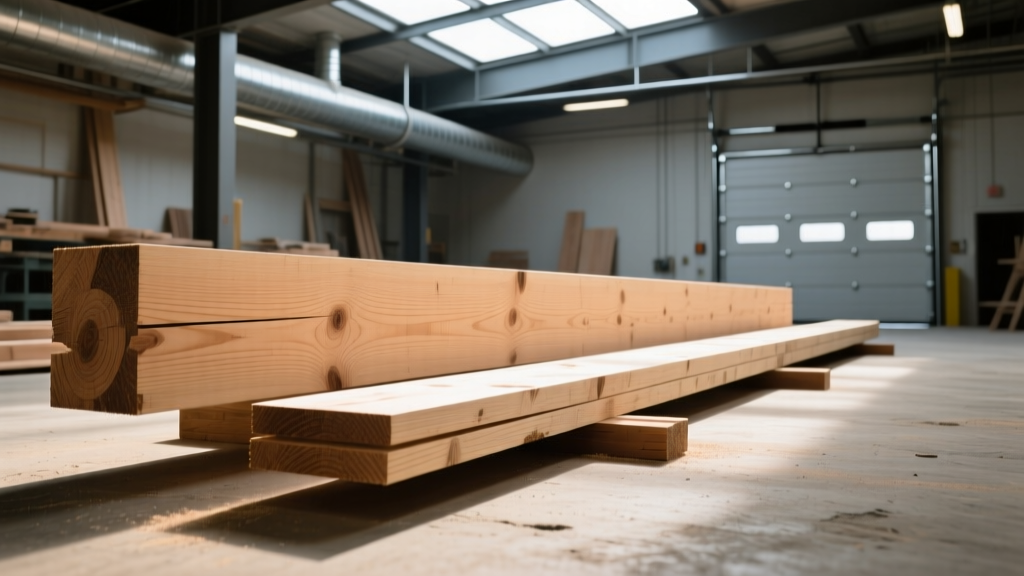
The Reality of Exposed and Stored 2x4 Lumber
While the vast majority of 2x4 lumber (typically Spruce-Pine-Fir or Southern Yellow Pine) is hidden behind drywall, a growing trend in residential and commercial design leaves this structural framing exposed. Industrial-style ceilings, basement workshops, garage interiors, and agricultural outbuildings frequently feature exposed 2x4 joists and studs. Furthermore, contractors and DIYers often store 2x4 lumber for months before installation. In both scenarios, neglecting maintenance leads to severe degradation: surface checking, biological growth, dust infiltration, and structural weakening.
This playbook provides exact protocols for storing, cleaning, and sealing 2x4 lumber, moving beyond generic advice to deliver specific chemical ratios, moisture content targets, and application techniques required for long-term timber preservation.
Phase 1: Pre-Installation Storage & Acclimation Maintenance
If you are storing 2x4 lumber prior to use—whether for an exposed ceiling project or standard framing—improper storage will ruin the boards before they are ever cut. Warping, twisting, and mold growth occur when stacks are subjected to uneven moisture gradients.
Moisture Content Targets & Sticker Spacing
Never store 2x4s directly on concrete or dirt. Ground moisture wicks upward, causing the bottom boards to swell while the top boards remain dry, resulting in severe cupping. You must use "stickers" (small spacer strips) between every layer of the lumber stack to allow cross-ventilation.
| Storage Environment | Target MC | Sticker Spacing | Vapor Barrier Requirement |
|---|---|---|---|
| Unconditioned Garage/Shop | 12% - 15% | 24 inches on center | 6-mil poly under bottom layer |
| Conditioned Interior Space | 6% - 9% | 16 inches on center | None (allow ambient acclimation) |
| Exterior Covered Porch | 15% - 19% | 16 inches on center | Tarp over top only (sides open) |
According to the USDA Forest Products Laboratory Wood Handbook, proper sticker alignment is critical; misaligned stickers create vertical stress points that permanently bow the 2x4s under the weight of the stack. Ensure stickers are placed directly above one another from the bottom of the stack to the top.
Phase 2: Cleaning Exposed 2x4 Ceilings and Walls
Exposed 2x4 framing in workshops and garages acts as a massive dust and grease magnet. The rough-sawn or lightly planed surface of construction lumber traps particulates deep within the wood grain. Cleaning requires a two-tiered approach depending on the contamination level.
The Dry-Clean Protocol (Dust & Cobweb Removal)
For standard residential exposed ceilings (e.g., living spaces or finished basements), avoid wet cleaning entirely, as introducing water to unfinished SPF lumber will raise the grain, creating a fuzzy, splinter-prone surface.
- Compressed Air Blowout: Use an air compressor fitted with a blow gun, operating at no more than 40 PSI to avoid driving dust deeper into the pores. Work from one end of the room to the other.
- Soft-Bristle Agitation: Use a 12-inch horsehair or soft synthetic brush to dislodge webbing and dust trapped in the nail holes and stamp indentations (the ink grading stamps on 2x4s are notorious dust traps).
- HEPA Vacuuming: Immediately follow brushing with a shop vacuum equipped with a HEPA filter and a soft brush attachment to capture the airborne particulate before it resettles.
The Wet-Clean Protocol (Grease & Grime in Workshops)
In garage or workshop environments, 2x4 wall studs accumulate oily grime, drywall dust, and exhaust residue. Water alone will not cut this; you need an alkaline degreaser that will not compromise the wood's lignin.
Chemical Formulation: Mix 1/2 cup of TSP-PF (Trisodium Phosphate - Phosphate Free) per gallon of warm water. TSP-PF is highly effective at saponifying oils and lifting dirt from porous wood without the environmental hazards of traditional TSP. Apply with a pump sprayer, let dwell for 3 minutes, and scrub with a stiff nylon brush. Rinse immediately with a damp microfiber mop—never use a pressure washer, as the high PSI will fracture the earlywood/latewood bands.
Phase 3: Protective Sealing and Pest Deterrence
Once the 2x4 lumber is clean and fully dry (verify with a pinless moisture meter; it must read below 12% before sealing), you must encapsulate the surface. Unsealed construction lumber continuously sheds micro-splinters and absorbs ambient humidity, leading to seasonal expansion and contraction.
Penetrating Oils vs. Film-Forming Finishes
The choice of sealer dictates the future maintenance cycle of the exposed framing.
- Boiled Linseed Oil (BLO) & Mineral Spirits (50/50 Mix): The most cost-effective solution for large workshop ceilings. The mineral spirits thin the oil, allowing it to penetrate deeply into the porous SPF 2x4. It cures to a matte finish, locks down splinters, and does not peel. Warning: BLO rags are highly combustible and must be dried flat outdoors or disposed of in a sealed metal water-filled container.
- Water-Based Polyurethane (e.g., Varathane Crystal Clear): Best for interior living spaces where low VOC and fast dry times are mandatory. It forms a hard, clear film over the 2x4. However, if the wood's MC fluctuates above 12%, the film will crack and peel, requiring a complete sanding and reapplication.
- Intumescent Coatings: For commercial spaces or multi-family residential builds, building codes often restrict the use of exposed combustible framing. Applying an intumescent paint (which swells to form an insulating char when exposed to heat) can bring 2x4 assemblies up to code. Consult the American Wood Council's fire design resources for specific assembly ratings and required mil-thickness for fire-retardant coatings.
Troubleshooting Common 2x4 Degradation
Even with proper maintenance, exposed lumber in high-humidity areas (like basement workshops or agricultural buildings) can develop biological issues. Correct diagnosis is critical to avoid unnecessary demolition.
Do not automatically replace a 2x4 that shows black or green spotting. Surface mold and mildew feed on surface starches and do not compromise the structural integrity of the wood. According to EPA guidelines on mold remediation, surface mold on wood can be cleaned using a detergent solution and stiff brush, followed by a borate-based wood preservative (like Tim-Bor) to prevent recurrence.
However, if the wood feels spongy, exhibits cubical cracking (brown rot), or easily yields to a screwdriver, the fungal hyphae have penetrated the cellular structure. This is structural decay, and the affected 2x4 section must be sistered or replaced entirely.
FAQ: 2x4 Lumber Upkeep
How often should I re-seal exposed 2x4 ceiling joists?
In a climate-controlled interior space, a water-based polyurethane seal on 2x4 joists will last 10 to 15 years without maintenance. In an unconditioned garage or workshop using a penetrating oil finish, expect to apply a fresh maintenance coat every 3 to 5 years, depending on UV exposure and humidity fluctuations.
Can I use bleach to clean mold off my 2x4 wall studs?
No. Chlorine bleach is primarily water; it does not penetrate porous materials like raw 2x4 lumber effectively. The chlorine remains on the surface while the water soaks into the wood, actually feeding the deep fungal roots and accelerating decay. Use a dedicated borate treatment or a commercial quaternary ammonium wood cleaner instead.
Why are my sealed 2x4s turning yellow over time?
This is a natural photochemical reaction. SPF and SYP 2x4 lumber contain high levels of tannins and lignin. When exposed to UV light, the lignin oxidizes and turns yellow or amber. If you used an oil-based polyurethane or BLO, the yellowing will be amplified. To minimize this in living spaces, use a water-based acrylic finish with added UV inhibitors.