Rare Types of Wood for Luxury Millwork: 2026 Sourcing Guide
Compare rare types of wood for luxury millwork. Explore 2026 pricing, Janka hardness, CITES status, and fabrication specs for Koa, Ziricote, and more.

Specifying rare types of wood for high-end architectural millwork, custom flooring, and luxury inlays requires navigating a complex intersection of material science, international trade law, and specialized fabrication techniques. In 2026, the market for ultra-premium timber is defined by stringent CITES regulations, fluctuating export tariffs, and a growing demand for verified provenance. This comparison review evaluates four of the most sought-after rare wood species used in luxury construction, providing architects, custom millwork shops, and procurement managers with the exact technical data needed for specification and fabrication.
Comparative Matrix: Premium Rare Woods for Architectural Millwork
The following matrix benchmarks four rare species against critical architectural and fabrication metrics. Pricing reflects Q1 2026 wholesale market rates for kiln-dried, surfaced lumber (4/4 or 8/4 thickness) from verified importers.
| Species | Janka Hardness (lbf) | Specific Gravity | 2026 Price / BF | CITES Status | Primary Architectural Use |
|---|---|---|---|---|---|
| Hawaiian Koa | 1,170 | 0.55 | $150 - $320 | Not Listed (State Protected) | Feature wall paneling, luxury flooring |
| Ziricote | 1,970 | 0.67 | $45 - $85 | Not Listed | High-end cabinetry, accent veneers |
| Snakewood | 3,660 | 1.10 | $250+ (equiv.) | Not Listed (Export Restricted) | Marquetry, custom hardware, inlays |
| African Blackwood | 3,670 | 1.15 | $120 - $180 | Appendix II | Acoustic paneling, turnings, trim |
Deep Dive: Species Profiles and Fabrication Realities
Hawaiian Koa (Acacia koa)
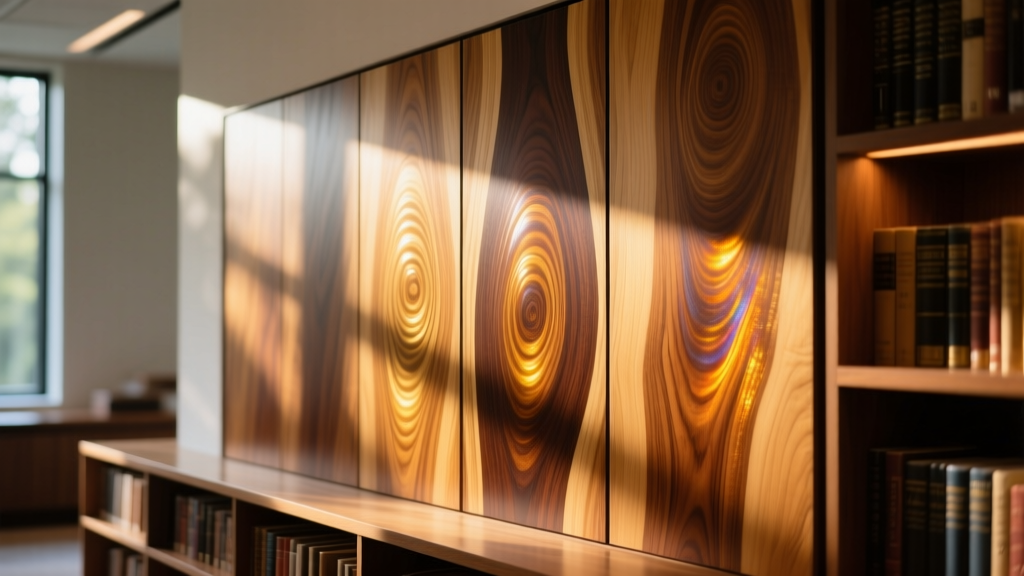
Koa is the undisputed king of figured domestic hardwoods. Sourced exclusively from the Hawaiian Islands, its harvest is strictly regulated by state law, limiting supply to fallen or privately managed plantation trees. The premium for 'curly' or 'fiddleback' Koa—where the chatoyance creates a 3D holographic effect—can easily exceed $300 per board foot. Fabrication note: Koa frequently features highly interlocked grain. Standard straight-knife planers will cause severe tearout. Millwork shops must use helical cutterheads with carbide inserts, taking passes of no more than 1/32 inch. For finishing, Koa's open pores require an epoxy seal coat or a dedicated grain filler before applying a catalyzed polyurethane to ensure a glass-smooth, pore-free surface.
Ziricote (Cordia dodecandra)
Native to Central America and Mexico, Ziricote is prized for its dramatic 'landscape' or 'spiderweb' grain patterns. While not as globally restricted as some rosewoods, old-growth Ziricote with tight, high-contrast figuring is becoming increasingly scarce. Fabrication note: Ziricote contains high levels of natural oils and resins that actively interfere with standard PVA wood glues (like Titebond II). To achieve structural bond strength in cabinetry joints, fabricators must wipe the mating surfaces with acetone or denatured alcohol immediately prior to applying a two-part epoxy or a specialized polyurethane adhesive. Additionally, its high silica content and density make it brittle; always pre-drill fastener holes using brad-point bits to prevent catastrophic blowout on the exit side.
Snakewood (Brosimum guianense)
True Snakewood is arguably the rarest and most expensive timber used in architectural detailing. Sourced from the coastal regions of South America, only the heartwood exhibits the signature mottled, reptilian pattern. It is almost never sold by the board foot; instead, it is priced by the pound or ounce, making it viable only for small-scale architectural hardware, custom door pulls, and intricate marquetry. Fabrication note: With a specific gravity of 1.10, Snakewood sinks in water and behaves more like metal than wood. It will instantly blunt high-speed steel (HSS) and standard carbide tooling. Shops must utilize polycrystalline diamond (PCD) router bits or accept rapid edge degradation, factoring tooling replacement into the project cost.
African Blackwood (Dalbergia melanoxylon)
Often confused with Ebony, African Blackwood is a true rosewood species listed under CITES Appendix II, meaning international trade requires strict export permits to prove sustainable harvesting. It is jet-black, exceptionally dense, and machines to a glass-like finish without the need for chemical fillers. Fabrication note: The dust from African Blackwood is a known respiratory sensitizer and can cause severe allergic reactions. OSHA-compliant dust collection systems with HEPA filtration and mandatory N95/P100 respirators for machine operators are non-negotiable when milling this species.
⚠️ Tooling & Safety Warning for Ultra-Dense Species
When machining woods with a Janka hardness exceeding 3,000 lbf (Snakewood, African Blackwood), standard feed rates will cause motor stall and bit deflection. Reduce CNC router feed rates by 40-50% compared to standard oak or walnut protocols, and increase spindle RPM to maintain a clean shear cut. Always monitor for thermal buildup, which can scorch the wood and prematurely anneal the cutting edges.
Moisture Content and Acclimation Protocols
Rare woods represent a massive capital investment; improper moisture management will result in catastrophic checking, joint failure, or veneer delamination. Because these species are often imported from tropical climates and shipped in sealed containers, they arrive with highly variable moisture content (MC).
- Target MC: For interior, climate-controlled architectural millwork in North America, the target equilibrium moisture content (EMC) is 6% to 8%.
- Acclimation Time: Dense species like African Blackwood and Snakewood exchange moisture incredibly slowly. Expect a minimum acclimation period of 4 to 6 weeks in a climate-controlled staging area (70°F, 45% RH) after rough milling before final dimensioning.
- End-Sealing: Ziricote and Koa are highly susceptible to end-checking during the acclimation phase. Apply a thick coat of anchor seal (wax-based end sealer) immediately upon receiving the lumber, even if it is already kiln-dried.
Sourcing Framework: Navigating CITES and Provenance
Procuring rare types of wood in 2026 requires rigorous due diligence to comply with the U.S. Lacey Act and international timber regulations. Purchasing undocumented rare timber exposes firms to severe federal penalties and project delays.
'The premium you pay for FSC-certified or fully documented CITES-compliant rare timber is not just for the wood itself; it is an insurance policy against customs seizures and legal liability.' — International Tropical Timber Organization (ITTO) Market Report, 2025.
When issuing RFQs for rare species, procurement managers must mandate the following documentation from suppliers:
- CITES Export/Import Permits: Mandatory for Appendix II species like African Blackwood. Verify the permit numbers against the official CITES database.
- Chain of Custody (CoC):strong> While Forest Stewardship Council (FSC) certification is rare for ultra-niche species like Snakewood, a documented chain of custody from the stump to the importer is essential for Lacey Act compliance.
- Phytosanitary Certificates: Required by USDA APHIS to ensure the timber is free from invasive pests, particularly the emerald ash borer and Asian longhorned beetle.
💡 Pro-Tip: The 'Substitute Species' Strategy
If a client specifies African Blackwood but the budget or CITES paperwork proves prohibitive, specify Macassar Ebony (Diospyros celebica) or Wenge (Millettia laurentii) as alternatives. While not perfectly identical, Wenge can be ebonized with specialized aniline dyes to achieve a 95% visual match at roughly one-third the cost and with significantly fewer import restrictions.
Final Specification Guidelines
Integrating rare types of wood into architectural projects elevates the spatial experience but demands respect for the material's physical and legal boundaries. Specify Hawaiian Koa for large-format, high-impact visual features where budget allows. Utilize Ziricote for high-wear, high-visibility cabinetry where its natural oils provide inherent moisture resistance. Reserve Snakewood and African Blackwood strictly for small-scale, high-touch architectural jewelry—custom pulls, inlay banding, and acoustic diffusers—where their extreme density and cost can be justified by the square inch. Always pair these specifications with explicit fabrication notes regarding tooling, glue-up preparation, and mandatory dust collection to ensure the millwork shop can execute the design flawlessly.
Written by
Marcus ChenMarcus Chen is a licensed structural engineer (PE) and building materials analyst with over 12 years of experience across residential, commercial, and industrial construction. He holds a Master of Science in Civil Engineering from UC Berkeley and spent six years at Thornton Tomasetti before transitioning to independent consulting and technical writing. Marcus specializes in material selection for seismic-prone regions, concrete reinforcement strategies, and lifecycle cost analysis. His work has been cited by the American Concrete Institute (ACI) and the Structural Engineers Association of California (SEAOC). When he is not on a job site or at his desk, you will find him hiking the Sierra Nevada or restoring a 1920s craftsman bungalow in Oakland, CA.
More from Marcus Chen
View all
Construction Cost
How Much Did the Eiffel Tower Cost to Build?
How much did the Eiffel Tower cost to build in 1889? We adjust for inflation and compare its budget to modern skyscraper construction.
Aug 4, 2026

Fire Resistance
What Is a Fire Resistant Material? Testing & Certification Guide
Discover what is a fire resistant material through ASTM and UL testing. Learn how fire ratings, certifications, and assemblies work in construction.
Aug 4, 2026

Construction Cost
How Much Did the Burj Khalifa Cost to Build?
How much did the Burj Khalifa cost to build? We break down the $1.5B project and extract 5 money-saving strategies for your next build.
Jul 30, 2026