Cost Analysis of Different Types of Woods for Construction in 2026
Compare the 2026 costs and lifecycle value of different types of woods, from dimensional softwoods and hardwoods to engineered timber and exterior cedars.
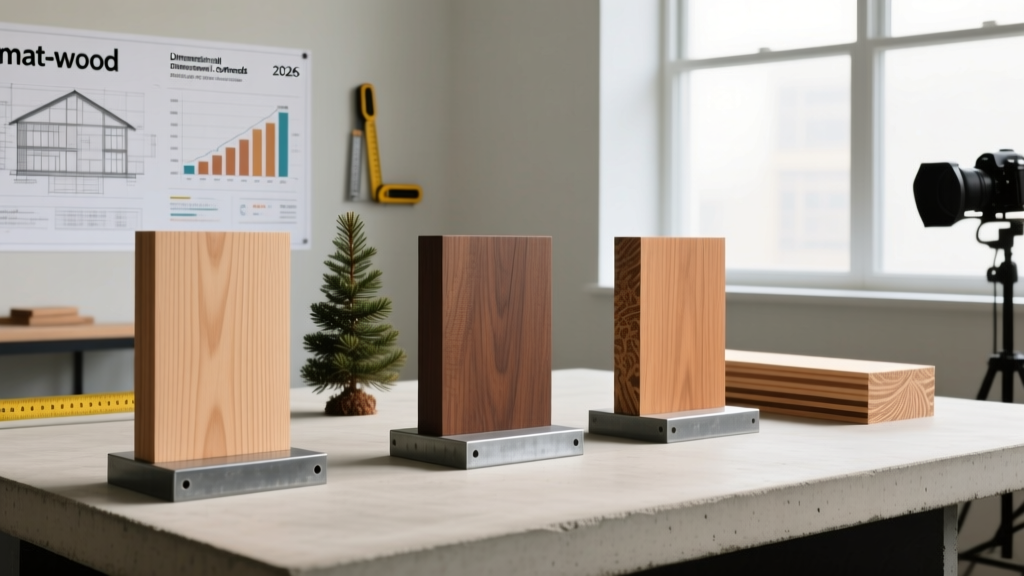
The True Cost of Wood: Beyond the Initial Price Tag
Evaluating different types of woods for construction requires looking past the sticker price per board foot (BF) or square foot (SF). The true cost of any wood species encompasses material yield, fastener compatibility, finishing requirements, and long-term maintenance. A cheaper initial material often incurs higher labor and lifecycle costs. For example, selecting a low-density softwood for exterior decking might save $2.00 per linear foot upfront, but the required biennial sealing and premature fastener corrosion can negate those savings within five years.
This analysis breaks down the 2026 pricing and structural value of primary wood categories, providing builders, architects, and homeowners with a concrete framework for material selection based on budget and performance metrics.
Dimensional Softwoods: Framing and Structural Cost Breakdown
Softwoods dominate the structural framing market. Pricing fluctuates based on regional mill output and transportation costs, but the relative value between species remains consistent. According to the USDA Forest Products Laboratory Wood Handbook, the structural capacity of wood is directly tied to its specific gravity and growth ring density.
| Species Group | Avg Cost (per BF) | Modulus of Elasticity (E) | Specific Gravity | Best Application |
|---|---|---|---|---|
| SPF (Spruce-Pine-Fir) | $3.50 - $4.50 | 1,300,000 psi | 0.42 | Interior wall framing, floor joists |
| Southern Yellow Pine (SYP) | $4.00 - $5.20 | 1,700,000 psi | 0.55 | Heavy floor loads, roof trusses, decking |
| Douglas Fir-Larch | $5.50 - $7.00 | 1,900,000 psi | 0.50 | Long-span beams, post-and-beam, exposed framing |
When designing shear walls or heavy cabinetry mounting, SYP outperforms SPF significantly. SYP's higher specific gravity (0.55 vs 0.42) provides up to 30% greater screw withdrawal resistance, reducing the need for structural blocking and saving 1.5 to 2 hours of framing labor per 1,000 square feet.
Hardwood Millwork and Flooring: Analyzing the Premium
Hardwoods are specified for finish carpentry, cabinetry, and flooring. The cost premium of hardwoods is justified by their Janka hardness rating (resistance to denting) and aesthetic grain patterns. However, not all hardwoods offer the same return on investment.
The Janka-to-Cost Ratio
- White Oak (Janka 1360): $8.00 - $12.00/SF (material). The industry standard for durability. Highly resistant to moisture due to its closed-cell tyloses structure.
- Hard Maple (Janka 1450): $7.00 - $10.00/SF. Harder than oak but highly susceptible to humidity fluctuations. Requires strict acclimation (30-50% RH) to prevent gapping.
- Hickory (Janka 1820): $9.00 - $13.00/SF. The hardest domestic flooring option. High labor cost for installation due to tool wear and difficulty in blind-nailing.
- Black Walnut (Janka 1010): $14.00 - $22.00/SF. Softer than oak, commanding a massive premium purely for its rich color and prestige.
Plain-sawn white oak is prone to tangential shrinkage (cupping). Specifying quarter-sawn white oak increases material costs by 35-45%, but it reduces radial shrinkage by nearly 50%. For wide-plank flooring (over 5 inches) or environments with radiant floor heating, the quarter-sawn premium prevents costly callback repairs for warped boards.
Exterior and Decay-Resistant Woods: Lifecycle Value Analysis
Exterior applications demand a 30-year lifecycle cost analysis. The Wood Database categorizes natural decay resistance based on heartwood extractives, which dictate how long a species can survive ground contact or weather exposure without chemical treatment.
| Material | Initial Cost (per LF) | Maintenance Cycle | Fastener Requirement | 30-Year Est. Lifecycle Cost |
|---|---|---|---|---|
| Pressure-Treated (PT) SYP | $2.50 - $3.50 | Seal every 2 years | Hot-dipped galvanized or Stainless | $18.50 / LF |
| Western Red Cedar | $7.00 - $9.50 | UV Oil every 3-5 years | Stainless steel recommended | $22.00 / LF |
| Clear Heart Redwood | $12.00 - $16.00 | Oil every 5-7 years | Stainless steel required | $28.50 / LF |
| Thermally Modified Ash | $9.00 - $11.50 | None (weathers to silver) | Standard exterior rated | $14.00 / LF |
While Pressure-Treated pine is the cheapest upfront, the mandatory use of hot-dipped galvanized or stainless steel fasteners (adding $0.15 to $0.25 per fastener) and the biennial cost of penetrating sealants ($0.75/SF) inflate its long-term cost. Thermally modified ash has emerged as a high-value alternative; the thermal baking process alters the wood's cellular structure, rendering it highly decay-resistant without chemicals, and it requires zero ongoing maintenance if the user accepts a silver-gray patina.
Engineered Timber: The Commercial and High-End Residential Premium
Engineered wood products (EWP) solve the natural limitations of solid sawn lumber, such as checking, twisting, and length restrictions. According to APA - The Engineered Wood Association, EWPs provide predictable structural performance that allows for optimized engineering.
LVL (Laminated Veneer Lumber) vs. Solid Sawn Beams
A solid sawn Douglas Fir 4x12 beam costs approximately $14.00 per linear foot. An equivalent LVL beam costs $18.00 to $22.00 per linear foot. However, the LVL beam can span up to 20% further without intermediate support. In a 2,500 SF residential footprint, utilizing LVLs can eliminate two to three interior load-bearing walls or foundation piers, saving $3,500 to $5,000 in concrete and masonry labor, easily offsetting the lumber premium.
CLT (Cross-Laminated Timber)
For commercial or multi-family residential projects, CLT panels cost between $8.00 and $12.00 per SF of panel area. While the material cost is higher than traditional light-frame wood, CLT acts as both the structural frame and the architectural finish. This dual-purpose nature reduces overall framing labor by up to 40% and eliminates the need for drywall on exposed ceilings, compressing the construction schedule by 2 to 3 months.
Wood Selection Decision Matrix: Budget vs. Performance
Use this framework to finalize material selections based on project constraints:
- If budget is the absolute priority and spans are short: Use #2 Grade SPF for framing and PT SYP for exterior decking. Factor in a strict 5-year maintenance budget for the deck.
- If maximizing open-concept floor plans: Upgrade to LVL or Glulam beams. The material premium is recovered through eliminated foundation piers and steel flitch plates.
- If specifying wide-plank flooring over radiant heat: Do not use solid plain-sawn maple or hickory. Specify engineered white oak (4mm to 6mm wear layer) or quarter-sawn solid white oak to prevent catastrophic seasonal gapping.
- If building in a high-moisture or coastal environment: Avoid standard pressure-treated wood due to accelerated fastener corrosion. Specify Western Red Cedar or thermally modified woods paired with 316-grade stainless steel fasteners.
Procurement Strategies and Moisture Content Specifications
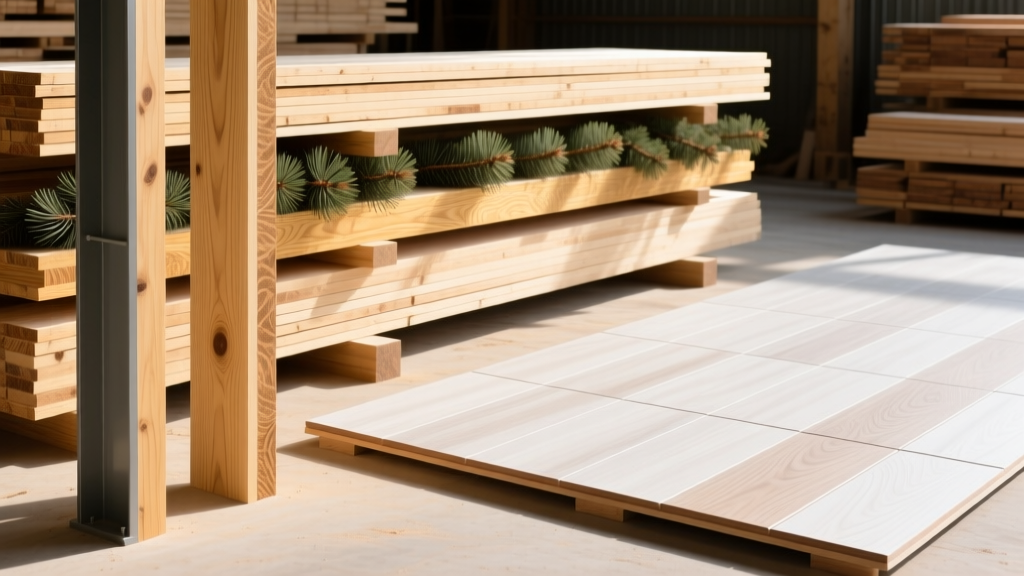
When ordering different types of woods, specifying the correct moisture content (MC) is critical to preventing structural failure and finish defects. Standard kiln-dried (KD-19) framing lumber has a moisture content of up to 19%. If this lumber is installed and immediately sealed behind drywall in a climate-controlled home, it will shrink as it acclimates to the interior's 8-10% MC, causing drywall nail pops and corner cracking.
For high-end custom builds, specify MC-15 (15% moisture content or less) for all interior framing and millwork. This typically adds a 5-8% premium to the lumber package but eliminates thousands of dollars in drywall and trim callback repairs. Always require your supplier to provide a moisture meter reading at the time of delivery, rejecting any interior-bound loads that test above 14%.
Written by
Priya KapoorPriya Kapoor is a real estate market analyst and construction economics researcher with expertise in housing affordability, development feasibility, and infrastructure investment. She holds a Master of Regional Planning from Cornell University and previously worked as a senior analyst at CBRE's Investment Properties group, where she modeled returns for $4B in mixed-use development pipelines. Priya now runs an independent research practice advising developers, municipalities, and REITs on construction cost forecasting and market timing. She publishes the quarterly "BuildMat Market Pulse" report tracking material price indices across 12 commodity categories. Based in Austin, TX, Priya serves on the board of Habitat for Humanity Austin and is a marathon runner.
More from Priya Kapoor
View all
Construction Cost
Cost to Build a 1600 Sq Ft Home in 2026: Full Breakdown
Accurate 2026 cost to build a 1600 sq ft home—material, labor, and regional pricing breakdowns included. Plan your budget with real-time estimates.
Aug 11, 2026

Wood & Lumber
Name the Types of Wood for Pressure Treatment and Preservation
Learn how to name the types of wood best suited for pressure treatment. Compare species treatability, chemical retention levels, and 2026 preservation costs.
Aug 4, 2026

Stone & Masonry
Stone Veneer Suppliers Lindenhurst: 2026 Cost Analysis
Analyze 2026 stone veneer costs in Lindenhurst, NY. Compare local supplier pricing, delivery fees, and Suffolk County installation labor rates.
Aug 4, 2026