Best Type of Axe for Splitting Wood: 2026 Quality Guide
Discover the best type of axe for splitting wood with our 2026 quality grading guide. Compare steel hardness, handle materials, and top models.
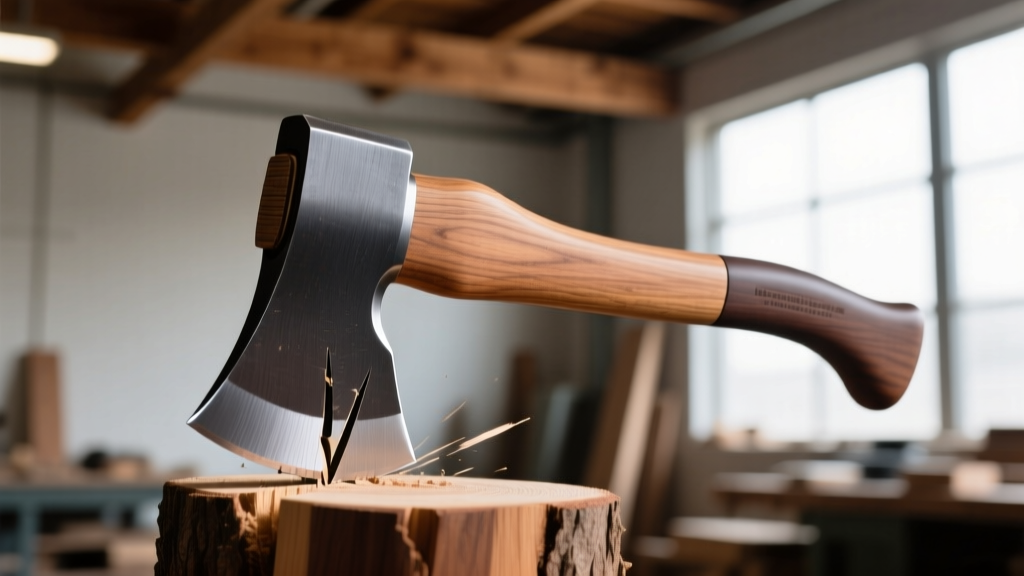
The Anatomy of a Premium Splitting Axe
Finding the best type of axe for splitting wood requires looking beyond marketing claims and evaluating the tool through a strict grade and quality lens. Unlike felling or chopping axes, which are designed to cut across the wood grain, a dedicated splitting axe is engineered to pry wood fibers apart along the grain. In 2026, the market is saturated with hybrid tools and composite handles, making it critical for builders, homesteaders, and landscaping contractors to understand the metallurgical and ergonomic grading standards that separate a premium splitting tool from a disposable hardware store implement.

Grading the Axe Head: Steel Hardness and Bit Geometry
The head of a splitting axe must withstand immense compressive forces without chipping, rolling, or becoming lodged in dense heartwood. The quality of the steel is measured on the Rockwell C scale (HRC).
Rockwell Hardness (HRC) Explained
- Below 45 HRC: The steel is too soft. The bit will roll and deform after striking dense knots, requiring constant reshaping.
- 50 to 55 HRC (The Sweet Spot): Premium splitting axes, such as those forged by Gränsfors Bruk, target this range. It provides enough hardness to hold a convex edge while retaining the toughness to absorb the shock of hitting a frozen log without chipping.
- Above 60 HRC: Typical of cheap, mass-produced hardware store axes. The steel is brittle and highly prone to micro-fractures and dangerous chipping upon lateral impact.
Furthermore, the poll (the back of the axe head) on a dedicated splitting axe is often wider and heavier than a felling axe, shifting the center of gravity forward to maximize kinetic energy transfer during the downward swing.
Handle Grading: Appalachian Hickory vs. Modern Composites
The handle, or haft, dictates shock absorption and swing accuracy. When grading wooden handles, inspectors look for first-grade Appalachian hickory. According to forestry and woodworking standards, a Grade-A hickory handle must have grain lines running parallel to the handle axis (deviating no more than 10 degrees), contain zero sapwood on the striking side, and be kiln-dried to a moisture content below 8%.
| Handle Material | Shock Absorption | Durability | Maintenance |
|---|---|---|---|
| Grade-A Hickory | Excellent | High (if oiled) | Requires seasonal boiled linseed oil |
| Fiberglass/Composite | Poor to Fair | Exceptional | Zero maintenance |
| Steel (One-Piece) | Terrible | Indestructible | Requires grip tape replacement |
While traditionalists swear by hickory, modern composite handles have closed the gap in overall utility. Fiskars utilizes a proprietary FiberComp material that is virtually unbreakable and immune to the humidity fluctuations that cause wooden handles to loosen or shrink over time. However, composites transfer significantly more high-frequency vibration to the user's joints, making hickory the superior choice for high-volume, all-day splitting sessions.
Maul vs. Splitting Axe: Weight and Velocity Grading
A common mistake in wood processing is confusing a splitting axe with a splitting maul. While both are designed to separate wood along the grain, their grading and physical properties serve different scenarios. A splitting maul typically weighs between 6 and 8 pounds, relying on sheer blunt force and a wide wedge angle (often 35 degrees or more) to bust through massive, unseasoned rounds. However, the heavy weight limits swing velocity and accelerates user fatigue. A dedicated splitting axe, weighing between 4.5 and 5.5 pounds, relies on higher swing velocity and a sharper convex bit (20 to 25 degrees) to penetrate seasoned wood and medium-sized rounds. For processing dense, kiln-dried, or partially seasoned hardwoods like hickory, locust, or white oak, the splitting axe is vastly superior. The maul is strictly graded for high-volume, unseasoned softwood processing where edge retention is secondary to raw impact mass.
Top-Tier Models: 2026 Market Breakdown
Based on current metallurgical quality, edge retention, and ergonomic grading, here is how the top splitting axes on the market compare this year.
1. Gränsfors Bruk Large Splitting Axe (Premium Grade)
Price: ~$195 | Weight: 5.5 lbs | Handle: 27.5-inch Grade-A Hickory
Hand-forged in Sweden, this axe represents the pinnacle of traditional axe grading. The head is left with a visible forge mark, a sign of hand-craftsmanship rather than a defect. The convex bit is ground to a 25-degree angle, optimized for prying apart seasoned red oak and ash. The hickory handle is selected for perfect grain alignment, offering unparalleled shock absorption.
2. Fiskars X25 (Composite Utility Grade)
Price: ~$75 | Weight: 5.4 lbs | Handle: 28-inch FiberComp
The Fiskars X25 dominates the mid-tier market by prioritizing unbreakable durability and a friction-reducing PTFE coating on the head. While it lacks the vibration dampening of premium hickory, its ultra-thin convex geometry and lightweight composite handle allow for higher swing speeds, making it the best type of axe for splitting wood for casual users or those with limited upper-body strength.
3. Husqvarna 26-Inch Wooden Splitting Axe (Mid-Tier Grade)
Price: ~$95 | Weight: 5.3 lbs | Handle: 26-inch Hickory
Forged from Swedish axe steel, the Husqvarna offers a middle ground. It features a traditional wooden handle and excellent steel hardness (approx. 52 HRC), but the factory edge often requires immediate reprofiling on a whetstone to achieve the optimal convex geometry for stubborn hardwoods.
Maintenance and Edge Retention Protocols
A premium splitting axe will degrade rapidly if maintained like a felling axe. Splitting edges should never be razor-sharp; a razor edge is too thin and will fold over when striking a hidden knot or a rock concealed in the bark.
For wooden handles, apply a heavy coat of boiled linseed oil (not raw linseed oil, which does not cure properly) at the start and end of every heating season. According to Penn State Extension, properly seasoned firewood requires splitting to expose the inner heartwood to air; using a correctly graded, well-maintained splitting axe reduces the physical strain of this essential winter preparation task by up to 40% compared to using an improper felling axe or a dull maul.
Final Grading Verdict
If your priority is heirloom quality, joint preservation, and traditional craftsmanship, the Gränsfors Bruk Large Splitting Axe is the undisputed champion. If you require a weatherproof, zero-maintenance tool that can be left in the bed of a work truck year-round, the Fiskars X25 offers the highest utility-to-cost ratio. Understanding the grades of steel hardness and handle grain orientation ensures you select the best type of axe for splitting wood that will safely and efficiently process cord after cord of timber.
Written by
Sarah WhitfieldSarah Whitfield is a chartered quantity surveyor (MRICS) and construction cost analyst with 15 years of experience in material pricing, procurement strategy, and project budgeting. She earned her degree in Construction Management from the University of Reading (UK) and has worked on projects ranging from $2M custom homes to $180M mixed-use developments across North America and Europe. Sarah currently leads cost estimating for BuildMat Insight, maintaining a proprietary database of 4,000+ material price points updated quarterly. She is a frequent contributor to RSMeans cost data panels and has presented at the International Cost Engineering Council (ICEC) congress. Based in Denver, CO, Sarah is an avid trail runner and volunteer mentor for Women in Construction.
More from Sarah Whitfield
View all
Wood & Lumber
What Are the Different Types of Wood? A Builder's Guide
Compare structural softwoods, finish hardwoods, and engineered lumber. Analyze Janka ratings, MOE values, and 2026 pricing for construction.
Aug 4, 2026

Walls & Panels
Steel Framing vs Wood Framing: Corrosion and Moisture Defense
Compare steel framing vs wood framing for moisture resistance. Learn about galvanized coatings, condensation risks, and corrosion protection strategies.
Jul 21, 2026

Stone & Masonry
How to Cut Stone Veneer: Wet Saw vs Grinder Comparison
Compare the best tools for cutting stone veneer. We review wet saws, angle grinders, and chop saws to help you achieve clean, chip-free cuts.
Jul 21, 2026