Density of MDF Wood Explained: Top Brand Specs & Routing Guides
Discover how the density of MDF wood varies across top brands like Arauco and SierraPine, and learn which weight class is best for CNC routing and cabinetry.
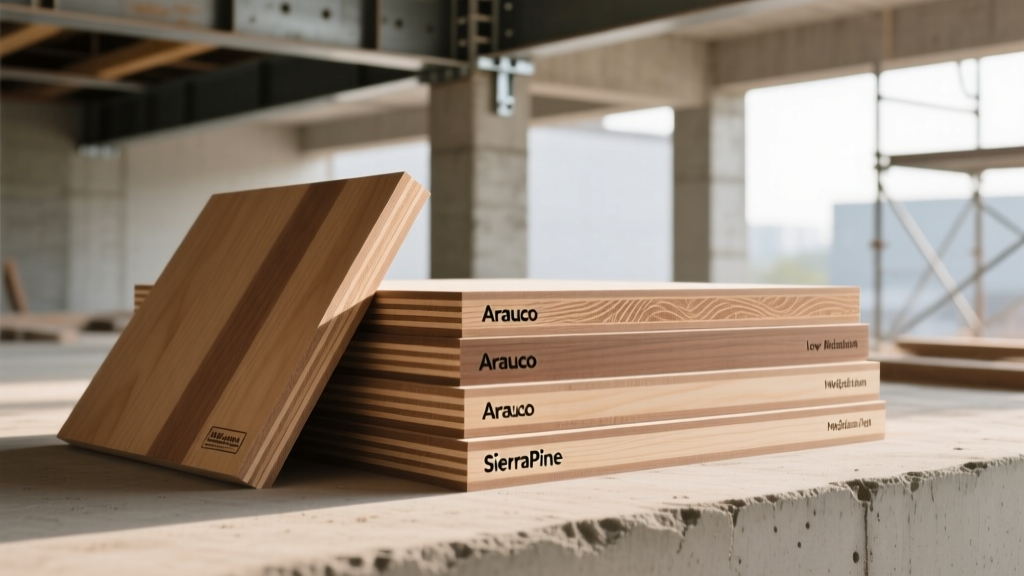
The Three Density Tiers of MDF Wood
Medium Density Fiberboard (MDF) is a misnomer in the modern lumber market. While the 'M' stands for medium, manufacturers now engineer MDF across a broad density spectrum to meet specific structural, machinability, and weight requirements. Understanding the exact density of MDF wood is critical for cabinetmakers, CNC operators, and millwork contractors, as a variance of just 10 lbs/ft³ drastically alters tool wear, fastener withdrawal strength, and hinge longevity.
According to the Composite Panel Association (CPA), MDF is manufactured by breaking down wood residuals into fibers, combining them with wax and resin, and forming panels under high heat and pressure. The density is controlled by the compression ratio and the fiber-to-resin ratio. In 2026, the market is strictly segmented into three density tiers:
- Lightweight MDF (30–37 lbs/ft³ | 480–590 kg/m³): Engineered with expanded wood fibers and lower compression. Ideal for large-format cabinet doors, RV manufacturing, and exhibition booths where weight reduction is paramount.
- Standard MDF (44–50 lbs/ft³ | 700–800 kg/m³): The industry baseline. Offers a homogeneous core with a tight surface profile, making it the default choice for painted millwork, baseboards, and standard cabinetry.
- High-Density MDF / HDF (55–65+ lbs/ft³ | 880–1040+ kg/m³): Compressed to extreme tolerances. Used for laminate flooring cores, heavy-duty structural shelving, and acoustic door cores where rigidity and screw-holding capacity are non-negotiable.
Brand Deep-Dive: Engineering Density at the Mill
Not all 3/4-inch MDF panels are created equal. The specific gravity and internal bond strength vary significantly depending on the manufacturer's pressing technology and resin chemistry. Here is how the top North American brands engineer their product lines.
Arauco: The Trupan Line
Arauco’s Trupan series is widely considered the gold standard for CNC machining and painted finishes. Arauco achieves its renowned surface consistency through a continuous press system that creates a highly uniform density profile from core to surface.
Weighing in at approximately 33 lbs/ft³, Trupan Ultralight reduces panel weight by up to 30% compared to standard MDF. Despite the lower density, Arauco utilizes a specialized fiber preparation process that maintains a tight surface pore structure. This means fabricators can route intricate shaker-style profiles and apply primer directly without the heavy grain-raise typically associated with lightweight boards.
SierraPine: Medex and MoistureShield
SierraPine focuses heavily on the architectural and commercial millwork sectors. Their Medex line is a moisture-resistant MDF that inherently features a higher density due to the inclusion of polymeric methylene diphenyl diisocyanate (pMDI) resins and specialized swelling inhibitors.
Standard Medex (3/4-inch) typically weighs between 48 and 52 lbs/ft³. The added density and chemical composition make it exceptionally stable in high-humidity environments like bathroom vanities and commercial kitchens. However, this increased density of MDF wood comes with a trade-off: pMDI resins are notoriously abrasive, accelerating carbide tool wear during CNC routing by up to 25% compared to standard urea-formaldehyde (UF) MDF panels.
Roseburg: SkyBlend and Standard MDF
Roseburg’s standard MDF and SkyBlend (100% recycled fiber) lines hover right at the 46 lbs/ft³ mark. Roseburg utilizes a multi-opening press system that yields a slightly softer core but a very hard, compressed surface skin. This specific density gradient makes Roseburg panels excellent for edge-banding and veneer pressing, as the hard surface prevents telegraphing of the adhesive through thin wood veneers.
Application Matrix: Matching Density to the Job
Selecting the wrong density class leads to catastrophic field failures, from sagging shelves to stripped hinge screws. Use this decision matrix to specify the correct panel for your 2026 project pipeline.
| Application | Recommended Density Tier | Top Brand / Product Line | Critical Consideration |
|---|---|---|---|
| Tall Cabinet Doors (Over 60') | Lightweight (30-37 lbs/ft³) | Arauco Trupan Ultralight | Reduces hinge stress; requires specialized confirmat screws or dowels for assembly. |
| Painted Shaker Doors & Millwork | Standard (44-50 lbs/ft³) | Roseburg Standard MDF | Tight surface profile minimizes primer coats; excellent CNC edge routing. |
| Bathroom Vanities & Wet Areas | Standard-High (48-55 lbs/ft³) | SierraPine Medex | pMDI resin increases density; use diamond-tipped router bits to prevent burning. |
| Heavy-Duty Structural Shelving | High-Density (55+ lbs/ft³) | Custom HDF / Flooring Core | High screw withdrawal strength; requires pre-drilling to prevent core splitting. |
Machining Realities: Tool Wear and Fastener Pull-Out
The density of MDF wood directly dictates your consumable costs and assembly hardware specifications. The USDA Forest Products Laboratory notes that internal bond strength and screw withdrawal resistance scale almost linearly with panel density, but machinability follows an inverse curve.
Tool Wear and CNC Routing
When routing standard MDF (46 lbs/ft³), a high-quality solid carbide compression bit will typically yield 40 to 50 linear miles of clean edge profiling before requiring sharpening. However, when routing High-Density MDF or moisture-resistant boards like Medex, the combination of higher compression and abrasive resins reduces bit life to roughly 25 linear miles.
Warning: Never route moisture-resistant MDF (which often features a higher density core) with standard high-speed steel (HSS) bits. The heat generated by the dense fiber and resin matrix will cause HSS to lose its temper almost instantly, leading to severe edge tear-out and potential fire hazards from smoldering dust extraction lines.
Fastener Withdrawal Strength
Standard MDF is notorious for poor screw-holding capacity, often stripping out under the dynamic load of cabinet doors. According to ASTM D1761 testing standards, a #10 wood screw driven into the edge of 50 lbs/ft³ MDF yields approximately 450 lbs of withdrawal resistance. By contrast, driving that same screw into the face of the panel yields over 1,100 lbs of resistance due to the compressed surface density.
Actionable Hardware Specs:
- For Standard MDF Edges: Abandon standard wood screws. Use Euro-style confirmat screws (e.g., Hafele 6.3mm x 50mm) which feature a wide, coarse thread designed specifically to bite into the low-density core of MDF without stripping.
- For Lightweight MDF: Confirmat screws will blow out the low-density core. You must use wooden dowels with PVA glue or specialized blind fasteners like the Lamello Tenso P-System, which rely on surface tension and mechanical expansion rather than core thread engagement.
2026 Pricing and Supply Chain Realities
The cost of MDF is intrinsically tied to its density and resin chemistry. As of early 2026, raw material fluctuations and environmental regulations regarding formaldehyde emissions have stabilized, but premium densities command a distinct markup.
Average Wholesale Cost per 4x8 Sheet (3/4-inch Thick)
- Standard MDF (46 lbs/ft³): $42.00 – $48.00
- Lightweight MDF (33 lbs/ft³): $55.00 – $62.00 (Premium due to specialized fiber expansion tech)
- Moisture-Resistant Medex (50 lbs/ft³): $68.00 – $75.00 (Driven by pMDI resin costs)
- High-Density HDF (60+ lbs/ft³): $85.00 – $95.00 (Niche architectural market)
Note: Pricing reflects distributor wholesale tiers. Retail markups at big-box stores typically add 30-45% to these baselines.
Ultimately, specifying the correct density of MDF wood is an exercise in balancing weight, machinability, and structural integrity. By aligning your brand selections—whether leveraging Arauco’s lightweight innovations or SierraPine’s dense, moisture-resistant cores—with your specific CNC tooling and fastener strategies, you eliminate field callbacks and optimize your shop's consumable budget.