Every Type of Wood Siding: The Complete Species Guide
Compare every major type of wood siding by species. Discover Janka hardness, rot resistance, pricing, and fastener specs for cedar, redwood, and hardwoods.

The Science of Wood Cladding: Beyond Aesthetics
Selecting the right type of wood siding requires looking past surface aesthetics to evaluate cellular density, natural extractive content, and dimensional stability. Wood is a hygroscopic material; it constantly exchanges moisture with the surrounding environment. When a siding profile absorbs bulk water or high humidity, it swells; when it dries, it shrinks. This continuous cycling causes checking, cupping, and fastener back-out if the wrong species or grade is chosen for a specific climate. According to the USDA Forest Products Laboratory, the longitudinal shrinkage of most commercial timber is negligible (0.1% to 0.2%), but tangential shrinkage can exceed 7%, making flat-sawn boards highly susceptible to cupping compared to vertical-grain (quarter-sawn) profiles.
This guide breaks down the primary wood species used in exterior cladding, analyzing their structural properties, natural durability, and precise installation requirements to ensure a 30-plus-year service life.
Premium Softwoods: The Industry Standards
Softwoods dominate the residential siding market due to their workability, natural insulation properties (R-value of approximately 1.41 per inch of thickness), and favorable strength-to-weight ratios.
Western Red Cedar (Thuja plicata)
Western Red Cedar remains the benchmark for premium wood siding. Its exceptional durability stems from naturally occurring fungicidal extractives, primarily thujaplicins and water-soluble phenolics. These compounds inhibit the growth of decay fungi and deter wood-boring insects.
- Dimensional Stability: Cedar has a volumetric shrinkage factor of just 4.6%, one of the lowest among commercial softwoods, meaning it resists warping and splitting better than almost any alternative.
- Grade Selection: For siding, always specify Vertical Grain (VG) Clear. VG boards are quarter-sawn, exposing the dense, tightly packed growth rings to the weather, which reduces surface checking and holds finishes up to 50% longer than flat-grain boards.
- Cost (2026): $7.50 to $11.00 per square foot (material only, depending on profile and grade).
Redwood (Sequoia sempervirens)
Coastal Redwood is prized for its deep reddish-brown hue and high tannin content, which provides natural resistance to rot and insects. Redwood is slightly harder than cedar (Janka rating of 450 lbf vs. 350 lbf) and offers superior fire resistance due to its thick cellular structure and lack of volatile resins.
- Grade Selection: Specify Clear All Heart (CAH) for siding. The heartwood contains the decay-resistant tannins; sapwood grades (like Construction Heart) lack this biological armor and will rapidly decay in wet climates.
- Cost (2026): $9.00 to $14.00 per square foot. Supply constraints and strict California forestry regulations keep Redwood at a premium over Cedar.
High-Performance Hardwoods & Modified Timbers
For architects and builders seeking extreme durability without relying on chemical preservatives, dense hardwoods and thermally modified domestic species offer unmatched lifespans.
Ipe (Handroanthus spp.)
Often called "ironwood," Ipe is a South American hardwood with a Janka hardness of 3,510 lbf—nearly ten times harder than cedar. It is classified as a Class A fire-rated material (the same rating as concrete and steel) and carries a natural life expectancy of 40 to 75 years in exterior applications without any chemical treatment.
Thermally Modified Ash (Fraxinus americana)
Thermal modification is a chemical-free process where domestic Ash is baked in a low-oxygen kiln at temperatures exceeding 413°F (212°C). This permanently alters the wood's hemicellulose structure, removing the sugars that attract fungi and insects.
- Moisture Dynamics: The process reduces the wood's Equilibrium Moisture Content (EMC) by up to 50%. Thermally modified Ash absorbs water so slowly that it is virtually immune to the swelling and shrinking cycles that destroy standard wood siding.
- Aesthetic: The heat caramelizes the wood sugars, yielding a rich, uniform chocolate-brown color that weathers to a striking silver-gray if left unfinished.
- Cost (2026): $10.50 to $15.00 per square foot.
Budget & Paint-Grade Softwoods
Eastern White Pine & Spruce-Pine-Fir (SPF)
When the design calls for an opaque, painted finish rather than a natural stain, Eastern White Pine and SPF are the most economical choices. However, these species lack natural decay-resistant extractives. If used as siding, they require rigorous moisture management.
- Mandatory Preparation: All faces, edges, and especially the end-grains must be back-primed with a high-quality alkyd or acrylic stain-blocking primer before installation to prevent tannin bleed and moisture intrusion.
- Profile Restriction: Avoid bevel (lap) siding in Pine; the thin bottom edge is prone to splitting and cupping. Opt for thicker shiplap or tongue-and-groove profiles (minimum 3/4" net thickness).
- Cost (2026): $3.50 to $5.50 per square foot (primed).
Species Comparison Matrix
| Species | Janka Hardness | Natural Rot Resistance | Dimensional Stability | Est. Cost / Sq Ft |
|---|---|---|---|---|
| Western Red Cedar (VG) | 350 lbf | High (Heartwood) | Excellent | $7.50 - $11.00 |
| Coastal Redwood (CAH) | 450 lbf | Very High | Very Good | $9.00 - $14.00 |
| Ipe | 3,510 lbf | Exceptional | Good (Heavy) | $13.00 - $18.00 |
| Thermally Modified Ash | 1,320 lbf | High (Modified) | Exceptional | $10.50 - $15.00 |
| Eastern White Pine | 380 lbf | Low (Requires Paint) | Fair | $3.50 - $5.50 |
Critical Decision Framework: Matching Species to Climate
Specifying wood siding without considering the local microclimate is the leading cause of premature cladding failure. Use this framework to match the species to the environment:
- Coastal & Marine Environments (Salt Spray & High Humidity): Specify Coastal Redwood or Western Red Cedar. Avoid Pine entirely. Fasteners must be Type 316 stainless steel to resist chloride-induced pitting. Maintain a minimum 12-inch ground clearance to prevent salt-sand accumulation at the bottom courses.
- Arid & High-UV Zones (Desert Southwest): Thermally Modified Ash is ideal here. Its low EMC prevents the severe checking and splitting that plagues standard cedar in dry, high-UV environments. If using Cedar, apply a heavily pigmented, UV-blocking solid stain rather than a transparent sealer.
- High Moisture & Heavy Canopy (Pacific Northwest, Deep South): Prioritize biological resistance. Ipe or Vertical Grain Cedar are mandatory. Ensure a ventilated rainscreen gap (minimum 3/8") behind the siding using furring strips to allow the back face of the wood to dry as quickly as the front face.
Installation & Fastener Metallurgy
The physical attachment of wood siding dictates its longevity. According to guidelines published by WoodWorks, improper fastener selection leads to localized wood decay as moisture pools around corroded nail shafts.
Fastener Specifications
- Nail Type: Use ring-shank or screw-shank nails for withdrawal resistance. Smooth shank nails will back out as the wood swells and shrinks seasonally.
- Penetration Depth: Fasteners must penetrate the structural framing (studs or blocking) by a minimum of 1.5 inches. If installing over rigid foam insulation, calculate the foam thickness and use correspondingly longer fasteners (e.g., 3.5" nails for 1" of foam + 1/2" sheathing + 1.5" stud penetration).
- Blind vs. Face Nailing: For bevel and shiplap profiles, blind nailing (driving the nail just above the overlap line so the next course covers it) is preferred to minimize water entry points. However, for boards wider than 8 inches, face nailing at the top and bottom edges is required to prevent wind-load cupping.
Frequently Asked Technical Questions
Can I install wood siding directly over rigid foam insulation?
No. Rigid foam is an air and moisture barrier that traps water against the back of the wood. You must install a ventilated rainscreen system. Attach vertical furring strips (1x3 or 1x4) over the foam, aligned with the studs, to create a drainage and drying plane before attaching the siding.
Why is my cedar siding turning black near the nail heads?
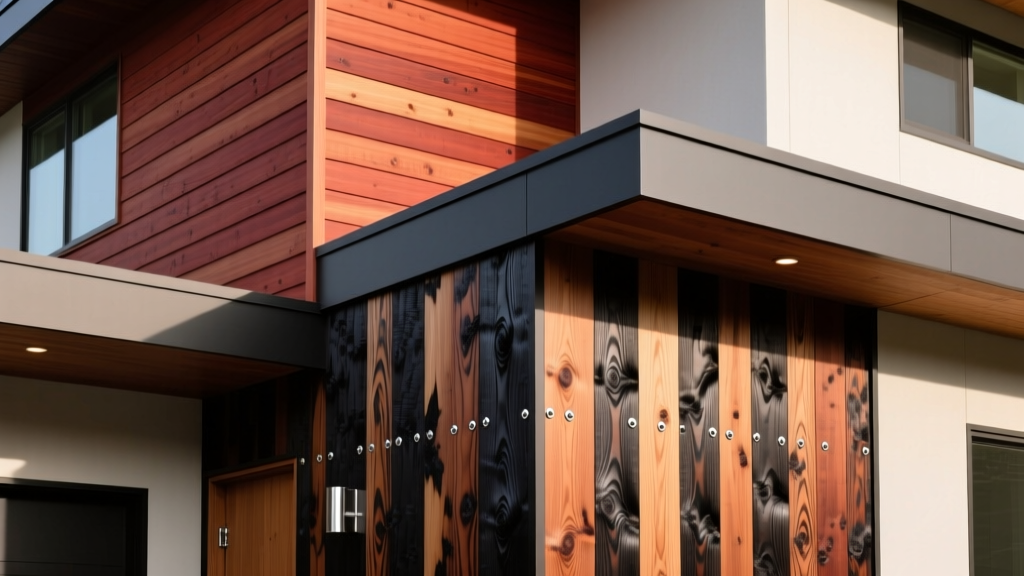
This is a chemical reaction, not mold. The natural tannins and acids in cedar react with the zinc in standard galvanized nails, creating iron tannate—a black, inky compound that bleeds into the wood grain. The only permanent fix is to remove the offending nails, replace them with stainless steel, and treat the stains with an oxalic acid-based wood brightener.
Does thermally modified wood require an end-grain sealer?
Yes. While the thermal modification process alters the cellular structure of the board faces, cutting the boards on-site exposes raw, unmodified end-grain. This end-grain acts like a bundle of microscopic straws, wicking moisture deep into the board. Always brush a dedicated end-grain sealer or heavy coat of the primary finish onto all field cuts immediately after sawing.
Written by
Elena RodriguezElena Rodriguez is a civil engineer and technical writer specializing in concrete technology, masonry systems, and ASTM/ACI compliance. She earned her B.S. in Civil Engineering from Texas A&M University and spent a decade at a materials testing laboratory, performing over 2,000 concrete compressive strength tests and masonry prism evaluations. Elena is an ACI-certified Field Testing Technician (Grade I) and a member of ASTM Committee C12 on Natural Building Stone. She currently consults on forensic engineering cases involving concrete failures and moisture intrusion. Based in San Antonio, TX, Elena is a proud member of the Society of Women Engineers (SWE) and coaches her daughter's FIRST Robotics team.
More from Elena Rodriguez
View all
Walls & Panels
Cost Analysis: Light Gauge Steel Framing Advantages and Disadvantages
Evaluate light gauge steel framing advantages and disadvantages through a strict cost analysis lens, comparing material, labor, and lifecycle expenses.
Aug 4, 2026

Walls & Panels
Gypsum Board Types: Exact Specifications, Thickness & Dimensions
Compare standard, Type X, and moisture-resistant gypsum board types. Get exact specifications, thicknesses, dimensions, and ASTM standards for your project.
Aug 4, 2026

Fire Resistance
Best Fire-Resistant Outdoor Decking Materials: 2026 Buyer Guide
Discover the best fire-resistant outdoor decking materials for 2026. Compare Class A PVC, aluminum, and hardwood options for WUI compliance and safety.
Aug 4, 2026