Steam Mop for Hardwood Floors: 2026 Brand Warranties & Safe Models
Discover the truth about using a steam mop for hardwood floors. We analyze 2026 brand warranties, dry-vapor models, and safe cleaning protocols.
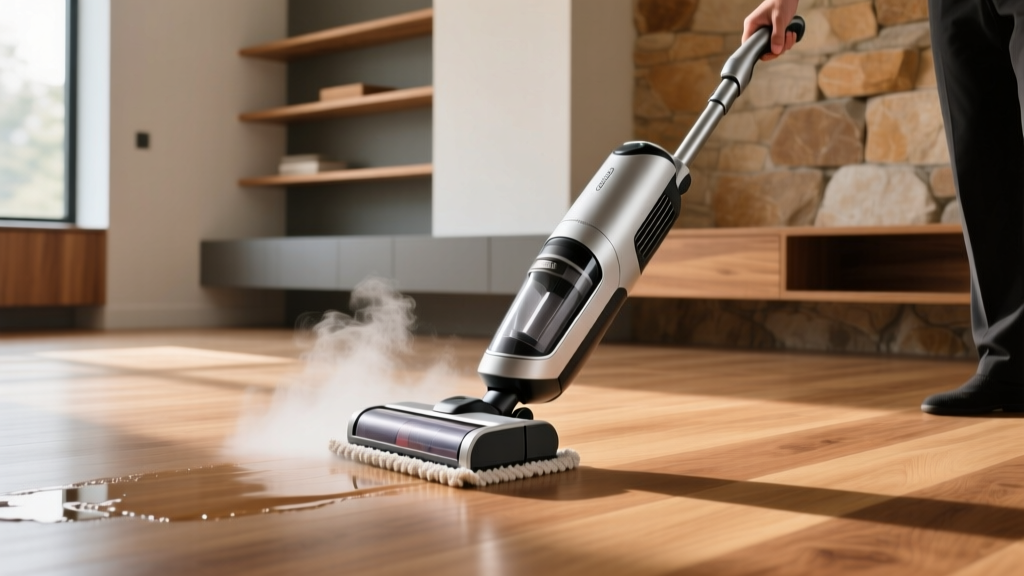
The Hardwood Steam Paradox: Sanitation vs. Substrate Damage
The search for a steam mop for hardwood floors typically stems from a desire for chemical-free sanitation and streak-free shine. However, applying 212°F (100°C) vaporized water to a hygroscopic material like wood creates a severe conflict between surface hygiene and structural integrity. While the flooring care market has introduced "hardwood-safe" low-moisture steam systems, the fundamental physics of wood moisture content (MC) dictates strict limitations on how thermal cleaning can be deployed without triggering catastrophic finish failure.
The Physics of Steam Penetration and Finish Degradation
To understand why standard steam mops destroy hardwood, you must look at the microscopic level of floor finishes. Modern hardwood floors are typically coated with aluminum oxide or UV-cured polyurethane. While these finishes are highly resistant to liquid water, they are vulnerable to gas (steam).
The Condensation Trap
Steam is water in a gaseous state, allowing it to penetrate micro-fissures, bevels, and seam gaps that liquid water cannot enter. When the 212°F vapor contacts the cooler wood substrate beneath the finish, it rapidly condenses back into liquid water. This traps moisture underneath the polyurethane layer, leading to three specific failure modes:
- Cupping: The bottom of the wood plank absorbs moisture and expands, pushing the edges of the board upward while the center remains concave.
- Crowning: If the moisture is trapped in the center of the board, the middle swells and rises above the edges.
- Adhesive Delamination (Engineered Wood): Engineered hardwood features a thin veneer glued to a plywood core. The intense heat of a steam mop softens the thermoset adhesives bonding these layers, causing the top veneer to bubble and peel away from the core.
Manufacturer Warranty Stances: The 2026 Landscape
Major flooring manufacturers have updated their care guidelines to explicitly address thermal cleaning devices. A review of current warranty documentation reveals a unified industry stance against high-moisture steam.
| Brand | Steam Mop Policy | Warranty Consequence |
|---|---|---|
| Shaw Floors | Strictly prohibits steam cleaning or wet mopping. | Immediate void of finish and structural warranties. |
| Mohawk Industries | Excludes damage caused by "steam cleaners or excessive water". | Claim denial for cupping, crowning, or finish clouding. |
| Bruce (AHF Products) | Recommends only manufacturer-approved spray cleaners. | Voided warranty if steam-induced delamination occurs. |
For a comprehensive look at manufacturer-approved care, refer to the Shaw Floors Care and Maintenance Guide, which outlines the strict pH and moisture limitations required to keep warranties intact.
Brand Deep-Dive: "Hardwood-Safe" Low-Moisture Steam Lines
If you require thermal sanitization for your hardwood floors, you must abandon traditional boiler-style steam mops and transition to dry-vapor or pump-controlled low-moisture systems. These devices output steam with a moisture content of 5% or less, allowing the heat to sanitize while the minimal water content evaporates before penetrating the wood seams.
1. Bissell PowerFresh Slim (Model 2075A)
Unlike traditional steam mops that rely on a continuous boiling chamber, the Bissell 2075A utilizes a digital pump mechanism. This allows the user to select a "Hard Floor" setting that drastically reduces the steam output rate. The Expert Catch: Even on the lowest setting, the microfiber pad must be changed every 500 square feet. Once the pad reaches saturation, it stops absorbing the condensation, effectively turning the mop into a wet-squeegee that pushes water into the floor seams.
2. Dupray Neat Steam Cleaner (Dry Vapor System)
The Dupray Neat is a pressurized canister system rather than a stick mop. It heats water to 275°F but outputs it as "dry steam" (approximately 5% moisture). Application Protocol: You must attach the microfiber floor bonnet over the triangular floor tool. The thick terry-cloth bonnet acts as a thermal buffer, absorbing the 5% moisture instantly while allowing the 275°F heat to pass through and sanitize the polyurethane surface. Never use the bare plastic nozzle directly on hardwood, as the localized heat concentration will melt aluminum oxide finishes.
3. Reliable EnviroMate Pro (Variable Dial Control)
This commercial-grade unit features a physical variable steam dial. By turning the dial to the lowest quadrant (Setting 1), the boiler restricts the vapor pressure, producing a barely-visible mist. This is the only system recommended by specialized flooring restorers for deep-cleaning heavily soiled, oil-rubbed hardwood floors where chemical strippers are not an option.
Comparison Matrix: Thermal Steam vs. Chemical Spray
How do low-moisture steam systems actually compare to the industry-standard pH-neutral spray mops? The data below highlights the operational trade-offs.
| Feature | Low-Moisture Steam (e.g., Dupray) | pH-Neutral Spray Mop (e.g., Bona) |
|---|---|---|
| Sanitization Level | High (Kills 99.9% of bacteria via heat) | Low (Removes dirt, does not sterilize) |
| Moisture Risk | Moderate (Requires strict pad-changing) | Very Low (Flash-evaporates in seconds) |
| Finish Compatibility | Polyurethane only (Avoid oil/wax) | Universal (Safe for all sealed finishes) |
| Drying Time | 10 to 15 minutes | 1 to 3 minutes |
The 3-Step Protocol for Safe Hardwood Steam Cleaning
If you proceed with a low-moisture steam mop, you must adhere to a strict operational protocol to prevent Equilibrium Moisture Content (EMC) disruption.
- The Tape Test (Finish Integrity Check): Before applying steam, place a piece of painter's tape on an inconspicuous area of the floor and pull it up quickly. If any finish flakes off, your floor's polyurethane is compromised. Do not use steam. Moisture will immediately enter the exposed wood fibers.
- The 3-Second Movement Rule: Never hold a steam mop stationary on hardwood for more than 3 seconds. Prolonged thermal exposure softens the finish, allowing the mop's mechanical friction to scrub the polyurethane away, leaving dull, cloudy patches.
- The Pad Rotation Mandate: A standard microfiber steam pad holds roughly 4 ounces of water before reaching saturation. For a 500-square-foot room, you must swap to a dry pad at least three times during the cleaning session. Using a damp pad simply pushes dirty, condensed water into the bevels.
"The most common cause of steam-related hardwood failure isn't the initial cleaning—it's the repetitive use of a saturated microfiber pad. Homeowners treat steam mops like traditional wet mops, unaware that the pad itself has become a water-delivery system rather than a moisture-absorbing buffer." — Hardwood Flooring Restoration Specialists
The Ultimate Expert Recommendation
While low-moisture, dry-vapor systems like the Dupray Neat or the Bissell 2075A offer a scientifically viable method for sanitizing sealed hardwood, the daily use of any steam mop for hardwood floors remains an unnecessary risk for the average homeowner. For routine maintenance, the industry consensus strongly favors the Bona Hardwood Floor Premium Spray Mop paired with Bona's pH-neutral cleaner. This system relies on mechanical agitation and flash-evaporation rather than thermal shock, ensuring that the wood's moisture content remains entirely undisturbed while preserving the manufacturer's structural and finish warranties. Reserve dry-vapor steam cleaning strictly for annual, deep-sanitization events, and always verify your floor's finish integrity before applying heat.