Exposed Beams: Using Pretty Types of Wood Structurally
Discover how to specify pretty types of wood for exposed structural beams and columns, balancing architectural aesthetics with load-bearing engineering codes.
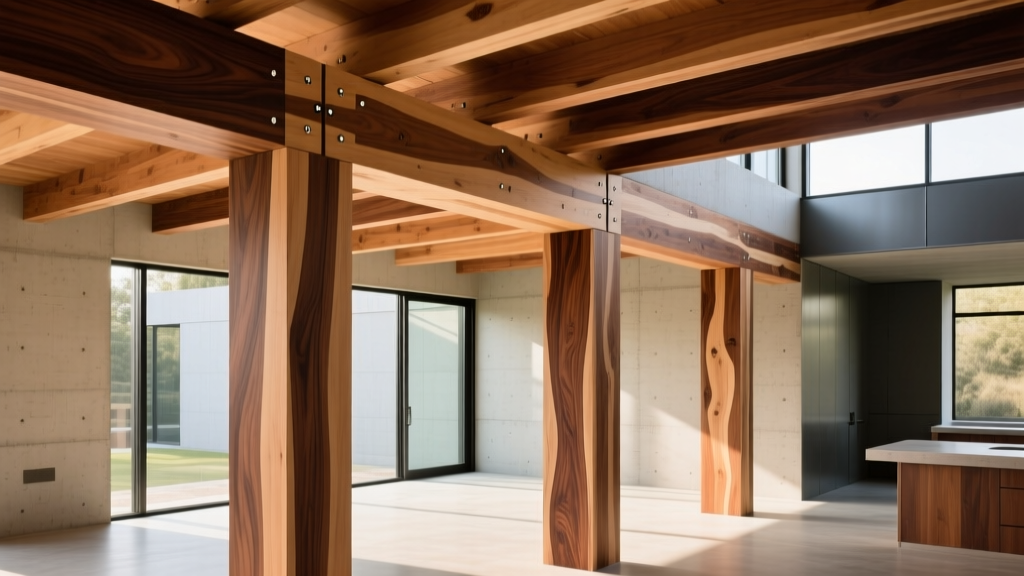
The Intersection of Aesthetics and Load-Bearing Engineering
When architects and homeowners envision exposed timber framing, they rarely picture standard kiln-dried Spruce-Pine-Fir (SPF) hidden behind drywall. They envision rich, striking grains, deep amber tones, and cathedral ceilings supported by massive, beautiful timbers. However, specifying pretty types of wood for primary structural applications requires navigating a complex intersection of architectural grading, structural engineering, and material science. Most aesthetically prized hardwoods—like Black Walnut, Cherry, or Mahogany—are graded for appearance (FAS or Select) rather than structural integrity. To use these or similar striking species as load-bearing beams, columns, or trusses, engineers and builders must rely on specific grading standards, architectural glulam, and concealed connection engineering.
Top Aesthetic Species for Structural Applications
Not all beautiful woods possess the necessary Modulus of Elasticity (E) or Bending Stress (Fb) to span large distances without excessive deflection. Below is a structural and aesthetic comparison of the best species for exposed architectural framing.
| Species | Form | Design Bending Stress (Fb) | Aesthetic Profile | Best Structural Use |
|---|---|---|---|---|
| White Oak | Solid Sawn | 1,350 psi (Select Structural) | Warm tan, prominent ray fleck, coarse grain | Short-span beams, heavy timber columns, pegged trusses |
| Douglas Fir | Architectural Glulam | 2,400 psi (24F-V8) | Reddish-brown, tight vertical grain, minimal knots | Long-span ridge beams, curved glulam arches |
| Western Red Cedar | Solid / Glulam | 1,000 psi (Select Structural) | Rich amber to dark brown, straight grain, aromatic | Exposed exterior beams, pergolas, light-load interior spans |
| Alaskan Yellow Cedar | Solid Sawn | 1,250 psi (Select Structural) | Pale yellow, extremely uniform, fine texture | Exposed columns, moisture-prone environments |
The Black Walnut Challenge
Black Walnut is arguably one of the most sought-after pretty types of wood for interior design. However, its structural bending stress (Fb ≈ 1,010 psi for Select Structural) is relatively low compared to standard framing lumber. To use solid Walnut as a primary structural beam, the cross-sectional dimensions must be significantly oversized to prevent deflection. For example, where a 6x12 Douglas Fir beam might suffice for a 14-foot span, a Walnut beam might need to be sized to 8x14 or larger. Consequently, Walnut is best reserved for decorative collar ties, non-load-bearing faux beams, or heavily reinforced flitch beams where a steel core carries the actual load.
Solid Sawn Timbers vs. Architectural Glulam
When specifying beautiful woods for exposed ceilings, you must choose between traditional solid-sawn heavy timber and engineered architectural glulam. The APA (The Engineered Wood Association) sets strict appearance grades for glulam that bridge the gap between structural capacity and high-end aesthetics.
Solid Sawn Hardwoods
- Pros: Authentic historic character, can be hand-hewn, accepts traditional joinery (mortise and tenon).
- Cons: Prone to checking (splitting) as it equilibrates to interior humidity, limited by tree diameter (max width usually 12 inches), heavy and difficult to crane into place.
- Specifying: Require "Select Structural" grade with an "Architectural" surfacing add-on to ensure exposed faces are free of large knots and wane.
Architectural Glulam
- Pros: Dimensionally stable (minimal checking), capable of massive spans (40+ feet), can be manufactured in curved radii, highly predictable engineering values.
- Cons: Lamination lines are visible (though minimized in Premium grades), cannot be easily modified on-site with traditional hand tools.
- Specifying: Order "Premium" or "Architectural" appearance grades. These specify that the outer laminations are clear, quarter-sawn, and color-matched, hiding the engineered core.
Concealing Steel Connections in Exposed Timber
The structural integrity of pretty types of wood is only as strong as its connections. Exposed steel brackets, joist hangers, and bolt heads ruin the clean aesthetic of architectural timber. Structural engineers utilize several concealed connection methods to maintain the visual purity of the wood:
- Epoxy-Set Threaded Rods: Instead of through-bolts with visible washers, steel rods are epoxied into pre-drilled holes in the timber. These rods connect to hidden steel plates embedded in the masonry or steel columns.
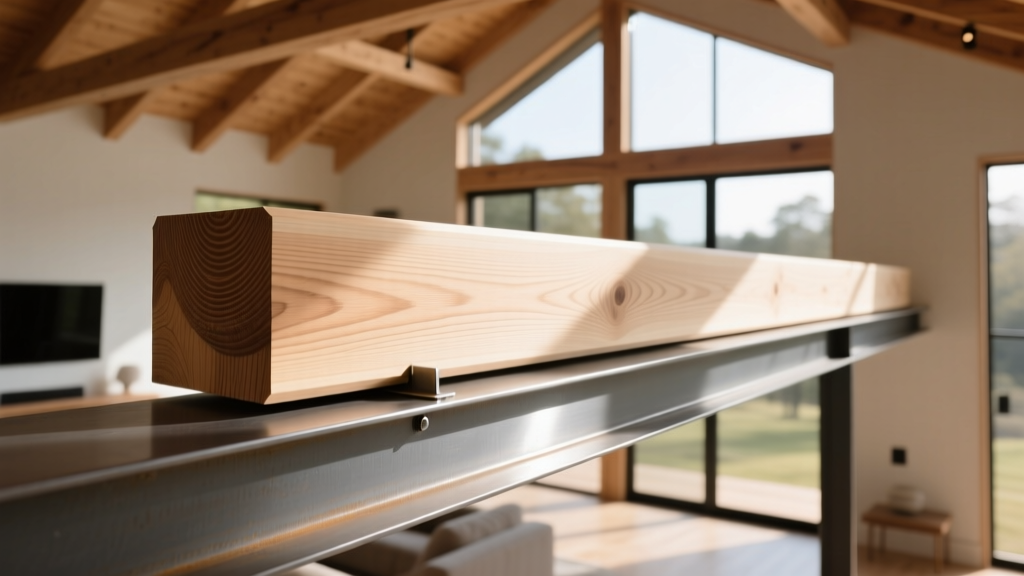
- Internal Flitch Plates: A steel plate is routed into a center slot cut into the timber beam. The beam rests on a steel column via a concealed shear tab, making the beam appear to float or rest directly on the column without visible hardware.
- Cross-Pinned Shear Connectors: Used in glulam-to-glulam connections, steel pins are driven horizontally through the laminations, entirely hidden from the exterior faces.
- Timber Rivets and Dog Bones: For heavy timber trusses, internal steel "dog bone" tension ties are routed into the bottom of intersecting beams and secured with vertical pins, completely concealed from the interior view.
Moisture Dynamics and Interior Acclimation
A major failure mode for exposed aesthetic timbers is improper moisture management. According to data from the USDA Forest Products Laboratory, wood continuously exchanges moisture with its environment. A solid White Oak beam milled at 18% moisture content (MC) will rapidly dry in a climate-controlled home (typically 30-40% relative humidity, equating to 6-8% Equilibrium Moisture Content).
- Kiln-Drying: Specify RF/V (Radio Frequency Vacuum) kiln-dried timbers for large cross-sections (e.g., 8x10 or larger). Traditional kilns only dry the outer 2 inches of thick timbers, leading to massive internal checks later.
- Target MC: Require the mill to dry structural hardwoods to 12-15% MC before shipping, and allow them to acclimate in the conditioned space for 14-21 days before final sealing.
- End-Grain Sealing: Immediately upon delivery, coat all end-grain with a commercial wax emulsion (e.g., Anchorseal) to prevent rapid moisture egress, which causes end-splitting.
2026 Cost Analysis: Standard vs. Exposed Aesthetic Timber
Upgrading from hidden structural framing to exposed, aesthetically graded timber represents a significant premium. Below is a comparative cost breakdown for a standard 20-foot ridge beam application in a residential build.
| Material Specification | Approx. Cost per Board Foot | Total Beam Cost (Est.) | Additional Labor/Finishing |
|---|---|---|---|
| Hidden LVL (Laminated Veneer Lumber) | $2.50 - $3.50 | $400 - $600 | Drywall, tape, mud, paint ($800+) |
| Architectural Glulam (Douglas Fir, Premium) | $7.00 - $10.00 | $1,100 - $1,600 | Clear oil finish application ($250) |
| Solid White Oak (Select Structural, RF/V Dried) | $14.00 - $18.00 | $2,200 - $2,900 | Crane rigging, hand-sanding, sealing ($1,200+) |
Frequently Asked Questions
Can I use reclaimed barn wood for structural beams?
Reclaimed timber is highly prized for its aesthetic patina, but it cannot be used for primary structural framing unless it is re-graded by a certified lumber grader. Old timbers often contain hidden metal, internal decay, or modified grain structures that invalidate standard NDS span tables. Most engineers will require a non-destructive stress-wave test or will downgrade the allowable design values by 30-50% to account for unknown fatigue.
How do I protect pretty wood beams from UV yellowing or graying?
Woods like White Oak and Douglas Fir will photo-oxidize when exposed to direct sunlight through large windows, shifting to a dull gray or dark amber. To preserve the original color, specify a two-part water-borne polyurethane with a UV-inhibitor additive (e.g., Bona Traffic HD or a specialized architectural timber finish like Rubio Monocoat with UV protection). Avoid oil-based polyurethanes, which inherently amber the wood and obscure the natural grain contrast.
What is the maximum span for a solid aesthetic hardwood beam?
While engineering calculations dictate the exact span based on load, solid sawn hardwoods like White Oak or Cedar are generally limited by the available log diameter and transportation constraints. Solid timbers larger than 12x12 inches are exceptionally rare and expensive. For spans exceeding 22-24 feet in residential construction, structural engineers almost universally transition to architectural glulam, which can be manufactured in continuous lengths up to 60 feet while maintaining a premium exterior appearance.
Written by
Sarah WhitfieldSarah Whitfield is a chartered quantity surveyor (MRICS) and construction cost analyst with 15 years of experience in material pricing, procurement strategy, and project budgeting. She earned her degree in Construction Management from the University of Reading (UK) and has worked on projects ranging from $2M custom homes to $180M mixed-use developments across North America and Europe. Sarah currently leads cost estimating for BuildMat Insight, maintaining a proprietary database of 4,000+ material price points updated quarterly. She is a frequent contributor to RSMeans cost data panels and has presented at the International Cost Engineering Council (ICEC) congress. Based in Denver, CO, Sarah is an avid trail runner and volunteer mentor for Women in Construction.
More from Sarah Whitfield
View all
Wood & Lumber
What Are the Different Types of Wood? A Builder's Guide
Compare structural softwoods, finish hardwoods, and engineered lumber. Analyze Janka ratings, MOE values, and 2026 pricing for construction.
Aug 4, 2026

Walls & Panels
Steel Framing vs Wood Framing: Corrosion and Moisture Defense
Compare steel framing vs wood framing for moisture resistance. Learn about galvanized coatings, condensation risks, and corrosion protection strategies.
Jul 21, 2026

Stone & Masonry
How to Cut Stone Veneer: Wet Saw vs Grinder Comparison
Compare the best tools for cutting stone veneer. We review wet saws, angle grinders, and chop saws to help you achieve clean, chip-free cuts.
Jul 21, 2026