Wood Roofing Materials Philippines: Species Guide for Trusses & Shakes
Explore the best wood roofing materials Philippines offers. A complete species guide for roof trusses, purlins, and shakes, including 2026 pricing.

The Reality of Wood Roofing in the Philippine Climate
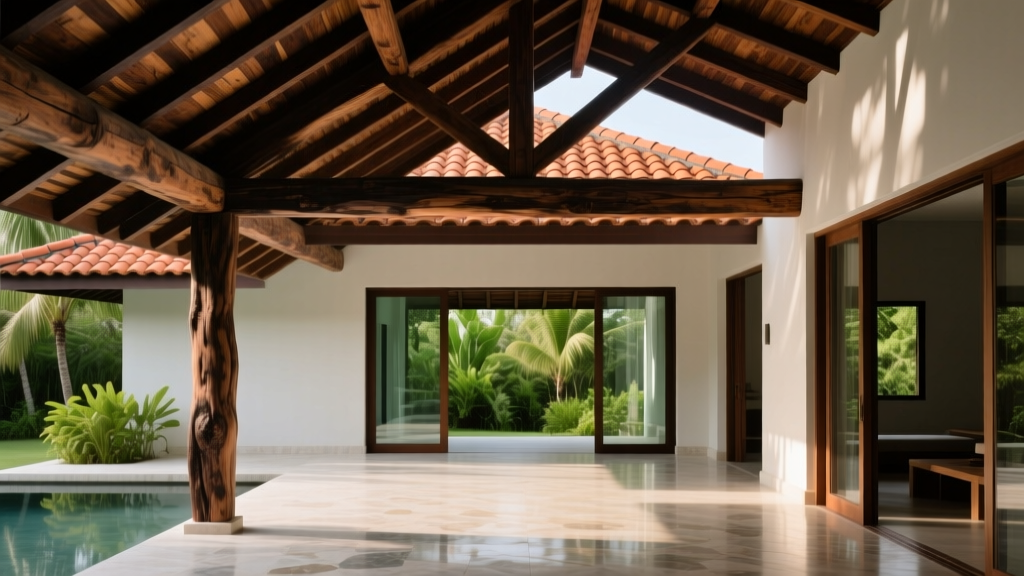
When specifying wood roofing materials in the Philippines, architects and builders must navigate a uniquely aggressive environmental triad: Category 5 typhoon wind uplifts, year-round ambient humidity exceeding 80%, and highly destructive subterranean termite colonies (Coptotermes gestroi). While metal and concrete dominate mass-market Philippine construction, premium wood roofing—specifically exposed timber trusses, structural purlins, and heritage wood shakes—remains a staple in luxury resorts, bespoke residential builds, and cultural restoration projects.
Under the National Structural Code of the Philippines (NSCP), roof framing in Wind Zones 3 and 4 must resist uplift pressures exceeding 2.5 kPa. Wood species selected for these structural roofing components must possess high specific gravity to prevent fastener pull-out, alongside natural extractives that resist biological decay. This guide details the exact timber species utilized in Philippine roof construction, their 2026 market realities, and the engineering protocols required to ensure structural longevity.
Premium Hardwoods: The Heritage Truss Species
Premium Philippine hardwoods are characterized by Janka hardness ratings above 8,000 N and natural termite resistance. Due to strict logging bans enforced by the Department of Environment and Natural Resources (DENR), virgin timber of these species is largely unavailable; the 2026 market relies heavily on reclaimed lumber, storm-fall salvage, and legally imported equivalents.
Yakal (Shorea astylosa)
- Structural Role: Primary truss chords, king posts, and heavy timber ridge beams.
- Janka Hardness: ~10,500 N
- 2026 Pricing: PHP 180 – PHP 280 per board foot (reclaimed/salvaged).
- Profile: Yakal is the gold standard for Philippine timber framing. Its extreme density allows it to hold heavy steel truss plates and lag screws without pre-drilling in some applications, though pre-drilling is highly recommended to prevent splitting. Reclaimed Yakal often features embedded metal fragments, requiring carbide-tipped saw blades during fabrication.
Molave (Vitex parviflora)
- Structural Role: Exposed rafters, purlins, and decorative wood shakes.
- Janka Hardness: ~8,800 N
- 2026 Pricing: PHP 90 – PHP 140 per board foot.
- Profile: Molave offers a striking pale-yellow to dark-brown grain that weathers to a distinguished silver-gray if left untreated. It is highly resistant to marine borers and powderpost beetles. For wood shakes, Molave is split rather than sawn to follow the grain, ensuring water sheds efficiently without capillary action.
Guijo (Shorea guiso)
- Structural Role: Secondary truss members, battens, and fascia boards.
- Janka Hardness: ~7,200 N
- 2026 Pricing: PHP 65 – PHP 95 per board foot.
- Profile: Slightly more workable than Yakal, Guijo is prized for its interlocked grain, which provides exceptional shear strength. It is highly susceptible to checking if dried too rapidly, so kiln-dried stocks must be acclimated to local humidity (12-14% EMC) before installation.
Commercial & Engineered Timbers: The Modern Standard
For large-scale commercial roofing and cost-conscious residential trusses, builders rely on plantation-grown softwoods and engineered wood products. These materials require rigorous chemical preservation to survive the Philippine climate.
Mindanao Pine (Pinus insularis / Pinus merkusii)
The workhorse of the Philippine framing industry. Mindanao Pine is lightweight (Janka ~3,200 N) and easy to machine, making it ideal for prefabricated roof trusses. However, its sapwood is highly permeable and vulnerable to termites. Critical Requirement: All Mindanao Pine used in roofing must be pressure-treated with Copper Azole (CA-C) or Alkaline Copper Quaternary (ACQ) to a minimum retention level of 4.0 kg/m³ for above-ground use (AWPA UC3B standard).
African Mahogany (Khaya senegalensis)
Widely cultivated in Philippine plantations since the 1990s, African Mahogany (Janka ~5,000 N) bridges the gap between softwoods and premium hardwoods. It machines beautifully for exposed architectural roof beams and accepts penetrating oil finishes exceptionally well. It is moderately resistant to decay but requires borate treatments to deter drywood termites.
Glulam (Glued Laminated Timber)
For sweeping, column-free resort pavilions, Glulam beams manufactured from Mindanao Pine or imported Radiata Pine are increasingly specified. Glulam allows for curved roof profiles that solid timber cannot achieve. Ensure the adhesive used is a resorcinol-formaldehyde or polyurethane (PUR) resin rated for exterior, high-humidity exposure.
Wood Species Comparison Matrix for Roof Framing
| Species | Janka Hardness (N) | Natural Termite Resistance | Fastener Holding Power | Best Roof Application |
|---|---|---|---|---|
| Yakal (Reclaimed) | 10,500 | Exceptional | Extreme (Pre-drill required) | Primary Truss Chords, Ridge Beams |
| Molave | 8,800 | High | Very High | Exposed Rafters, Purlins, Shakes |
| Guijo | 7,200 | Moderate-High | High | Fascia, Secondary Truss Webs |
| African Mahogany | 5,000 | Moderate | Moderate | Architectural Beams, Soffits |
| Mindanao Pine (Treated) | 3,200 | Low (Relies on chemicals) | Low-Moderate | Standard Truss Webs, Battens |
Critical Failure Modes & Preservation Protocols
Selecting the right species is only half the battle. The Philippine environment exploits specific vulnerabilities in wood roofing systems. According to the US Forest Products Laboratory, tropical climates accelerate both fungal decay and galvanic corrosion.
The chemical preservatives used to protect Mindanao Pine (specifically the copper in ACQ and CA-C) are highly corrosive to standard zinc-galvanized steel. In coastal Philippine provinces (e.g., Batangas, Cebu, Palawan), the combination of copper-treated wood and salt-laden air will destroy standard truss plates in under three years. Solution: Specify Type 316 Stainless Steel fasteners and hot-dipped galvanized (HDG) steel plates with a minimum Z600 coating for all treated wood connections.
Termite and Borer Mitigation
Subterranean termites build mud tubes from the foundation to the roof eaves. To protect wood roofing materials:
- Soil Pre-Treatment: Apply a non-repellent termiticide (e.g., Fipronil or Imidacloprid) to the soil foundation before pouring concrete slabs.
- End-Grain Sealing: Termites and moisture enter wood primarily through the end grain. All field cuts made during truss assembly must be immediately brushed with a copper naphthenate or borate-based end-cut preservative.
- Physical Barriers: Install stainless steel termite mesh (e.g., Termimesh) around all roof penetrations and where wooden columns meet concrete pads.
Typhoon Uplift Fastening
Wood shakes and shingles in typhoon-prone areas cannot rely on standard nailing. For Molave or imported Cedar shakes, use ring-shank stainless steel nails (minimum 3.1mm shank diameter) driven into solid wood sheathing, bypassing the battens. For structural trusses, hurricane ties and structural screws (e.g., Simpson Strong-Tie SDWS) provide 300% more withdrawal resistance than traditional lag bolts.
Sourcing and Legal Compliance
The Forest Management Bureau (FMB) of the DENR strictly regulates the transport and sale of premium hardwoods in the Philippines. When sourcing Yakal, Molave, or Guijo for roofing:
- Certificate of Timber Origin (CTO): Mandatory for all reclaimed and salvaged hardwood. Do not accept delivery without a valid CTO and transport permit.
- Reclaimed Verification: Inspect reclaimed beams for original mortise-and-tenon joints or adze marks, which verify age and legal salvage status.
- Moisture Meter Testing: Require suppliers to provide kiln-drying certificates. Wood roofing components must be installed at a moisture content (MC) of 12% to 15%. Installing wood at 20%+ MC guarantees severe warping and checking as it equilibrates with the dry season air.
Frequently Asked Questions
Are wood shakes practical for modern Philippine homes?
Wood shakes are practical only for steep-pitch roofs (minimum 4:12 slope) with adequate ventilation and a high-quality synthetic underlayment. In high-fire-risk areas or densely packed urban subdivisions, local building codes may prohibit wood shakes entirely. For the aesthetic without the fire risk, specify metal roofing stamped with a wood-shake profile.
How often should an exposed Molave roof truss be refinished?
If installed indoors or under deep eaves protected from direct UV and rain, Molave trusses finished with a penetrating tung oil or exterior-grade polyurethane require re-coating every 5 to 7 years. If left completely unfinished, they will oxidize to a silver-gray patina but will require annual inspection for surface micro-cracking.
What is the most cost-effective wood for standard roof purlins in 2026?
Pressure-treated Mindanao Pine remains the most cost-effective and widely available material for purlins and truss webs, averaging PHP 35 per board foot. Ensure the treatment incisions are present and the wood bears the FMB treatment certification stamp before purchase.
Written by
David NakamuraDavid Nakamura is a licensed architect (AIA) and construction technology writer focused on sustainable building methods, mass timber engineering, and high-performance building envelopes. He holds a Master of Architecture from the University of Washington and is a certified Passive House Consultant (CPHC). David spent eight years at the Seattle firm Mithun, where he led the design of three LEED Platinum projects, before founding his own practice specializing in net-zero residential design. He serves on the editorial advisory board of GreenBuilder Magazine and has authored peer-reviewed papers on cross-laminated timber (CLT) connections for the Journal of Structural Engineering. In his spare time, David teaches woodworking at Pratt Fine Arts Center and kayaks the Puget Sound.
More from David Nakamura
View all
Construction Cost
Labor Cost to Build a Deck Per Sq Ft: 2026 Installation Guide
Discover the exact labor cost to build a deck per sq ft in 2026. This installation guide breaks down contractor rates, complexity factors, and hidden fees.
Aug 4, 2026

Construction Cost
How Much Does It Cost to Build a 3 Bedroom House? Financing Guide
Learn exactly how much it costs to build a 3 bedroom house and explore 2026 financing options, construction loan types, and budget frameworks for your build.
Aug 4, 2026

Construction Cost
Cost to Build a Tennis Court: 2026 Guide
How much does it cost to build a tennis court in 2026? Breakdowns for asphalt, concrete, and synthetic surfaces plus fencing and lighting.
Jul 30, 2026