Fire Rated Plywood: Scenario Matching for Code Compliance
Master fire rated plywood selection with our scenario matching guide. Compare IBC code triggers, interior vs exterior types, and cost data for builds.
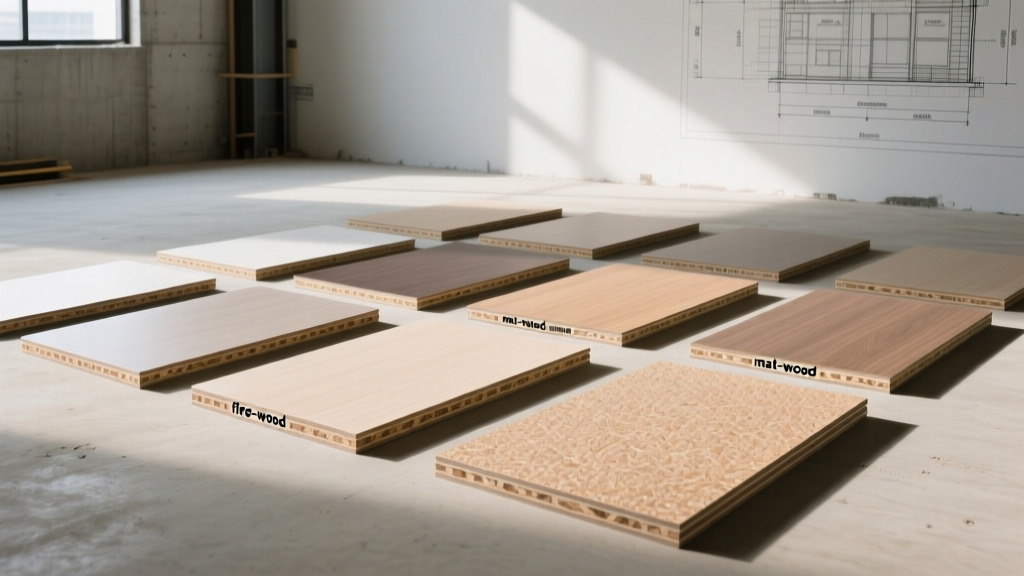
The Core Distinction: Fire-Retardant vs. Fire-Resistant
A critical failure point in commercial and multi-family wood framing is confusing fire-retardant-treated (FRT) plywood with fire-resistant assemblies. FRT plywood is a material property; it is pressure-impregnated with chemicals (typically diammonium phosphate or ammonium sulfate salts) to reduce surface flammability. It achieves a Class A / Class 1 Flame Spread Index (FSI) of 25 or less when tested under ASTM E84.
However, FRT plywood does not inherently possess a 1-hour or 2-hour fire-resistance rating (which is an assembly metric tested under ASTM E119). Instead, building codes like the International Building Code (IBC) allow FRT wood to be used in specific scenarios where non-combustible materials would otherwise be mandated, provided the FRT material meets the strict impregnation standards of IBC Section 2303.2.
Scenario Matching Matrix: IBC Code Triggers by Application
Specifying FRT plywood requires matching the exact environmental and structural scenario to the correct treatment type. Over-specifying interior FRT for exterior soffits leads to catastrophic structural degradation, while under-specifying leads to failed municipal inspections.
| Application Scenario | IBC Code Trigger | Required FRT Classification | Recommended Product Type |
|---|---|---|---|
| Multi-family interior corridor walls & roof decks (Type III/IV) | IBC Sec. 603.1(25) & 2303.2 | Interior Type A (Humidity Resistant) | Hoover PyroGuard Interior / Viance FlamePRO |
| Exterior soffits, balconies, and WUI zone exterior walls | IBC Sec. 2303.2.5 & Chapter 7A | Exterior (Must pass ASTM D5664) | Hoover PyroGuard Exterior / Exterior-rated FRT |
| Mezzanine floors and interior decorative paneling | IBC Sec. 505 & 803.1.1 | Interior Type B (Standard) | Standard Interior FRT Plywood (Class A) |
| Heavy timber roof decking (Type IV-HT) | IBC Sec. 602.4 & 2304.11 | Often exempt if meeting heavy timber dimensions | Untreated Heavy Timber (Verify local AHJ) |
The Exterior FRT Trap: Humidity and Structural Degradation
The most common and expensive mistake in FRT plywood procurement is installing interior-grade treated panels in exterior or high-humidity applications. When interior FRT chemicals are exposed to high relative humidity or liquid water, the salts leach out. This leaching not only removes the fire-retardant properties but also triggers an acidic hydrolysis reaction that destroys the cellulose in the wood, leading to severe loss of tensile and shear strength.
If your scenario involves exterior exposure or high interior humidity (e.g., unconditioned attics in humid climates), the FRT plywood MUST be tested in accordance with ASTM D5664 (humidity exposure) and ASTM D5665 (weathering). The manufacturer must provide a specific design value adjustment factor. Never assume an Interior Type A panel is code-compliant for exterior soffits, even if it is painted or sealed.
For exterior scenarios, manufacturers like Hoover Treated Wood Products utilize specialized polymer-based or advanced salt formulations that resist leaching. However, even with exterior-rated FRT plywood, the American Wood Council notes that engineers must apply a strength reduction factor (typically multiplying allowable design values by 0.80 to 0.90) to account for the chemical impregnation process.
Hardware Compatibility: Avoiding Galvanic Corrosion
The chemicals used to achieve a Class A flame spread rating are inherently corrosive to standard metals. Using standard bright zinc-plated nails or standard galvanized joist hangers with FRT plywood will result in rapid galvanic corrosion, compromising the structural integrity of the connection within 3 to 5 years.
Approved Fastener and Connector Specifications
- Nails and Screws: Must be Hot-Dipped Galvanized (HDG) meeting ASTM A153 Class D, or Type 304/316 Stainless Steel. Electroplated zinc is strictly prohibited.
- Joist Hangers and Brackets: Must be HDG (ASTM A653, G185 coating) or Stainless Steel. Simpson Strong-Tie and MiTek explicitly require their ZMAX or stainless steel lines when in contact with FRT lumber.
- Cut Edges: While FRT plywood is pressure-impregnated throughout (unlike surface coatings), cutting the panels exposes fresh wood fibers. Always brush-coat cut edges with the manufacturer’s approved topical fire-retardant sealer to maintain the continuous Class A rating.
Cost & Procurement: 2026 Budgeting Realities
FRT plywood carries a significant premium over standard CDX or OSB due to the pressure-treatment cycle, redrying process (kiln drying after treatment to 19% moisture content or less), and third-party quality assurance labeling (e.g., UL or Intertek). When estimating project costs, builders must account for both material premiums and extended lead times.
| Material (4x8 Sheet, 5/8" Thick) | Est. Cost per Sheet | Lead Time | Weight / Handling Notes |
|---|---|---|---|
| Standard CDX Plywood (Untreated) | $55 - $70 | 1 - 2 Weeks | ~48 lbs. Standard handling. |
| FRT Plywood - Interior Type A | $95 - $125 | 3 - 5 Weeks | ~52 lbs. Slightly brittle; handle edges carefully. |
| FRT Plywood - Exterior Rated | $140 - $185 | 6 - 10 Weeks | ~55 lbs. Requires specialized manufacturer order. |
Note: Prices reflect national averages for commercial volume orders. Retail pricing at big-box lumber yards can be 20-30% higher, and exterior FRT is rarely stocked on shelves, requiring direct distributor procurement.
Application Decision Framework: Do You Actually Need FRT?
Before specifying FRT plywood for roof decks or exterior walls to meet non-combustible construction requirements (Type I or II), run through this decision framework to identify potential cost offsets.
- Evaluate NFPA 13R Sprinkler Offsets: Under IBC Section 504.2 and 903.2.8, the installation of a full NFPA 13 automatic sprinkler system often allows builders to substitute FRT roof decking with standard untreated wood framing in certain multi-family configurations. The cost of the sprinkler system is frequently lower than the FRT plywood premium across a 100+ unit project.
- Check Heavy Timber Exemptions (Type IV-HT): If your project is classified as Type IV Heavy Timber, IBC Section 2304.11 allows roof decking to be untreated solid wood planks or structural panels of specific thicknesses (typically 1.5" minimum) without FRT treatment, relying on the char rate of mass timber for fire resistance.
- Verify the WUI Map: For projects in Wildland-Urban Interface zones, Chapter 7A of the California Building Code (and similar state adaptations) mandates ignition-resistant construction. FRT plywood is a primary solution for exterior soffits here, but fiber-cement soffit panels may offer a lower life-cycle cost and zero structural degradation risk compared to exterior FRT wood.
- Confirm the AHJ Stamp Requirements: Ensure the FRT plywood arrives with the physical quality mark stamp on every panel. The stamp must explicitly list the treating company, the standard (e.g., AWPA U1), the flame spread index, and the specific ASTM D5664 exterior compliance if applicable. Panels without visible stamps will be red-tagged by the fire marshal during the rough framing inspection.