What Type of Wood Are Pallets Made Of? Treatment & Preservation
Discover what type of wood pallets are made of, including ISPM 15 heat treatment standards, chemical preservation, and moisture management tips.

The Core Question: What Type of Wood Are Pallets Made Of?
The global supply chain relies on over 3 billion wooden pallets, yet the specific lumber species used in their construction is rarely uniform. To answer what type of wood are pallets made of, you must look at regional forestry outputs, load-bearing requirements, and preservation capabilities. Pallet lumber is broadly categorized into hardwoods and softwoods, with each offering distinct structural and treatment-related properties.
Quick Species Breakdown
- Southern Yellow Pine (SYP): Accounts for roughly 40-50% of U.S. pallet production. High density, excellent fastener-holding strength, and readily accepts heat treatment.
- Oak (White and Red): The premier hardwood for heavy-duty, block-style pallets. Exceptional abrasion resistance and structural rigidity.
- Spruce-Pine-Fir (SPF): Common in northern regions and Canada. Lightweight and cost-effective, but lower natural rot resistance and prone to splitting if moisture fluctuates rapidly.
- Hard Maple and Hickory: Used in specialized, high-impact pallets for automotive or heavy machinery transport.
From a preservation standpoint, the species dictates the wood's natural susceptibility to biological degradation. Southern Yellow Pine, while strong, has a high sapwood content that is highly permeable to both moisture and wood-destroying organisms, making rigorous treatment protocols mandatory for international transit.
ISPM 15 and the Reality of Pallet Treatment
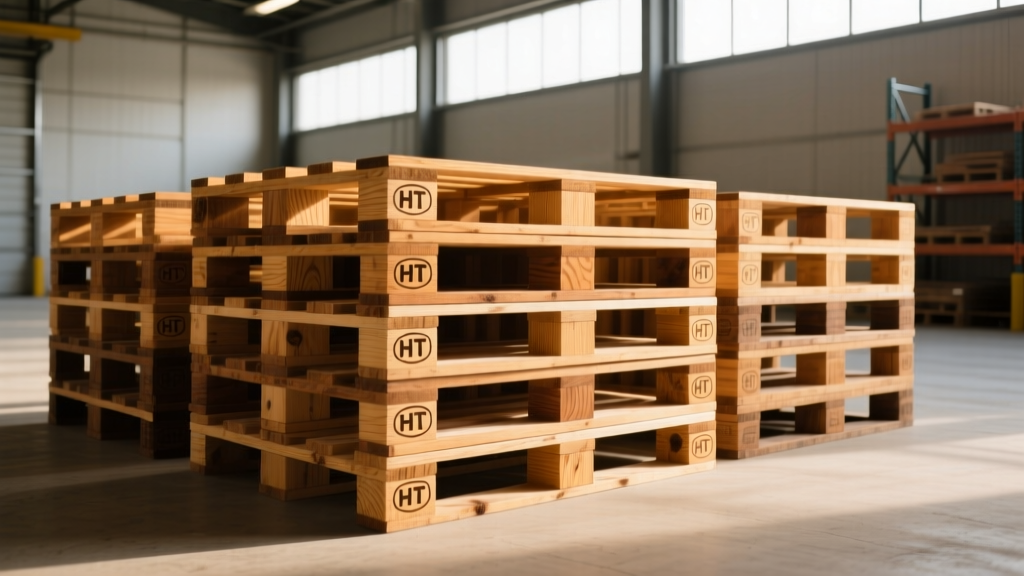
When discussing pallet preservation, the International Standards for Phytosanitary Measures No. 15 (ISPM 15) is the governing global framework. The standard mandates that all wood packaging material (WPM) moving across international borders must be treated to eradicate wood-boring pests like the Asian longhorned beetle and pinewood nematode.
It is a common misconception that ISPM 15 treatment preserves the wood against rot or mold. The standard is strictly phytosanitary, not preservative. The two primary approved methods are:
| Treatment Code | Methodology | Core Requirement | Impact on Wood Longevity |
|---|---|---|---|
| HT (Heat Treatment) | Conventional steam or kiln heating. | 56°C (133°F) at the wood core for a minimum of 30 continuous minutes. | Neutral. Kills pests but does not prevent future mold or decay if re-wetted. |
| DH (Dielectric Heating) | Microwave or radio-frequency heating. | 60°C (140°F) across the entire wood profile for 1 continuous minute. | Neutral. Faster than HT but requires thinner lumber profiles. |
| MB (Methyl Bromide) | Chemical fumigation (largely phased out). | Specific concentration based on temperature and exposure time. | Negative environmental impact; banned in the EU and heavily restricted globally. |
According to the National Wooden Pallet and Container Association (NWPCA), over 95% of globally exported pallets now utilize HT rather than MB, driven by environmental regulations and the phasing out of ozone-depleting substances.
Chemical Preservatives and Modern Alternatives
While ISPM 15 handles pests, it does nothing to stop fungal decay or termites in domestic storage. For pallets stored outdoors or used in high-humidity environments (such as cold-chain logistics or agricultural transport), secondary chemical preservation is required.
Borate Treatments for Insect Resistance
Disodium octaborate tetrahydrate (DOT), commonly known by brand names like Tim-bor or Bora-Care, is the industry standard for domestic pallet preservation against termites and carpenter ants. Borates are water-soluble, meaning they penetrate deeply into green SYP or Oak during a dip-treatment process. However, because they are water-soluble, borate-treated pallets cannot be exposed to rain or prolonged high humidity, as the chemical will leach out, rendering the wood unprotected.
Anti-Mold and Sapstain Dips
Freshly cut pallet lumber is highly susceptible to sapstain fungi (such as Ceratocystis) and mold (such as Aspergillus and Penicillium). To preserve the aesthetic and sanitary quality of pallets destined for food, beverage, or pharmaceutical transport, mills utilize quaternary ammonium compounds or chlorothalonil-based anti-sapstain dips immediately after sawing. These treatments provide a 30- to 60-day chemical barrier against mold spores during transit and initial storage.
Critical Warning: Never use pallets treated with Chromated Copper Arsenate (CCA) or Creosote for indoor furniture, gardening, or agricultural projects. While rare in modern standard shipping pallets, legacy or specialized industrial pallets may contain these toxic heavy metals. Always verify the absence of a greenish tint or harsh chemical odor before repurposing lumber.
Moisture Content and Rot Prevention in Transit
The single greatest threat to pallet longevity is moisture. Wood-decaying fungi require a moisture content (MC) above the fiber saturation point—typically around 28% to 30%—to initiate cellular breakdown. However, surface mold can bloom at an MC as low as 20% if ambient relative humidity exceeds 80%.
To preserve structural integrity and prevent biological growth, the U.S. Forest Products Laboratory recommends maintaining pallet moisture content below 19%. This is where the distinction between Heat-Treated (HT) and Kiln-Dried (KD) becomes vital:
- HT Pallets: Heated to 56°C to kill pests, but the process may only reduce MC to 22-25%. They are safe for bugs but vulnerable to mold if stored in damp warehouses.
- KD Pallets: Dried to an MC of 19% or lower. Kiln drying inherently satisfies the ISPM 15 HT requirement while simultaneously preserving the wood against fungal decay.
Field Testing for Moisture and Treatment
Procurement officers and warehouse managers should utilize pin-type moisture meters (such as the Delmhorst J-2000 or Wagner Meters Orion) to verify incoming pallet quality. Insert the pins into the thickest component of the pallet—usually the 3.5-inch stringer or block. If the reading exceeds 19%, the pallet is at immediate risk of mold proliferation and fastener corrosion.
Extending Pallet Lifespan: Preservation Best Practices
Even well-treated SYP or Oak pallets will fail prematurely if storage protocols ignore basic wood science. Implement the following preservation framework in your facility:
- Elevate Storage: Never store empty or loaded pallets directly on concrete or soil. Concrete wicks moisture, and soil introduces ground-dwelling fungi. Use rack systems or place a sacrificial layer of pressure-treated lumber at the base.
- Cross-Stacking for Airflow: When storing empty pallets outdoors or in unconditioned spaces, cross-stack them (alternating the direction of each layer) rather than nesting them. This creates vertical chimneys that promote convective drying after rain events.
- UV Protection: While UV radiation does not cause rot, it degrades the lignin on the wood surface, causing checking (splitting) and reducing the holding power of the top deckboards. Store pallets under opaque roofing or heavy-duty tarps.
- Rotate Inventory (FIFO): Pallets stored for over 12 months in fluctuating humidity will experience fastener loosening due to the natural swelling and shrinking of the wood fibers. Strict First-In, First-Out rotation prevents structural fatigue.
Sourcing and Compliance Checklist
Procurement Officer's Pallet Checklist
- [ ] Verify the IPPC Stamp: Ensure the stamp includes the IPPC logo, country code, unique producer number, and the "HT" (or "KD-HT") code. Stamps must be legible and on at least two opposite sides.
- [ ] Specify MC Limits: Require a maximum 19% Moisture Content on your purchase orders for food-grade or pharmaceutical pallets to prevent mold contamination.
- [ ] Demand Species Consistency: If your racking systems are designed for the deflection limits of Oak, do not accept mixed hardwood/softwood bales. Specify SYP or Oak explicitly.
- [ ] Check for Chemical Odors: Reject shipments that smell of harsh solvents or exhibit unnatural green/orange staining, which may indicate unauthorized chemical treatments or severe fungal infection.
Understanding the specific wood species and the precise nature of their treatment transforms pallets from a disposable shipping expense into a managed, predictable asset. By aligning your procurement with ISPM 15 standards, strict moisture thresholds, and proper biological preservation techniques, you safeguard both your supply chain and the products it carries.
Written by
Marcus ChenMarcus Chen is a licensed structural engineer (PE) and building materials analyst with over 12 years of experience across residential, commercial, and industrial construction. He holds a Master of Science in Civil Engineering from UC Berkeley and spent six years at Thornton Tomasetti before transitioning to independent consulting and technical writing. Marcus specializes in material selection for seismic-prone regions, concrete reinforcement strategies, and lifecycle cost analysis. His work has been cited by the American Concrete Institute (ACI) and the Structural Engineers Association of California (SEAOC). When he is not on a job site or at his desk, you will find him hiking the Sierra Nevada or restoring a 1920s craftsman bungalow in Oakland, CA.
More from Marcus Chen
View all
Construction Cost
How Much Did the Eiffel Tower Cost to Build?
How much did the Eiffel Tower cost to build in 1889? We adjust for inflation and compare its budget to modern skyscraper construction.
Aug 4, 2026

Fire Resistance
What Is a Fire Resistant Material? Testing & Certification Guide
Discover what is a fire resistant material through ASTM and UL testing. Learn how fire ratings, certifications, and assemblies work in construction.
Aug 4, 2026

Construction Cost
How Much Did the Burj Khalifa Cost to Build?
How much did the Burj Khalifa cost to build? We break down the $1.5B project and extract 5 money-saving strategies for your next build.
Jul 30, 2026