Maple Wood Flooring Cost Calculator & Estimation Guide 2026
Calculate exact maple wood flooring costs with our 2026 estimation guide. Breakdowns for solid vs engineered grades, waste factors, and hidden prep fees.
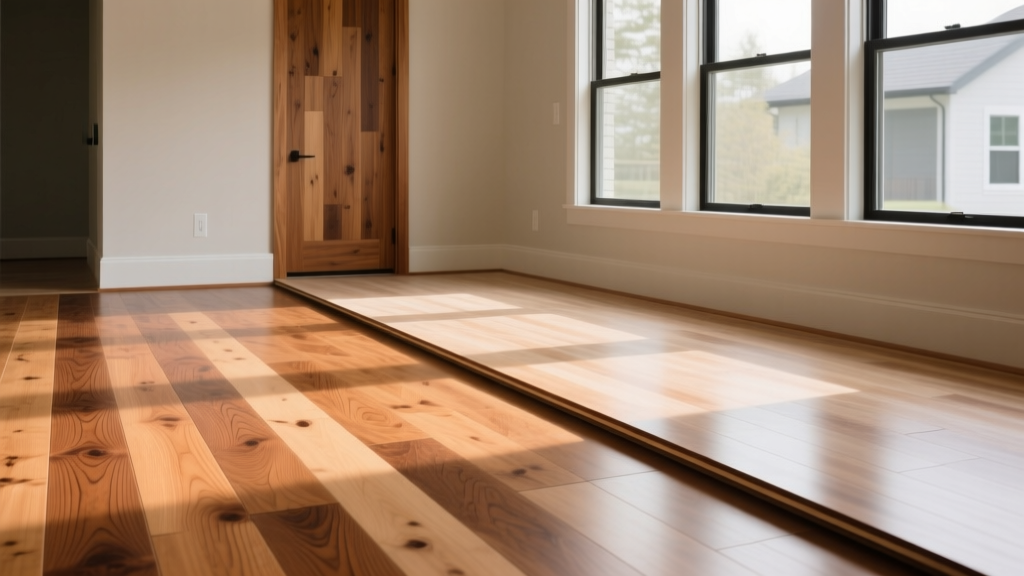
The True Cost of Maple Wood Flooring in 2026
Hard maple (Acer saccharum) remains one of the most durable and sought-after domestic species for residential and commercial flooring, registering at 1,450 lbf on the Janka hardness scale. However, pricing for maple wood flooring varies drastically based on format, grading, and regional supply chain dynamics. According to the USDA Forest Products Laboratory Wood Handbook, hard maple's dense cellular structure makes it highly resistant to indentation, but it also demands precise milling and specialized installation techniques that impact overall project costs.
When budgeting for a maple flooring project, contractors and homeowners must look beyond the base price per square foot. The total financial outlay includes material grading premiums, layout-specific waste factors, moisture mitigation systems, and specialized fasteners required to penetrate dense maple tongues without splitting.
Material Pricing Matrix by Grade and Format
Maple is graded by the National Hardwood Lumber Association (NHLA) standards, which dictate the allowable character marks, color variations, and board lengths. Clear and Select grades command a premium due to their uniform, pale cream appearance, while Common grades offer a more rustic aesthetic at a lower cost.
| Format | Grade | Thickness / Wear Layer | 2026 Price Range (per sq. ft.) |
|---|---|---|---|
| Solid Strip (2 1/4') | Clear | 3/4' | $9.50 - $13.00 |
| Solid Plank (3 1/4' - 5') | Select & Better | 3/4' | $8.00 - $11.50 |
| Solid Plank (4' - 7') | #1 Common | 3/4' | $5.50 - $8.00 |
| Engineered (Multi-ply) | Select | 1/2' (3mm wear layer) | $7.50 - $10.50 |
| Engineered (Multi-ply) | #1 Common | 5/8' (4mm wear layer) | $6.00 - $9.00 |
Precision Quantity Calculator: Beyond Basic Square Footage
The most common error in flooring estimation is applying a flat 10% waste factor across all projects. Maple wood flooring requires a nuanced calculation based on room geometry, layout pattern, and board width. Wide-plank maple (5 inches and above) typically yields less waste than narrow strip flooring because there are fewer end-matches required per square foot, but defective boards in wide-plank runs can cause larger localized shortages.
The Calculation Formula
To determine the exact purchasing quantity, use the following framework:
- Measure Gross Area: Calculate the length x width of all distinct rectangular sections of the room.
- Subtract Fixed Obstacles: Deduct the square footage of kitchen islands, fireplaces, and permanent cabinetry.
- Apply the Layout-Specific Waste Factor: Multiply the net area by the appropriate waste percentage (see matrix below).
- Round Up to Bundle Increments: Solid maple is typically sold in bundles covering 20 to 24 square feet. Always round up to the next full bundle.
Waste Factor Matrix for Maple Flooring
- Standard Parallel Layout (Rectangular Room): 5% - 7%
- Standard Parallel Layout (Irregular/Cut-up Room): 8% - 10%
- 45-Degree Diagonal Layout: 12% - 15%
- Herringbone or Chevron Pattern: 15% - 20%
- Stair Treads and Risers: Calculate by linear piece, add 2 extra boards per flight for miter mistakes.
Hidden Installation and Prep Costs
Material costs represent only 40% to 50% of the total project budget. The National Wood Flooring Association (NWFA) mandates strict subfloor preparation and acclimation protocols for hard maple, which introduce additional labor and material expenses.
Subfloor and Moisture Mitigation
Hard maple is notoriously reactive to seasonal humidity fluctuations. If installed over a concrete slab or a crawlspace, moisture mitigation is non-negotiable.
- Vapor Retarder (Wood Subfloor): Asphalt-laminated kraft paper (e.g., Aquabar 'B') costs approximately $0.15 to $0.25 per square foot. This slows moisture transfer and reduces squeaking.
- Moisture Barrier (Concrete Slab): For engineered maple glued down over concrete, a two-part epoxy moisture mitigation system (like Bona T-400 or Mapei Primer E) adds $2.50 to $4.00 per square foot.
- Subfloor Leveling: Maple requires a subfloor flatness of 1/8' over a 6-foot radius. Self-leveling compound application averages $1.50 to $3.00 per square foot for minor corrections.
Specialized Fasteners for Dense Maple
Because hard maple is exceptionally dense, standard 16-gauge flooring cleats can cause the tongue to split during pneumatic nailing, leading to compromised board stability and lateral movement. Professional installers must use 15.5-gauge, 1.5-inch flooring staples. The narrower staple crown penetrates the dense maple tongue cleanly without fracturing the wood fibers. Budget an extra $0.10 per square foot for specialized fasteners and pneumatic tool rental.
Solid vs. Engineered Maple: Lifecycle Cost Analysis
While solid 3/4' maple is traditionally viewed as the premium choice, engineered maple often provides a better long-term return on investment in specific environments. Solid maple cannot be installed below grade (basements) or over radiant heating systems due to its high dimensional movement coefficient. When exposed to the rapid temperature shifts of radiant heat, solid maple is prone to cupping and checking.
Engineered maple features a cross-banded plywood or HDF core that neutralizes lateral expansion and contraction. A high-quality engineered maple board with a 4mm sawn wear layer can be sanded and refinished up to three times, matching the functional lifespan of solid wood in a residential setting. Furthermore, engineered maple can be floated or glued down, expanding the installation methods available for concrete subfloors without the need for expensive sleeper systems.
Site Finishing vs. Factory Finishing
Unfinished solid maple requires site sanding, staining, and finishing. Hard maple is notoriously difficult to stain evenly due to its tight, closed grain, often resulting in blotchy finishes unless a pre-stain wood conditioner or gel stain is used. Site finishing adds $3.00 to $5.00 per square foot in labor and materials. Conversely, factory-finished (prefinished) maple utilizes UV-cured aluminum oxide coatings that offer superior scratch resistance and eliminate the 3-to-5-day curing downtime, making prefinished boards the standard for 2026 renovations.
Frequently Asked Questions
Why is my maple flooring turning yellow over time?
Hard maple contains natural photosensitive compounds. When exposed to ultraviolet (UV) light, unfinished or oil-modified polyurethane-finished maple will naturally amber or yellow over time. To minimize this, specify a water-based, UV-inhibiting finish (such as Bona Traffic HD) which remains optically clear and preserves the pale, creamy hue of the raw maple.
Can I install solid maple flooring over radiant heat?
The NWFA strongly advises against installing solid strip maple over radiant heating systems. The localized, intense heat causes rapid moisture loss, leading to severe gapping and edge-cupping. If radiant heat is present, you must use engineered maple with a minimum 5-ply core, and ensure the surface temperature of the floor never exceeds 80°F (27°C).
How long must solid maple acclimate before installation?
Acclimation is not based on a fixed number of days, but on moisture content equilibrium. Solid maple must acclimate until its moisture content (MC) is within 2% of the subfloor's MC, and both must be within the normal living environment range (typically 6% to 9% MC). In humid summer months, this may take 7 to 14 days with active HVAC operation and cross-ventilation of the staging area.