Types of Wood Privacy Fences: 2026 Durability & Cost Comparison
Compare the top types of wood privacy fences in 2026. Expert analysis of cedar, redwood, pressure-treated pine, and hardwoods with real costs.

The 2026 Wood Privacy Fence Landscape: Beyond Basic Pine
When evaluating the various types of wood privacy fences for your property, the decision extends far beyond aesthetic preference. In 2026, material science, regional microclimates, and fluctuating lumber supply chains dictate which wood species will survive a decade of ground contact, UV exposure, and wind shear. While composite alternatives have gained market share, natural timber remains the gold standard for structural rigidity and authentic curb appeal. However, selecting the wrong species—or pairing the right species with incompatible fasteners—will result in premature structural failure, tannin streaking, or accelerated rot.
This comparison review dissects the four primary timber categories used in modern privacy fencing, providing exact durability metrics, 2026 installed cost ranges, and the specific metallurgical requirements for hardware.
Head-to-Head Matrix: Top 4 Wood Species for Privacy Fences
| Wood Species | Janka Hardness (lbf) | Natural Decay Resistance | 2026 Installed Cost (per lin. ft.) | Expected Lifespan |
|---|---|---|---|---|
| Pressure-Treated SYP | 690 | High (Chemical) | $28 - $42 | 15 - 20 Years |
| Western Red Cedar | 350 | Moderate-High (Natural) | $55 - $80 | 20 - 25 Years |
| California Redwood | 420 | Very High (Heartwood) | $75 - $110 | 25 - 30 Years |
| Tropical Hardwood (Ipe) | 3,680 | Extreme (Natural) | $120 - $165 | 40 - 50+ Years |
Note: 2026 costs reflect a standard 6-foot-tall privacy fence, including 6x6 posts, 2x4 rails, and 1x6 pickets, fully installed by licensed contractors. Material-only costs are roughly 40-50% of these figures.
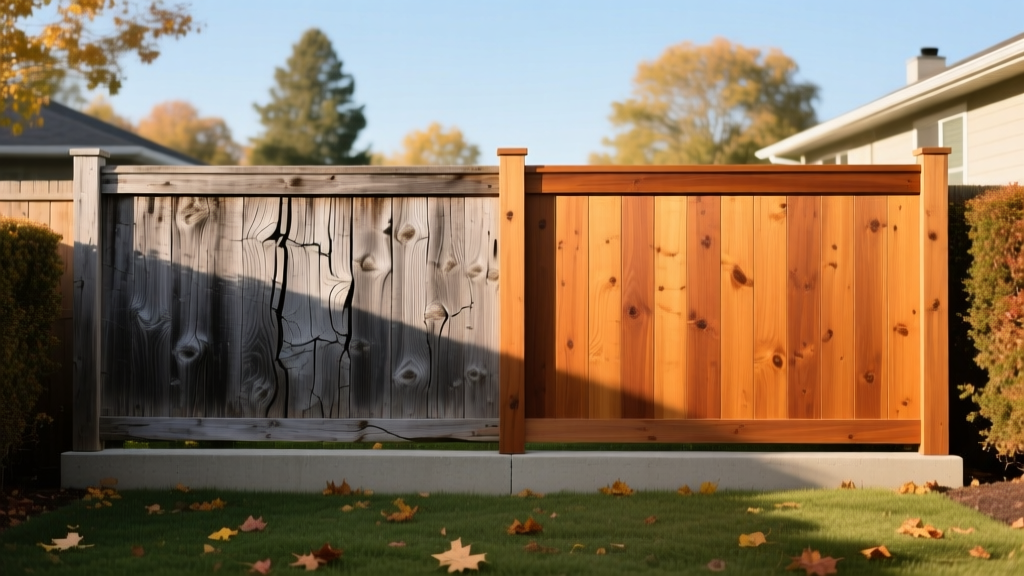
Pressure-Treated Southern Yellow Pine (SYP): The Budget Workhorse
Southern Yellow Pine dominates the entry-level market due to its cellular structure, which readily accepts chemical preservatives. In 2026, the industry standard for residential fence posts is Micronized Copper Azole (MCA-C) or Alkaline Copper Quaternary (ACQ). When purchasing SYP for ground contact, you must verify the AWPA (American Wood Protection Association) use category tag on the lumber.
Critical Standard: AWPA UC4A vs. UC4B
Do not use UC3B (above ground) rated lumber for fence posts. According to the American Wood Protection Association standards, posts set in concrete or soil require a minimum of UC4A (Ground Contact). In areas with high termite pressure or poor drainage, upgrade to UC4B (Heavy Duty Ground Contact), which contains a higher concentration of copper preservatives.
Pros and Cons of Pressure-Treated Pine
- Pros: Lowest initial capital expenditure; widely available at big-box retailers; high structural bending strength (Fb = 1,800 psi for Select Structural).
- Cons: Prone to severe warping, twisting, and checking as it dries; requires annual sealing after the initial moisture content drops below 19%; highly corrosive to standard fasteners.
Fastener Mandate: The copper in MCA and ACQ treatments will corrode standard zinc-plated nails within 24 months. You must use hot-dipped galvanized fasteners meeting ASTM A153 Class D standards, or Type 304 stainless steel for inland applications.
Western Red Cedar: The Dimensional Stability Champion
Western Red Cedar is prized not for its hardness, but for its exceptional dimensional stability. It contains natural extractives (thujaplicins) that act as fungicides, resisting rot and insect attacks without chemical treatments. Cedar shrinks and swells significantly less than pine when exposed to seasonal humidity shifts, meaning your privacy fence pickets will remain flush and straight over decades.
When ordering cedar, understand the grading rules established by the Western Red Cedar Lumber Association. For a premium privacy fence, specify Architectural Knotty (tight, sound knots) or Clear Heart (no sapwood, maximum rot resistance). Avoid 'Select Structural' for pickets, as it is graded for load-bearing capacity, not visual finish.
Warning: The Tannin Bleed Phenomenon
Cedar is rich in water-soluble tannins. If you use standard galvanized or iron fasteners, moisture will trigger a chemical reaction that causes black streaks to run down the pickets. Always use Type 304 or 316 stainless steel ring-shank nails or screws. Furthermore, if painting cedar (rather than staining), you must apply an alkyd-based, stain-blocking primer to prevent tannins from bleeding through the topcoat.
California Redwood: The Premium Standard
Redwood offers a tighter grain and higher density than cedar, providing superior screw-holding capacity and impact resistance. However, the durability of a redwood privacy fence is entirely dependent on the ratio of heartwood to sapwood in the lumber you purchase.
- Heartwood: The dark, inner core of the tree. It is naturally impervious to decay and termites.
- Sapwood: The light-colored outer ring. It contains no natural preservatives and will rot rapidly if exposed to soil moisture.
For fence posts and bottom rails, you must specify All Heart grade. For pickets, Heart B (which allows minor sapwood streaks on one face) is a cost-effective compromise. Due to stringent environmental harvesting regulations in California, redwood prices have surged in 2026. Ensure your supplier provides FSC-certified or SFI-certified lumber to guarantee sustainable forestry practices and legal chain-of-custody documentation.
Tropical Hardwoods (Ipe & Cumaru): The Fortress Option
When clients request a 'lifetime' privacy fence, tropical hardwoods like Ipe (Tabebuia serratifolia) and Cumaru (Dipteryx odorata) are the only natural woods that deliver. With Janka hardness ratings exceeding 3,500 lbf, these woods are virtually immune to scratching, denting, and wood-boring insects.
Installation Realities for High-Density Hardwoods
Working with Ipe requires specialized tooling and techniques that standard fencing contractors often lack:
- Pre-Drilling is Mandatory: You cannot nail Ipe. Every screw hole must be pre-drilled with a carbide-tipped bit, and the hole must be countersunk to accommodate the wood's slight seasonal expansion.
- End-Grain Sealing: Freshly cut ends of Ipe will check (split) within hours if not immediately sealed with a commercial wax emulsion like Anchorseal.
- Hidden Fastener Systems: Because face-screwing requires plugging hundreds of holes with wood dowels and glue, modern Ipe fences utilize hidden stainless steel biscuit joinery or specialized clip systems routed into the board edges.
Critical Installation Variables That Void Warranties
The most common failure point in any wood privacy fence is not the picket, but the post base. In 2026, structural engineers and fencing experts universally condemn the 'concrete encapsulation' method, where a wooden post is dropped into a hole and completely surrounded by wet concrete. This creates a moisture trap that accelerates rot at the concrete-to-wood interface.
The Correct Post-Setting Protocol
1. Excavate the post hole to a depth of 36 inches (or below the local frost line).
2. Add 6 inches of crushed 3/4-inch gravel at the base and tamp it solid. This provides hydraulic drainage, preventing water from pooling under the post.
3. Set the pressure-treated (UC4A minimum) post on the gravel.
4. Pour concrete only up to 2 inches below the final grade level.
5. Slope the top of the concrete collar away from the wood post at a 45-degree angle to shed surface runoff.
Decision Framework: Matching Wood Type to Your Microclimate
Use this matrix to select the optimal wood species based on your specific environmental stressors:
- Coastal / Salt-Spray Zones (Within 1 mile of ocean): Western Red Cedar with Type 316 marine-grade stainless steel fasteners. Avoid pressure-treated pine, as the salt accelerates the corrosion of the galvanized coatings.
- High Termite / Formosan Zones (Deep South, Hawaii): Tropical Hardwoods (Ipe) or UC4B Heavy-Duty Pressure-Treated Pine. Natural cedar and redwood sapwood will be compromised by aggressive subterranean termite colonies.
- High Wind / Hurricane-Prone Regions: Pressure-Treated SYP or Redwood, utilizing 6x6 posts (rather than 4x4s) set 42 inches deep, with 2x6 horizontal rails screwed and glued using polyurethane construction adhesive for maximum racking resistance.
- Arid / High UV Zones (Southwest): Western Red Cedar. Pine will warp and split aggressively under intense, dry heat unless heavily shaded and continuously sealed.
Frequently Asked Questions
Can I use composite posts with natural wood pickets?
Yes, and this is a highly recommended hybrid approach in 2026. Using structural composite lumber (SCL) or galvanized steel posts wrapped in composite sleeves eliminates the ground-contact rot issue entirely, while allowing you to use natural cedar or redwood pickets for the visual and tactile benefits of real wood.
How long should I wait to stain a new pressure-treated pine fence?
Historically, contractors advised waiting 6 to 12 months for PT lumber to 'dry out.' Modern micronized treatments (MCA-C) have lower initial moisture content. You should perform the 'water drop test': sprinkle water on the wood. If it beads up, the wood is still too wet for penetrating oil-based stains. If it absorbs immediately, it is ready. In most climates, this takes 60 to 90 days of dry weather.
Is Ipe wood fire-resistant?
Yes. Ipe possesses a Class A fire rating (ASTM E84), identical to concrete and steel. This makes it one of the only wood species legally permitted for privacy fencing and decking in California's strict Wildland-Urban Interface (WUI) fire zones, provided the local building authority approves the specific assembly.
Written by
James ThorntonJames Thornton is a construction industry veteran with 25 years of hands-on experience in wood framing, lumber grading, and residential building codes. He started as a framing carpenter in rural Oregon, earned his ICC Residential Building Inspector certification, and eventually became a senior plan reviewer for the City of Portland Bureau of Development Services. James holds a B.S. in Wood Science & Technology from Oregon State University and is a certified lumber grader through the West Coast Lumber Inspection Bureau (WCLIB). He has inspected over 3,000 residential construction sites and authored the city's internal guide on advanced framing techniques (2x6 at 24" O.C.). James lives in Bend, OR, where he builds custom timber-frame cabins and competes in lumberjack sports.
More from James Thornton
View all
Insulation
Best Home Insulation Materials: Complete 2026 Guide
Compare top home insulation materials for 2026. Find R-values, installed costs per square foot, and best uses for fiberglass, spray foam, and mineral wool.
Aug 4, 2026

Sustainable Building
Certify Your Green Building Material for LEED and WELL
Step-by-step guide to certifying a green building material for LEED v5 and WELL v2. Master EPDs, HPDs, and VOC limits for 2026 project specifications.
Aug 4, 2026

Stone & Masonry
Veneer Stacked Stone Panels: Interior Design & Style Showcase
Discover how veneer stacked stone panels transform interiors. Explore modern design profiles, material pairings, and technical installation specs.
Aug 4, 2026