Name a Type of Wood for Outdoor Use: Naturally Rot-Resistant Species
Discover which woods survive ground contact without chemicals. We compare Ipe, Black Locust, and Cedar for natural rot resistance and preservation.

The "Name a Type of Wood" Challenge: Natural Durability vs. Chemical Treatment
When architects, builders, or building inspectors ask you to name a type of wood that can handle direct ground contact or harsh exterior elements without relying on toxic chemical preservatives like Alkaline Copper Quaternary (ACQ) or Copper Azole (CA-C), the answer lies in heartwood extractives. While pressure-treated Southern Yellow Pine dominates the commercial market due to its low upfront cost, naturally rot-resistant hardwoods and select softwoods offer superior longevity, structural stability, and environmental safety.
This guide cuts through the marketing fluff to examine the biological mechanisms that make certain woods naturally immune to decay fungi and termites. We will evaluate specific species against the American Wood Protection Association (AWPA) Use Category System, detail exact fastener requirements to prevent galvanic corrosion, and outline the precise maintenance protocols required to maximize the lifespan of these premium materials in 2026.
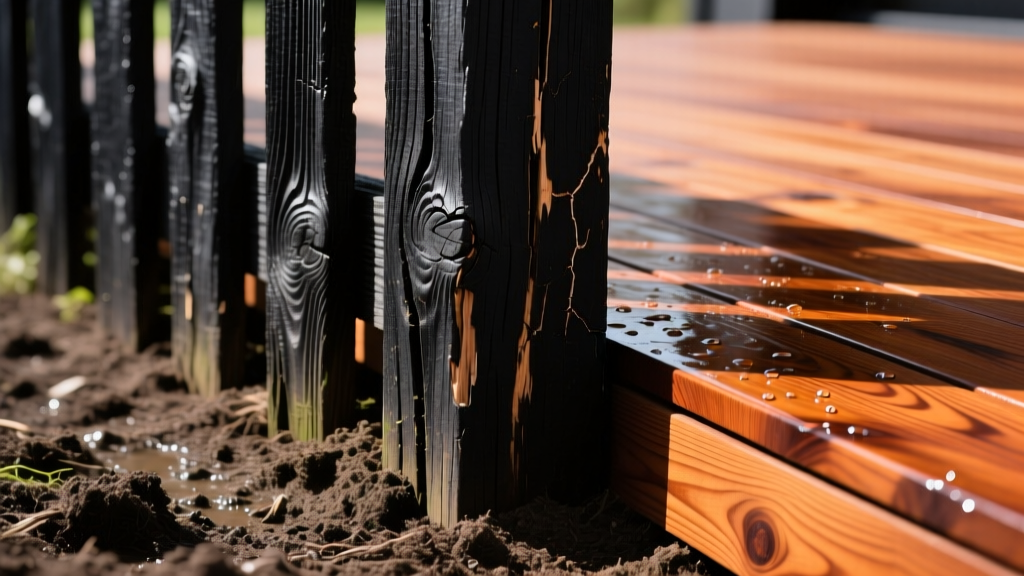
The Science of Natural Wood Preservation
Natural decay resistance is not a property of the wood's cellulose or lignin structure; it is entirely dependent on extractives—complex chemical compounds deposited in the heartwood as the tree matures. Sapwood, regardless of the species, contains virtually no extractives and is highly susceptible to rot. Therefore, only the heartwood of durable species should be specified for exterior applications.
- Thujaplicins and Phenols: Found in Western Red Cedar, these compounds are highly toxic to decay fungi but are water-soluble, meaning they can slowly leach out in constant ground contact.
- Tannins and Polyphenols: White Oak and Ipe contain high concentrations of tannic acid, which acts as a natural fungicide and deters wood-boring insects.
- Flavonoids and Resins: Black Locust produces robinin and other flavonoids, combined with dense tyloses that block the wood's vascular pores, making it virtually impermeable to moisture and fungal hyphae.
AWPA Use Categories & Species Performance Matrix
The AWPA categorizes exterior wood exposure into distinct Use Categories (UC). UC3B covers above-ground exterior use, while UC4A, UC4B, and UC4C cover increasing severities of ground contact. Below is a performance matrix of the top naturally durable species based on data from the USDA Forest Products Laboratory.
| Wood Species | Janka Hardness (lbf) | AWPA Decay Class | UC3B Lifespan (Above Ground) | UC4A Lifespan (Ground Contact) |
|---|---|---|---|---|
| Ipe (Brazilian Walnut) | 3,510 | Class 1 (Highly Resistant) | 40-75+ years | 25-40 years |
| Black Locust | 1,700 | Class 1 (Highly Resistant) | 30-50 years | 20-30 years |
| Cumaru (Brazilian Teak) | 3,540 | Class 1 (Highly Resistant) | 30-50 years | 20-25 years |
| White Oak | 1,360 | Class 2 (Resistant) | 20-30 years | 10-15 years |
| Western Red Cedar | 350 | Class 1-2 (Resistant) | 15-25 years | 5-7 years (Not recommended) |
Species Deep-Dive: Selecting the Right Timber
Black Locust (Robinia pseudoacacia)
Often cited as the premier domestic alternative to tropical hardwoods, Black Locust is exceptionally dense and stable. Its shrinkage rate is remarkably low (radial 4.6%, tangential 7.2%), meaning it resists cupping and checking far better than treated pine. For structural ground-contact applications like fence posts, retaining wall timbers, or pier blocks, Black Locust is the most sustainable and durable domestic choice. Ensure you are purchasing true Black Locust, as Honey Locust is significantly less rot-resistant.
Ipe (Handroanthus spp.)
Ipe remains the gold standard for high-traffic exterior decking and boardwalks. Its extreme density (3,510 lbf) makes it highly resistant to physical abrasion and splintering. However, its hardness requires pre-drilling for all fasteners and specialized carbide-tipped saw blades. From a preservation standpoint, Ipe requires zero chemical treatment, but its high oil content can interfere with certain film-forming finishes.
Western Red Cedar (Thuja plicata)
While famous for its aromatic oils and natural beauty, Western Red Cedar is a softwood best reserved for UC3B (above-ground) applications like siding, fascia, and covered porch ceilings. When placed in direct ground contact (UC4A), the water-soluble thujaplicins leach into the soil rapidly, leading to structural failure within a decade. Never use cedar for structural posts embedded in concrete or soil.
⚠️ CRITICAL WARNING: Fastener Corrosion & Tannin Bleed
High-tannin woods like White Oak, Ipe, and Cedar will rapidly corrode standard zinc-plated or electro-galvanized fasteners. The tannic acid reacts with the zinc and iron, causing black streaking (tannin bleed) and catastrophic fastener failure within 2 to 4 years. Rule: Always use 304-grade stainless steel for standard exterior applications, and upgrade to 316-grade marine stainless steel for coastal environments or when using high-tannin species in ground contact. Hot-dipped galvanized (HDG) fasteners are acceptable for pressure-treated pine but will fail prematurely with Ipe or Oak.
Preserving the "Untreated": Maintenance Protocols
Natural rot resistance protects against biological decay, but it does not protect against ultraviolet (UV) degradation or moisture-induced dimensional changes. UV radiation breaks down lignin at the wood's surface, causing the wood to turn silver-gray and develop microscopic surface checks that can trap moisture. To preserve the structural integrity and aesthetic of natural woods, follow these specific protocols.
Step-by-Step End-Grain Sealing
The end grain of a board absorbs moisture up to 50 times faster than the face grain. Unsealed end grain is the primary entry point for moisture, leading to internal checking and fungal infiltration.
- Cut and Prep: Make clean cuts using a sharp blade to avoid crushing the wood fibers.
- Timing: Apply end-grain sealer within 10 minutes of cutting. Once the wood begins to dry, the sealer cannot penetrate deeply enough to be effective.
- Product Selection: Use a wax-based emulsion sealer like Anchorseal or Green Wood End Sealer. Do not use standard polyurethane or paint, which will peel as the wood expands and contracts.
- Application: Brush on a heavy, milky coat until the end grain stops absorbing the liquid. Two coats are required for hardwoods over 2,000 lbf Janka.
Penetrating Oil vs. Film-Forming Finishes
For Ipe, Cumaru, and Cedar, avoid film-forming finishes (varnishes, solid stains, polyurethanes). The natural oils and high density of these woods prevent proper adhesion, and UV exposure will cause the film to blister and peel within 18 months. Instead, use penetrating hardwood oils (such as Penofin Hardwood Formula or Osmo Decking Oil) that contain UV inhibitors and mildewcides. These oils soak into the wood fibers, nourish the timber, and fade gradually rather than peeling, making annual reapplication as simple as cleaning and wiping on a fresh coat.
2026 Cost Analysis: Natural Hardwoods vs. Pressure-Treated Pine
When evaluating the ROI of naturally resistant woods, builders must look beyond the initial board-foot cost and factor in the lifecycle cost, including chemical treatments, fastener upgrades, and replacement labor.
| Material | Avg. 2026 Material Cost (per LF) | Required Fastener Cost Premium | Estimated 30-Year Lifecycle Cost |
|---|---|---|---|
| Pressure-Treated Pine (UC4A) | $2.85 - $3.50 | Low (HDG acceptable) | High (Requires replacement at year 15-20) |
| Black Locust (Domestic) | $7.50 - $9.50 | High (304 SS required) | Low (Zero replacements needed) |
| Ipe (Imported Tropical) | $9.00 - $12.50 | High (316 SS recommended) | Low (Zero replacements needed) |
For structural ground-contact applications, Black Locust offers the best balance of domestic availability, natural durability, and long-term cost efficiency. For high-visibility architectural decking where extreme surface hardness is required, Ipe remains unmatched. By understanding the biological extractives and AWPA Use Categories, you can confidently name a type of wood that will outlast chemical alternatives while meeting the highest standards of sustainable construction.
For further reading on wood durability and preservative standards, consult the American Wood Protection Association (AWPA) Use Category System and the USDA Forest Products Laboratory guidelines.
Written by
Priya KapoorPriya Kapoor is a real estate market analyst and construction economics researcher with expertise in housing affordability, development feasibility, and infrastructure investment. She holds a Master of Regional Planning from Cornell University and previously worked as a senior analyst at CBRE's Investment Properties group, where she modeled returns for $4B in mixed-use development pipelines. Priya now runs an independent research practice advising developers, municipalities, and REITs on construction cost forecasting and market timing. She publishes the quarterly "BuildMat Market Pulse" report tracking material price indices across 12 commodity categories. Based in Austin, TX, Priya serves on the board of Habitat for Humanity Austin and is a marathon runner.
More from Priya Kapoor
View all
Construction Cost
Cost to Build a 1600 Sq Ft Home in 2026: Full Breakdown
Accurate 2026 cost to build a 1600 sq ft home—material, labor, and regional pricing breakdowns included. Plan your budget with real-time estimates.
Aug 11, 2026

Wood & Lumber
Name the Types of Wood for Pressure Treatment and Preservation
Learn how to name the types of wood best suited for pressure treatment. Compare species treatability, chemical retention levels, and 2026 preservation costs.
Aug 4, 2026

Stone & Masonry
Stone Veneer Suppliers Lindenhurst: 2026 Cost Analysis
Analyze 2026 stone veneer costs in Lindenhurst, NY. Compare local supplier pricing, delivery fees, and Suffolk County installation labor rates.
Aug 4, 2026