Structural Types of Treated Wood for Load-Bearing Framing
Compare structural types of treated wood for load-bearing framing. Learn AWPA retention levels, KDAT specs, and fastener compatibility matrices.
The Chemistry of Structural Wood Preservation
When specifying lumber for structural applications in high-moisture, ground-contact, or termite-prone environments, standard SPF (Spruce-Pine-Fir) or untreated Southern Yellow Pine (SYP) will rapidly succumb to fungal decay and insect infiltration. The phrase 'types of treated wood' encompasses a variety of chemical delivery systems designed to protect the cellulose and lignin matrix of the wood. Since the residential phase-out of Chromated Copper Arsenate (CCA) in 2003, the structural framing industry has transitioned to copper-based and borate-based preservatives. Understanding the specific chemical formulation is not merely an academic exercise; it directly dictates the required fastener metallurgy, the allowable moisture content at installation, and the long-term deflection characteristics of the load-bearing assembly.
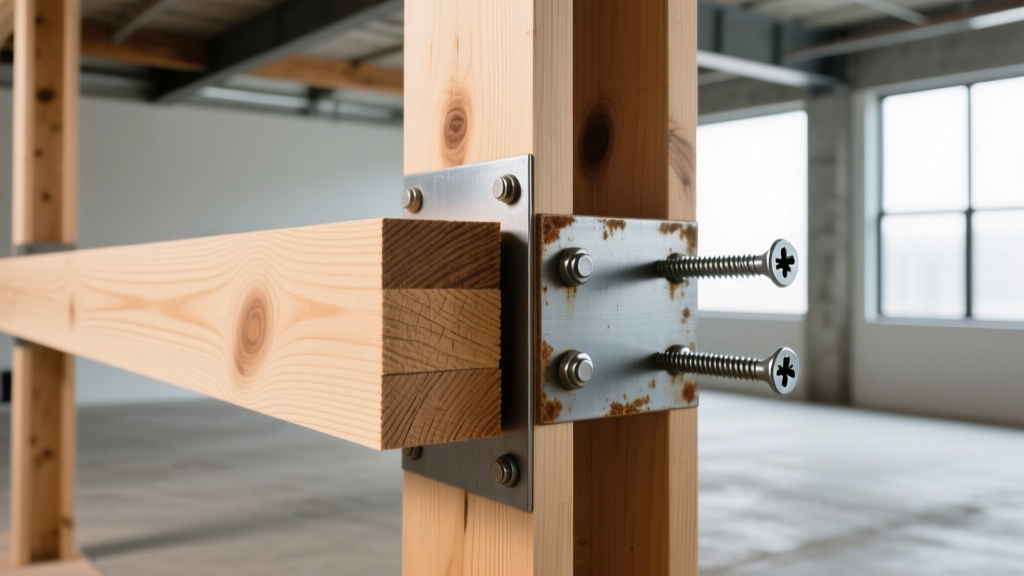
Modern copper-based preservatives (ACQ and MCQ) are highly corrosive to standard galvanized steel and aluminum. Using electroplated zinc fasteners or standard shear walls in ACQ-treated structural framing will result in catastrophic hardware failure within 3 to 5 years.
Primary Types of Treated Wood for Structural Framing
Structural engineers and framers must select the preservative type based on the specific Use Category (UC) defined by the American Wood Protection Association (AWPA). Below are the dominant formulations used in load-bearing construction today.
Alkaline Copper Quaternary (ACQ)
ACQ relies on dissolved copper as the primary fungicide and a quaternary ammonium compound as the insecticide and co-biocide. Because the copper is dissolved in an alkaline solution, it penetrates dense species like Southern Yellow Pine exceptionally well. However, the high alkalinity and free copper ions make ACQ the most corrosive preservative on the market. It requires a minimum of G185 hot-dipped galvanized steel (1.85 oz/ft² of zinc) or Type 304 stainless steel for all structural connectors, joist hangers, and anchor bolts.
Micronized Copper Azole (MCA / MCQ)
Instead of dissolving copper in an alkaline solvent, MCA suspends micron-sized (sub-micron) copper particles in water, paired with an azole co-biocide (typically tebuconazole). This formulation is less alkaline and significantly less corrosive than ACQ, allowing for the use of standard G90 galvanized hardware in some above-ground applications, though ZMAX (Z44) coatings remain the industry standard for structural peace of mind. MCA also yields a cleaner, more natural wood color, making it preferable for exposed structural beams or timber framing where aesthetics matter alongside structural integrity.
Borate-Treated Lumber (SBX / DOT)
Disodium octaborate tetrahydrate (DOT) is a water-soluble, non-corrosive preservative. Borate-treated wood is completely safe for all standard steel and aluminum hardware. It is highly effective against Formosan subterranean termites and wood-decaying fungi. However, because borates are water-soluble, they will leach out if exposed to liquid water. Therefore, borate-treated structural lumber is strictly limited to interior, above-ground, weather-protected applications—such as sill plates over concrete foundations, interior load-bearing walls in termite zones, and protected roof trusses.
Preservative Comparison and Cost Matrix
The following matrix outlines the structural specifications, hardware requirements, and approximate 2026 material costs for standard dimensional framing lumber (SYP 2x6x8).
| Preservative Type | Active Biocides | Min. Hardware Req. | AWPA Use Categories | Avg. Cost (2x6x8) |
|---|---|---|---|---|
| ACQ | Copper, Quaternary Ammonium | G185 HDG or SS 304 | UC3B, UC4A, UC4B | $10.50 - $13.00 |
| MCA / MCQ | Micronized Copper, Tebuconazole | ZMAX (Z44) or HDG | UC2, UC3B, UC4A | $11.00 - $14.50 |
| Borate (SBX) | Disodium Octaborate Tetrahydrate | Standard G90 / Aluminum | UC2 (Interior Only) | $8.50 - $11.00 |
Understanding AWPA Retention Levels and Use Categories
Specifying the chemical type is only half the battle; the retention level (measured in pounds per cubic foot, pcf) dictates the structural lifespan. The American Wood Protection Association (AWPA) categorizes end-use environments to standardize these retention levels. For structural framing, you will primarily encounter three categories:
- UC3B (Exterior, Above Ground, Coated): Requires 0.25 pcf for MCA and 0.40 pcf for ACQ. Used for exterior load-bearing walls, covered decks, and structural posts not in contact with soil.
- UC4A (Ground Contact): Requires 0.31 pcf for MCA and 0.60 pcf for ACQ. Mandatory for structural posts embedded in concrete, retaining walls, and sill plates resting on concrete slabs.
- UC4B (Heavy Duty Ground Contact): Requires 0.80 pcf. Reserved for critical structural components subject to severe decay hazards, such as permanent wood foundations and structural columns in freshwater environments.
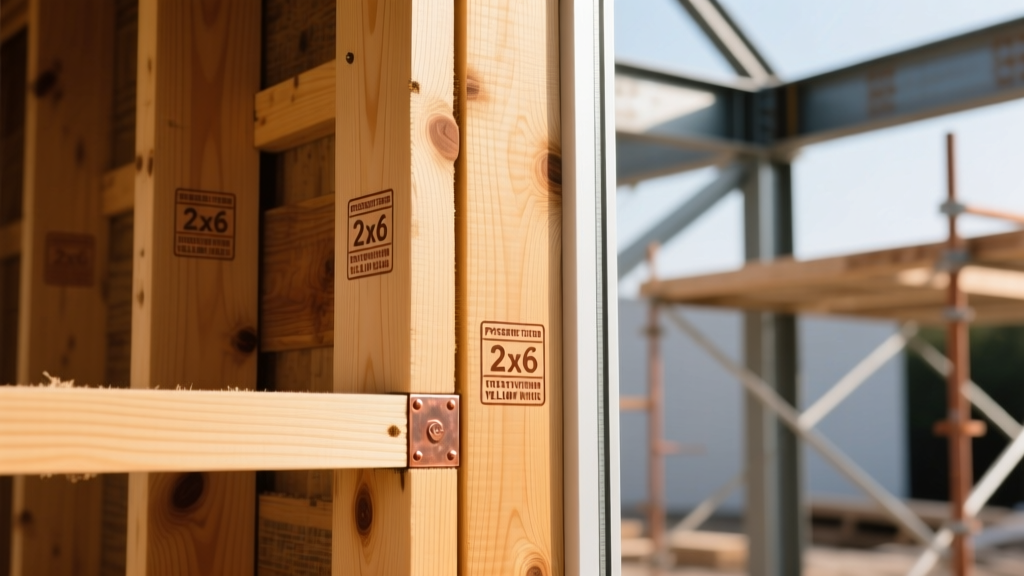
Never assume a stack of treated lumber is rated for ground contact just because it looks wet or green. Always verify the AWPA Use Category (e.g., UC4A) and the specific retention level printed on the end tag. Installing UC3B lumber in a ground-contact structural post application violates the International Building Code (IBC) and voids the manufacturer's warranty.
Structural Failure Modes: Moisture, Shrinkage, and Creep
The most common structural failures involving treated wood are not caused by biological decay, but by improper moisture management during construction. Standard pressure-treated lumber is often sold 'wet' (moisture content between 15% and 19%). When this lumber is used to frame interior load-bearing walls or enclosed exterior assemblies, it undergoes significant dimensional shrinkage as it equilibrates to the interior environment (typically 8-12% MC).
The Shrinkage Deflection Problem: Southern Yellow Pine shrinks tangentially at a rate of roughly 6.6% from green to oven-dry. A wet 2x6 top plate can shrink by 1/8 to 3/16 of an inch as it dries. In a multi-story load-bearing wall assembly, this cumulative shrinkage can lead to truss uplift, drywall tearing at the ceiling line, and misaligned structural headers. Furthermore, as wet treated joists dry, they are prone to severe checking (longitudinal splitting) and twisting, which compromises the withdrawal capacity of structural screws and nails.
The KDAT Solution: For all enclosed structural framing, specify Kiln-Dried After Treatment (KDAT) lumber. KDAT lumber is re-dried in a kiln after the preservative fixation process, bringing the moisture content down to 19% or less (often closer to 15%). According to the Southern Pine Council, KDAT lumber minimizes post-installation shrinkage, reduces checking, and holds structural fasteners significantly tighter. While KDAT commands a 15-20% price premium over wet treated lumber, it eliminates thousands of dollars in drywall and framing callback repairs.
Fastener and Hardware Compatibility Matrix
The interaction between preservative chemicals and structural hardware is governed by galvanic corrosion principles. The USDA Forest Products Laboratory provides extensive data on these interactions. Below is the strict hardware matrix for structural connections.
| Hardware Type | ACQ Compatibility | MCA/MCQ Compatibility | Borate (SBX) Compatibility |
|---|---|---|---|
| Electroplated Zinc (G60) | FAIL - Do Not Use | FAIL - Do Not Use | PASS |
| Hot-Dipped Galvanized (G90) | FAIL - Do Not Use | MARGINAL (Above Ground) | PASS |
| HDG (G185) / ZMAX (Z44) | PASS (Minimum Req.) | PASS | PASS |
| Type 304 Stainless Steel | PASS (Severe Env.) | PASS | PASS |
| Aluminum Connectors | FAIL - Severe Reaction | FAIL - Severe Reaction | PASS |
Field Application Best Practices for Structural Integrity
Even the highest grade of UC4B treated lumber will fail if the preservative envelope is breached during construction and left unprotected. When structural beams, posts, or joists are cut, notched, or drilled in the field, the exposed untreated core becomes a direct pathway for fungal hyphae and termite tunneling.
- Mandatory Field Treatment: AWPA standards require that all field cuts and drill holes in ground-contact (UC4A/UC4B) lumber be treated with a copper naphthenate-based preservative (e.g., Cuprinol Green or Osmose Woodlife CopperCoat). Apply two liberal coats to the end grain, allowing 2 hours of drying time between coats. End grain absorbs moisture and biocides at a rate 20 to 50 times faster than the face grain.
- Pre-Drilling Dense Species: Southern Yellow Pine is incredibly dense, and the pressure treatment process compresses the wood fibers further. Driving 1/2-inch structural lag screws or large timber screws near the ends of treated SYP beams without pre-drilling will cause catastrophic end-splitting, destroying the shear capacity of the joint. Always pre-drill pilot holes at 75% of the fastener's root diameter for structural connections in treated lumber.
- Elevation and Storage: Never store KDAT or wet treated structural lumber directly on bare soil before framing. The capillary action will draw ground moisture into the end grain, negating the kiln-drying process and introducing localized decay fungi before the building envelope is even sealed. Store all structural timber on elevated, banded dunnage covered with breathable tarps.
Written by
Elena RodriguezElena Rodriguez is a civil engineer and technical writer specializing in concrete technology, masonry systems, and ASTM/ACI compliance. She earned her B.S. in Civil Engineering from Texas A&M University and spent a decade at a materials testing laboratory, performing over 2,000 concrete compressive strength tests and masonry prism evaluations. Elena is an ACI-certified Field Testing Technician (Grade I) and a member of ASTM Committee C12 on Natural Building Stone. She currently consults on forensic engineering cases involving concrete failures and moisture intrusion. Based in San Antonio, TX, Elena is a proud member of the Society of Women Engineers (SWE) and coaches her daughter's FIRST Robotics team.
More from Elena Rodriguez
View all
Walls & Panels
Cost Analysis: Light Gauge Steel Framing Advantages and Disadvantages
Evaluate light gauge steel framing advantages and disadvantages through a strict cost analysis lens, comparing material, labor, and lifecycle expenses.
Aug 4, 2026

Walls & Panels
Gypsum Board Types: Exact Specifications, Thickness & Dimensions
Compare standard, Type X, and moisture-resistant gypsum board types. Get exact specifications, thicknesses, dimensions, and ASTM standards for your project.
Aug 4, 2026

Fire Resistance
Best Fire-Resistant Outdoor Decking Materials: 2026 Buyer Guide
Discover the best fire-resistant outdoor decking materials for 2026. Compare Class A PVC, aluminum, and hardwood options for WUI compliance and safety.
Aug 4, 2026