Types of Wood Nails for Pressure-Treated Lumber Explained
Discover which types of wood nails prevent corrosion in pressure-treated lumber. Compare hot-dipped galvanized, stainless steel, and polymer-coated options.

The Chemistry of Treated Lumber and Nail Corrosion
Pressure-treated lumber is essential for structural longevity in ground-contact and high-moisture applications, but the chemical preservatives used to protect the wood are inherently hostile to standard steel fasteners. Modern wood preservation relies heavily on copper-based compounds. When you drive a standard bright steel nail into alkaline copper quaternary (ACQ) or copper azole (CA) treated lumber, you create a galvanic cell. The copper in the wood preservative acts as a cathode, while the steel nail acts as an anode. In the presence of moisture, the steel nail rapidly oxidizes and dissolves, leading to catastrophic structural failure long before the wood itself decays.
Understanding the specific types of wood nails required for preserved lumber is not merely a code compliance issue; it is a fundamental requirement for maintaining the structural integrity of decks, retaining walls, and exterior framing. The American Wood Protection Association (AWPA) strictly categorizes treated wood by Use Category (UC), ranging from UC3B (above ground, exposed) to UC4C (heavy-duty ground contact), and each category demands a specific threshold of fastener corrosion resistance.
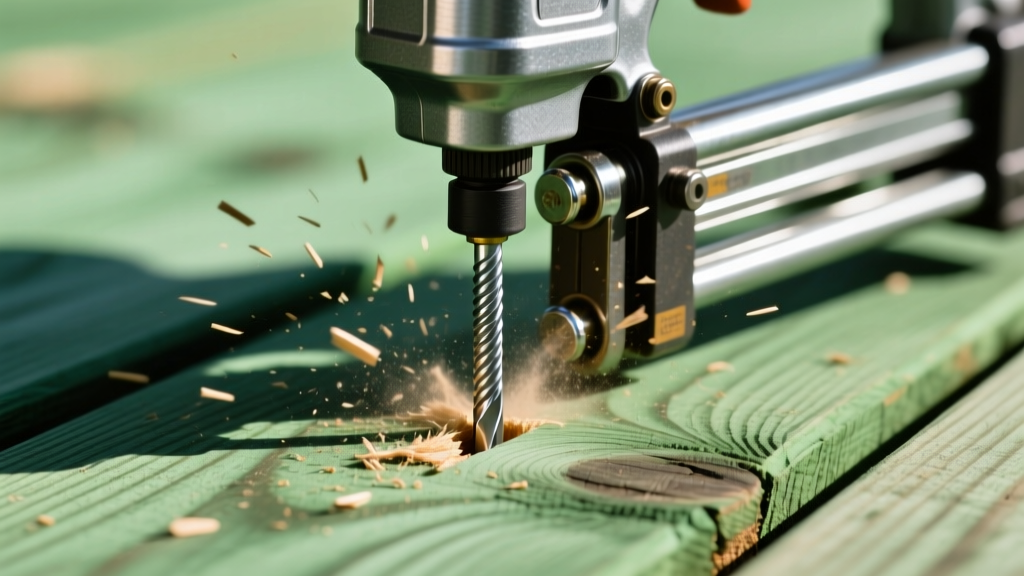
Evaluating Types of Wood Nails for Preserved Wood
Selecting the correct fastener requires matching the nail's metallurgical properties to the specific preservative retention level of the lumber. Here is a technical breakdown of the approved nail types.
Hot-Dipped Galvanized (HDG) Nails
Hot-dipped galvanized nails are the industry baseline for most above-ground (UC3B) and standard ground-contact (UC4A) treated lumber. Unlike electro-galvanized nails, which possess a microscopically thin zinc coating that fails rapidly in treated wood, HDG nails are submerged in molten zinc. This creates a metallurgical bond and a thick, durable outer layer of zinc-iron alloy.
- Specification: Must meet ASTM A153, Class D for nails.
- Coating Weight: Minimum 1.0 ounce per square foot of surface area.
- Application Limit: Suitable for ACQ and CA treated wood in UC3B and UC4A. Not recommended for UC4B (permanent wood foundations) or high-salt coastal environments, as the zinc sacrificial layer will eventually deplete.
Type 304 vs. Type 316 Stainless Steel Nails
Stainless steel nails offer the highest tier of corrosion resistance by integrating chromium and nickel directly into the steel alloy, forming a passive oxide layer that self-heals when scratched.
- Type 304 / 305 Stainless: Contains 18% chromium and 8% nickel. Ideal for ACQ, CA, and MicroPro (MCQ) treated lumber in severe above-ground and standard ground-contact applications. Type 305 includes additional nickel to reduce magnetic permeability, preventing the nail from attracting iron particles during manufacturing.
- Type 316 Stainless: Contains 16% chromium, 10% nickel, and 2% molybdenum. The molybdenum specifically prevents pitting corrosion caused by chlorides. Type 316 is mandatory for treated lumber used in saltwater coastal zones (within 3,000 feet of the ocean) or for lumber treated to UC4B and UC4C retention levels, where copper concentrations are highest.
Polymer-Coated and Ceramic-Coated Nails
Advancements in polymer chemistry have introduced non-metallic barrier coatings that physically isolate the steel core from the copper-laden wood. Premium polymer-coated nails (such as those utilizing proprietary epoxy-nylon blends) are tested to withstand 1,000 to 1,500 hours in continuous salt-spray chambers (ASTM B117).
These nails offer a distinct advantage in driving friction. The slick polymer coating reduces the coefficient of friction during pneumatic driving, preventing the wood fibers from tearing and reducing the likelihood of the nail head blowing through the joist. However, if the coating is chipped or scraped off during driving, the exposed steel core becomes highly vulnerable to localized galvanic corrosion.
Never use aluminum flashing or aluminum joist tape in direct contact with copper-based treated lumber, even if you are using stainless steel nails. The aluminum will act as a sacrificial anode to the copper, rapidly corroding the flashing and compromising your waterproofing layer. Always use copper, PVC, or heavy-duty butyl-rubber flashing systems with treated wood.
Nail Material Compatibility Matrix
The USDA Forest Products Laboratory provides extensive data on fastener degradation. The following matrix outlines the minimum acceptable nail materials based on the AWPA Use Category of the pressure-treated lumber.
| AWPA Use Category | Application Scenario | Minimum Nail Requirement | Premium / Coastal Requirement |
|---|---|---|---|
| UC3B | Decking, above-ground framing | HDG (ASTM A153) or Polymer-Coated | Type 304 Stainless Steel |
| UC4A | Standard ground contact, posts | HDG (ASTM A153, 1.0 oz/ft2) | Type 304 or 316 Stainless Steel |
| UC4B | Permanent wood foundations, critical structures | Type 304 Stainless Steel | Type 316 Stainless Steel |
| UC4C | Heavy-duty ground contact, saltwater exposure | Type 316 Stainless Steel | Type 316 Stainless Steel |
Mechanical Grip: The Shrinkage Factor in Treated Wood
Corrosion resistance is only half the battle. The physical mechanics of how the nail holds the wood together are equally critical when dealing with preserved lumber. Pressure-treated wood is typically sold at a high moisture content, often between 35% and 45%. As the wood acclimates to its environment and dries to the equilibrium moisture content (EMC) of roughly 12% to 19%, it shrinks.
Tangential shrinkage in Southern Yellow Pine (the most common species used for treatment) can reach 5% to 8%. This massive volumetric reduction causes the wood fibers to pull away from smooth-shank nails, drastically reducing withdrawal resistance. According to the American Wood Council, a smooth-shank nail driven into green treated lumber can lose up to 70% of its initial withdrawal capacity once the wood dries.
Mandatory Use of Ring Shank and Screw Shank Nails
To counteract wood shrinkage, you must exclusively use deformed shank nails in pressure-treated applications.
- Ring Shank Nails: Feature concentric ridges that act like one-way barbs. As the wood shrinks and attempts to pull away, the ridges lock into the wood fibers, providing up to 300% greater withdrawal resistance than smooth shanks.
- Screw Shank Nails: Feature a helical thread that twists into the wood. These are preferable for extremely dense treated hardwoods or when driving nails near the end-grain of joists, as they reduce the splitting force compared to the aggressive wedging action of ring shanks.
Field Failures: Common Mistakes with Nails in Treated Lumber
Even experienced contractors make critical errors when fastening treated wood. Avoid these specific field failures:
Using stainless steel nails to secure a hot-dipped galvanized steel joist hanger to treated lumber creates a bimetallic couple. The galvanized hanger will corrode rapidly to protect the stainless steel nail. Always match the fastener material to the connector material, or upgrade both to stainless steel.
Setting the pneumatic nailer pressure too high drives the nail head below the wood surface, stripping the polymer coating off the shank and exposing the steel core to the copper preservatives. Calibrate your nailer to sit the head perfectly flush with the wood surface.
Frequently Asked Questions
Can I use electro-galvanized nails for temporary treated wood forms?
No. Electro-galvanized nails have a zinc coating measured in millionths of an inch, compared to the thick metallurgical bond of HDG nails. The alkaline environment of ACQ treated wood will strip electro-galvanized coatings in a matter of weeks, leading to rust streaks and rapid structural degradation.
Are copper-treated woods safe for aluminum nails?
Absolutely not. Aluminum is highly anodic to copper. If you use aluminum nails in ACQ or CA treated wood, the nails will literally dissolve into white, powdery aluminum oxide within a single wet season, resulting in immediate joint failure.
Do I need stainless steel nails for MicroPro (MCQ) treated wood?
Written by
James ThorntonJames Thornton is a construction industry veteran with 25 years of hands-on experience in wood framing, lumber grading, and residential building codes. He started as a framing carpenter in rural Oregon, earned his ICC Residential Building Inspector certification, and eventually became a senior plan reviewer for the City of Portland Bureau of Development Services. James holds a B.S. in Wood Science & Technology from Oregon State University and is a certified lumber grader through the West Coast Lumber Inspection Bureau (WCLIB). He has inspected over 3,000 residential construction sites and authored the city's internal guide on advanced framing techniques (2x6 at 24" O.C.). James lives in Bend, OR, where he builds custom timber-frame cabins and competes in lumberjack sports.
More from James Thornton
View all
Insulation
Best Home Insulation Materials: Complete 2026 Guide
Compare top home insulation materials for 2026. Find R-values, installed costs per square foot, and best uses for fiberglass, spray foam, and mineral wool.
Aug 4, 2026

Sustainable Building
Certify Your Green Building Material for LEED and WELL
Step-by-step guide to certifying a green building material for LEED v5 and WELL v2. Master EPDs, HPDs, and VOC limits for 2026 project specifications.
Aug 4, 2026

Stone & Masonry
Veneer Stacked Stone Panels: Interior Design & Style Showcase
Discover how veneer stacked stone panels transform interiors. Explore modern design profiles, material pairings, and technical installation specs.
Aug 4, 2026