Matching Preservation Treatments to Different Types of Wooden Planks
Discover how to match chemical and thermal preservation treatments to specific types of wooden planks for maximum structural durability and rot resistance.

The Chemistry of Wood Preservation: Why Plank Species Matters
Wood preservation is not a universal application. The cellular anatomy, extractive content, and permeability of different types of wooden planks dictate how deeply preservatives penetrate and how the timber reacts to thermal or chemical modification. Applying an alkaline copper quaternary (ACQ) treatment to a naturally durable heartwood is not only redundant but can lead to surface checking and chemical runoff. Conversely, failing to properly treat the sapwood of a high-permeability species guarantees premature fungal decay. To achieve a 30- to 50-year service life in exterior construction, builders must align the preservation method with the specific biological and structural profile of the plank species.
AWPA Use Categories: Decoding the Treatment Matrix
The American Wood Protection Association (AWPA) classifies wood treatments into Use Categories (UC) based on exposure severity. When specifying types of wooden planks for structural or cladding applications, referencing the AWPA U1 standard ensures the chemical retention rate (measured in pounds per cubic foot, or pcf) matches the environmental threat level.
| AWPA Category | Exposure Condition | Required Retention (pcf) | Typical Plank Application |
|---|---|---|---|
| UC1 / UC2 | Interior, dry / damp | 0.15 - 0.25 | Interior framing, floor joists |
| UC3B | Exterior, above ground | 0.25 (MCA) / 0.40 (ACQ) | Decking, siding, fascia boards |
| UC4A | Ground contact | 0.40 (MCA) / 0.60 (ACQ) | Posts, retaining walls, sill plates |
| UC4B | Heavy-duty ground contact | 0.60 - 0.80 | Permanent wood foundations, pilings |
For detailed chemical specifications and retention requirements, consult the AWPA Standards database to ensure compliance with local building codes.
Deep Dive: Preservation Protocols by Plank Type
1. Pressure-Treated Southern Yellow Pine (SYP)
Southern Yellow Pine is the industry standard for pressure-treated lumber due to its highly permeable sapwood, which allows deep cellular penetration of waterborne preservatives. Modern treatments utilize Micronized Copper Azole (MCA-C) or Alkaline Copper Quaternary (ACQ).
- Treatment Mechanism: Copper acts as the primary fungicide, while azole or quaternary ammonium compounds serve as co-biocides to prevent copper-tolerant fungi from degrading the wood.
- Moisture Management: SYP planks are typically treated at a moisture content (MC) of 40-60%. They must be allowed to dry to 15-19% MC before applying any surface water-repellent sealers; otherwise, the sealer will trap moisture and accelerate internal rot.
- Cost: $2.80 to $3.50 per linear foot (LF) for 5/4x6 UC3B decking profiles.
The high copper content in ACQ and MCA treatments is highly corrosive to standard steel and aluminum. You must use fasteners rated ASTM A153 (hot-dipped galvanized) or Type 304/316 stainless steel. Using aluminum flashing or standard zinc-coated screws with pressure-treated SYP will result in severe galvanic corrosion and structural failure within 24 to 36 months.
2. Thermally Modified Ash and Pine
Thermal modification alters the chemical structure of the wood without introducing biocides. Planks are heated to 400°F–450°F (204°C–232°C) in a low-oxygen environment. This process caramelizes the hemicellulose (the complex carbohydrate that fungi feed on) and reduces the wood's equilibrium moisture content (EMC).
- Preservation Need: While thermally modified ash achieves natural durability class 1 (equivalent to teak), the high heat degrades lignin, making the surface highly susceptible to UV degradation and silvering.
- Surface Treatment: Avoid film-forming sealers (polyurethanes), which will peel as the wood expands and contracts. Instead, use deeply penetrating, pigmented exterior oils like Rubio Monocoat Exterior or Osmo UV-Protection Oil to block UV rays while allowing vapor transmission.
- Cost: $7.50 to $9.50 per board foot (BF).
3. Acetylated Radiata Pine (Accoya)
Acetylation is a proprietary chemical modification process that reacts the wood's free hydroxyl groups with acetic anhydride to form acetyl groups. Because acetyl groups are larger and hydrophobic, they physically block water molecules from entering the cell walls, reducing moisture uptake by up to 80%.
- Durability: Accoya planks carry a 50-year above-ground warranty and a 25-year ground-contact warranty. The USDA Forest Products Laboratory notes that acetylated wood exhibits exceptional dimensional stability (ASE), swelling and shrinking up to 75% less than untreated pine.
- Maintenance: Requires minimal preservation. Factory-coated finishes last 2-3 times longer than on untreated wood due to the lack of substrate swelling.
- Cost: $10.00 to $13.00 per LF for cladding profiles.
4. Naturally Durable Heartwoods (Western Red Cedar & Redwood)
These species contain natural extractives—such as thujaplicins in cedar and polyphenols in redwood—that act as built-in fungicides and insect repellents. However, this natural preservation is strictly limited to the heartwood; the sapwood margins have zero natural resistance.
- Treatment Protocol: Do not pressure-treat heartwood; the extractives actively repel chemical penetration. For exterior applications, apply a penetrating alkyd-urethane sealer (e.g., Sikkens Cetol SRD) to prevent UV graying and surface checking.
- Extractive Bleeding: Tannins in redwood and cedar can bleed through water-based acrylic paints. Always prime these planks with a stain-blocking alkyd primer before applying topcoats.
- Cost: $4.50 to $6.50 per LF for clear-grade 1x6 siding.
Cost vs. Lifecycle Analysis: The 30-Year Projection
Initial material costs often obscure the true expense of exterior wood installations. When evaluating types of wooden planks, factoring in the maintenance cycle (sanding, cleaning, re-sealing) reveals the long-term financial reality.
| Plank Type & Treatment | Initial Cost (per sq ft) | Maintenance Interval | Expected Lifespan | 30-Year Est. Cost (incl. upkeep) |
|---|---|---|---|---|
| PT Southern Yellow Pine (MCA) | $3.50 | Every 2-3 years | 15-20 years | $18.50 (requires 1 full replacement) |
| Thermally Modified Ash | $11.00 | Every 3-4 years (UV oil) | 25-30 years | $16.50 (no replacement needed) |
| Acetylated Pine (Accoya) | $14.50 | Every 5-7 years | 50+ years | $17.00 (no replacement needed) |
| Western Red Cedar (Clear) | $8.50 | Every 3-5 years | 20-25 years | $19.00 (requires 1 partial replacement) |
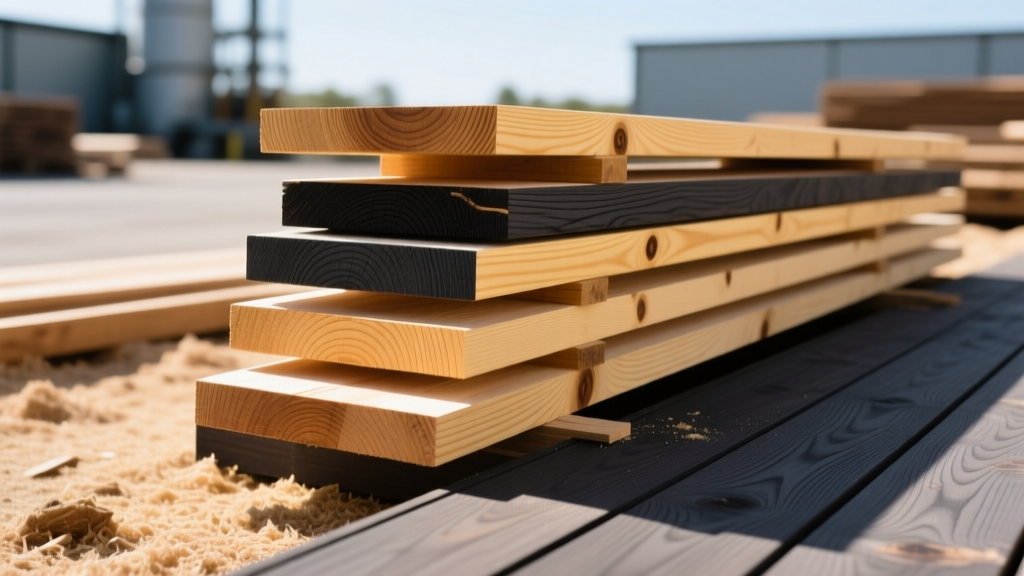
Field Application: Moisture Content and Treatment Adhesion
A common failure mode in exterior wood preservation is the premature peeling of surface sealers. This is almost always a moisture-content (MC) error. According to EPA guidelines on wood preservatives, applying a film-forming coating to pressure-treated wood that has not adequately dried traps internal moisture.
Use a pin-type moisture meter to verify the plank's core MC. For pressure-treated SYP, wait until the core reads below 19% before sealing. For thermally modified and acetylated planks, which ship at a much lower 6-10% MC, sealing can occur immediately upon installation, provided the surface is free of mill glaze and construction dust.
Troubleshooting Common Preservation Failures
- Surface Checking vs. Structural Splitting: Small surface cracks (checks) on pressure-treated planks are a normal result of differential drying rates between the wet core and dry surface. They do not compromise structural integrity. However, splits that penetrate entirely through the plank thickness indicate severe internal stress or improper kiln-drying after treatment (KDAT). Reject KDAT planks with full-thickness splits.
- Green Discoloration on Cedar: If Western Red Cedar develops a green, fuzzy appearance, it is not mold; it is a copper-based reaction. This occurs when copper flashing or treated adjacent lumber leaches copper ions onto the cedar's acidic tannins. Isolate cedar from copper-bearing materials using a waterproof membrane or PVC spacer blocks.
- Thermal Wood Brittleness: Thermally modified planks have reduced bending strength (MOR) compared to untreated wood. When using these planks for structural decking, reduce the joist spacing from the standard 16 inches on-center (OC) to 12 inches OC to prevent deflection and snapping under heavy dynamic loads.
Written by
James ThorntonJames Thornton is a construction industry veteran with 25 years of hands-on experience in wood framing, lumber grading, and residential building codes. He started as a framing carpenter in rural Oregon, earned his ICC Residential Building Inspector certification, and eventually became a senior plan reviewer for the City of Portland Bureau of Development Services. James holds a B.S. in Wood Science & Technology from Oregon State University and is a certified lumber grader through the West Coast Lumber Inspection Bureau (WCLIB). He has inspected over 3,000 residential construction sites and authored the city's internal guide on advanced framing techniques (2x6 at 24" O.C.). James lives in Bend, OR, where he builds custom timber-frame cabins and competes in lumberjack sports.
More from James Thornton
View all
Insulation
Best Home Insulation Materials: Complete 2026 Guide
Compare top home insulation materials for 2026. Find R-values, installed costs per square foot, and best uses for fiberglass, spray foam, and mineral wool.
Aug 4, 2026

Sustainable Building
Certify Your Green Building Material for LEED and WELL
Step-by-step guide to certifying a green building material for LEED v5 and WELL v2. Master EPDs, HPDs, and VOC limits for 2026 project specifications.
Aug 4, 2026

Stone & Masonry
Veneer Stacked Stone Panels: Interior Design & Style Showcase
Discover how veneer stacked stone panels transform interiors. Explore modern design profiles, material pairings, and technical installation specs.
Aug 4, 2026