Hardwood Plywood Durability: Lifespan Analysis and Failure Modes
Analyze hardwood plywood durability, expected lifespan, and failure modes. Learn how veneer core, glue types, and finishes impact long-term performance.
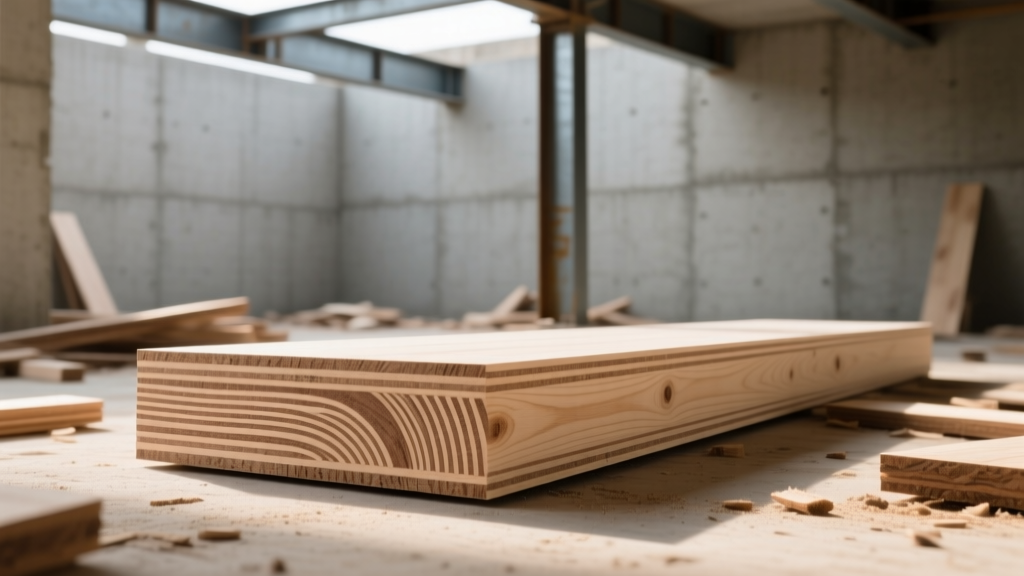
The Anatomy of Panel Longevity
Hardwood plywood is the foundational substrate for high-end cabinetry, architectural millwork, and custom furniture. However, the assumption that all hardwood plywood offers equal longevity is a costly error in commercial and residential construction. A panel's lifespan is not dictated by the decorative face veneer alone, but by the complex interaction between core engineering, adhesive chemistry, and environmental acclimatization.
When procuring hardwood plywood for projects requiring a 25- to 50-year service life, architects and millworkers must look past the surface species. The durability of the panel hinges on three critical metrics: face veneer thickness, core void tolerance, and the moisture resistance of the resin bonding the plies. Understanding these variables is the difference between a legacy installation and a callback for delaminated cabinet doors.
Core Engineering and Structural Lifespan
The core of hardwood plywood determines its screw-holding capacity, dimensional stability, and resistance to sagging over long spans. Selecting the wrong core for a specific application is the primary cause of premature structural failure.
Veneer Core: The Traditional Standard
Composed of multiple layers of softwood or hardwood veneers glued at alternating 90-degree angles, veneer core offers the best strength-to-weight ratio. True Baltic Birch (typically imported from Eastern Europe) features 1.5mm thick, void-free plies, making it exceptionally stable and capable of holding screws near the edges. Domestic veneer cores, however, often utilize thicker, rotary-peeled softwood plies that can contain internal voids. These voids compromise edge-fastening and can cause the face veneer to dip or 'telegraph' over time.
MDF and Particleboard Cores: The Flatness Trade-off
For applications demanding a perfectly flat surface—such as high-gloss laminate doors or book-matched veneer walls—MDF (Medium Density Fiberboard) or particleboard cores are specified. While they eliminate telegraphing, they introduce severe structural limitations. An 18mm (3/4-inch) MDF core shelf will visibly sag under a load of 20 pounds per linear foot if the span exceeds 24 inches. Furthermore, MDF cores are highly susceptible to moisture wicking; if exposed to standing water or high ambient humidity without edge sealing, the core will swell and permanently rupture the face veneer bond.
Lumber Core (Blockboard): The Span Master
Lumber core plywood features a center made of edge-glued solid wood strips, sandwiched between cross-banded veneers and face veneers. This construction is vastly superior for long-span applications like open shelving or heavy doors, resisting sagging up to 36-inch spans while maintaining excellent screw retention.
Do not conflate domestic 'Birch Plywood' with 'Baltic Birch'. Domestic birch plywood typically features a rotary-cut birch face veneer over a softwood (fir/pine) core with standard interior glues. True Baltic Birch is void-free throughout, uses exterior-grade phenolic resins, and is graded under different international standards. Specify exactly which product your supplier is providing to avoid catastrophic edge-blowout during CNC machining.
Adhesive Chemistry: The Invisible Lifespan Multiplier
The resin binding the plies dictates the panel's moisture tolerance. According to research on wood adhesive bonds by the USDA Forest Products Laboratory, the chemical crosslinking of the adhesive determines whether a panel can survive cyclic humidity changes without delaminating.
- Urea-Formaldehyde (UF): The standard for interior, dry-condition panels (ANSI Type I interior). UF is rigid and sands well but is highly susceptible to hydrolysis (breakdown from moisture). Lifespan in high-humidity environments (like unventilated bathrooms) drops significantly.
- Soy-Based and PVA (Polyvinyl Acetate): Often used in Type II water-resistant panels. While they offer improved moisture tolerance over UF, PVA can re-emulsify under prolonged water exposure or high heat, making it unsuitable for exterior or high-moisture millwork.
- Polyurethane Reactive (PUR): The modern gold standard for premium hardwood plywood. PUR adhesives form an irreversible chemical crosslink that is virtually waterproof and highly resistant to thermal cycling. Panels bonded with PUR are increasingly specified for kitchen cabinetry and marine interiors where traditional PVA glues would fail within five years.
Hardwood Plywood Lifespan Matrix by Application
The following matrix outlines expected service life and required specifications based on environmental exposure and mechanical stress.
| Application | Expected Lifespan | Required Core Spec | Adhesive / Glue Type | Primary Failure Threat |
|---|---|---|---|---|
| Interior Millwork (Dry) | 40-50+ Years | Veneer or MDF Core | Type I (UF or Soy) | Surface abrasion, UV fading |
| Kitchen Cabinetry | 20-30 Years | Veneer or Lumber Core | Type II or PUR | Steam delamination, edge swell |
| Bathroom Vanities | 10-15 Years | Marine-Grade Veneer | PUR or Phenolic | Standing water core rot |
| Heavy-Duty Shelving | 30-40 Years | Lumber Core (Blockboard) | Type I (UF) | Creep and structural sagging |
Forensic Analysis of Common Failure Modes
When hardwood plywood fails before its expected lifespan, the cause is rarely the wood itself. Forensic analysis of failed millwork typically points to three specific manufacturing or installation errors.
1. Veneer Telegraphing
Telegraphing occurs when the texture or defects of the core plies become visible through the face veneer. This happens when the face veneer is too thin (typically under 0.4mm) and the core is not properly calibrated or sanded. As the panel undergoes seasonal humidity cycling, the core plies expand and contract at different rates than the face. To prevent this in high-end architectural work, specify a minimum face veneer thickness of 0.6mm to 1.0mm, and mandate a 'calibrated core' from the supplier, ensuring the panel is sanded to a strict thickness tolerance of +/- 0.2mm.
2. Edge Delamination and Wicking
In veneer core panels, the exposed edges act like a bundle of straws. If a kitchen cabinet toe-kick or a bathroom vanity edge is left unsealed, ambient moisture wicks deep into the core plies. Over 3 to 5 years, this moisture degrades urea-formaldehyde glues, causing the plies to separate. The solution is not just edge banding, but chemical sealing. Applying a 2K (two-component) polyurethane sealer or an epoxy penetrating sealer to all machined edges before applying veneer tape creates an impermeable moisture barrier.
3. Edge Banding Thermal Failure
Modern hardwood plywood is frequently edged with PVC or wood veneer tape using hot-melt EVA (Ethylene Vinyl Acetate) adhesives. EVA has a low thermal reactivation point (around 160°F). In environments with direct sunlight or near heat sources (like ovens), the EVA glue softens, leading to peeling. For durable hardwood plywood assemblies, specify PUR hot-melt edgebanding. PUR edgebanding cures via a moisture reaction and cannot be re-melted by heat, ensuring a permanent mechanical bond.
Procurement Specifications for Maximum Durability
To ensure you receive panels capable of surviving decades of use, procurement documents and architectural specifications must explicitly define the following parameters. Relying on generic terms like '3/4-inch Oak Plywood' leaves too much room for supplier substitution.
Example Specification Clause:
'Hardwood plywood shall conform to ANSI/HPVA HP-1-2020 standards. Face veneer shall be plain-sliced White Oak, minimum 0.6mm thickness, Grade A. Core shall be 100% hardwood veneer, void-free, calibrated to +/- 0.2mm tolerance. Adhesive shall be Type II water-resistant PVA or PUR. Panels must be sanded two-side (S2S) to a uniform 18mm thickness.'
By enforcing strict tolerances on veneer thickness, core composition, and adhesive chemistry, builders and designers can eliminate the variables that lead to premature degradation. The data is clear: the longevity of hardwood plywood is engineered at the factory, not just finished in the shop. For deeper insights into the mechanical properties of engineered wood under varying moisture conditions, the USDA Forest Products Laboratory Wood Handbook remains the definitive engineering reference for material behavior over time.