What Type of Screws for Pressure Treated Wood? A Cost-Value Analysis
Discover what type of screws for pressure treated wood offer the best lifespan. Compare hot-dipped galvanized, stainless steel, and polymer costs.
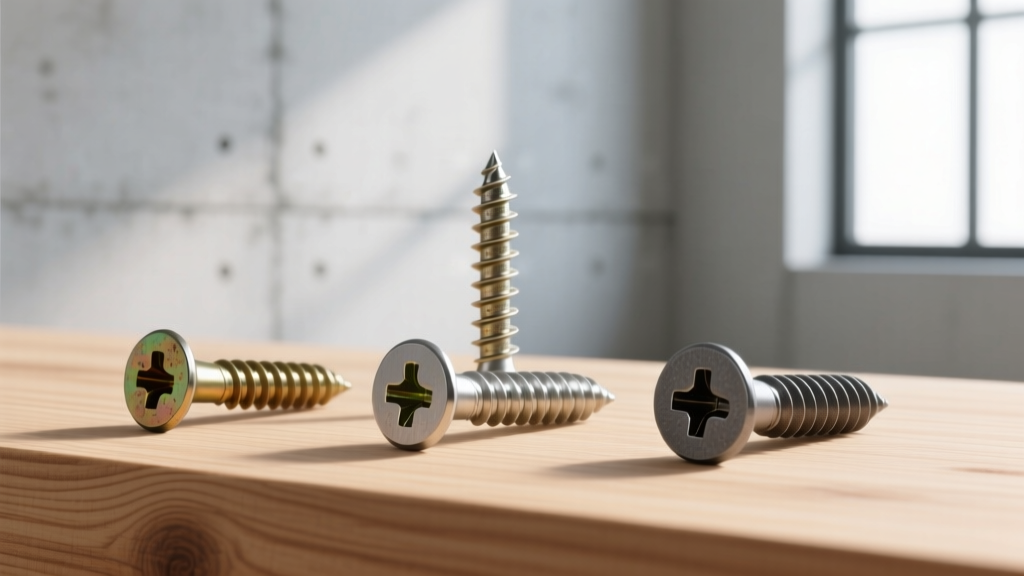
The Corrosion Challenge in Modern Pressure-Treated Lumber
When determining what type of screws for pressure treated wood will provide the best structural integrity, the answer is dictated by chemistry, not just mechanics. Since the phase-out of Chromated Copper Arsenate (CCA) in residential applications, the industry has shifted to Alkaline Copper Quaternary (ACQ) and Copper Azole (CA-C) preservatives. While these treatments effectively resist rot and insects, the elevated copper content makes the wood highly corrosive to standard carbon steel and electroplated zinc fasteners.
Selecting the wrong fastener is a false economy. A box of cheap, electro-galvanized screws might save $30 on a deck build, but it will trigger a galvanic reaction that dissolves the zinc coating within months, leading to rust jacking, tannin streaking, and eventual structural failure of critical joints like ledger boards. This cost-value analysis breaks down the exact material costs, lifecycle performance, and hidden labor expenses of the three primary fastener categories used in pressure-treated (PT) wood construction.
Never use standard bright steel or electro-galvanized (EG) screws in modern ACQ or CA-C pressure-treated wood. The thin zinc layer (typically less than 0.36 oz/ft²) will be consumed by the copper in the wood preservative in less than one year, leading to rapid shaft corrosion and catastrophic joint failure.
Fastener Material Comparison Matrix
The following matrix compares the upfront material costs and expected service life of the primary fastener types compatible with PT wood. Pricing reflects 2026 market averages for #9 or #10 gauge, 3-inch exterior deck/structural screws (sold in 1 lb or 400-count boxes).
| Fastener Type | Coating / Material Standard | Avg. Cost (per 400ct box) | Est. Lifespan in PT Wood | Best Application |
|---|---|---|---|---|
| Hot-Dipped Galvanized (HDG) | ASTM A153 Class D (1.0 oz/ft²) | $22 - $28 | 15 - 25 Years | Standard framing, joist hangers, general decking |
| Heavy-Galvanized (e.g., ZMAX) | 1.85 oz/ft² Zinc Coating | $28 - $35 | 25 - 35 Years | High-moisture framing, ground contact posts |
| Ceramic / Polymer Coated | Epoxy/Polymer over zinc base | $30 - $45 | 20 - 30 Years | Visible decking, fascia, color-matched applications |
| Type 304 Stainless Steel | Solid 18-8 Stainless Alloy | $65 - $85 | 50+ Years (Lifetime) | Premium decking, coastal zones (non-salt spray) |
| Type 316 Stainless Steel | Solid Marine-Grade Stainless | $90 - $130 | 50+ Years (Lifetime) | Direct saltwater exposure, dock building, boardwalks |
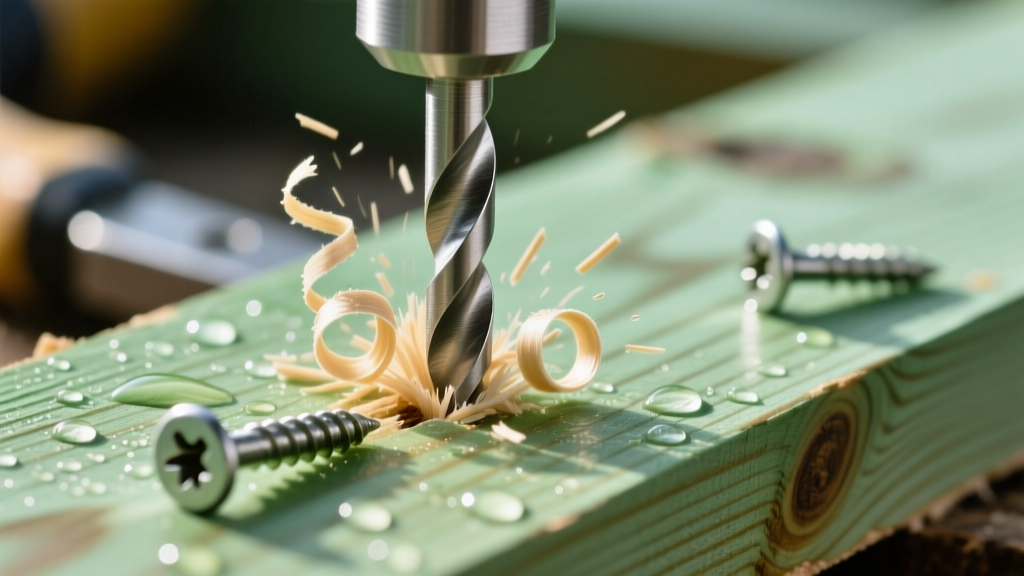
Lifecycle Cost Analysis: The True Price of a Deck Build
To understand the true value of premium fasteners, we must model a real-world scenario. Consider a standard 400-square-foot elevated deck requiring approximately 1,800 fasteners for decking, joist connections, and framing.
Scenario A: The False Economy (Electro-Galvanized)
- Upfront Fastener Cost: $45
- Year 5 Consequence: Severe rust streaking on decking; joist hanger nails lose shear strength.
- Year 10 Consequence: Ledger board fasteners fail. Deck requires partial teardown and structural reinforcement.
- Total 10-Year Cost: $45 (materials) + $2,500+ (repair labor and replacement lumber) = $2,545+
Scenario B: The Baseline Standard (HDG)
- Upfront Fastener Cost: $110
- Year 15 Consequence: Minor surface oxidation on screw heads; structural integrity remains intact.
- Total 15-Year Cost: $110
Scenario C: The Premium Investment (Type 304 Stainless)
- Upfront Fastener Cost: $320
- Year 30 Consequence: Fasteners remain structurally sound and visually clean; outlasts the pressure-treated joists themselves.
- Total 30-Year Cost: $320
The data reveals that upgrading from standard HDG to Type 304 Stainless Steel costs roughly $210 more upfront for a 400 sq. ft. deck. However, it eliminates the risk of galvanic failure entirely, making it the highest-value choice for visible decking and critical structural connections where future access for replacement is impossible.
Deep Dive: Evaluating the Top Fastener Categories
1. Hot-Dipped Galvanized (HDG) and Heavy-Galvanized
HDG fasteners are the industry baseline for pressure-treated wood. The hot-dipping process creates a metallurgical bond between the steel and zinc, providing a sacrificial anode that corrodes before the steel core. According to the USDA Forest Products Laboratory Wood Handbook, fasteners used in ACQ-treated wood must have a minimum zinc coating of 1.0 oz/ft² (ASTM A153 Class D).
The Value Proposition: HDG offers the best cost-to-performance ratio for hidden structural framing. However, the rough surface finish of the hot-dip process can damage composite or premium wood decking during installation, and the zinc will eventually leave dark gray streaks on the wood surface as it weathers. For high-moisture or ground-contact applications, specifying a heavier coating like Simpson Strong-Tie's ZMAX (1.85 oz/ft²) provides an extra margin of safety against accelerated corrosion.
2. Ceramic and Polymer-Coated Fasteners
Brands like GRK (with their Climatek coating) and FastenMaster utilize multi-layer polymer or ceramic epoxy coatings over a zinc base. These coatings are highly resistant to the alkaline environment of PT wood and are available in colors that blend with stained or painted lumber.
The Value Proposition: These screws offer superior aesthetics and excellent corrosion resistance without the premium price of stainless steel. They are ideal for visible deck surfaces where HDG streaking is unacceptable. The primary drawback is that if the polymer coating is scratched during driving (especially with worn driver bits), the exposed zinc base will corrode locally. Always use fresh, perfectly fitting star (Torx) or square drive bits to preserve the coating integrity.
3. Stainless Steel (304 vs. 316)
Stainless steel relies on chromium oxide for corrosion resistance, making it entirely immune to the copper-induced galvanic corrosion found in PT wood. As detailed in the Simpson Strong-Tie Corrosion Resistance Guide, Type 304 is sufficient for almost all inland residential applications. Type 316, which includes molybdenum for chloride resistance, is strictly required for projects within 3,000 feet of saltwater or in areas where de-icing salts are heavily used.
The Value Proposition: Stainless steel is the ultimate 'install and forget' fastener. While the material cost is 3x to 4x higher than HDG, the elimination of replacement labor and the guarantee of zero structural degradation makes it the only logical choice for high-end custom builds, boardwalks, and critical ledger-to-house connections.
Never mix stainless steel fasteners with galvanized joist hangers or connectors. The stainless steel will act as a cathode and rapidly corrode the zinc and steel of the galvanized hanger. If using stainless fasteners, you must use stainless steel hardware, or isolate the metals using approved structural barriers.
Structural Value: Shank Design and Head Types
Material composition is only half the value equation; the physical geometry of the screw dictates its withdrawal resistance and shear strength in PT lumber, which is often installed at high moisture content (up to 35% MC) and shrinks as it dries.
- Structural Screws (e.g., LedgerLoks, GRK RSS): These feature a thick shank and aggressive threading designed to replace 3/8-inch lag bolts. They provide immense withdrawal resistance, critical for securing deck ledger boards to pressure-treated rim joists. The cost premium ($0.40 - $0.80 per screw) is easily justified by eliminating the need to pre-drill holes and the superior clamping force they provide.
- Type 17 Auger Points: Look for deck screws with a Type 17 notch at the tip. This acts as a self-reaming bit, clearing wood fibers and preventing the pressure-treated pine from splitting, even when driving screws near the end grain of a 2x6 joist.
- Cap-Head vs. Flat-Head: For structural framing, hex-washer or cap-head screws provide better bit engagement and prevent cam-out. For decking surfaces, flat-head screws with cutting nibs under the head ensure a flush finish that won't catch foot traffic or trap moisture.
Code Compliance and Final Procurement Strategy
Modern building codes (including the 2024 and 2026 IBC/IRC updates) strictly regulate fastener corrosion resistance in treated wood. Section 2304.10.3 of the International Building Code mandates that fasteners in contact with preservative-treated wood must be hot-dipped galvanized, stainless steel, or have an approved alternative coating with an ICC-ES Evaluation Report.
Final Procurement Framework:
- Hidden Structural Framing & Joist Hangers: Use Hot-Dipped Galvanized (ASTM A153) or Heavy-Galvanized (1.85 oz) nails and screws. It is the most cost-effective code-compliant choice.
- Visible Decking & Fascia: Use Polymer/Ceramic coated screws for color-matching and streak prevention, or Type 304 Stainless Steel for lifetime durability.
- Critical Ledger Connections & Ground Contact: Exclusively use Type 304 or Type 316 Stainless Steel structural screws. The value of human safety and structural permanence far outweighs the $150 material premium.
By aligning your fastener material and geometry with the specific environmental and structural demands of your pressure-treated wood project, you optimize both your immediate construction budget and the long-term lifecycle value of the structure.
Written by
James ThorntonJames Thornton is a construction industry veteran with 25 years of hands-on experience in wood framing, lumber grading, and residential building codes. He started as a framing carpenter in rural Oregon, earned his ICC Residential Building Inspector certification, and eventually became a senior plan reviewer for the City of Portland Bureau of Development Services. James holds a B.S. in Wood Science & Technology from Oregon State University and is a certified lumber grader through the West Coast Lumber Inspection Bureau (WCLIB). He has inspected over 3,000 residential construction sites and authored the city's internal guide on advanced framing techniques (2x6 at 24" O.C.). James lives in Bend, OR, where he builds custom timber-frame cabins and competes in lumberjack sports.
More from James Thornton
View all
Insulation
Best Home Insulation Materials: Complete 2026 Guide
Compare top home insulation materials for 2026. Find R-values, installed costs per square foot, and best uses for fiberglass, spray foam, and mineral wool.
Aug 4, 2026

Sustainable Building
Certify Your Green Building Material for LEED and WELL
Step-by-step guide to certifying a green building material for LEED v5 and WELL v2. Master EPDs, HPDs, and VOC limits for 2026 project specifications.
Aug 4, 2026

Stone & Masonry
Veneer Stacked Stone Panels: Interior Design & Style Showcase
Discover how veneer stacked stone panels transform interiors. Explore modern design profiles, material pairings, and technical installation specs.
Aug 4, 2026