Different Types of Screws for Wood: A Structural Framing Guide
Explore the different types of screws for wood structural connections. Learn shear strengths, ICC-ES codes, and when to use structural vs. lag screws.
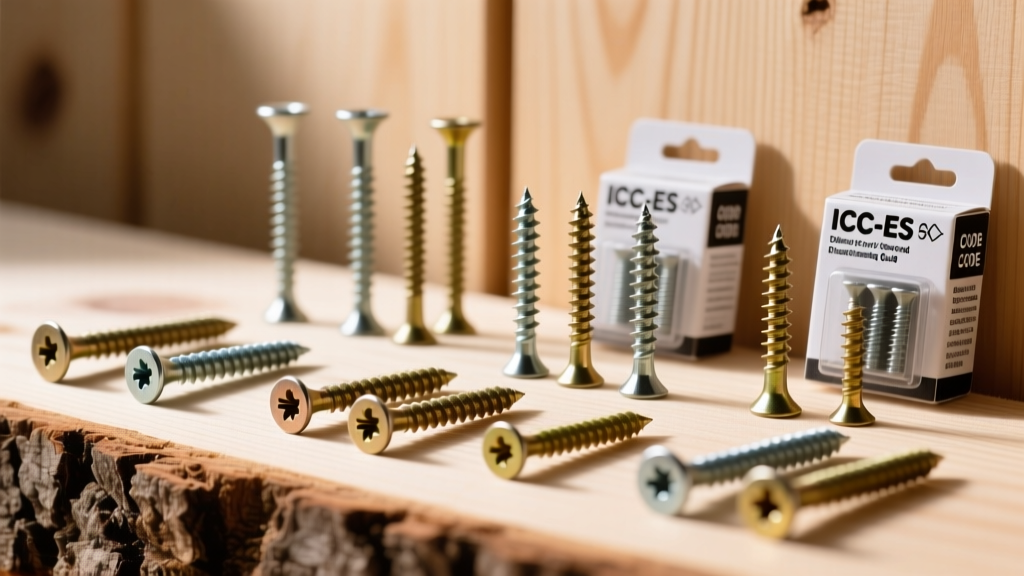
Beyond the Hardware Aisle: What Makes a Screw "Structural"?
When engineers and framers evaluate the different types of screws for wood construction, the distinction between standard fasteners and structural fasteners is a matter of life safety and code compliance. Standard wood screws (governed by ASME B18.6.1) are designed for light-duty pulling power and lack the lateral shear strength required for load-bearing connections. Structural screws, conversely, are engineered to replace traditional lag bolts and through-bolts in critical framing applications, offering higher allowable shear values, predictable withdrawal capacities, and faster installation without pre-drilling.
As of 2026, the shift toward advanced engineered lumber—such as Laminated Strand Lumber (LSL) and Parallam (PSL)—demands fasteners that can penetrate dense, heavily glued fibers without causing micro-fractures or delamination. Understanding the mechanical differences between fastener categories is essential for passing structural inspections and ensuring long-term building integrity.
Anatomy of a High-Performance Structural Fastener
Before selecting from the different types of screws for wood framing, it is crucial to understand the engineering features that separate structural screws from standard deck or drywall screws.
The Unthreaded Shank (Shear Plane)
The most critical feature of a structural screw is its unthreaded shank, located just below the head. In a structural connection, the lateral load (shear force) should be borne by the solid steel shank, not the threads. If threads cross the shear plane between two pieces of lumber, the screw acts like a saw blade under dynamic loading, eventually cutting through the wood fibers and leading to catastrophic joint failure. Premium structural screws feature precisely calibrated unthreaded lengths (typically 1 to 1.5 inches) to ensure the shear plane falls entirely on the smooth shank when joining standard 2x dimensional lumber.
Self-Drilling Tips and Serrated Threads
Modern structural screws utilize a Type 17 auger point or a proprietary self-drilling tip (such as the FastenMaster wedge tip or GRK's W-Cut). These tips displace wood fibers rather than just cutting them, drastically reducing the driving torque required and eliminating the need for pre-drilling, even in dense hardwoods or pressure-treated LVL beams. Serrated threads near the head act as a built-in reamer, allowing the screw head to sit perfectly flush with the wood surface without splitting the top board.
Matrix: Comparing the Different Types of Screws for Wood Structures
Not all heavy-duty screws are created equal. The table below breaks down the primary categories of structural fasteners used in modern timber and stick framing.
| Fastener Category | Typical Gauge / Diameter | Drive / Head Style | Pre-Drilling Required? | Best Structural Application |
|---|---|---|---|---|
| Structural Wood Screws (e.g., Simpson SDWS, GRK RSS) | #9 to #12 (0.148" - 0.216") | Torx (Star), Flat, or Hex Washer | No (Self-drilling) | Joist hangers, ledger boards, shear wall nailing, truss-to-plate connections. |
| Structural Timber Screws (e.g., FastenMaster TimberLOK) | 3/8" to 1/2" | Hex Head or Large Torx | No (Aggressive self-drilling) | Beam-to-post connections, ridge beams, heavy timber framing, deck ledgers. |
| Traditional Lag Screws (Lag Bolts) | 1/4" to 1" | Hex Head | Yes (Mandatory pilot hole) | Masonry-to-wood ledgers, heavy timber brackets, historic restoration. |
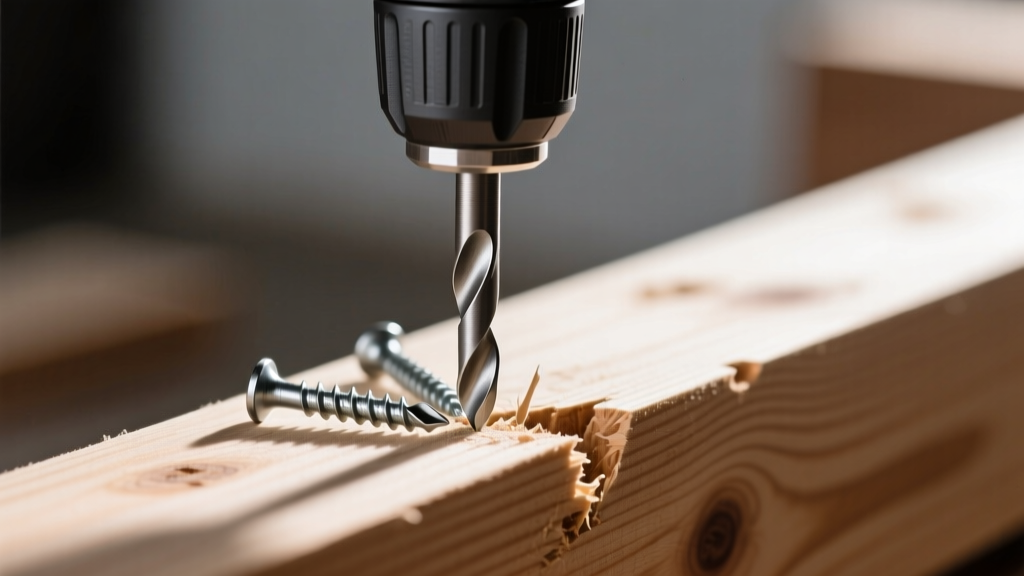
Load Capacities and Shear Strength Benchmarks
When replacing lag screws with structural screws, builders must verify that the allowable shear and withdrawal values meet the engineer's specifications. According to the American Wood Council's National Design Specification (NDS), fastener capacity is heavily dependent on the specific gravity of the wood species and the depth of penetration into the main member.
Data Highlight: #10 Structural Screw vs. 3/8" Lag Screw
Allowable Lateral (Shear) Load in Douglas Fir-Larch (Single Shear, 1.5" side member):
- 3/8" Lag Screw (3" length): ~550 lbs (Requires 15/64" pilot hole, high installation torque, high risk of snapping).
- #10 Structural Screw (3" length): ~480 to 520 lbs (depending on manufacturer's ICC-ES report).
Insight: While a single 3/8" lag screw holds slightly more shear weight, a framer can install two #10 structural screws in the time it takes to drill and drive one lag bolt. Two #10 screws yield over 1,000 lbs of combined shear capacity, eliminate wood splitting, and provide redundant load paths.
Code Compliance: Navigating ICC-ES and the NDS
You cannot simply use any heavy-looking screw for a structural connection. The International Building Code (IBC) and International Residential Code (IRC) require that proprietary structural screws possess an active Evaluation Report from the ICC Evaluation Service (ICC-ES).
These ESR (Evaluation Service Report) documents provide the exact allowable load tables, minimum edge distances, and required penetration depths that building inspectors use to approve a framing plan. If a fastener lacks an ESR, the building inspector will default to the generic NDS tables for standard wood screws, which will almost certainly result in a failed inspection for a load-bearing joint. Always verify that the box of screws explicitly states "ICC-ES ESR-XXXX" and keep the manufacturer's load table on site for the inspector.
Preventing Structural Failure: Spacing and Edge Distances
Even the highest-rated structural screw will fail if installed too close to the edge of the lumber, causing the wood to split and the fastener to pull through. The NDS mandates strict minimum spacing requirements based on the fastener diameter (D):
- Minimum Edge Distance (Loaded Edge): 1.5D (e.g., for a 0.2" diameter #10 screw, stay at least 0.3" from the edge).
- Minimum End Distance (Parallel to Grain): 2.5D to 4D, depending on whether the load is pulling the fastener out or pushing it in.
- Minimum Spacing Between Screws (In a Row): 4D to prevent "zippering," a failure mode where a row of closely spaced screws splits the wood grain entirely along the length of the board.
When working with engineered wood products like I-joists or LVLs, always consult the specific manufacturer's fastener guide. The resins used in LVLs can cause dense, brittle flitch layers that require strict adherence to minimum edge distances to prevent blowouts on the exit side of the fastener.
Corrosion Resistance in Treated Lumber
Modern pressure-treated lumber utilizes copper-based preservatives like Alkaline Copper Quaternary (ACQ) or Micronized Copper Azole (MCA). These chemicals are highly corrosive to standard zinc coatings. If you are using structural screws to attach a pressure-treated deck ledger to a house rim joist, the fasteners must meet ASTM A153 Class D (hot-dip galvanized) standards, or feature a proprietary multi-layer epoxy coating (such as Simpson's ZMAX or GRK's Climatek coating). Standard electroplated zinc screws will corrode and lose their structural cross-section within 3 to 5 years when embedded in ACQ-treated wood, compromising the entire structural connection.
Written by
Priya KapoorPriya Kapoor is a real estate market analyst and construction economics researcher with expertise in housing affordability, development feasibility, and infrastructure investment. She holds a Master of Regional Planning from Cornell University and previously worked as a senior analyst at CBRE's Investment Properties group, where she modeled returns for $4B in mixed-use development pipelines. Priya now runs an independent research practice advising developers, municipalities, and REITs on construction cost forecasting and market timing. She publishes the quarterly "BuildMat Market Pulse" report tracking material price indices across 12 commodity categories. Based in Austin, TX, Priya serves on the board of Habitat for Humanity Austin and is a marathon runner.
More from Priya Kapoor
View all
Construction Cost
Cost to Build a 1600 Sq Ft Home in 2026: Full Breakdown
Accurate 2026 cost to build a 1600 sq ft home—material, labor, and regional pricing breakdowns included. Plan your budget with real-time estimates.
Aug 11, 2026

Wood & Lumber
Name the Types of Wood for Pressure Treatment and Preservation
Learn how to name the types of wood best suited for pressure treatment. Compare species treatability, chemical retention levels, and 2026 preservation costs.
Aug 4, 2026

Stone & Masonry
Stone Veneer Suppliers Lindenhurst: 2026 Cost Analysis
Analyze 2026 stone veneer costs in Lindenhurst, NY. Compare local supplier pricing, delivery fees, and Suffolk County installation labor rates.
Aug 4, 2026