Top Marine Plywood Brands: Okoume, Meranti & Fir Specs
Compare top marine plywood brands and species like Okoume, Meranti, and Douglas Fir. Discover BS 1088 specs, core gaps, and 2026 pricing for boatbuilding.
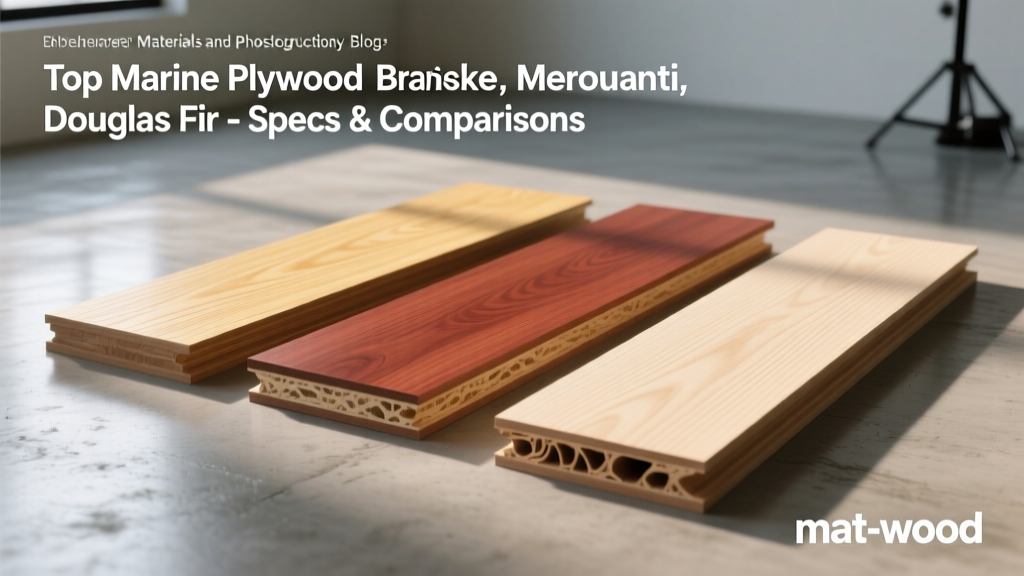
The Reality of Marine Plywood Selection
True marine plywood is an engineered structural panel designed for continuous moisture exposure, high-impact marine environments, and rigorous fiberglass encapsulation. Unlike standard exterior plywood, which merely uses waterproof glue, marine plywood mandates premium face veneers, strict core gap limitations, and specific timber species. In 2026, the market is dominated by a few specialized manufacturers producing panels to British Standard (BS 1088) or Australian Standard (AS/NZS 2272). Selecting the right brand and wood species dictates the structural integrity, weight, and finishing quality of your hull, transom, or deck.
The Big Three Species: Okoume, Meranti, and Douglas Fir
The performance of marine plywood is fundamentally tied to its timber species. Each offers distinct mechanical properties that suit specific boatbuilding applications.
Okoume (Aucoumea klaineana)
Okoume is the gold standard for cold-molded hull planking and lightweight skiffs. Originating from West Africa, it offers an exceptional strength-to-weight ratio. According to The Wood Database, Okoume has a Janka hardness of 410 lbf, making it relatively soft but highly flexible. It bends easily over compound curves without fracturing and absorbs epoxy resin uniformly, creating a monolithic composite structure when sheathed in biaxial fiberglass.
Meranti (Shorea spp.)
Light Red Meranti is denser and heavier than Okoume, with a Janka hardness around 550 lbf. It is the preferred species for transoms, stringers, and structural bulkheads where high fastener-holding capacity and compression resistance are critical. Meranti panels are generally more affordable but require careful edge sealing, as the wood's open grain can wick moisture if left exposed during construction delays.
Douglas Fir (Pseudotsuga menziesii)
Fir marine plywood is exceptionally stiff and impact-resistant, making it ideal for cabin soles, heavy-duty decks, and workboat flooring. However, its prominent grain pattern can telegraph through thin epoxy and paint finishes if not properly sealed with a high-build primer. Fir is also prone to surface checking if exposed to UV degradation before encapsulation.
Brand Deep-Dive: Joubert, Bruynzeel, and Austral
Not all panels stamped 'marine' are created equal. The manufacturing pedigree determines veneer thickness consistency, core void frequency, and glue-line integrity.
| Brand | Primary Species | Standard | Glue Type | Best Application |
|---|---|---|---|---|
| Joubert (France) | Okoume | BS 1088 | Phenol-Formaldehyde (PF) | Cold-molded hulls, kayak decks |
| Bruynzeel (Netherlands) | Okoume / Zebrano | BS 1088 | Phenol-Formaldehyde (PF) | Brightwork, classic restorations |
| Austral Plywoods (Australia) | Hoop Pine | AS/NZS 2272 | Phenol-Formaldehyde (PF) | Transoms, heavy structural framing |
| Various (US Domestic) | Douglas Fir | APA Marine | Phenol-Formaldehyde (PF) | Workboat decks, dock boxes |
Joubert Plywood
Joubert is arguably the most recognized name in Okoume marine plywood. Their panels are renowned for uniform veneer thickness, which prevents the 'starved joint' phenomenon when epoxy-filleting edges. Joubert's strict adherence to BS 1088 ensures that face veneers are free of knots and patches, yielding a flawless surface for clear-coat finishes.
Bruynzeel
Bruynzeel panels are legendary in the classic yacht restoration community. They utilize a proprietary hot-pressing technique that yields incredibly tight glue lines. Bruynzeel also offers Zebrano-faced marine panels for high-end interior joinery where aesthetic grain contrast is required without sacrificing moisture resistance.
Austral Plywoods
For builders requiring the highest structural certification, Austral's Hoop Pine plywood manufactured to AS/NZS 2272 is unmatched. This standard is stricter than BS 1088 regarding core gaps; it mandates edge-jointing of inner veneers and limits core voids to less than 5% of the panel area. This makes Austral panels exceptionally reliable for load-bearing transoms on outboard-powered vessels.
Decoding the Standards: BS 1088 vs. AS/NZS 2272
Understanding the certification stamp on the panel edge is critical for structural engineering and insurance compliance.
Many big-box retailers sell plywood stamped 'WBP' (Weather and Boil Proof) or 'Exterior Grade' and market it to DIYers as marine plywood. WBP only certifies the glue (usually Melamine-Urea-Formaldehyde), not the veneer quality. These panels contain football patches, core voids, and C-grade inner plies that will rot from the inside out when subjected to continuous bilge moisture. Always demand BS 1088 or AS/NZS 2272.
- BS 1088 (British Standard): Requires A-grade face and back veneers (knot-free). Inner plies can be lower grade but must be the same species. Core gaps are permitted if filled with resin-impregnated wood flour, but structural integrity is maintained.
- AS/NZS 2272 (Australian Standard): Requires A-grade faces and structural-grade inner veneers. Mandates strict limits on core gaps and requires veneer edge jointing to prevent localized soft spots. Often considered the most rigorous marine standard globally.
2026 Pricing Breakdown and True Yield Costs
Marine plywood represents a significant portion of a custom build's material budget. Prices in 2026 reflect global supply chain adjustments and stricter FSC (Forest Stewardship Council) harvesting mandates for Okoume and Meranti.
| Thickness | Species / Brand | Panel Size | Approx. Retail Price (2026) |
|---|---|---|---|
| 1/4' (6mm) | Okoume (Joubert) | 4' x 8' | $130 - $165 |
| 1/2' (12mm) | Okoume (Joubert) | 4' x 8' | $185 - $240 |
| 1/2' (12mm) | Meranti (Various) | 4' x 8' | $110 - $145 |
| 3/4' (18mm) | Hoop Pine (Austral) | 4' x 8' | $210 - $275 |
| 3/4' (18mm) | Douglas Fir (APA) | 4' x 8' | $160 - $200 |
When budgeting, factor in a 15% to 20% waste yield. Unlike standard construction plywood, marine plywood cuts must be perfectly square to ensure tight epoxy fillets. Any offcut smaller than 2 square feet is typically unusable for structural hull components, driving up the true cost per square foot of installed material.
Application-Specific Selection Framework
Use this decision matrix to specify the correct panel for your vessel's components, referencing guidelines supported by the American Boat & Yacht Council (ABYC) for structural integrity.
Hull Planking and Curved Decks
Specification: 1/4' or 3/8' Okoume (BS 1088).
Rationale: Cold-molding requires stripping the wood over a male mold. Okoume's low density and long grain structure allow it to bend along two axes simultaneously without snapping or requiring excessive kerfing.
Transoms and Motor Mounts
Specification: 3/4' Meranti or Hoop Pine (AS/NZS 2272).
Rationale: Outboard motors generate immense torque and vibration. The transom must resist compression from the motor clamps and shear forces from the bolts. Meranti and Hoop Pine provide the necessary density to hold heavy lag screws without stripping.
Bulkheads and Cabin Soles
Specification: 1/2' Douglas Fir or Lower-Grade Meranti.
Rationale: These components are largely flat, heavily tabbed to the hull with fiberglass, and do not require the bending properties of Okoume. Fir offers high stiffness at a lower cost, reducing overall build expenses without sacrificing structural rigidity.
Inspection and Edge-Sealing Protocols
Even BS 1088 panels require inspection upon delivery. Check the panel edges for delamination or impact damage from shipping. Tap the panel face with a brass hammer; a dull thud indicates a void in the inner plies, while a sharp ring confirms solid veneer contact.
End-grain sealing is the most frequently botched step in marine plywood fabrication. When cutting panels, the exposed end grain acts like a bundle of straws, wicking moisture deep into the core. Before applying any fiberglass cloth or paint, you must seal all edges. According to technical bulletins from Epoxyworks Magazine, the correct protocol is to apply a 50/50 mix of marine epoxy and solvent (like denatured alcohol) to penetrate the first 1/16th of an inch, followed by two coats of unthickened epoxy. This creates an impenetrable moisture barrier before the panel is permanently installed in the bilge or deck structure.