How to Treat and Preserve Different Types of Wood Flooring
Learn how to treat and preserve different types of wood flooring. Compare finishes, moisture controls, and maintenance for solid, engineered, and reclaimed wood.

Substrate Constraints: Solid vs. Engineered Preservation
Preserving wood flooring requires matching the treatment protocol to the substrate's physical limitations. Solid hardwood (typically 3/4-inch thick) offers a generous 5/16-inch sandable wear layer, allowing for aggressive mechanical preservation. You can drum sand through multiple grit sequences (36, 60, 100) to strip deep stains and oxidized polyurethane before applying new chemical sealers.
Engineered wood flooring, however, demands a non-destructive approach. Most engineered boards feature a veneer wear layer ranging from 1.2mm to 6mm. If the wear layer is under 3mm, mechanical sanding risks cutting through the veneer and exposing the cross-plywood or HDF core. For thin-veneer engineered floors, preservation relies on chemical abrasion systems (such as Bona Prep) to etch the existing finish, followed by a direct application of a waterborne polyurethane topcoat without sanding to bare wood.
Finish Chemistries and Penetration Profiles
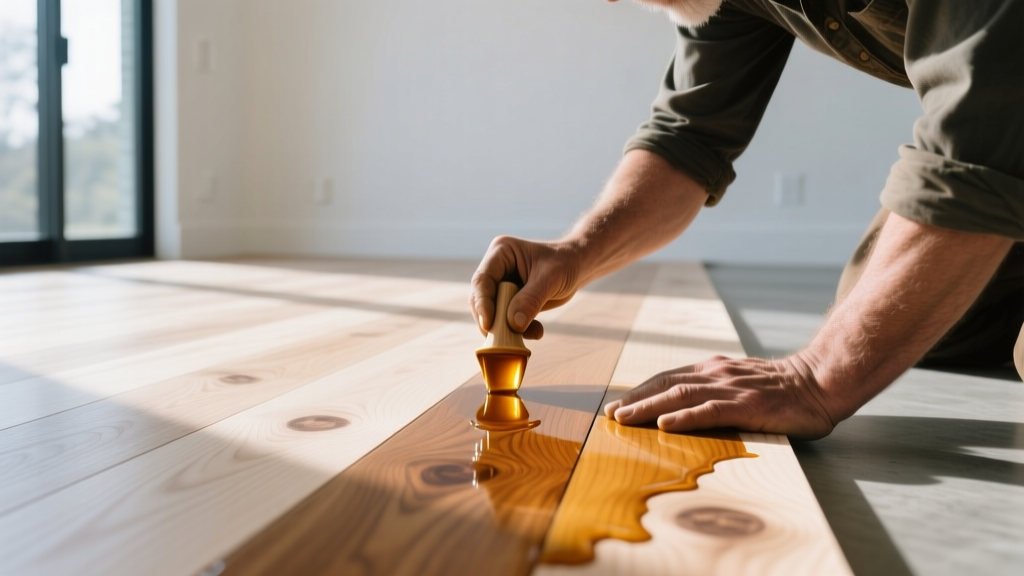
The choice of finish dictates the floor's moisture resistance, UV stability, and long-term maintenance cycle. Below is a technical comparison of the primary finish chemistries used across various types of wood flooring.
| Finish Type | Penetration Depth | Recoat Method | Best Wood Species | Approx. Cost (per sq ft) |
|---|---|---|---|---|
| Waterborne Polyurethane (2K) | Surface (0.05mm) | Screen & Recoat (120-grit) | White Oak, Maple, Ash | $0.65 - $0.90 |
| Hardwax Oil | Shallow (0.2mm - 0.5mm) | Chemical Clean & Re-oil | Walnut, Reclaimed Pine, Hickory | $0.80 - $1.20 |
| Oil-Modified Polyurethane | Surface (0.08mm) | Screen & Recoat (120-grit) | Red Oak, Brazilian Cherry | $0.40 - $0.60 |
| Penetrating Tung Oil | Deep (1mm - 2mm) | Solvent Wipe & Reapply | Teak, Mahogany, Exotic Hardwoods | $1.00 - $1.50 |
For high-traffic commercial or residential applications, a two-component waterborne polyurethane (like Bona Traffic HD) provides a cross-linked polymer matrix that cures in 24 hours and resists micro-scratching. Conversely, hardwax oils (such as Osmo Polyx-Oil or Rubio Monocoat) penetrate the wood's open pores and crystallize, allowing for localized spot repairs without requiring a full-floor screen and recoat.
Species-Specific Preservation Protocols
Different types of wood flooring react uniquely to chemical treatments, light exposure, and moisture. Applying a generic preservation strategy across all species leads to premature failure.
White Oak and Tannin Management
White oak contains high concentrations of tannic acid. When exposed to alkaline substances (like pet urine or ammonia-based cleaners) or certain water-based finishes, a chemical reaction occurs, resulting in permanent black or gray stains. To preserve white oak, always apply a tannin-blocking sealer (such as Bona AmberSeal) before topcoating with waterborne polyurethane. Never use high-pH cleaning agents on white oak floors.
If preserving reclaimed white oak that contains embedded iron nails or historical hardware, moisture from water-based finishes will cause immediate black 'halo' staining. Pre-treat the wood with a commercial oxalic acid solution to neutralize the iron-tannin reaction before sealing.
Walnut, Cherry, and UV Photoreactivity
American Black Walnut and Brazilian Cherry (Jatoba) are highly photoreactive. Their cellular lignin degrades under ultraviolet light, causing Walnut to lighten (bleach) and Cherry to darken (amber) rapidly within the first six months of installation. To preserve the original mill color, specify finishes with high concentrations of UV inhibitors, or apply architectural window films (like 3M Prestige Series) that block up to 99% of UV rays while maintaining visible light transmittance.
Reclaimed Pine and Softwood Stabilization
Reclaimed heart pine and antique spruce have a low Janka hardness rating (often below 400 lbf), making them highly susceptible to compression dents and edge splintering. Surface-level polyurethanes will eventually crack as the soft wood compresses beneath the rigid finish film. Preserve softwoods using high-solids penetrating oils or two-part epoxy sealers that reinforce the cellular structure from within, increasing surface density and preventing micro-fractures.
Moisture Management and Equilibrium
Wood is hygroscopic; it continuously exchanges moisture vapor with the surrounding environment. The primary cause of finish failure, cupping, and gapping is a disruption in the wood's Equilibrium Moisture Content (EMC). According to the USDA Forest Products Laboratory, interior wood flooring must be maintained at a moisture content (MC) between 6% and 9%, which corresponds to an indoor relative humidity (RH) of 35% to 55% at 70°F.
Pre-Installation Moisture Verification
Before applying any treatment or finish, verify the moisture differential between the subfloor and the flooring material using a pinless moisture meter (e.g., Wagner Orion 940). Follow these strict tolerances:
- 3/4-inch Solid Hardwood: Subfloor MC must be within 2% of the flooring MC.
- Engineered Wood (3/8-inch to 1/2-inch): Subfloor MC must be within 4% of the flooring MC.
- Concrete Subfloors: Must pass a calcium chloride test (emitting less than 3 lbs per 1,000 sq ft per 24 hours) or an in-situ relative humidity probe test (reading below 75% RH) before applying moisture-cure urethane adhesives or epoxy vapor barriers like Bostik MVP4.
Maintenance Schedules and Recoating Triggers
Preservation is an ongoing cycle. Rather than relying on arbitrary calendar dates, use physical testing to determine when a floor's finish has been compromised and requires intervention. The National Wood Flooring Association (NWFA) recommends the following diagnostic protocols:
- The Water Drop Test: Place three drops of water in a high-traffic zone (e.g., in front of a sofa or kitchen sink). Wait 3 minutes. If the water beads up, the finish is intact. If the wood darkens slightly but dries without a mark, the finish is worn and requires a recoat within 6 months. If the water leaves a permanent dark spot, the finish has failed, and moisture has penetrated the wood fibers, requiring a full sand and refinish.
- The Tape Test (for Adhesion): If the finish is peeling or flaking, score a 1-inch grid into the finish with a utility blade, apply high-tack painter's tape, and pull quickly. If more than 20% of the finish squares lift off, the bond to the substrate has failed. Screening and recoating will not work; the floor must be chemically stripped or mechanically sanded to bare wood.
When selecting cleaning agents for routine preservation, avoid oil soaps, wax-based cleaners, and steam mops. Oil soaps leave a lipid residue that prevents future polyurethane topcoats from adhering, while steam mops force pressurized vapor into the wood's micro-fissures, causing localized grain raising and finish delamination. Stick to pH-neutral, non-residue cleaners specifically formulated for urethane-finished floors, ensuring the longevity of both the wood substrate and the chemical wear layer.
For comprehensive guidance on indoor air quality when selecting chemical finishes and sealers, consult the EPA's guidelines on Volatile Organic Compounds (VOCs) to ensure your preservation treatments meet current environmental and health safety standards.
Written by
Priya KapoorPriya Kapoor is a real estate market analyst and construction economics researcher with expertise in housing affordability, development feasibility, and infrastructure investment. She holds a Master of Regional Planning from Cornell University and previously worked as a senior analyst at CBRE's Investment Properties group, where she modeled returns for $4B in mixed-use development pipelines. Priya now runs an independent research practice advising developers, municipalities, and REITs on construction cost forecasting and market timing. She publishes the quarterly "BuildMat Market Pulse" report tracking material price indices across 12 commodity categories. Based in Austin, TX, Priya serves on the board of Habitat for Humanity Austin and is a marathon runner.
More from Priya Kapoor
View all
Construction Cost
Cost to Build a 1600 Sq Ft Home in 2026: Full Breakdown
Accurate 2026 cost to build a 1600 sq ft home—material, labor, and regional pricing breakdowns included. Plan your budget with real-time estimates.
Aug 11, 2026

Wood & Lumber
Name the Types of Wood for Pressure Treatment and Preservation
Learn how to name the types of wood best suited for pressure treatment. Compare species treatability, chemical retention levels, and 2026 preservation costs.
Aug 4, 2026

Stone & Masonry
Stone Veneer Suppliers Lindenhurst: 2026 Cost Analysis
Analyze 2026 stone veneer costs in Lindenhurst, NY. Compare local supplier pricing, delivery fees, and Suffolk County installation labor rates.
Aug 4, 2026