Selection Framework: Choosing the Right Type of Paint for Wood
Master the 4-pillar selection framework to choose the exact type of paint for wood. Compare binders, primers, and sheens for interior and exterior projects.
The Hygroscopic Reality: Why Wood Paint Fails
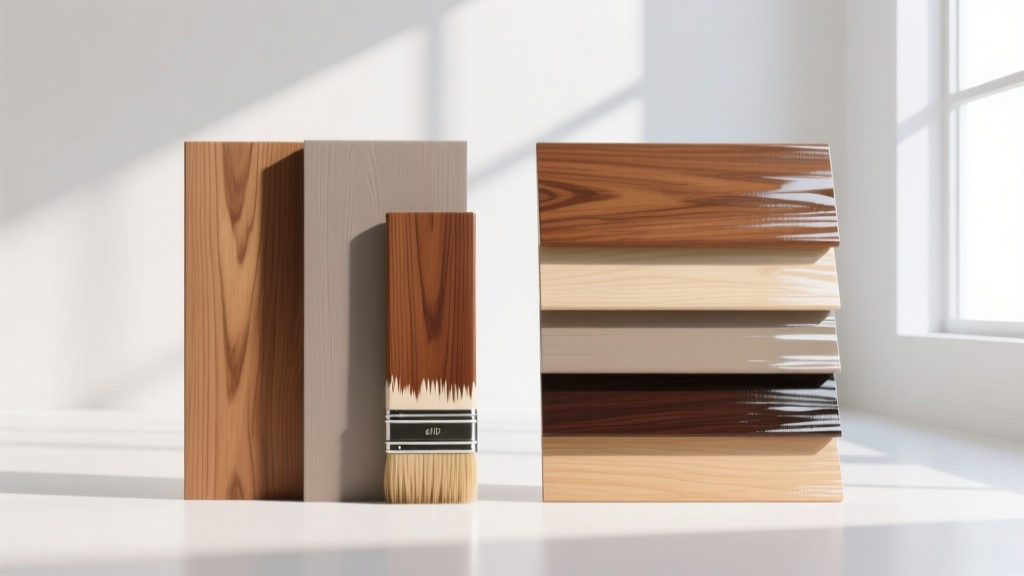
Wood is a hygroscopic, dimensionally unstable substrate. It swells with moisture absorption and shrinks during drying cycles. Paint failure on wood—manifesting as alligatoring, peeling, or tannin bleed—is rarely a product defect; it is almost always a specification error. Selecting the correct type of paint for wood requires matching the coating's binder chemistry, elasticity, and permeability to the specific wood species and environmental stressors. This selection framework eliminates guesswork, providing a deterministic approach to specifying coatings for architectural millwork, exterior siding, and structural timber.
Pillar 1: Binder Chemistry and Environmental Stress
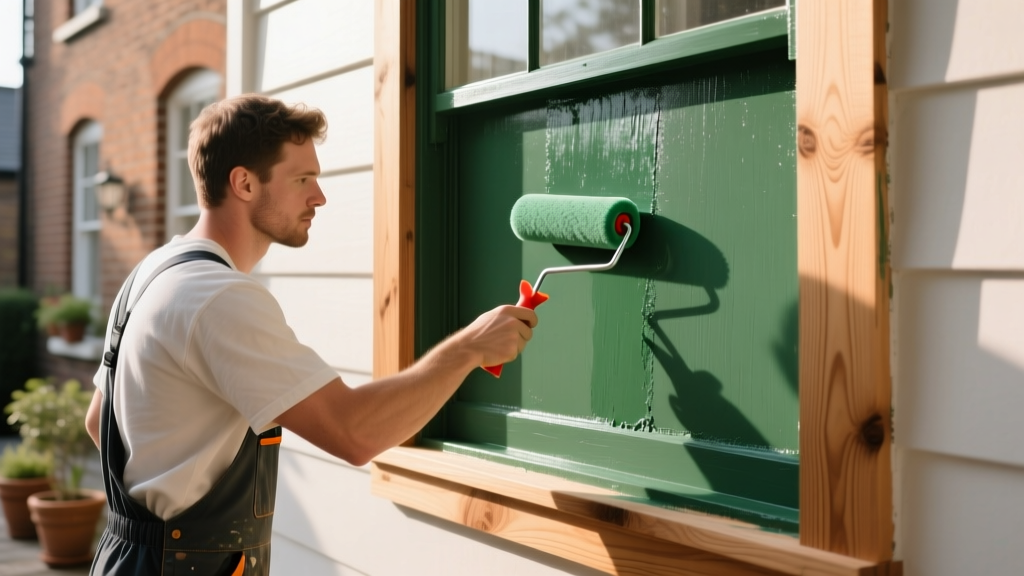
The binder (resin) dictates the physical properties of the dried paint film. When evaluating the type of paint for wood, you must align the binder's elastic modulus with the wood's coefficient of hygroscopic expansion.
| Binder Type | Best Application | Elasticity (Wood Movement) | UV & Moisture Resistance | Dry Time (Recoat) |
|---|---|---|---|---|
| 100% Acrylic Latex | Exterior Siding, Trim, Decks | High (Expands/contracts with wood) | Excellent UV, high moisture permeability | 2-4 hours |
| Traditional Alkyd (Oil) | Interior Cabinetry, High-Wear Trim | Low (Becomes brittle over time) | Poor UV (chalks), low moisture permeability | 16-24 hours |
| Waterborne Alkyd | Interior Doors, Millwork, Furniture | Medium (Cures hard but retains slight flex) | Good UV, moderate moisture resistance | 4-6 hours |
| Epoxy / Polyurethane | Wood Floors, Industrial Countertops | Very Low (Rigid film) | Variable (Epoxies yellow in UV) | 12-24 hours |
Pillar 2: Wood Species and Tannin Mitigation
The biological composition of the wood species dictates the required primer and topcoat system. Ignoring species-specific extractives is the leading cause of aesthetic paint failure.
Cedar and Redwood (High Tannin Content)
These species contain high concentrations of water-soluble tannic acid. If a standard water-based latex primer is applied, the water in the primer activates the tannins, pulling them through the topcoat as brown or yellow stains. The Fix: You must isolate the wood using a non-water-based barrier. Specify a shellac-based primer (e.g., Zinsser B-I-N Model 00402) or a high-solids solvent-based alkyd primer. Once sealed, a 100% acrylic exterior topcoat can be safely applied.
Pine and Fir (Resinous Knots)
Softwoods contain pitch and sap pockets, particularly around knots. Heat from direct sunlight liquefies this resin, causing it to bleed through standard primers. The Fix: Spot-prime all knots with a dewaxed shellac primer before applying a full coat of bonding primer. Sanding the knots flush and wiping them with denatured alcohol prior to priming improves mechanical adhesion.
MDF (Medium-Density Fiberboard)
While not solid wood, MDF is ubiquitous in interior millwork. The edges of MDF act like a sponge, absorbing the liquid from water-based paints and causing the wood fibers to swell, creating a permanently rough texture. The Fix: Seal all MDF edges with a solvent-based primer or a dedicated MDF edge sealer. Alternatively, apply a thin layer of vinyl spackle to the edges, sand to 220-grit, and then prime.
Pillar 3: Primer Selection and Mechanical Adhesion
Topcoats provide color and sheen; primers provide adhesion and substrate stabilization. According to the USDA Forest Products Laboratory, proper surface preparation and primer selection account for over 70% of a coating system's lifespan. Bare wood requires a primer with high penetrating capabilities to anchor into the wood's cellular structure.
- Exterior Bare Wood: Use an exterior-grade, slow-drying oil-based or alkyd wood primer (e.g., Sherwin-Williams Exterior Wood Primer). The slow dry time allows the resin to penetrate deeply into the wood pores rather than sitting on the surface.
- Interior Bare Trim: Use a high-hiding, sandable waterborne or alkyd undercoater. Sanding the primer to a 220-grit profile ensures a glass-smooth foundation for the topcoat.
- Previously Painted Wood (Chalking): If the existing paint chalks when rubbed, it must be power-washed and primed with a penetrating bonding primer to re-consolidate the surface.
Pillar 4: Sheen, Traffic, and Dry Film Thickness (DFT)
Sheen is not merely an aesthetic choice; it is a functional specification that dictates cleanability, moisture shedding, and the visibility of substrate imperfections.
Sheen Specification Matrix
- Flat/Matte (0-10% Gloss): Interior ceilings only. Hides drywall and wood imperfections but lacks washability.
- Satin/Pearl (25-35% Gloss): Interior walls, exterior siding. Provides a balance of imperfection-hiding and moisture shedding.
- Semi-Gloss (35-70% Gloss): Interior trim, doors, cabinets, exterior window sashes. High washability, excellent moisture resistance, but highlights sanding marks and wood grain.
- High-Gloss (70-90% Gloss): High-end architectural millwork, front doors. Requires flawless substrate preparation (skim coating and 320-grit sanding) as it acts like a mirror.
Dry Film Thickness (DFT): For exterior wood, target a total system DFT of 4.0 to 5.0 mils (typically one coat of primer at 1.5 mils and two coats of topcoat at 1.5 mils each). Applying paint too thin starves the film of UV protectants; applying it too thick traps solvents, leading to wrinkling and extended cure times.
2026 Cost, Coverage, and ROI Analysis
Premium coatings cost more upfront but drastically reduce lifecycle maintenance costs. The following data reflects current professional-grade pricing and coverage metrics.
| Product Category | Example Product | Est. Cost / Gallon | Theoretical Coverage | Practical Coverage (Textured Wood) |
|---|---|---|---|---|
| Premium 100% Acrylic Ext. | Benjamin Moore Aura Exterior | $95 - $110 | 350-400 sq ft | 250-300 sq ft |
| Waterborne Alkyd Int. | Sherwin-Williams Emerald Urethane | $100 - $120 | 350-400 sq ft | 300-350 sq ft |
| Shellac-Based Primer | Zinsser B-I-N Advanced | $75 - $90 | 200-250 sq ft | 150-200 sq ft |
| Exterior Alkyd Primer | PPG Seal Grip Exterior | $65 - $80 | 300-350 sq ft | 200-250 sq ft |
When calculating project costs, always factor in a 20% coverage reduction for rough-sawn wood, cedar shakes, or heavily weathered timber, as the increased surface area absorbs significantly more material. Furthermore, adhere to the Environmental Protection Agency (EPA) guidelines regarding VOC limits, ensuring all specified primers and topcoats meet the architectural coating standard of less than 250 g/L for interior and exterior applications to maintain indoor air quality and regulatory compliance.
Quick-Reference Decision Tree
Use this logic flow to specify the exact type of paint for wood on your next project:
- Is the wood exposed to exterior weather and UV?
- Yes: Proceed to Step 2.
- No (Interior): Skip to Step 4.
- Is the wood species Cedar, Redwood, or heavily knotted Pine?
- Yes: Prime with Shellac or Solvent-based Alkyd. Topcoat with 100% Acrylic Satin/Semi-Gloss.
- No (e.g., Primed Pine, Engineered Wood): Prime with Exterior Alkyd Primer. Topcoat with 100% Acrylic.
- Is the exterior surface horizontal (decking, rail caps) or vertical (siding)?
- Horizontal: Use a dedicated solid-color deck stain or elastomeric floor coating (standard paint will peel from foot traffic and pooling water).
- Vertical: Standard 100% Acrylic architectural paint is sufficient.
- For Interior Wood: Is it a high-wear surface (doors, cabinets, trim)?
- Yes: Specify Waterborne Alkyd (Urethane Enamel) in Semi-Gloss. It cures to a hard, furniture-grade finish without the yellowing of traditional oils.
- No (Walls, Ceilings): Specify Acrylic Latex in Matte or Eggshell.
Written by
James ThorntonJames Thornton is a construction industry veteran with 25 years of hands-on experience in wood framing, lumber grading, and residential building codes. He started as a framing carpenter in rural Oregon, earned his ICC Residential Building Inspector certification, and eventually became a senior plan reviewer for the City of Portland Bureau of Development Services. James holds a B.S. in Wood Science & Technology from Oregon State University and is a certified lumber grader through the West Coast Lumber Inspection Bureau (WCLIB). He has inspected over 3,000 residential construction sites and authored the city's internal guide on advanced framing techniques (2x6 at 24" O.C.). James lives in Bend, OR, where he builds custom timber-frame cabins and competes in lumberjack sports.
More from James Thornton
View all
Insulation
Best Home Insulation Materials: Complete 2026 Guide
Compare top home insulation materials for 2026. Find R-values, installed costs per square foot, and best uses for fiberglass, spray foam, and mineral wool.
Aug 4, 2026

Sustainable Building
Certify Your Green Building Material for LEED and WELL
Step-by-step guide to certifying a green building material for LEED v5 and WELL v2. Master EPDs, HPDs, and VOC limits for 2026 project specifications.
Aug 4, 2026

Stone & Masonry
Veneer Stacked Stone Panels: Interior Design & Style Showcase
Discover how veneer stacked stone panels transform interiors. Explore modern design profiles, material pairings, and technical installation specs.
Aug 4, 2026