What Type of Paint to Use Over Stained Wood: Grade & Prep Guide
Discover what type of paint to use over stained wood. Learn primer grades, topcoat selections, and prep protocols to prevent peeling and bleed.

The Adhesion Problem: Why Stain Rejects Paint
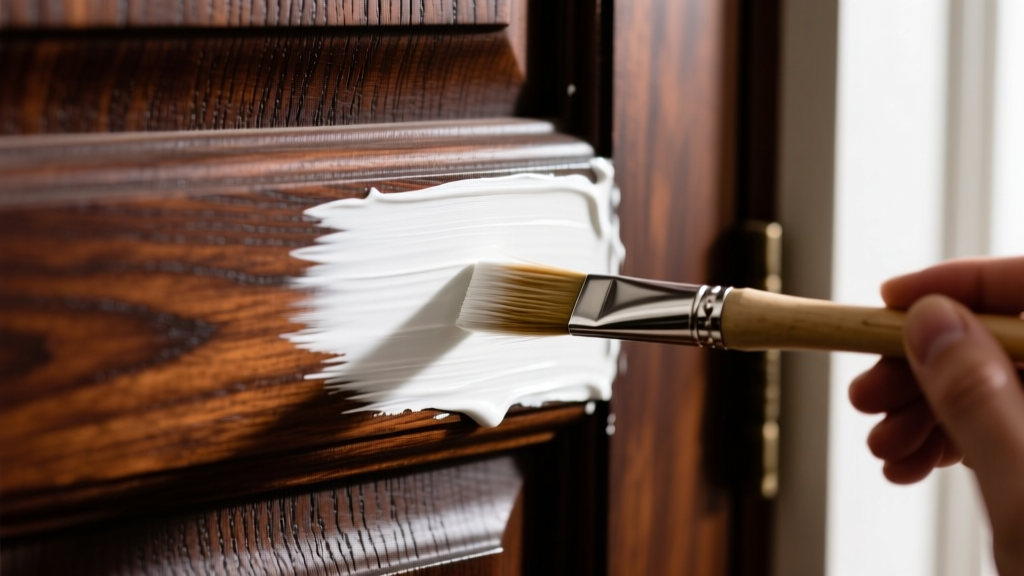
Painting over stained wood introduces a complex chemical and mechanical challenge. Stains, particularly oil-based and penetrating dye varieties, alter the surface tension of wood fibers. Furthermore, stained wood is almost universally sealed with a clear topcoat—such as polyurethane, lacquer, or varnish—which creates a non-porous, high-gloss barrier. If you apply standard latex paint directly over this surface, the water in the paint will bead up, and the resulting film will lack mechanical grip, leading to catastrophic peeling, alligatoring, or tannin bleed-through within months.
According to the USDA Forest Products Laboratory, the success of any architectural coating on wood depends entirely on surface preparation and the compatibility of the primer with the existing finish. Therefore, answering the question of what type of paint to use over stained wood requires looking past the topcoat and focusing heavily on the primer grade and the specific resin technology of the finish paint.
Woods like cedar, redwood, mahogany, and cherry contain high levels of water-soluble tannins. If you use a standard water-based acrylic primer over these species, the moisture will reactivate the tannins, causing yellow or brown stains to bleed through your topcoat. You must use a stain-blocking primer specifically rated for tannin mitigation.
Primer Grades: The True Foundation for Painted Stained Wood
The primer is the most critical component in this system. The Painting Contractors Association (PCA) mandates that primers must be selected based on their adhesion properties and their ability to seal underlying contaminants. Here is the grade matrix for priming stained wood:
| Primer Grade / Resin | Top Product Models | Best Application | Dry Time & VOC Notes |
|---|---|---|---|
| Pigmented Shellac | Zinsser B-I-N | Severe tannin bleed, knotty pine, cedar, and slick lacquered surfaces. | 45 mins. High VOC. Requires denatured alcohol for cleanup. |
| Oil-Alkyd | Zinsser Cover Stain, Kilz Original | Exterior stained trim, high-moisture areas, and general interior woodwork. | 2 hours. Moderate VOC. Excellent sanding profile. |
| High-Adhesion Acrylic | INSL-X Stix, Kilz Kolor | Interior trim where low-VOC is required and thorough sanding has been completed. | 1 hour. Low VOC. Water cleanup. Poor tannin blocking. |
What Type of Paint to Use Over Stained Wood (Topcoat Selection)
Once the correct primer has been applied and lightly sanded with 220-grit paper to remove any raised grain or dust nibs, you must select the appropriate topcoat. The architectural coatings industry has shifted heavily toward advanced hybrid resins due to strict environmental VOC regulations. Here are the two premium grades used by professionals for painting over stained wood.
1. Waterborne Alkyd (Urethane-Modified Acrylic)
Waterborne alkyds are the undisputed standard for interior cabinets, doors, and high-use trim. They utilize an alkyd resin suspended in a water base. This gives them the leveling properties, hard cure, and durability of traditional oil-based paints, but with the low-VOC footprint and easy soap-and-water cleanup of latex.
- Top Models: Benjamin Moore Advance, Sherwin-Williams Emerald Urethane Trim Enamel.
- Cure Time: Dry to touch in 2-4 hours, but requires 14 to 30 days to reach full chemical cure and maximum hardness.
- Finish Grades: Satin or Semi-Gloss (MPI Gloss Level 3 or 5) are preferred for woodwork as they highlight the profile of the trim without showing every surface imperfection.
2. 100% Acrylic Latex (Exterior & Architectural Trim)
For exterior stained wood (like fascia, siding, or porch railings) or interior walls where flexibility is required to accommodate wood expansion and contraction, a high-grade 100% acrylic latex is necessary. Acrylic resins remain flexible and resist UV degradation far better than alkyds, which tend to chalk and become brittle over time when exposed to direct sunlight.
- Top Models: Sherwin-Williams Duration, Benjamin Moore Regal Select.
- Adhesion Note: Acrylic latex requires a much more aggressive mechanical scuff-sand on the underlying primer compared to waterborne alkyds.
Step-by-Step Surface Prep & Application Protocol
Failure when painting over stained wood is rarely a paint defect; it is almost always a preparation failure. Follow this exact protocol to ensure a permanent bond.
- Chemical Cleaning: Wash the stained wood with a Trisodium Phosphate (TSP) substitute or a heavy-duty degreaser like Krud Kutter. This removes years of cooking grease, furniture polish, and hand oils that act as a bond-breaker.
- Deglossing (Mechanical or Chemical): You must break the factory gloss of the polyurethane or lacquer. Scuff-sand the entire surface using 150-grit aluminum oxide sandpaper. You are not trying to sand off the stain; you are merely scratching the clear coat to create a microscopic 'tooth' for the primer. Alternatively, use a chemical liquid sander (deglosser) if the trim has intricate, hard-to-sand routed profiles.
- Dust Extraction: Vacuum the surface with a brush attachment, then wipe it down with a tack cloth or a lint-free rag dampened with mineral spirits.
- Prime Application: Apply your chosen primer (e.g., Zinsser B-I-N for tannin-heavy woods) at a wet film thickness of roughly 3.0 to 4.0 mils. Allow it to dry completely according to the manufacturer's data sheet.
- Primer Sanding: Lightly hand-sand the dried primer with 220-grit sandpaper. This knocks down any raised wood grain and ensures a glass-smooth topcoat.
- Topcoat Application: Apply two coats of your selected waterborne alkyd or acrylic paint. Maintain a wet edge to prevent lap marks, and do not over-brush, which will break the surfactants and cause drag marks.
Waterborne alkyds can dry too quickly in low-humidity environments, leading to brush drag and poor leveling. Add a manufacturer-approved extender, such as Benjamin Moore 518 Extender (not Floetrol, which is strictly for standard latex and can disrupt alkyd emulsions), at a ratio of 8 ounces per gallon to increase open time and achieve a factory-sprayed finish.
Troubleshooting Common Failure Modes
Even with the right materials, environmental factors can cause application defects. Here is how to diagnose and fix them:
- Symptom: Yellow/Brown Stains Appearing Through White Paint.
Cause: Tannin bleed or nicotine stains penetrating a standard acrylic primer.
Fix: You cannot fix this by adding more topcoat. You must prime over the bleeding area with a pigmented shellac primer (Zinsser B-I-N) to seal the stain, then reapply your topcoat. - Symptom: Paint Peeling in Sheets or Chips.
Cause: Inadequate deglossing of the original polyurethane sealant, or painting over silicone-based furniture polish (like Pledge).
Fix: Scrape off the loose paint. Clean the area with mineral spirits to remove silicone residue, sand aggressively to bare wood or a fully scratched clear coat, re-prime with an oil-alkyd primer, and repaint. - Symptom: Alligatoring (Cracking that Looks Like Reptile Skin).
Cause: Applying a hard, rigid topcoat (like an alkyd) over a highly flexible underlying layer, or applying a second coat before the first coat has fully flashed off its solvents.
Fix: Sand down to a sound layer, ensure proper dry times between coats (check the data sheet for 'recoat windows'), and use a compatible paint system.
Cost Breakdown: Painting Over Stained Cabinetry & Trim
Upgrading stained wood with paint is a high-ROI renovation, but premium materials are required to guarantee longevity. Below is the estimated material cost breakdown for painting 100 square feet of stained wood trim or cabinetry (equivalent to roughly 10-12 standard cabinet doors and frames).
| Material Category | Specific Product Example | Est. Cost (per 100 sq ft) |
|---|---|---|
| Prep & Cleaning | TSP Substitute, 150/220-grit sandpaper, tack cloths | $15 - $25 |
| Stain-Blocking Primer | Zinsser B-I-N Shellac (1 Quart) | $25 - $35 |
| Premium Topcoat | Benjamin Moore Advance Waterborne Alkyd (1 Quart) | $30 - $45 |
| Consumables | High-density foam rollers, angled sash brushes, painter's tape | $20 - $30 |
| Total Material Cost (Excluding Labor) | $90 - $135 | |
By strictly adhering to the correct primer grade and utilizing advanced waterborne alkyd topcoats, you can successfully transform dated, stained woodwork into a durable, factory-finished architectural feature that withstands the rigors of daily use.
Written by
Sarah WhitfieldSarah Whitfield is a chartered quantity surveyor (MRICS) and construction cost analyst with 15 years of experience in material pricing, procurement strategy, and project budgeting. She earned her degree in Construction Management from the University of Reading (UK) and has worked on projects ranging from $2M custom homes to $180M mixed-use developments across North America and Europe. Sarah currently leads cost estimating for BuildMat Insight, maintaining a proprietary database of 4,000+ material price points updated quarterly. She is a frequent contributor to RSMeans cost data panels and has presented at the International Cost Engineering Council (ICEC) congress. Based in Denver, CO, Sarah is an avid trail runner and volunteer mentor for Women in Construction.
More from Sarah Whitfield
View all
Wood & Lumber
What Are the Different Types of Wood? A Builder's Guide
Compare structural softwoods, finish hardwoods, and engineered lumber. Analyze Janka ratings, MOE values, and 2026 pricing for construction.
Aug 4, 2026

Walls & Panels
Steel Framing vs Wood Framing: Corrosion and Moisture Defense
Compare steel framing vs wood framing for moisture resistance. Learn about galvanized coatings, condensation risks, and corrosion protection strategies.
Jul 21, 2026

Stone & Masonry
How to Cut Stone Veneer: Wet Saw vs Grinder Comparison
Compare the best tools for cutting stone veneer. We review wet saws, angle grinders, and chop saws to help you achieve clean, chip-free cuts.
Jul 21, 2026