Best Type of Fences Wood: Complete Species Guide and Cost Data
Discover the best type of fences wood for your project. Compare cedar, pine, redwood, and tropical hardwoods with 2026 cost data and lifespan metrics.

The Science of Wood Selection for Fencing
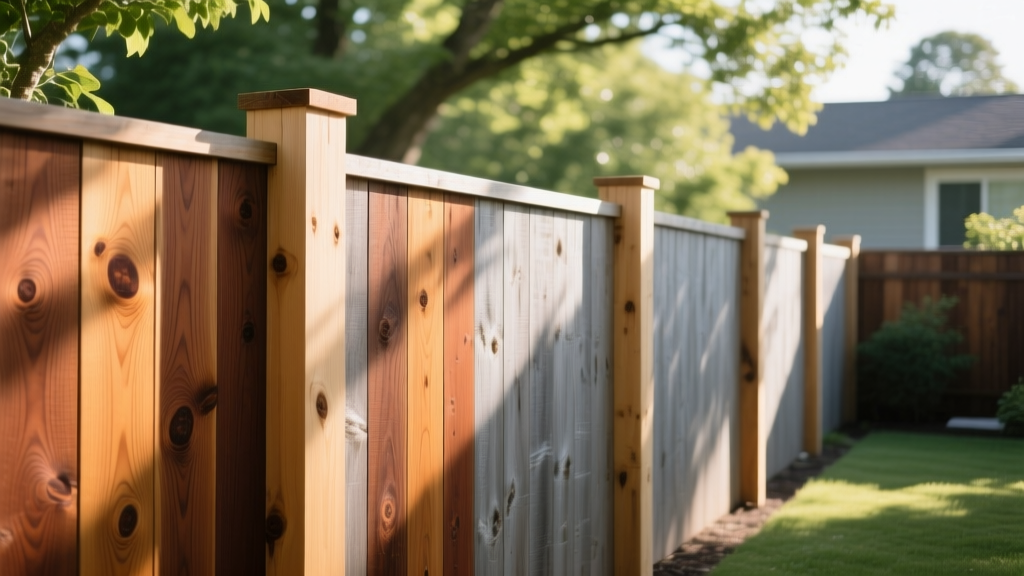
Selecting the right type of fences wood is not merely an aesthetic choice; it is a structural and financial decision that dictates the lifespan, maintenance cycle, and total cost of ownership of your perimeter. A fence built with the wrong species or improper treatment grade will succumb to fungal decay, insect infestation, or dimensional warping within 5 to 7 years. Conversely, specifying the correct heartwood grade or preservative retention level can extend that lifespan to 30+ years.
As of 2026, market dynamics have shifted. Supply chain stabilizations have brought Western Red Cedar prices down by roughly 8% from their post-pandemic peaks, while tropical hardwood exports face stricter FSC (Forest Stewardship Council) compliance checks, slightly elevating costs for premium species like Ipe. This guide breaks down the exact species, grades, and preservative standards you need to specify for your next fencing project.
Species Performance & Cost Matrix
The table below provides a direct comparison of the four primary wood categories used in modern residential and commercial fencing. Costs reflect 2026 national averages for material only (6-foot tall privacy fence, per linear foot).
| Wood Species | Janka Hardness (lbf) | Natural Decay Resistance | Material Cost (per lin. ft.) | Expected Lifespan |
|---|---|---|---|---|
| Pressure-Treated SYP (Pine) | 690 | High (Chemically Induced) | $14 - $22 | 15 - 20 Years |
| Western Red Cedar (WRC) | 350 | Moderate to High (Extractives) | $24 - $36 | 15 - 25 Years |
| California Redwood | 450 | High (Heartwood Only) | $35 - $55 | 20 - 30 Years |
| Ipe / Tropical Hardwood | 3,680 | Exceptional (Density & Oils) | $65 - $95 | 40+ Years |
Deep Dive: Softwoods & Preservative Treatments
Pressure-Treated Southern Yellow Pine (SYP)
Southern Yellow Pine is the undisputed workhorse of the fencing industry due to its cellular structure, which readily accepts preservative treatments. However, specifying 'pressure-treated' is not enough. You must verify the AWPA (American Wood Protection Association) Use Category stamped on the end tag of every board and post.
Pro-Tip for 2026: Always source KDAT (Kiln-Dried After Treatment) SYP. Standard wet-treated pine will shrink, twist, and check as it dries in the sun, pulling nails and warping pickets. KDAT lumber is dimensionally stable upon installation and accepts stains immediately.
Western Red Cedar (WRC)
Cedar relies on natural extractives (thujaplicins) for its decay and insect resistance. The critical mistake DIYers and inexperienced contractors make is buying lower-grade cedar that contains sapwood. Sapwood contains virtually no decay-resistant extractives and will rot just as fast as untreated pine.
- Clear Heart (Grade A): 100% heartwood, no knots. Best for high-end modern horizontal fences. Expensive but guaranteed longevity.
- Select Tight Knot (STK): Contains heartwood with small, sound knots. The best balance of cost, aesthetics, and structural durability for standard privacy fences.
- Construction / Utility Grade: Contains high percentages of sapwood and loose knots. Avoid for fencing entirely.
California Redwood
Redwood offers superior dimensional stability compared to cedar, meaning it shrinks and swells less with seasonal humidity changes. Like cedar, only the heartwood is rot-resistant. When sourcing Redwood, look for 'Construction Heart' or 'B-Heart' grades. According to the USDA Forest Products Laboratory Wood Handbook, Redwood's high tannin content also provides natural fire retardancy, making it an excellent choice for properties in Wildland-Urban Interface (WUI) fire zones.
Tropical Hardwoods: The Premium Tier
Species like Ipe, Cumaru, and Tigerwood are incredibly dense, boasting Janka hardness ratings that exceed 3,000 lbf. They are virtually impervious to rot, termites, and mechanical damage. However, they introduce unique installation and sourcing challenges.
Sourcing and Certification
Due to historical overharvesting, sourcing tropical hardwoods requires strict diligence. Ensure your supplier provides FSC (Forest Stewardship Council) certification. In 2026, many architects and municipalities mandate FSC-certified lumber for commercial and public works fencing to comply with sustainable procurement laws. If Ipe is unavailable or cost-prohibitive, Thermally Modified Ash has emerged as a highly durable, domestically sourced alternative that mimics the dark, rich tones of tropical woods without the import footprint.
Installation Realities
You cannot nail Ipe. The density will bend standard nails and split the wood. Installation requires:
- Pre-drilling: Every hole must be pre-drilled with a carbide-tipped bit.
- Hidden Fasteners: Use specialized biscuit joinery or hidden clip systems (e.g., TigerClaw) routed into the edges of the boards to maintain a clean, fastener-free face.
- End-Grain Sealing: Freshly cut ends of tropical hardwoods will check (split) rapidly as moisture escapes. You must immediately apply a wax-based end-grain sealer (like Anchorseal) to every cut.
Hardware Compatibility & Galvanic Corrosion
The most common cause of premature fence failure is not the wood rotting, but the fasteners corroding and snapping due to galvanic reactions between the wood's chemistry and the metal. Cedar and Redwood contain high levels of tannic acid, which aggressively corrodes standard zinc-plated and electro-galvanized fasteners. Pressure-treated wood contains copper-based preservatives (like MCA or ACQ) that act as a catalyst for rapid steel corrosion.
- For Pressure-Treated SYP: Use Hot-Dipped Galvanized (HDG) fasteners meeting ASTM A153 standards. Polymer-coated deck screws (e.g., GRK RSS) are also acceptable if rated for ACQ/MCA treated lumber.
- For Cedar & Redwood: Use 304 Stainless Steel or hot-dipped galvanized. Note that HDG can sometimes leave black streaks (zinc/tannin reaction) on cedar; 304 SS prevents this entirely.
- For Coastal / Saltwater Environments: Use 316 Marine-Grade Stainless Steel exclusively, regardless of wood species.
- For Tropical Hardwoods: Use 304 or 316 Stainless Steel. Never use galvanized, as the zinc will react with the natural oils and leave permanent dark stains on the dense grain.
Decision Framework: Choosing Your Material
Use this practical framework to finalize your material specification based on project constraints:
- Scenario A: Maximum Budget Constraint & High Privacy Need.
Selection: UC4B Pressure-Treated SYP (KDAT).
Action: Install with HDG ring-shank nails. Wait 60 days for moisture equalization, then apply a high-quality, semi-transparent oil-based stain (e.g., Armstrong Clark or TWP) to prevent UV graying and checking. - Scenario B: Balance of Aesthetics, Budget, and Natural Rot Resistance.
Selection: Select Tight Knot (STK) Western Red Cedar.
Action: Use 304 Stainless Steel trim-head screws. Leave unsealed to weather to a natural silvery-gray (requires accepting minor surface checking), or apply a penetrating alkyd-wood finish immediately to lock in the red/brown hue. - Scenario C: High Wind Load, Coastal Environment, or Lifetime Investment.
Selection: FSC-Certified Ipe or Thermally Modified Ash.
Action: Frame with 316 Stainless Steel hardware. Route edges for hidden fasteners. Apply UV-inhibiting hardwood oil (like Ipe Oil) annually if maintaining the original dark brown color is desired; otherwise, let it patina to silver.
By aligning the biological properties of the wood species with the specific environmental and structural demands of your site, you eliminate premature failure and ensure the fence performs flawlessly for decades.
Written by
Marcus ChenMarcus Chen is a licensed structural engineer (PE) and building materials analyst with over 12 years of experience across residential, commercial, and industrial construction. He holds a Master of Science in Civil Engineering from UC Berkeley and spent six years at Thornton Tomasetti before transitioning to independent consulting and technical writing. Marcus specializes in material selection for seismic-prone regions, concrete reinforcement strategies, and lifecycle cost analysis. His work has been cited by the American Concrete Institute (ACI) and the Structural Engineers Association of California (SEAOC). When he is not on a job site or at his desk, you will find him hiking the Sierra Nevada or restoring a 1920s craftsman bungalow in Oakland, CA.
More from Marcus Chen
View all
Construction Cost
How Much Did the Eiffel Tower Cost to Build?
How much did the Eiffel Tower cost to build in 1889? We adjust for inflation and compare its budget to modern skyscraper construction.
Aug 4, 2026

Fire Resistance
What Is a Fire Resistant Material? Testing & Certification Guide
Discover what is a fire resistant material through ASTM and UL testing. Learn how fire ratings, certifications, and assemblies work in construction.
Aug 4, 2026

Construction Cost
How Much Did the Burj Khalifa Cost to Build?
How much did the Burj Khalifa cost to build? We break down the $1.5B project and extract 5 money-saving strategies for your next build.
Jul 30, 2026