Selection Framework: Best Type of Wood for Fence Durability
Use our expert selection framework to choose the best type of wood for fence projects based on climate, soil conditions, budget, and decay resistance.
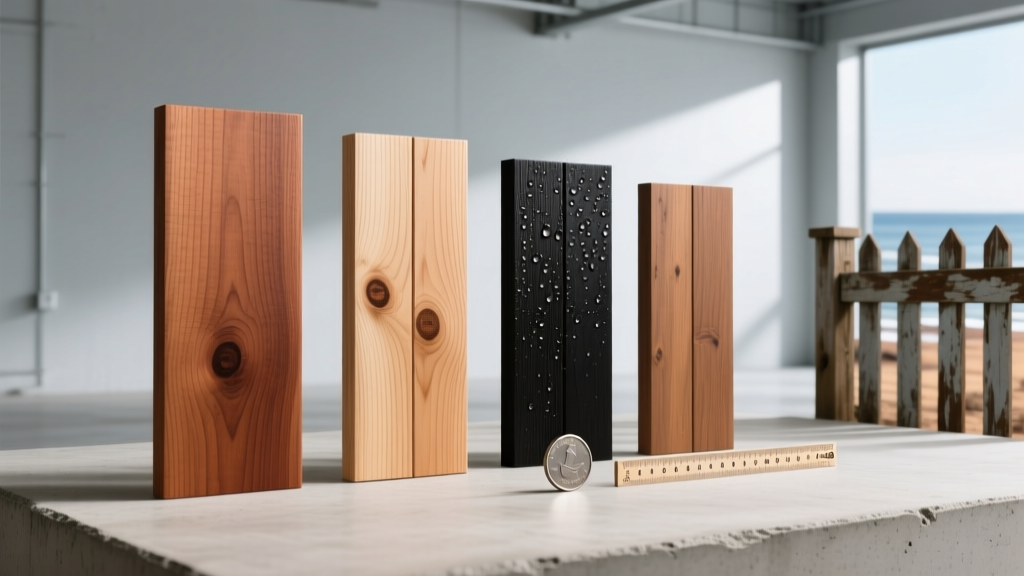
The 4-Axis Selection Matrix for Fence Timber
Selecting the correct type of wood for fence construction requires moving beyond basic aesthetics to evaluate structural decay resistance, soil chemistry interactions, and long-term lifecycle costs. A fence is a partially subterranean structure; the bottom 24 inches of every post operates in a hostile microenvironment of fluctuating moisture, soil-borne fungi, and microbial activity. According to the U.S. Forest Products Laboratory, wood decay in ground-contact applications accelerates exponentially when moisture content exceeds 20%. To engineer a fence that survives its intended lifespan without catastrophic post failure, builders and homeowners must apply a rigorous selection framework.
This matrix evaluates timber across four critical axes: AWPA decay categories, regional soil reactivity, lumber grading standards, and lifecycle economics.
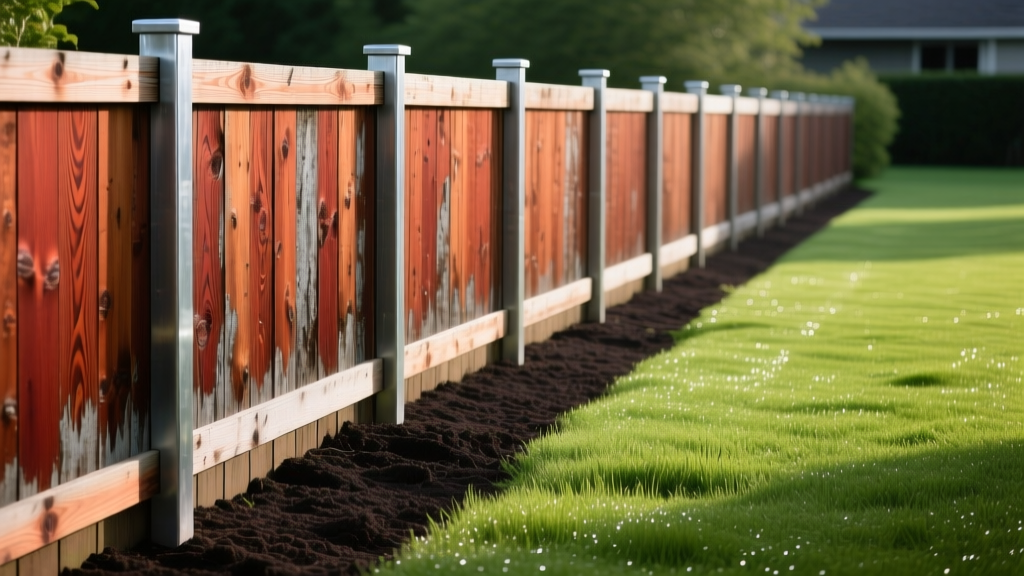
Axis 1: Decay Resistance and AWPA Use Categories
The American Wood Protection Association (AWPA) categorizes treated lumber based on its intended exposure to moisture and biological threats. When evaluating pressure-treated pine or naturally durable species for fence posts, you must specify the correct Use Category (UC) for the subterranean portion of the build.
- UC4A (General Ground Contact): Suitable for fence posts set in concrete piers where the wood does not touch the soil directly, or for use in well-drained, arid sandy soils.
- UC4B (Heavy-Duty Ground Contact): Mandatory for fence posts driven directly into clay-rich or poorly drained soils, or for critical structural corner posts bearing high wind loads.
- UC4C (Severe Duty): Reserved for permanent wood foundations and marine environments; generally overkill and cost-prohibitive for standard residential fencing.
For naturally durable woods like Western Red Cedar or Redwood, decay resistance is confined exclusively to the heartwood. Sapwood offers zero natural protection against termites or fungal rot. Therefore, specifying "All Heart" or "Clear Heart" grades is non-negotiable for fence posts, whereas sapwood-containing grades are acceptable for above-ground pickets and rails.
| Wood Species | Janka Hardness (lbf) | Natural Decay Resistance | Ideal Fence Application |
|---|---|---|---|
| Pressure-Treated Pine (Southern Yellow) | 870 | N/A (Depends on Chemical Retention) | Posts (UC4B), Rails, Pickets |
| Western Red Cedar | 350 | High (Heartwood Only) | Pickets, Rails, Above-Ground Posts |
| California Redwood | 420 | Very High (Heartwood Only) | Privacy Panels, Decorative Trim |
| Black Locust (Domestic Hardwood) | 1,700 | Exceptional (Heartwood & Sapwood) | Direct-Burial Posts, Gate Hinge Posts |
| Ipe (Tropical Hardwood) | 3,510 | Exceptional | Horizontal Slats, Luxury Privacy Screens |
Axis 2: Climate and Soil Reactivity
The environment dictates the failure mode of your fence. A material that performs flawlessly in the arid Southwest will rot at the base within seven years in the humid Southeast if improperly specified.
The Clay Soil Trap
Expansive clay soils retain moisture against the wood surface and restrict oxygen flow, creating an anaerobic environment that accelerates certain types of fungal decay while simultaneously causing frost heave in freezing climates. If your site features heavy clay, direct-burial wooden posts are a liability. The framework dictates using UC4B pressure-treated pine, or better yet, transitioning to hot-dipped galvanized steel post anchors set in concrete, allowing you to use UC4A lumber or cedar above grade.
High-UV and Arid Climates
In regions with intense solar exposure, ultraviolet radiation degrades the lignin in wood, causing surface checking (cracking) and silvering. While this does not immediately compromise structural integrity, it opens pathways for moisture ingress during rare rain events. For arid climates, the Western Red Cedar Lumber Association recommends applying a penetrating, oil-based UV inhibitor immediately upon installation to stabilize the cellular structure and prevent severe checking in wide dimensional boards like 1x12 privacy panels.
Axis 3: Lumber Grades and Dimensional Stability
Walking into a lumber yard and simply asking for "cedar" is a recipe for warped panels and structural failure. You must read the grade stamps and understand the milling associations' classifications. For structural framing (posts and 2x4 rails), dimensional stability and load-bearing capacity are paramount. For pickets, visual appearance and knot tightness take precedence.
Fastener Compatibility by Wood Type
The chemical composition of your chosen wood dictates your fastener metallurgy. Cedar and Redwood contain high levels of tannic acid, which reacts violently with standard zinc-plated nails, causing unsightly black streaks and rapid fastener corrosion. Furthermore, modern pressure-treated pine utilizes copper-based preservatives (like MCA or CA-C) that act as an electrolyte, accelerating galvanic corrosion of standard steel.
- Cedar & Redwood: Require hot-dipped galvanized (HDG) or 304/316 stainless steel fasteners.
- Pressure-Treated Pine: Require polymer-coated deck screws or HDG fasteners meeting ASTM A153 Class D standards.
- Tropical Hardwoods (Ipe/Cumaru): Require 316 marine-grade stainless steel to withstand the extreme density and natural oils that degrade lesser metals.
Axis 4: Installed Cost vs. Lifecycle Value (2026 Pricing)
Evaluating the type of wood for fence projects requires calculating the cost per linear foot (LF) against the expected maintenance-free lifespan. The following data reflects national averages for professional installation, including materials, labor, and site preparation, as of early 2026.
| Material Profile | Avg. Installed Cost (per LF) | Expected Lifespan (Years) | Lifecycle Cost Index |
|---|---|---|---|
| UC4B Pressure-Treated Pine (6-ft Privacy) | $28 - $38 | 15 - 20 | Lowest Initial / High Maintenance |
| Western Red Cedar (STK, 6-ft Privacy) | $45 - $65 | 20 - 25 | Moderate Initial / Low Maintenance |
| Clear Heart Redwood (6-ft Privacy) | $75 - $110 | 25 - 30 | High Initial / Premium Aesthetic |
| Black Locust Posts + Cedar Rails/Pickets | $55 - $75 | 30 - 40 (Posts) | Best Long-Term Structural Value |
| Ipe (Horizontal Slat Privacy) | $130 - $180 | 40+ | Luxury / Multi-Generational |
While pressure-treated pine remains the most common choice due to its low barrier to entry, the hidden costs of bi-annual sealing, warping replacement, and eventual post extraction often make a hybrid approach—such as Black Locust posts with cedar rails and pickets—the most economically rational choice for homeowners planning to stay in the property for more than 15 years.
The Final Decision Flowchart
Use this conditional logic to finalize your material specification:
- Is the fence located in a region with heavy clay soil and high frost heave?
If YES: Do not bury wood. Use concrete piers with galvanized post bases, and select Western Red Cedar or Redwood for the above-grade structure.
If NO: Proceed to Step 2. - Are you building a high-wind load fence (e.g., solid 8-foot privacy in coastal or plains regions)?
If YES: Use UC4B Pressure-Treated Southern Yellow Pine for 4x4 or 6x6 structural posts to leverage the wood's high bending strength, paired with cedar pickets to reduce overall weight and wind shear.
If NO: Proceed to Step 3. - Is the primary goal zero-maintenance longevity exceeding 30 years?
If YES: Source domestically milled Black Locust for all ground-contact posts and structural rails, utilizing stainless steel hardware throughout.
If NO: Select Select Tight Knot (STK) Western Red Cedar for a balanced compromise of natural beauty, moderate decay resistance, and manageable lifecycle costs.
By adhering to this framework and consulting AWPA treatment standards during the procurement phase, you eliminate the guesswork from material selection. The right type of wood for fence durability is not a single species, but a calculated assembly of materials matched precisely to their environmental and structural demands.
Written by
Elena RodriguezElena Rodriguez is a civil engineer and technical writer specializing in concrete technology, masonry systems, and ASTM/ACI compliance. She earned her B.S. in Civil Engineering from Texas A&M University and spent a decade at a materials testing laboratory, performing over 2,000 concrete compressive strength tests and masonry prism evaluations. Elena is an ACI-certified Field Testing Technician (Grade I) and a member of ASTM Committee C12 on Natural Building Stone. She currently consults on forensic engineering cases involving concrete failures and moisture intrusion. Based in San Antonio, TX, Elena is a proud member of the Society of Women Engineers (SWE) and coaches her daughter's FIRST Robotics team.
More from Elena Rodriguez
View all
Walls & Panels
Cost Analysis: Light Gauge Steel Framing Advantages and Disadvantages
Evaluate light gauge steel framing advantages and disadvantages through a strict cost analysis lens, comparing material, labor, and lifecycle expenses.
Aug 4, 2026

Walls & Panels
Gypsum Board Types: Exact Specifications, Thickness & Dimensions
Compare standard, Type X, and moisture-resistant gypsum board types. Get exact specifications, thicknesses, dimensions, and ASTM standards for your project.
Aug 4, 2026

Fire Resistance
Best Fire-Resistant Outdoor Decking Materials: 2026 Buyer Guide
Discover the best fire-resistant outdoor decking materials for 2026. Compare Class A PVC, aluminum, and hardwood options for WUI compliance and safety.
Aug 4, 2026