Types of Fences Wood: The Ultimate Lumber Grade & Quality Guide
Discover the best types of fences wood for your project. Compare lumber grades, species durability, and quality metrics to build a long-lasting boundary.

A wood fence is only as durable as its lowest-grade board. While many homeowners focus exclusively on the aesthetic profile of the pickets, the structural longevity of any boundary relies on understanding lumber grading, moisture content, and species-specific decay resistance. When evaluating types of fences wood, selecting the right grade prevents premature warping, fastener pull-through, and ground-line rot.
Decoding Lumber Grades for Fencing Applications
Lumber grading is a standardized system that categorizes wood based on structural integrity and visual defects. For fencing, you do not need premium furniture-grade lumber, but purchasing utility-grade boards will result in excessive waste and structural failure.
- FAS (First and Second): Minimum 83.3% clear-face cutting yield. Overkill and financially illogical for fencing.
- Select Structural: High bending strength, tight grain, minimal knots. Mandatory for 8-foot horizontal rails and gate frames.
- #1 Common: Tight knots, excellent structural integrity. Ideal for load-bearing fence posts (4x4 and 6x6).
- #2 Common: The industry standard for privacy fence pickets. Contains larger, sound knots and minor slope-of-grain deviations, but offers the best balance of cost and structural reliability.
- #3 Common: High defect rate, prone to warping. Only use for temporary construction fencing or rustic agricultural borders.
Wood Species Durability & Grade Matrix
Not all species react to ground contact and weather exposure equally. The American Wood Protection Association (AWPA) classifies natural decay resistance based on heartwood extractives. Below is a technical comparison of the most common types of fences wood used in residential and commercial construction.
| Species | AWPA Decay Resistance | Janka Hardness (lbf) | Recommended Grade | Expected Lifespan (Ground Contact) |
|---|---|---|---|---|
| Western Red Cedar | Class I (Highly Resistant) | 350 | #2 Common (Pickets), #1 (Posts) | 15-25 Years (Above ground), 5-7 Years (In ground) |
| California Redwood | Class I (Highly Resistant) | 420 | Construction or Select | 20-30 Years (Above ground), 10+ Years (In ground) |
| Pressure-Treated Pine (Southern Yellow) | Dependent on Retention Level | 870 | #2 Common or Better | 20-40 Years (If rated UC4A or UC4B) |
| Bald Cypress | Class I (Heartwood only) | 510 | #1 Common | 15-20 Years (Above ground) |
| SPF (Spruce-Pine-Fir) | Class III (Non-Resistant) | 380 - 520 | #2 Common | 3-5 Years (Requires chemical treatment or sealing) |
According to the USDA Forest Products Laboratory Wood Handbook, the natural decay resistance of cedar and redwood is strictly confined to the heartwood. Sapwood, regardless of the species, contains no extractives and will rot rapidly if exposed to soil moisture.
Moisture Content and Dimensional Stability
Wood is hygroscopic; it absorbs and releases moisture until it reaches equilibrium with the surrounding environment (EMC). Buying lumber with the wrong moisture content (MC) guarantees warped pickets and popped fasteners within the first season.
Green vs. Kiln-Dried vs. KDAT
- Green Lumber (MC > 19%): Often sold as rough-sawn cedar or redwood. It is heavy, pliable, and easy to cut, but will shrink significantly across the grain as it dries. Actionable advice: If using green lumber, butt pickets tightly together during installation; they will shrink to create a 1/4-inch gap naturally.
- Kiln-Dried (KD) (MC ~15%): Stable and lightweight. KD cedar and redwood will experience minimal shrinkage. Install with a 1/4-inch spacer between pickets to allow for seasonal expansion.
- Kiln-Dried After Treatment (KDAT): Pressure-treated pine is injected with water-based preservatives, leaving it saturated. KDAT lumber has been dried in a kiln post-treatment. Warning: Never buy 'green' pressure-treated pine for horizontal fence rails. The high moisture content will cause severe twisting (checking) as it dries in the sun, pulling the fasteners right through the pickets. Always specify KDAT for rails and posts.
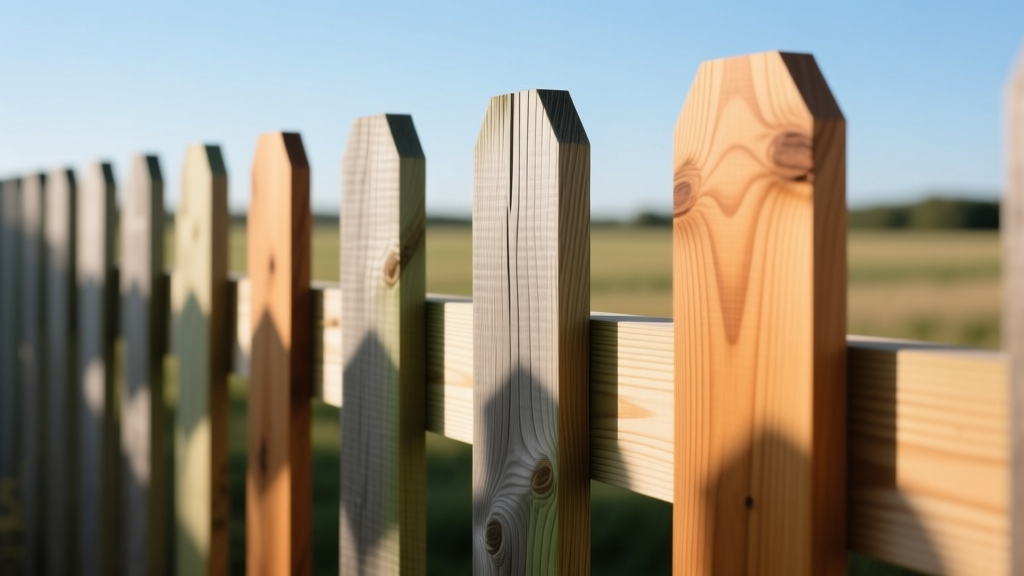
2026 Material Cost Breakdown by Species and Grade
Pricing fluctuates based on regional availability and milling capacity. The following data reflects Q1 2026 national averages for material costs per linear foot of a standard 6-foot-tall privacy fence (materials only, excluding labor, concrete, and hardware).
| Material Specification | Picket Cost (per board) | Material Cost (per linear ft) | ROI & Longevity Profile |
|---|---|---|---|
| Pressure-Treated SPF (#2 Common) | $2.85 - $3.40 | $18.00 - $22.00 | Low upfront cost; requires biennial sealing. |
| Western Red Cedar (#2 Common, KD) | $4.50 - $5.80 | $28.00 - $35.00 | Excellent natural aesthetics; moderate maintenance. |
| California Redwood (Construction Grade) | $6.20 - $8.50 | $38.00 - $48.00 | Premium durability; high resistance to cupping. |
| Tropical Hardwood (Ipe - 1x6) | $14.00 - $18.00 | $85.00 - $110.00 | 50+ year lifespan; requires hidden fastener systems. |
Critical Failure Modes and Prevention
Even premium lumber will fail if the installation ignores basic wood science. Address these specific edge cases to ensure your fence survives the 20-year mark.
1. End-Grain Wicking and Post Rot
The end grain of a wood post acts like a bundle of straws, wicking moisture directly from the soil into the core of the wood. This is the #1 cause of fence failure. Fix: Before setting posts in concrete, coat the bottom 24 inches of the post with a copper naphthenate-based wood preservative (e.g., Copper-Green). Furthermore, slope the concrete collar away from the post at a 45-degree angle to shed surface water.
2. Galvanic Corrosion from Treated Wood
Modern pressure-treated wood uses alkaline copper quaternary (ACQ) or copper azole (CA-C) preservatives. These copper-rich chemicals are highly corrosive to standard zinc-plated nails and aluminum hardware. Fix: You must use hot-dipped galvanized fasteners that meet ASTM A153 Class D standards, or stainless steel (Type 304 or 316). Electroplated 'bright' nails will corrode and leave black streaks down your fence within 12 months.
3. Picket Cupping and Bark Orientation
Flat-sawn boards will naturally cup away from the bark side (the outer rings) as they dry and are exposed to UV radiation. Fix: When nailing flat-sawn pickets, always install them with the bark side facing outward (towards the street). If they cup, the edges will pull toward the house, keeping the visible face relatively flat and preventing water from pooling on the horizontal surface of the cup.
The Lumber Yard Inspection Checklist
Do not accept a delivery blind. When evaluating the physical types of fences wood arriving on-site, run this 4-point inspection protocol:
- The Sight-Down Test: Pick up each 8-foot rail and 4x4 post. Look down the length like a telescope. Reject any board with a lateral bow exceeding 3/4 of an inch or any severe crook. Minor twist is manageable, but severe twist will split the pickets when forced flat.
- Knot Integrity Check: For #2 Common pickets, ensure knots are 'tight' (intergrown with the surrounding wood). Reject boards with 'loose' or 'encased' knots (surrounded by a dark ring), as these will fall out within a year, leaving holes in your privacy fence.
- Moisture Meter Verification: Use a pin-type moisture meter on a random sampling of boards. If KDAT lumber reads above 19%, it was either stored improperly or mislabeled. If cedar reads below 12%, it is kiln-dried and requires gap-spacing during installation.
- Grade Stamp Audit: Verify the ink stamp on the end or face of the lumber. Ensure the species and grade match your purchase order. Mills frequently substitute 'Hem-Fir' or 'SPF' when Cedar is on backorder.
By prioritizing structural grades, verifying moisture content, and matching the correct fastener metallurgy to your chosen species, you transform a standard perimeter barrier into a permanent, high-value architectural asset. For more detailed installation schematics and grading visual guides, consult the Western Red Cedar Lumber Association's fencing resources before finalizing your material order.
Written by
Priya KapoorPriya Kapoor is a real estate market analyst and construction economics researcher with expertise in housing affordability, development feasibility, and infrastructure investment. She holds a Master of Regional Planning from Cornell University and previously worked as a senior analyst at CBRE's Investment Properties group, where she modeled returns for $4B in mixed-use development pipelines. Priya now runs an independent research practice advising developers, municipalities, and REITs on construction cost forecasting and market timing. She publishes the quarterly "BuildMat Market Pulse" report tracking material price indices across 12 commodity categories. Based in Austin, TX, Priya serves on the board of Habitat for Humanity Austin and is a marathon runner.
More from Priya Kapoor
View all
Construction Cost
Cost to Build a 1600 Sq Ft Home in 2026: Full Breakdown
Accurate 2026 cost to build a 1600 sq ft home—material, labor, and regional pricing breakdowns included. Plan your budget with real-time estimates.
Aug 11, 2026

Wood & Lumber
Name the Types of Wood for Pressure Treatment and Preservation
Learn how to name the types of wood best suited for pressure treatment. Compare species treatability, chemical retention levels, and 2026 preservation costs.
Aug 4, 2026

Stone & Masonry
Stone Veneer Suppliers Lindenhurst: 2026 Cost Analysis
Analyze 2026 stone veneer costs in Lindenhurst, NY. Compare local supplier pricing, delivery fees, and Suffolk County installation labor rates.
Aug 4, 2026