What Type of Wood Goes in a Wine Fridge? Cost & Value Guide
Discover what type of wood goes in a wine fridge. We analyze the cost, moisture resistance, and long-term value of top racking and lining woods.

The Microclimate Challenge: Why Wood Selection Dictates Fridge Longevity
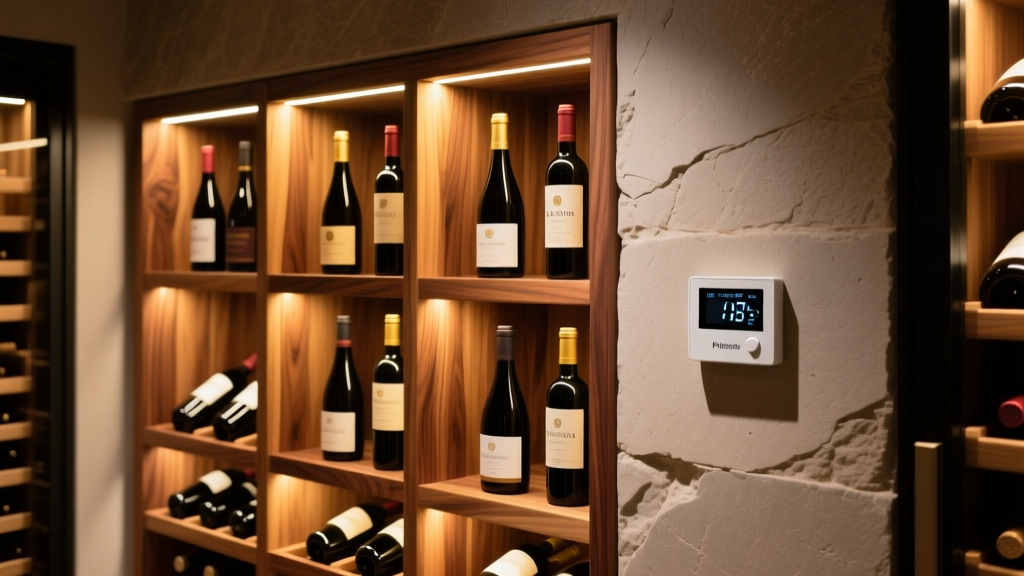
Building or retrofitting a wine fridge requires treating the interior as a specialized microclimate. Unlike standard cabinetry, wine storage environments are strictly maintained at 55°F with a relative humidity (RH) of 50% to 70%. When evaluating what type of wood goes in a wine fridge, you are not just selecting for aesthetics; you are engineering for dimensional stability, rot resistance, and chemical neutrality.
According to the USDA Forest Products Laboratory Wood Handbook, wood exposed to a constant 60% RH at 55°F will reach an Equilibrium Moisture Content (EMC) of approximately 11.5%. Standard furniture-grade lumber is kiln-dried to 6%–8% EMC. Consequently, wood placed inside a wine fridge will actively absorb ambient moisture and swell. If the species has poor dimensional stability, this swelling will cause joinery failure, warped racking, and stuck drawers. Furthermore, volatile organic compounds (VOCs) and natural saps can off-gas in the confined, humid space, potentially penetrating corks and tainting the wine.
Cost vs. Value Matrix: Top Wood Species for Wine Fridges
The following matrix evaluates the most common wood species used in premium wine fridges and cellars, balancing upfront material costs against long-term durability and maintenance requirements.
| Wood Species | Avg Cost (per BF) | Janka Hardness | Dimensional Stability | Rot Resistance | Value Rating |
|---|---|---|---|---|---|
| Spanish Cedar | $14 – $20 | 600 lbf | Excellent | Very High | ★★★★★ |
| Sapele (African Mahogany) | $9 – $14 | 1,410 lbf | Very Good | Moderate | ★★★★☆ |
| Coastal Redwood | $8 – $15 | 420 lbf | Excellent | High | ★★★★☆ |
| Black Walnut | $15 – $24 | 1,010 lbf | Good | Moderate | ★★★☆☆ |
Deep Dive: Species Breakdown and ROI
1. Spanish Cedar (Cedrela odorata): The Premium Standard
Spanish Cedar is widely considered the gold standard for high-end wine fridge interiors and humidor-style cabinetry. Its natural oils emit a subtle, pleasant aroma that actively repels insects and inhibits mold spore germination—a critical feature in 60% RH environments. Data from The Wood Database highlights its exceptional dimensional stability, meaning it will not warp or bind when transitioning from a dry workshop to a humid wine fridge.
- Best Application: Interior wall lining, premium display racking, and drawer interiors.
- Cost Reality: At $14 to $20 per board foot (BF), it is an investment. However, its zero-maintenance requirement (no sealing needed) offsets the initial material cost over a 20-year lifespan.
- Failure Mode: Because it is relatively soft (600 lbf Janka), heavy magnum bottles can dent the racking rails if not handled carefully.
2. Sapele (Entandrophragma cylindricum): The Durability Workhorse
Often marketed as African Mahogany, Sapele offers a striking ribbon-stripe figure and exceptional hardness. Its interlocked grain provides superior resistance to the swelling vectors caused by high humidity. Sapele is the preferred choice for structural racking components that must bear the weight of hundreds of glass bottles without sagging.
- Best Application: High-density storage racking, structural shelving, and heavy-duty pull-out bins.
- Cost Reality: Priced between $9 and $14 per BF, Sapele delivers the best structural ROI in the premium tier. It machines beautifully and holds stainless steel fasteners securely.
- Failure Mode: The interlocked grain can cause tear-out during planing if the miller does not use specialized helical cutterheads, potentially increasing custom milling costs.
3. Coastal Redwood (Sequoia sempervirens): The Traditionalist's Choice
Clear, all-heart Coastal Redwood has been used in wine cellars for decades. Its high tannin content acts as a natural fungicide and preservative. Redwood boasts one of the lowest shrinkage rates among domestic softwoods, making it incredibly stable in fluctuating microclimates.
- Best Application: Rustic or traditional racking designs, decorative fascia, and ceiling treatments inside large walk-in wine fridges.
- Cost Reality: $8 to $15 per BF for clear heartwood grades. Beware of cheaper 'construction grade' redwood, which contains sapwood that lacks rot resistance.
- Failure Mode: At 420 lbf Janka, it is very soft. Metal bottle necks will easily gouge the wood over time, requiring protective rail inserts (like PVC or leather padding) on the racking lips.
4. Black Walnut (Juglans nigra): The High-End Aesthetic
For modern, luxury wine fridges where visual contrast is paramount, Black Walnut is unmatched. Its rich, dark chocolate hues provide a stunning backdrop for bottle labels. However, walnut requires careful finishing in a humid environment to prevent tannin bleed, which can stain light-colored wine labels if the bottle rests directly against unfinished wood.
- Best Application: Modern display racking, exterior fridge cladding, and accent banding.
- Cost Reality: $15 to $24 per BF. The high material cost is compounded by the mandatory expense of high-quality, water-based sealants.
- Failure Mode: If exposed to prolonged 70% RH without a proper vapor-barrier finish, walnut can develop superficial surface mold.
The False Economy of Budget Woods (Pine, Fir, and MDF)
Using budget materials like Pine, Fir, or Medium Density Fiberboard (MDF) in a wine fridge is a critical error. Pine and Fir contain high levels of volatile terpenes and sap. In a sealed 55°F environment, these VOCs concentrate and can penetrate natural corks, exacerbating cork taint (TCA) and ruining the wine. MDF and standard plywood use urea-formaldehyde glues that break down in 60% RH, leading to structural delamination, sagging shelves, and toxic off-gassing within 24 months.
While Pine may cost under $3 per BF and MDF even less, the replacement cost of a failed racking system—combined with the potential loss of a ruined wine collection—results in a negative ROI. Always allocate budget toward moisture-stable hardwoods or specialized softwoods like Redwood.
Hidden Costs: Finishes, Fasteners, and Milling
When calculating the total cost of your wine fridge wood, material pricing is only the baseline. The following ancillary costs must be factored into your budget:
- Water-Based Polyurethanes ($40–$80 per quart): If using Walnut or Sapele, you must seal the wood. Never use oil-based polyurethanes or lacquers, as their prolonged off-gassing will taint the wine. Use a water-based, low-VOC finish like General Finishes Enduro-Var or Epifanes Waterbased Matte. Budget for 3 coats with light 320-grit sanding between applications.
- Marine-Grade Fasteners ($0.15–$0.40 per screw): Standard zinc or galvanized screws will rust rapidly in 60% RH, leaving permanent black streaks on the wood (especially on high-tannin woods like Redwood and Walnut). You must exclusively use Grade 304 or 316 stainless steel screws and brad nails.
- Rail Protection ($2–$4 per linear foot): For softer woods like Spanish Cedar and Redwood, applying a thin strip of PVC, leather, or silicone channeling to the bottle rest rails prevents glass-on-wood friction and extends the life of the racking.
Final Verdict: Maximizing Your Wine Fridge Investment
Determining what type of wood goes in a wine fridge ultimately depends on your balance of budget, structural needs, and aesthetic goals. For the ultimate low-maintenance, rot-proof interior, Spanish Cedar remains the undisputed champion despite its premium price tag. For heavy-duty structural racking on a moderate budget, Sapele offers the best mechanical value. Avoid the false economy of construction-grade softwoods and composite boards, as the humid microclimate of a wine fridge will rapidly expose their structural and chemical flaws.
Frequently Asked Questions
Can I use oak for wine fridge racking?
White Oak is dimensionally stable and rot-resistant, making it technically suitable. However, its prominent open grain can trap moisture and dust, and its high tannin content requires thorough sealing to prevent label staining. Red Oak should be strictly avoided due to its high porosity and poor rot resistance.
Does the wood inside a wine fridge need to be sealed?
Spanish Cedar and Redwood should generally be left unfinished to allow their natural rot-resistant oils to interact with the environment. Woods like Walnut, Sapele, and Cherry must be sealed with a water-based, low-VOC polyurethane to prevent moisture absorption and tannin bleed.
What is the safest glue for assembling wine fridge racking?
Written by
James ThorntonJames Thornton is a construction industry veteran with 25 years of hands-on experience in wood framing, lumber grading, and residential building codes. He started as a framing carpenter in rural Oregon, earned his ICC Residential Building Inspector certification, and eventually became a senior plan reviewer for the City of Portland Bureau of Development Services. James holds a B.S. in Wood Science & Technology from Oregon State University and is a certified lumber grader through the West Coast Lumber Inspection Bureau (WCLIB). He has inspected over 3,000 residential construction sites and authored the city's internal guide on advanced framing techniques (2x6 at 24" O.C.). James lives in Bend, OR, where he builds custom timber-frame cabins and competes in lumberjack sports.
More from James Thornton
View all
Insulation
Best Home Insulation Materials: Complete 2026 Guide
Compare top home insulation materials for 2026. Find R-values, installed costs per square foot, and best uses for fiberglass, spray foam, and mineral wool.
Aug 4, 2026

Sustainable Building
Certify Your Green Building Material for LEED and WELL
Step-by-step guide to certifying a green building material for LEED v5 and WELL v2. Master EPDs, HPDs, and VOC limits for 2026 project specifications.
Aug 4, 2026

Stone & Masonry
Veneer Stacked Stone Panels: Interior Design & Style Showcase
Discover how veneer stacked stone panels transform interiors. Explore modern design profiles, material pairings, and technical installation specs.
Aug 4, 2026