Wood Panel Wall Durability: Lifespan and Material Analysis
Analyze wood panel wall durability and lifespan across solid wood, MDF, and plywood. Discover failure modes, moisture limits, and maintenance costs.
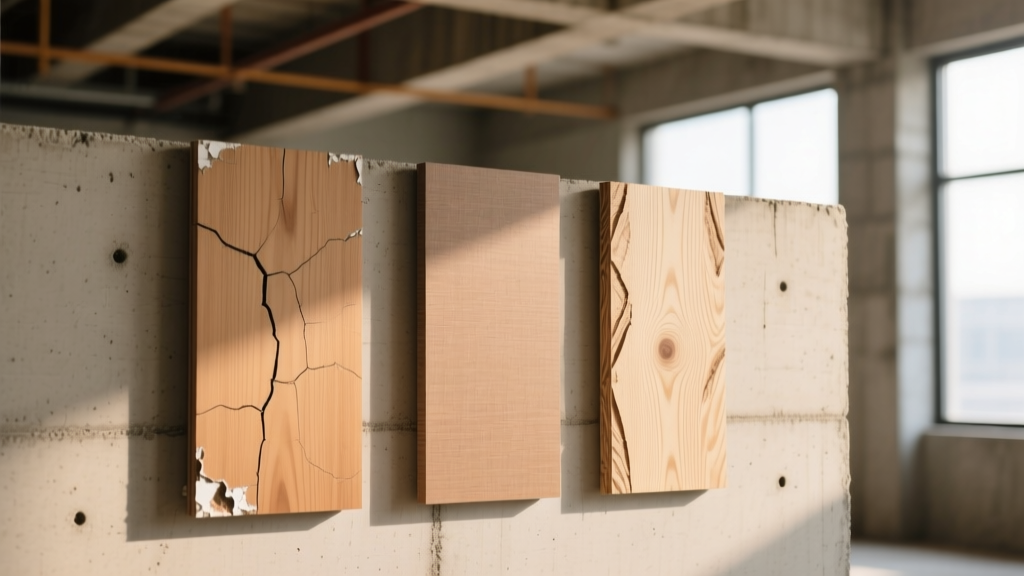
Architectural Wood Panel Walls: Beyond Aesthetics
Architectural wood panel walls elevate interior spaces, but their longevity depends entirely on material selection, core composition, and environmental control. A wood panel wall in a humidified museum lobby will perform vastly differently than one in a high-traffic corporate corridor with aggressive HVAC cycling. When specifying wood for vertical architectural applications, designers and facility managers must look past the face veneer and evaluate the structural core, finish chemistry, and mounting hardware. According to the Architectural Woodwork Institute (AWI) standards, the lifespan of an interior wood panel system is dictated by its ability to resist dimensional movement, impact degradation, and finish failure over decades of service.
This analysis breaks down the expected lifespan, failure thresholds, and long-term maintenance economics of the most common wood panel wall systems used in modern commercial and high-end residential construction.
Material Matrix: Expected Lifespan and Failure Thresholds
Not all wood panels are engineered equally. The core material dictates the panel's dimensional stability, while the face veneer determines its aesthetic aging and refinishing potential. Below is a comparative matrix of the four primary wood panel wall categories.
| Panel Type | Core Material | Expected Lifespan | Moisture Tolerance (RH) | Impact Resistance | Avg. Installed Cost (per sq. ft.) |
|---|---|---|---|---|---|
| Solid Hardwood (Tambour/Stave) | Solid Lumber (3/4" to 1") | 50+ Years | 35% - 55% | High | $45 - $85 |
| Architectural Plywood | Veneer Core (Baltic/ApplePly) | 30 - 40 Years | 30% - 60% | Medium-High | $28 - $55 |
| Veneered MDF/HDF | Medium/High Density Fiberboard | 15 - 25 Years | 40% - 50% (Strict) | Low-Medium | $18 - $32 |
| WPC (Wood Plastic Composite) | Extruded PVC/Wood Flour Blend | 25 - 35 Years | 10% - 90% (Waterproof) | Medium | $12 - $24 |
The Moisture Variable: Dimensional Stability and Delamination
Wood is hygroscopic; it continuously exchanges moisture with the surrounding air until it reaches Equilibrium Moisture Content (EMC). In interior environments, seasonal HVAC fluctuations cause the EMC to shift. When a wood panel wall absorbs or loses moisture, the face veneer expands or contracts. If the core material reacts at a different rate than the face veneer, catastrophic delamination or surface telegraphing occurs.
For most climate-controlled commercial buildings in North America, the target EMC is between 6% and 9%. The USDA Forest Products Laboratory Wood Handbook specifies that maintaining indoor relative humidity (RH) between 35% and 55% is critical to preventing permanent checking (splitting) in solid wood panels and edge-banding failure in veneered panels.
MDF Core Swelling vs. Plywood Cross-Banding
Medium Density Fiberboard (MDF) is the most common core for budget-conscious veneered wood panel walls due to its perfectly smooth surface, which prevents telegraphing. However, MDF has a critical durability flaw: irreversible thickness swelling. If an MDF-core panel is exposed to a localized water leak or sustained RH levels above 65%, the wood fibers absorb moisture and expand. Unlike solid wood, which shrinks back when dried, MDF swells permanently, ruining the panel and requiring full replacement.
Conversely, architectural plywood utilizes cross-banded veneer layers (each layer's grain runs perpendicular to the next). This cross-banding restricts dimensional movement to less than 1% across the panel's width, making it vastly superior for large-format wood panel walls in environments where humidity control is inconsistent, such as historic building renovations or atrium spaces.
Edge Banding: The Primary Failure Point
The edges of a wood panel wall are the most vulnerable to impact and moisture intrusion. In high-traffic corridors, luggage, carts, and foot traffic constantly strike the lower 36 inches of the wall.
- PVC Edge Banding: Applied via hot-melt EVA or PUR adhesives. PUR (Polyurethane Reactive) edge banding creates a moisture-proof chemical bond that will not degrade over time, offering a 20+ year lifespan even in humid conditions.
- Solid Wood Edge Banding: Typically 1/8-inch to 1/4-inch thick hardwood. While aesthetically superior and refinishable, solid wood edges are prone to chipping upon impact and can split if the core material shifts during seasonal humidity changes.
- Veneer Edge Banding: Extremely fragile. Should never be specified for wood panel walls below 48 inches from the finished floor, as impact will instantly fracture the thin (1/42-inch) wood layer.
Structural Mounting Systems and Long-Term Deflection
A wood panel wall is only as durable as its mounting system. Direct-to-stud adhesive installations (using construction adhesives like Liquid Nails) are a common cost-saving measure, but they introduce severe long-term durability risks. Adhesive bonds degrade over 15 to 20 years, particularly in buildings with high HVAC velocity that causes thermal cycling behind the panels. Furthermore, adhesive-mounted panels cannot be removed for access to plumbing or electrical infrastructure without destroying the wood face.
The industry standard for durable, commercial-grade wood panel walls is the aluminum Z-clip (French cleat) system. Panels are manufactured with a continuous aluminum extrusion routed into the top and bottom of the backer. This system provides several durability advantages:
- Micro-Adjustability: Allows for 1/16-inch tolerance adjustments during installation, preventing stress-induced bowing.
- Airflow Gap: Creates a 3/4-inch air cavity behind the panel, allowing the back of the wood to acclimate to the wall cavity's humidity, reducing the differential moisture gradient that causes cupping.
- Acoustic Decoupling: When paired with acoustic fleece backing, the Z-clip system prevents sound transmission and dampens impact vibrations that can loosen veneer glues over time.
Never specify direct-adhesive mounting for wood panel walls located directly adjacent to high-velocity HVAC supply diffusers. The constant blast of conditioned (often overly dry or cold) air creates a localized microclimate behind and around the panel edges, accelerating moisture loss and causing the panel edges to curl away from the drywall substrate within 3 to 5 years.
Maintenance Cycles and Refinishing Economics
The lifespan of a wood panel wall is heavily dictated by its factory-applied finish. According to WoodWorks design resources, specifying the correct AWI finish system is paramount for reducing lifetime facility maintenance costs.
Catalyzed Polyurethane (AWI System 5): This is the standard for commercial wood panel walls. It provides a 4- to 5-mil dry film thickness that is highly resistant to solvents, scuffs, and UV degradation. A catalyzed polyurethane finish will typically last 15 to 20 years before requiring a professional scuff-and-recoat. Refinishing costs average $3.50 to $5.50 per square foot.
Penetrating Oil Finishes (AWI System 1): While offering a highly desirable natural, low-sheen aesthetic, oil finishes (like Rubio Monocoat or Odie's Oil) offer zero surface build. They are highly susceptible to water spotting and require annual re-oiling in high-traffic zones. However, their primary durability advantage is spot-repairability; a scratched oil-finished panel can be sanded and re-oiled in a 12-inch section without redoing the entire wall, a feat impossible with catalyzed polyurethane.
Environmental Stressors: UV Degradation and Thermal Cycling
When a wood panel wall is installed in a space with significant natural light, ultraviolet (UV) radiation will alter the wood's cellular structure and color over time. This is not a defect, but a chemical reality of lignin degradation. Facility managers and designers must plan for this color shift over the 30-year lifespan of the installation.
- American Walnut: Highly photosensitive. Under direct UV exposure, walnut will lighten significantly, shifting from a rich, dark chocolate brown to a pale, yellowish-tan over a 10-year period. To mitigate this, specify UV-inhibitor additives in the topcoat, though this only slows, rather than stops, the fading.
- White Oak: Exhibits moderate color stability. It will slowly amber (yellow) over time, but the shift is generally considered aesthetically pleasing and less jarring than walnut's lightening.
- Cherry: The most volatile species for interior paneling. Cherry darkens rapidly, shifting from a pale pinkish-brown to a deep, burnt red within the first 12 months of UV exposure. If a wood panel wall features a large piece of artwork or a wall-mounted television, the wood behind the object will remain pale, creating a permanent 'ghost' silhouette once the object is removed.
Decision Framework: Specifying for Maximum Lifespan
To maximize the durability and lifespan of a wood panel wall, match the core material and finish to the specific environmental stressors of the room. For lobbies with strict climate control and low impact risk, MDF-core panels with PVC edge banding offer the best ROI. For high-traffic corridors, elevator cabs, or spaces with erratic humidity, mandate architectural plywood cores, PUR-glued solid wood edge banding, and aluminum Z-clip mounting hardware. By prioritizing structural engineering over mere surface aesthetics, architectural wood walls can easily outlast the 30-year lifecycle of the buildings they inhabit.