Asphalt Concrete vs Asphalt: Paving Application Guide
Clarify asphalt concrete vs asphalt for your next paving project. Explore mix designs, PG binders, application showcases, and 2026 cost frameworks.

The Nomenclature Gap: Binder vs. Composite Matrix
In construction specifications and material orders, the terms "asphalt" and "asphalt concrete" are frequently conflated, leading to procurement errors and misaligned project expectations. To specify materials accurately, engineers and contractors must distinguish between the two. Asphalt (technically asphalt cement or bitumen) is the viscous, black petroleum-based binder. Asphalt concrete> (AC) is the engineered composite material created by coating mineral aggregates with this asphalt binder.
When evaluating asphalt concrete vs asphalt for paving applications, you are essentially comparing the structural matrix to its chemical glue. The performance of any paved surface—from a suburban driveway to an interstate highway—relies entirely on how well the binder's rheological properties interact with the aggregate's mechanical interlock. According to the Federal Highway Administration (FHWA), modern mix designs prioritize this composite interaction to resist rutting, thermal cracking, and moisture damage.
Application Showcase: Engineering the Right Composite
Different paving scenarios demand distinct asphalt concrete mix designs. The choice of aggregate gradation and binder Performance Grade (PG) dictates the composite's structural behavior under specific traffic loads and climate conditions.
High-Volume Arterials: Stone Matrix Asphalt (SMA)
For interstate highways and heavy-traffic corridors, standard dense-graded asphalt concrete often fails under repetitive shear stress. Engineers specify Stone Matrix Asphalt (SMA), a gap-graded asphalt concrete featuring a high coarse-aggregate content (typically 70-80%) that forms a strong stone-on-stone skeleton.
Residential and Light Commercial: Fine-Graded HMA
Driveways, parking lots, and suburban roads prioritize surface smoothness, skid resistance, and ease of sealing. Fine-graded Hot Mix Asphalt (HMA) uses a higher percentage of fine aggregates (sand and stone dust) passing the #4 sieve. This creates a tighter, less permeable surface that sheds water effectively and provides an ideal substrate for coal tar or asphalt-based sealcoating after 90 days of curing.
Industrial Ports and Logistics Hubs: Heavy-Duty AC
Facilities handling loaded shipping containers or heavy mining equipment subject pavement to extreme static and dynamic point loads. Standard asphalt concrete will deform (rut) under the heat generated by tire friction and heavy static weights. The solution is a heavily polymer-modified asphalt concrete utilizing a stiff binder (e.g., PG 82-22) and a robust, crushed angular aggregate base that resists lateral displacement.
Material Property Matrix: Asphalt vs. Asphalt Concrete
Understanding the physical differences between the raw binder and the finished composite is critical for quality control and failure analysis.
| Property | Asphalt (Binder/Bitumen) | Asphalt Concrete (Composite) |
|---|---|---|
| Primary Function | Waterproofing, adhesion, flexibility | Load distribution, structural support, skid resistance |
| Temperature Susceptibility | High (becomes fluid when hot, brittle when cold) | Low (aggregate skeleton provides thermal stability) |
| Tensile Strength | Negligible | Moderate (relies on aggregate interlock and binder cohesion) |
| Application State | Heated liquid (300°F+) or emulsion | Heated composite mix, compacted via rollers |
Troubleshooting Application Failures: Binder or Mix?
When an asphalt concrete pavement fails, forensic analysis usually traces the root cause back to either the asphalt binder specification or the aggregate mix design.
- Bleeding (Flushing): A shiny, sticky surface that becomes slippery when wet. Cause: Excess asphalt binder in the mix design, or using a binder with a PG high-temperature rating that is too low for the local climate, causing it to liquefy and migrate to the surface.
- Alligator (Fatigue) Cracking: Interconnected longitudinal and transverse cracks resembling reptile skin. Cause: Structural failure of the underlying base course, or an asphalt concrete mix with insufficient binder content, making the composite too brittle to flex under traffic loads.
- Raveling: The progressive disintegration of the surface as aggregate particles dislodge. Cause: Poor adhesion between the asphalt binder and the aggregate (often due to moisture in the mix or using highly absorptive, dirty aggregates without an anti-stripping agent like hydrated lime).
- Rutting: Longitudinal depressions in the wheel paths. Cause: Weak aggregate skeleton (too much round, river-run gravel instead of crushed angular stone) or a binder that is too soft at high pavement temperatures.
2026 Procurement and Cost Framework
Budgeting for asphalt concrete applications requires separating the raw material costs from the logistical and laydown expenses. As of early 2026, petroleum fluctuations and carbon-tax impacts on aggregate transport have shifted baseline pricing.
Cost Breakdown (Per Ton and Per Square Foot)
| Material / Service | Estimated 2026 Cost | Application Notes |
|---|---|---|
| Standard HMA (Base/Binder) | $110 - $135 / ton | Used for lower structural layers; larger aggregate (19mm+). |
| Superpave Surface Mix (HMA) | $130 - $165 / ton | Top layer; finer aggregate (9.5mm or 12.5mm) for smoothness. |
| Warm Mix Asphalt (WMA) | $125 - $155 / ton | Produced at 230°F; allows longer haul distances and late-season paving. |
| Installed Driveway (2" overlay) | $8.00 - $14.00 / sq. ft. | Includes grading, tack coat, material, and compaction. |
Note: One ton of standard asphalt concrete, compacted to a 2-inch depth, will cover approximately 80 square feet.
Quality Control on the Jobsite
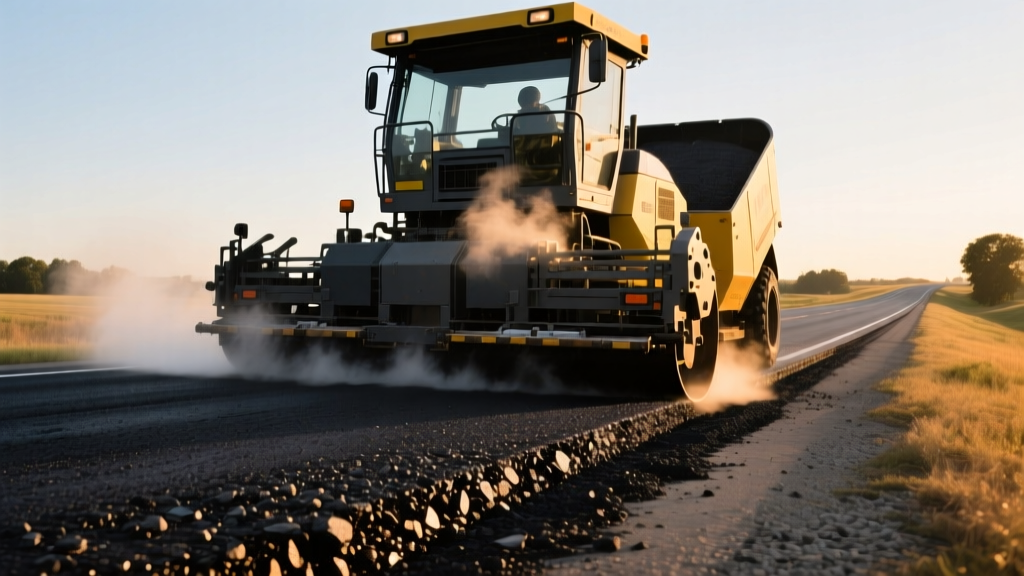
The transition from the batch plant to the finished pavement is where asphalt concrete proves its worth. The Asphalt Institute emphasizes that proper compaction is the single most critical factor in achieving the designed lifespan of the composite.
- Temperature Monitoring: HMA must be delivered to the paver between 275°F and 300°F. If the internal temperature drops below 220°F before breakdown rolling is complete, the mix becomes stiff, preventing the achievement of the target 92-96% theoretical maximum specific gravity (Gmm).
- Tack Coat Application: Never place new asphalt concrete directly onto an existing, milled, or aged surface without a tack coat (usually an SS-1h or CSS-1h asphalt emulsion). Apply at a residual rate of 0.05 to 0.10 gallons per square yard to ensure monolithic bonding between layers.
- Rolling Pattern: Use a vibratory steel-wheel roller for the breakdown pass (immediately behind the screed), followed by a pneumatic-tired roller for the intermediate pass to seal surface voids, and finish with a static steel-wheel roller to eliminate tire marks and ensure a smooth riding surface.
Final Specification Takeaway
When drafting project specs or reviewing contractor bids, eliminate the ambiguous term "asphalt." Require bids to specify the exact asphalt concrete mix design, aggregate source, and PG binder grade. This semantic precision ensures the structural composite delivered to your site is chemically and mechanically engineered for your specific traffic and environmental demands.
Written by
James ThorntonJames Thornton is a construction industry veteran with 25 years of hands-on experience in wood framing, lumber grading, and residential building codes. He started as a framing carpenter in rural Oregon, earned his ICC Residential Building Inspector certification, and eventually became a senior plan reviewer for the City of Portland Bureau of Development Services. James holds a B.S. in Wood Science & Technology from Oregon State University and is a certified lumber grader through the West Coast Lumber Inspection Bureau (WCLIB). He has inspected over 3,000 residential construction sites and authored the city's internal guide on advanced framing techniques (2x6 at 24" O.C.). James lives in Bend, OR, where he builds custom timber-frame cabins and competes in lumberjack sports.
More from James Thornton
View all
Insulation
Best Home Insulation Materials: Complete 2026 Guide
Compare top home insulation materials for 2026. Find R-values, installed costs per square foot, and best uses for fiberglass, spray foam, and mineral wool.
Aug 4, 2026

Sustainable Building
Certify Your Green Building Material for LEED and WELL
Step-by-step guide to certifying a green building material for LEED v5 and WELL v2. Master EPDs, HPDs, and VOC limits for 2026 project specifications.
Aug 4, 2026

Stone & Masonry
Veneer Stacked Stone Panels: Interior Design & Style Showcase
Discover how veneer stacked stone panels transform interiors. Explore modern design profiles, material pairings, and technical installation specs.
Aug 4, 2026