Cement Siding Materials Falmouth: Coastal Durability Showcase
Explore top cement siding materials for Falmouth homes. Compare fiber cement products, coastal installation specs, and 2026 Cape Cod pricing.

The Falmouth Coastal Crucible: Why Fiber Cement Dominates
Building on Cape Cod requires navigating a punishing intersection of high-velocity winds, driving rain, and relentless salt spray. When evaluating cement siding materials, Falmouth building inspectors and coastal architects consistently point to fiber cement as the only cladding that satisfies both the aesthetic demands of historic New England and the structural demands of the Atlantic coastline. Unlike vinyl, which becomes brittle in freezing Nor'easters, or natural cedar, which succumbs to moisture rot and woodpecker damage, fiber cement offers a non-combustible, dimensionally stable shield.
Falmouth Environmental & Code Baseline (2026)
- Design Wind Speed: 115–120 MPH (Exposure C and D near Vineyard Sound and Buzzards Bay).
- Salt Exposure Zone: Severe marine environment; requires 316 stainless steel fasteners within 1,500 feet of the shoreline.
- Fire Rating: Class A (ASTM E84) mandatory for dense zoning areas like Falmouth Village and Woods Hole.
Application Showcase: Top Cement Siding Profiles for Cape Cod
The term "cement siding" encompasses a range of fiber-reinforced Portland cement products. For Falmouth applications, the specific profile and finish dictate both the architectural authenticity and the long-term weather resistance.
1. James Hardie HardieShingle® (The Cedar Shake Stand-In)
For homes in historic districts or waterfront properties seeking the classic Cape Cod shake aesthetic, HardieShingle panels are the premier application. Available in staggered and straight-edge profiles, these 5/16-inch thick panels resist the warping and cupping that plague natural cedar in high-humidity marine environments. The ColorPlus® Technology factory finish utilizes a baked-on acrylic resin that resists UV fading and salt etching far better than field-applied stains. For Falmouth applications, the "Weathered Wood" and "Aged Pewter" colorways provide the most authentic coastal patina without the biological degradation of real timber.
2. Allura Fiber Cement Lap Siding (The Historic Colonial Match)
For traditional colonials and Capes located slightly inland (such as near Falmouth Heights or Teaticket), Allura’s 7-inch exposure lap siding offers a deeper shadow line than standard competitors. Allura utilizes a proprietary cellulose fiber blend that yields a slightly more flexible panel, reducing breakage during the high-wind installation nailing process. Their smooth finish is ideal for the crisp, painted exteriors favored in Falmouth’s historic village corridors, providing a substrate that holds exterior elastomeric paints for up to 15 years without blistering.
3. Nichiha Architectural Panels (The Modern Waterfront Accent)
For contemporary waterfront builds overlooking Old Silver Beach, Nichiha’s fiber cement architectural wall panels (specifically the Vintage Wood and Brick series) offer a high-performance, drained-and-back-ventilated rainscreen application. This 5/8-inch thick panel system creates a crucial air gap behind the cladding, allowing any wind-driven moisture that penetrates the outer plane to drain freely—a critical defense mechanism against the horizontal rain typical of Cape Cod squalls.
Material Performance Matrix
Selecting the right product requires matching the material properties to the specific micro-climate of the build site.
| Material / Brand | Profile Type | Wind Load Rating | Salt Spray Resistance | 2026 Material Cost (per sq. ft.) |
|---|---|---|---|---|
| James Hardie HardieShingle | Shake / Shingle | Up to 130 MPH | Excellent (with ColorPlus) | $4.85 - $6.20 |
| Allura Fiber Cement Lap | Horizontal Lap | Up to 115 MPH | Very Good (requires sealing) | $3.90 - $4.50 |
| Nichiha Architectural Panel | Large Format Panel | Up to 150 MPH | Exceptional (rainscreen system) | $7.50 - $9.10 |
Critical Installation Protocols for Falmouth’s Salt Zones
Even the most advanced cement siding materials will fail if installed using standard inland techniques. According to the FEMA Coastal Construction Manual, cladding in high-velocity hurricane zones (HVHZ) and severe marine environments requires strict adherence to moisture management and corrosion-resistant fastening.
- Substrate and Weather Barrier: Never install fiber cement directly over rigid foam without a vented rain screen matrix (like Keene DriWall) in direct oceanfront zones. Falmouth’s driving rain requires a minimum 3/8-inch drainage plane behind the siding to prevent hydrostatic pressure buildup.
- Flashing and Clearances: Maintain a strict 6-inch clearance above finished grade and a 2-inch clearance above roof intersections. All kick-out flashing at wall-to-roof transitions must be marine-grade aluminum or PVC; standard galvanized steel will corrode within three seasons in Falmouth's salt air.
- Fastening Schedules for High Winds: For 120 MPH wind zones, blind nailing alone is insufficient for lap siding. Installers must utilize face-nailing at the top and bottom of each board near the end joints, or use structural adhesive (like OSI Quad) combined with blind nailing to prevent the boards from lifting during Nor'easter uplift events.
⚠️ Critical Fastener Warning
Do not use hot-dipped galvanized nails for oceanfront Falmouth properties. The zinc coating will degrade from salt spray, leading to rust streaks that bleed through the cement siding finish within 5 to 7 years. You must specify Type 316 Stainless Steel ring-shank nails for any property within 1,500 feet of the water, and Type 304 for inland Falmouth zones. Reference the James Hardie Installation Manual for exact nail head diameter and penetration depth requirements.
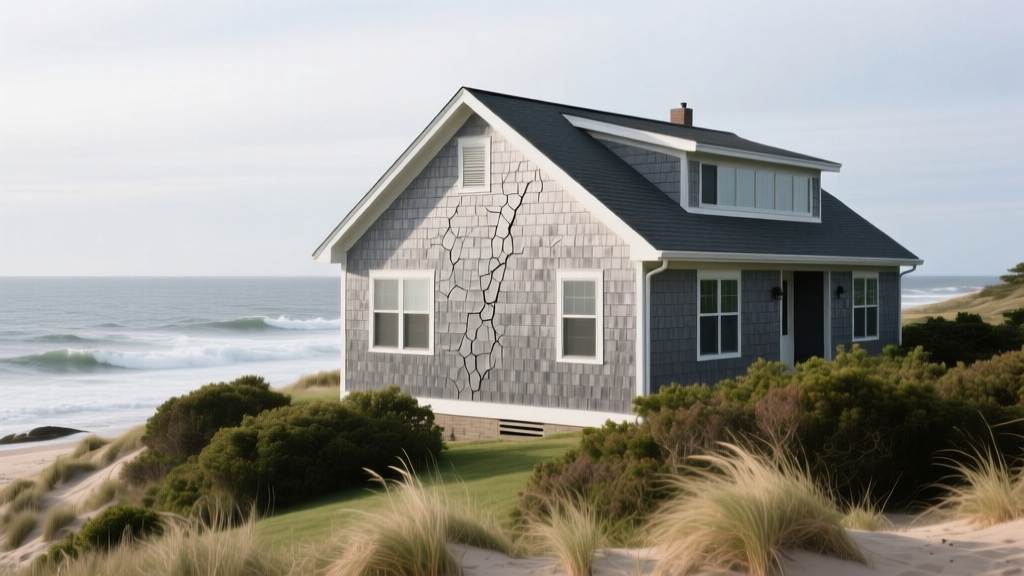
2026 Falmouth Cost Breakdown: Materials and Specialized Labor
Building on Cape Cod carries a premium, particularly for specialized exterior trades. The following cost matrix reflects Q1 2026 pricing for the Falmouth market, factoring in the logistical challenges of coastal delivery and the high demand for certified marine-environment installers.
| Project Component | Standard Inland Cost | Falmouth Coastal Cost | Cost Driver |
|---|---|---|---|
| Material (Lap/Panel) | $3.50 - $5.00 / sq. ft. | $4.50 - $7.00 / sq. ft. | Barge/freight fees to Cape Cod; premium finishes. |
| Labor (Installation) | $6.00 - $8.50 / sq. ft. | $9.50 - $13.00 / sq. ft. | High local union/trade rates; scaffolding in high winds. |
| Fasteners & Flashing | $0.75 / sq. ft. | $2.25 / sq. ft. | Mandatory 316 SS nails and marine-grade PVC flashings. |
| Total Installed Cost | $10.25 - $14.25 / sq. ft. | $16.25 - $22.25 / sq. ft. | Comprehensive coastal durability premium. |
Navigating Falmouth Historic District and Zoning Approvals
Before procuring materials, contractors and homeowners must navigate local zoning overlays. The Falmouth Historic District Commission strictly regulates exterior alterations in designated zones. While natural cedar was historically mandated, recent updates to the Massachusetts Board of Building Regulations and Standards and local conservation efforts have opened the door for high-fidelity fiber cement alternatives, provided they meet specific visual criteria.
When submitting to the Falmouth Historic Commission, specify the exact reveal (typically 4 to 5 inches for historic Capes) and provide physical samples of the factory finish. Commissions frequently reject smooth-finish cement siding on 18th-century replicas, requiring a "Cedarmill" woodgrain texture to mimic the original sawn timber. Furthermore, colors must align with the approved historic palette—avoid high-gloss or ultra-modern hues, favoring muted coastal tones like slate, sage, and weathered driftwood. By aligning material selection with both the structural realities of the Atlantic coast and the aesthetic preservation goals of the town, fiber cement proves to be the ultimate cladding solution for Falmouth's architectural heritage.
Written by
Marcus ChenMarcus Chen is a licensed structural engineer (PE) and building materials analyst with over 12 years of experience across residential, commercial, and industrial construction. He holds a Master of Science in Civil Engineering from UC Berkeley and spent six years at Thornton Tomasetti before transitioning to independent consulting and technical writing. Marcus specializes in material selection for seismic-prone regions, concrete reinforcement strategies, and lifecycle cost analysis. His work has been cited by the American Concrete Institute (ACI) and the Structural Engineers Association of California (SEAOC). When he is not on a job site or at his desk, you will find him hiking the Sierra Nevada or restoring a 1920s craftsman bungalow in Oakland, CA.
More from Marcus Chen
View all
Construction Cost
How Much Did the Eiffel Tower Cost to Build?
How much did the Eiffel Tower cost to build in 1889? We adjust for inflation and compare its budget to modern skyscraper construction.
Aug 4, 2026

Fire Resistance
What Is a Fire Resistant Material? Testing & Certification Guide
Discover what is a fire resistant material through ASTM and UL testing. Learn how fire ratings, certifications, and assemblies work in construction.
Aug 4, 2026

Construction Cost
How Much Did the Burj Khalifa Cost to Build?
How much did the Burj Khalifa cost to build? We break down the $1.5B project and extract 5 money-saving strategies for your next build.
Jul 30, 2026