Resin Bound Driveway vs Concrete: Cost, Durability & Installation
Compare resin bound driveway vs concrete. Analyze costs, permeability, curing times, and long-term durability to choose the best paving material for your home.

The Core Difference: Material Composition & Binding Mechanics
When evaluating a resin bound driveway vs concrete, the fundamental difference lies in the binder and the structural behavior of the finished surface. Standard concrete relies on Portland cement, water, and a graded aggregate mix to form a rigid, impermeable slab. A typical residential driveway requires a 4,000 PSI compressive strength mix poured to a minimum depth of 4 inches (100mm) over a compacted gravel subbase.
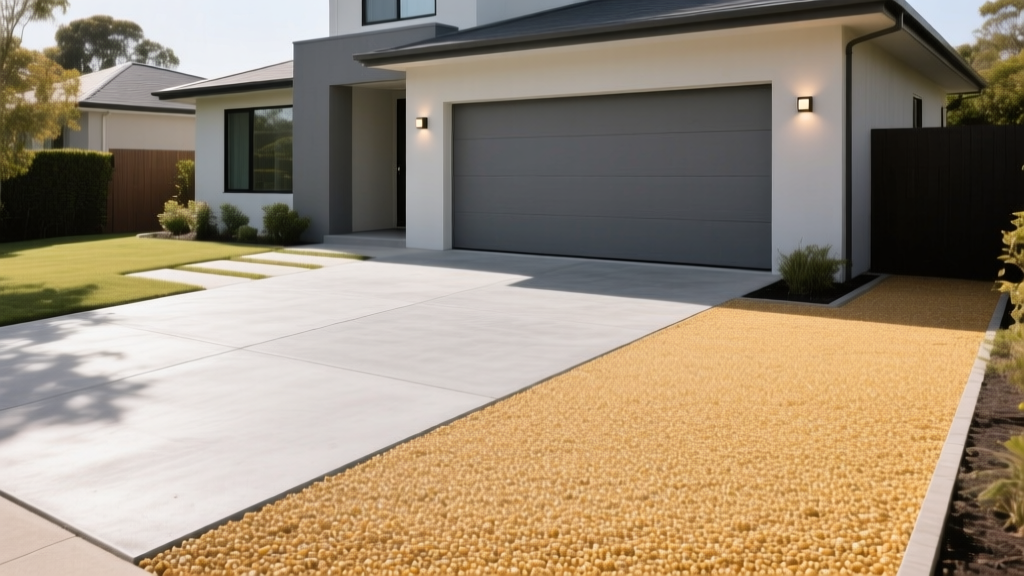
Resin bound paving, conversely, is a flexible, porous matrix. It consists of kiln-dried, precisely graded aggregates (usually 1-3mm quartz, granite, or recycled glass) thoroughly coated in a two-part polyurethane resin. The mixture is troweled onto a solid base—typically open-grade asphalt or a permeable concrete grid—at a thickness of just 15mm to 18mm. The resin acts as a flexible glue, holding the stones together while leaving microscopic voids between the aggregates.
If you choose resin bound paving, you must specify an aliphatic polyurethane resin (such as Vuba Easihold or SureSet). Aliphatic resins are UV-stable and will not yellow. Cheaper aromatic resins will degrade, discolor, and turn yellow within 6 to 12 months of direct sunlight exposure. Always verify the resin type on the technical data sheet before installation.
Head-to-Head Cost Breakdown
The financial comparison between a resin bound driveway vs concrete extends beyond the initial pour. Concrete has a lower baseline material cost, but decorative finishes and extensive subbase preparation can narrow the gap. Resin bound systems carry a premium for the specialized polyurethane binders and the skilled labor required for rapid troweling.
| Cost Factor | Standard Concrete (4-inch slab) | Resin Bound Paving (18mm overlay) |
|---|---|---|
| Material Cost (per sq. ft.) | $4.00 - $7.00 | $8.00 - $14.00 |
| Base Preparation | $2.00 - $4.00 (compacted gravel) | $5.00 - $9.00 (requires permeable base/asphalt) |
| Labor & Installation | $3.00 - $6.00 | $4.00 - $8.00 |
| Total Installed Cost (per sq. ft.) | $9.00 - $17.00 | $17.00 - $31.00 |
| 10-Year Maintenance | Sealing, joint filling, crack repair ($1.50/sq ft) | Power washing, moss treatment ($0.50/sq ft) |
Permeability, Drainage, and SuDS Compliance
Water management is often the deciding factor in the resin bound driveway vs concrete debate. As municipalities enforce stricter Sustainable Urban Drainage Systems (SuDS) regulations, impermeable surfaces are increasingly penalized with higher utility fees or outright permit denials.
Concrete Permeability Limitations
Standard concrete is entirely impermeable. Surface water must be pitched at a minimum slope of 1/8 inch per foot toward storm drains or permeable landscaping zones. While pervious concrete exists, it features a rough, popcorn-like texture that is difficult to clear of snow and highly susceptible to clogging from fine silts and leaf debris, rendering it ineffective over time in residential driveway applications.
Resin Bound Paving and SUDS
Resin bound paving is fully SuDS-compliant when installed over a permeable sub-base. According to the EPA's guidelines on permeable pavements, porous surfaces significantly reduce localized flooding and filter out hydrocarbons from vehicle runoff. The 20-25% void ratio in a resin bound matrix allows rainwater to pass through at a rate of up to 85 liters per square meter per minute. This eliminates the need for complex trench drains, catch basins, or planning permission related to surface water runoff in most jurisdictions.
Durability, Cracking, and Maintenance Realities
The structural behavior of these two materials under thermal expansion, freeze-thaw cycles, and vehicular loads dictates their long-term viability.
- Concrete Failure Modes: Concrete is rigid. When the subgrade shifts or settles, the slab cracks. To control this, contractors cut control joints every 10 to 12 feet. However, random cracking still occurs. Freeze-thaw cycles can cause surface scaling if the concrete was not properly air-entrained (requiring 4-7% microscopic air bubbles). Concrete also stains easily from oil leaks and tire marks unless sealed annually.
- Resin Bound Failure Modes: Resin bound surfaces do not crack because the polyurethane binder has high tensile flexibility. However, the system is only as strong as its base. If the underlying asphalt or grid base shifts, the resin layer can delaminate or tear. Additionally, laying resin on a damp substrate or during high-humidity conditions will cause the polyurethane to react with moisture, resulting in a foamy, weak surface that rapidly degrades.
While resin bound driveways easily handle the distributed weight of a 6,000 lb SUV, they are vulnerable to point loading. Using a hydraulic floor jack directly on a resin surface, or parking a heavy motorcycle on its kickstand during hot weather, can dent or puncture the 18mm matrix. Always use a load-spreading board for concentrated point loads.
Installation Timelines and Curing Constraints
Project timelines differ drastically between the two materials, impacting driveway usability and labor scheduling.
Concrete Curing: A standard concrete driveway requires 7 days of curing before it can support passenger vehicles, and a full 28 days to reach its design strength of 4,000 PSI. During this period, the surface must be kept moist or covered with curing compounds to prevent plastic shrinkage cracking. Formwork removal and joint cutting add secondary labor days to the schedule.
Resin Bound Curing: Resin bound paving is a rapid-cure system. Pedestrian traffic can typically resume in 4 to 6 hours, and full vehicular traffic is permitted within 24 to 48 hours, depending on ambient temperature. However, the installation window is extremely tight. Once the resin and hardener are mixed with the aggregate in a forced-action pan mixer, the contractor has roughly 15 to 20 minutes to trowel the material before it begins to set. This requires a highly coordinated, experienced crew.
Expert Verdict: Decision Matrix
Choose the material that aligns with your specific site constraints and budget parameters.
| Site Requirement | Recommended Material | Why? |
|---|---|---|
| Strict SuDS / Drainage Laws | Resin Bound | Fully permeable; avoids planning permission hurdles and stormwater fees. |
| Tight Budget / Large Area | Concrete | Lower cost per square foot; highly scalable for long rural driveways. |
| Poor / Shifting Subgrade | Concrete (Reinforced) | Thick rebar-reinforced slabs bridge soft spots better than thin resin overlays. |
| Aesthetic / Custom Design | Resin Bound | Offers limitless aggregate colors and seamless logo/pattern integration. |
| Rapid Turnaround Needed | Resin Bound | Drivable in 24 hours compared to concrete's 7-day minimum wait. |
Frequently Asked Questions
Can I install resin bound paving directly over my existing concrete driveway?
Yes, but only if the existing concrete is structurally sound, completely dry, and properly primed with a polyurethane primer. However, overlaying impermeable concrete defeats the permeable benefits of resin bound paving. Any surface water will pool on top of the concrete base and attempt to drain off the edges, potentially causing hydrostatic pressure issues if the driveway is sloped toward a garage. For SuDS compliance, the old concrete must be broken out and replaced with a permeable sub-base.
Which surface handles snow removal and de-icing salts better?
Concrete is highly susceptible to spalling and surface scaling when exposed to rock salt (sodium chloride) and freeze-thaw cycles. Resin bound paving handles de-icing salts exceptionally well without degrading the binder. However, you must use a rubber-edged snow shovel or a snowblower with rubber-tipped augers on a resin surface; metal blades will scrape and gouge the aggregate matrix.
What is the expected lifespan of both materials?
A properly poured and maintained concrete driveway will last 30 to 40 years, though it will likely require crack sealing and resurfacing during that time. A high-quality resin bound driveway installed with UV-stable aliphatic resin and a correct base typically carries a 15 to 21-year manufacturer warranty, with an expected functional lifespan of 25+ years before the aggregate begins to loosen.
Written by
James ThorntonJames Thornton is a construction industry veteran with 25 years of hands-on experience in wood framing, lumber grading, and residential building codes. He started as a framing carpenter in rural Oregon, earned his ICC Residential Building Inspector certification, and eventually became a senior plan reviewer for the City of Portland Bureau of Development Services. James holds a B.S. in Wood Science & Technology from Oregon State University and is a certified lumber grader through the West Coast Lumber Inspection Bureau (WCLIB). He has inspected over 3,000 residential construction sites and authored the city's internal guide on advanced framing techniques (2x6 at 24" O.C.). James lives in Bend, OR, where he builds custom timber-frame cabins and competes in lumberjack sports.
More from James Thornton
View all
Insulation
Best Home Insulation Materials: Complete 2026 Guide
Compare top home insulation materials for 2026. Find R-values, installed costs per square foot, and best uses for fiberglass, spray foam, and mineral wool.
Aug 4, 2026

Sustainable Building
Certify Your Green Building Material for LEED and WELL
Step-by-step guide to certifying a green building material for LEED v5 and WELL v2. Master EPDs, HPDs, and VOC limits for 2026 project specifications.
Aug 4, 2026

Stone & Masonry
Veneer Stacked Stone Panels: Interior Design & Style Showcase
Discover how veneer stacked stone panels transform interiors. Explore modern design profiles, material pairings, and technical installation specs.
Aug 4, 2026