How to Clean, Seal, and Restore a Concrete Goose Lawn Ornament
Learn how to clean, remove efflorescence, seal, and repaint your concrete goose lawn ornament with this step-by-step masonry restoration playbook.
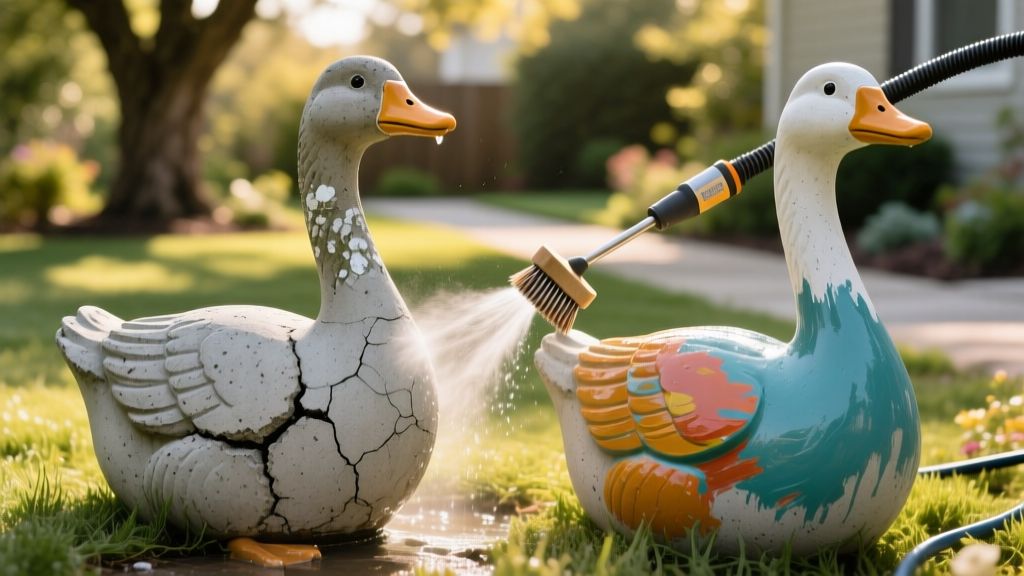
The Unique Degradation Profile of Cast Concrete Ornaments
Mid-century concrete geese and similar cast-stone lawn ornaments possess a distinct material vulnerability. Unlike modern architectural concrete mixed with air-entraining admixtures and low water-to-cement ratios, vintage lawn ornaments were typically cast in rudimentary molds using high-slump, un-reinforced mortar blends. This results in a highly porous matrix that readily absorbs groundwater, making them exceptionally susceptible to freeze-thaw spalling, biological colonization, and severe efflorescence. Restoring a concrete goose requires a specialized masonry playbook that prioritizes moisture management over purely aesthetic fixes.
Phase 1: Diagnostic Assessment and Surface Preparation
Before applying any water or chemicals, conduct a structural and surface diagnostic. The primary failure mode for concrete ornaments is sub-surface delamination caused by trapped moisture freezing and expanding.
The Tap Test and Moisture Mapping
Use the handle of a screwdriver to lightly tap the entire surface of the concrete goose. A solid, high-pitched ring indicates sound concrete. A dull thud reveals sub-surface delamination or voids. If you find hollow spots, the overlying concrete shell must be carefully removed with a chisel and patched with a polymer-modified hydraulic cement before cleaning begins.
Never use a pressure washer with a zero-degree (pinpoint) nozzle or exceed 1,500 PSI on vintage cast concrete. The porous surface will easily scar, and high-pressure water will force moisture deep into the core, guaranteeing winter spalling. Always use a 40-degree fan tip and maintain a 12-inch standoff distance.
Phase 2: The Deep Cleaning Protocol
Biological growth (algae, lichen, and moss) roots deeply into the pores of unsealed concrete. Simply scrubbing the surface leaves the root structure intact, leading to rapid regrowth.
Step-by-Step Biocidal Wash
- Dry Removal: Use a stiff nylon bristle brush to remove loose dirt, cobwebs, and flaking paint. Avoid wire brushes, which can leave iron particles that will rust and stain the concrete later.
- Biocide Application: Apply a commercial sodium hypochlorite-based masonry cleaner (diluted to 5% available chlorine) or a dedicated quaternary ammonium biocide. Allow a 15-minute dwell time to kill the biological roots. Do not let the solution dry on the surface.
- Agitation and Rinsing: Scrub the ornament with a medium-stiff nylon brush and rinse thoroughly with a garden hose. According to Penn State Extension guidelines, ensuring the complete removal of biocide residue is critical to prevent long-term chemical degradation of the cement paste.
| Contaminant | Recommended Agent | Dwell Time | Agitation Tool |
|---|---|---|---|
| General Dirt/Grime | Neutral pH Dish Soap (e.g., Dawn) | 5 Minutes | Soft Nylon Brush |
| Algae / Moss | 5% Sodium Hypochlorite Solution | 15 Minutes | Medium Nylon Brush |
| Iron / Rust Stains | Oxalic Acid Cleaner | 10 Minutes | Plastic Scraper |
Phase 3: Efflorescence Eradication
If your concrete goose exhibits a white, powdery crust, it is suffering from efflorescence. This occurs when water-soluble salts (primarily calcium hydroxide) migrate to the surface and react with atmospheric carbon dioxide to form insoluble calcium carbonate. The Portland Cement Association notes that while efflorescence is primarily an aesthetic issue, heavy crystallization can cause micro-spalling on delicate cast details like the goose's beak or wing feathers.
Chemical Removal Strategy
Do not use muriatic (hydrochloric) acid. Muriatic acid is too aggressive for cast ornaments and will etch the cement paste, leaving a rough, pitted surface that attracts more dirt. Instead, use a buffered phosphoric acid or sulfamic acid masonry cleaner.
- Pre-wet the concrete: Saturate the goose with clean water before applying acid. This prevents the acid from penetrating too deeply into the pores.
- Apply the acid: Use a pump sprayer to apply the diluted phosphoric acid (typically 1 part acid to 10 parts water, following manufacturer specs).
- Neutralize: After a 5-minute dwell time, neutralize the surface with a baking soda and water solution (1 cup baking soda per gallon of water), then rinse heavily.
Phase 4: Sealing and Repainting (The 2026 Standard)
Once the concrete is entirely clean and has cured for a minimum of 48 hours in dry, 60°F+ weather, it must be protected. The choice between a penetrating sealer and a film-forming paint dictates the ornament's lifespan.
Never seal a concrete lawn ornament with a non-breathable film-forming coating like polyurethane or standard exterior latex. These coatings trap internal moisture. When the sun heats the concrete, the trapped water turns to vapor, creating hydrostatic pressure that will blister the paint and spall the concrete face. Always use breathable systems.
Decision Matrix: Penetrating Sealer vs. Masonry Paint
| Feature | Silane/Siloxane Penetrating Sealer | Elastomeric Masonry Paint (e.g., Loxon) |
|---|---|---|
| Aesthetic | Invisible; maintains natural gray concrete look | Opaque, thick film; allows custom colors (classic white) |
| Moisture Management | Hydrophobic pores; highly breathable (vapor out) | Micro-porous film; bridges hairline cracks |
| Lifespan | 5 to 7 years before reapplication | 7 to 10 years depending on UV exposure |
| Best Application | Unpainted, natural cast stone geese | Traditionally painted geese requiring color restoration |
Application Protocol for Masonry Paint
If restoring the classic white painted look, use a 100% acrylic masonry coating specifically engineered for high-alkalinity substrates. Apply a masonry conditioner/primer first to consolidate any chalky residue. Follow with two coats of elastomeric masonry paint applied with a high-nap roller (3/4-inch) to force the coating into the concrete's pores. Maintain a wet edge to prevent lap marks, and ensure ambient temperatures remain above 50°F for 24 hours post-application.
Troubleshooting Common Concrete Goose Failures
Problem: The Paint is Peeling in Large Sheets
Cause: The previous owner used a standard exterior house paint or a polyurethane sealer over damp concrete, trapping moisture beneath an impermeable film.
Fix: Strip all failing paint using a soy-based chemical paint stripper (avoid caustic strippers that alter the concrete's pH). Pressure wash at 1,200 PSI, allow to dry for 72 hours, and repaint with a breathable acrylic masonry coating.
Problem: Deep Cracks Along the Wing Joints
Cause: Cast ornaments often have thin, protruding sections (wings, necks) that cure faster than the main body, leading to shrinkage cracking, or they suffer from thermal stress.
Fix: Do not use standard silicone caulk. Route out the crack with a masonry blade to create a V-notch. Clean with compressed air and fill with a low-modulus, self-leveling polyurethane concrete sealant (such as Sikaflex SL), which will flex with seasonal thermal expansion.
Annual Maintenance Checklist
To maximize the lifespan of your restored concrete goose, implement this seasonal maintenance routine:
- Spring: Inspect for winter spalling. Clear away mulch or soil that has built up against the base, as ground contact wicks moisture directly into the concrete core via capillary action.
- Summer: Wash with a neutral pH detergent to remove pollen and bird droppings (which are highly acidic and will etch masonry paint).
- Fall: Check the water repellency. Splash a cup of water on the surface; if it beads up, the sealer is intact. If it absorbs and darkens the concrete, schedule a reapplication of your silane/siloxane sealer.
- Winter: Never use chemical de-icers (like calcium chloride or rock salt) on the concrete base or surrounding walkways, as salt splash will cause severe surface scaling on the ornament's lower half.
Properly maintaining a concrete goose requires respecting the material science of cast masonry. By prioritizing breathability, utilizing the correct chemical cleaners, and avoiding high-pressure water, you can preserve these heavy, historic lawn ornaments for decades without succumbing to the inevitable spalling that ruins neglected concrete.