Concrete Step Stone Selection: Matching Applications to Needs
Discover how to choose the right concrete step stone for your project. Match precast, architectural, and landscaping stones to specific outdoor scenarios.
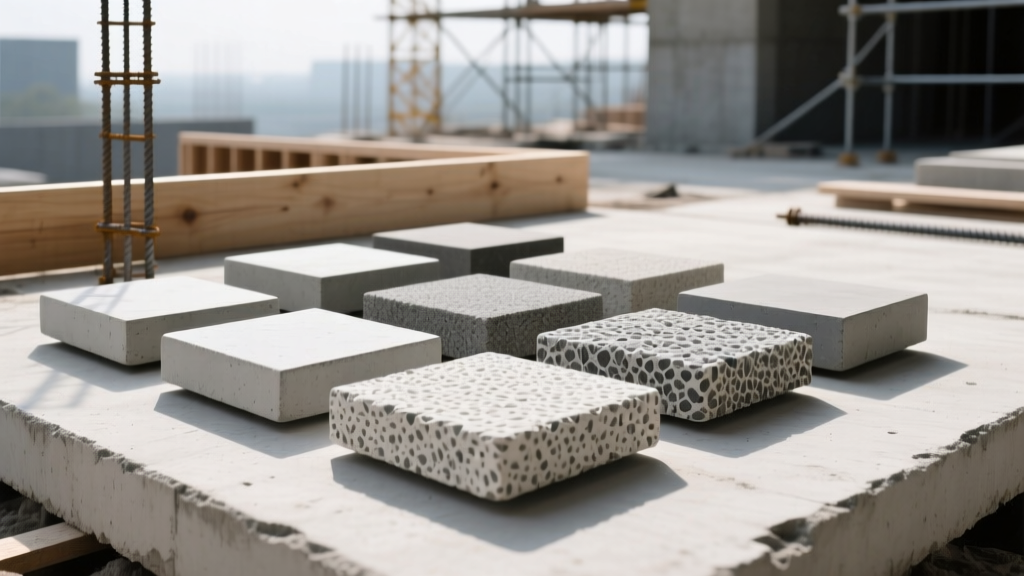
The Anatomy of a Concrete Step Stone
Selecting the correct concrete step stone is not a one-size-fits-all decision. A step stone that performs flawlessly in a shaded residential garden will rapidly spall and fail under the salt-laden foot traffic of a commercial plaza. The fundamental difference lies in the mix design, the curing process, and the structural profile of the precast unit. Modern precast concrete step stones are generally divided into three distinct categories: structural bullnose steps, architectural stone-faced units, and interlocking landscape treads.
Structural bullnose steps are typically wet-cast or dry-cast solid concrete blocks, measuring 4 inches thick by 18 inches deep, with lengths varying from 24 to 72 inches. They rely on high compressive strength (minimum 5,000 psi) and are designed to be mortared directly onto a poured concrete foundation. Architectural stone-faced units feature a structural concrete core with a polymer-modified, textured facing that mimics natural flagstone or bluestone. These are often engineered for sand-set or pedestal installations. Interlocking landscape treads are thinner (2 to 3 inches), designed to integrate seamlessly with segmental retaining wall systems using fiberglass pins or construction adhesive.
Scenario Matching Matrix: Which Profile Fits Your Site?
Matching the concrete step stone to the specific environmental and load-bearing scenario prevents premature failure. The matrix below outlines the exact material specifications required for four common applications, referencing standards established by the American Concrete Institute (ACI).
| Application Scenario | Recommended Stone Type | Min. Compressive Strength | Air Entrainment | Base / Installation Method |
|---|---|---|---|---|
| Commercial Plaza (High Traffic) | Solid Precast Bullnose (6x18x48) | 5,000 psi | 6% - 8% | Full mortar bed on reinforced concrete slab |
| Pool Surround (Wet/Chemical) | Architectural Stone-Faced (Slip-Resistant) | 4,500 psi | 5% - 7% | Pedestal system or permeable sand-set |
| Residential Garden Path | Dry-Cast Landscape Tread (3x12x24) | 3,500 psi | 4% - 6% | Compacted crushed stone base (ASTM #57) |
| Segmental Retaining Wall Integration | Interlocking Wall Cap/Step Unit | 4,000 psi | N/A (Dry-cast zero-slump) | Pinned to wall blocks with structural adhesive |
Commercial High-Traffic vs. Residential Landscaping
Commercial & Municipal Applications
In commercial environments, the concrete step stone must comply with the ADA Standards for Accessible Design. This mandates specific riser height uniformity (maximum 1/4 inch variance between adjacent steps) and a Dynamic Coefficient of Friction (DCOF) of at least 0.42 to prevent slip-and-fall liabilities. For these scenarios, specifiers should order wet-cast, air-entrained concrete step stones with a broom or exposed-aggregate finish. The air-entrainment creates microscopic bubbles within the cement matrix, providing essential relief valves for expanding water during freeze-thaw cycles. Failure to specify air-entrained concrete in northern climates will result in severe surface spalling within two winters.
Residential & Landscaping Applications
Residential projects prioritize aesthetic integration and ease of installation. Dry-cast, zero-slump concrete step stones are the industry standard here. Because they are manufactured with very low water-to-cement ratios and compacted under high vibration, they achieve immediate structural integrity without the need for prolonged wet curing. However, their dense surface can be slick when wet. For residential garden steps, select units with a stamped or split-face texture. These are typically installed using a 4-inch compacted base of 3/4-inch crushed angular gravel, which allows for minor adjustments and natural drainage without the rigid constraints of a mortared foundation.
Mitigating the Primary Failure Mode: Frost Heave and Differential Settlement
When installing concrete step stones in regions with severe freeze-thaw cycles, the base material is just as critical as the stone. Never use rounded river gravel or pea stone beneath step stones; the rounded edges fail to interlock, leading to lateral migration under foot traffic. Instead, specify ASTM D448 Size #57 crushed stone (graded from 1 inch to No. 4 sieve). The angular facets lock together, creating a semi-rigid platform that distributes the point-load of a stepping foot across a wider surface area.
Furthermore, if mortaring the concrete step stone to a concrete pad, a flexible bond-breaker or a specialized polymer-modified thin-set mortar must be used. Standard Type S masonry mortar is too rigid; when the concrete pad and the precast step stone expand at different rates under thermal loading, the rigid mortar will crack, allowing water infiltration that subsequently freezes and shears the step off the pad.
2026 Material Costs and Sourcing Metrics
Pricing for concrete step stones has stabilized following the supply chain fluctuations of the early 2020s, though regional variations in cement and aggregate transport costs remain a factor. Below is a breakdown of current material costs for specifiers and contractors budgeting for upcoming projects.
- Standard Precast Bullnose (4x18x48 inches): $55 to $85 per unit. Widely available at regional precast plants and masonry supply yards. Lead times are typically under two weeks.
- Architectural Stone-Faced Treads (2.5x12x24 inches): $12 to $18 per linear foot. Sold by premium hardscape distributors (e.g., Belgard, Unilock equivalents). Requires specialized ordering for custom color blends.
- Heavy-Duty Commercial Steps (6x18x72 inches, steel-reinforced): $140 to $210 per unit. These require internal #3 or #4 rebar reinforcement and must be custom-cast by Precast/Prestressed Concrete Institute (PCI) certified manufacturers.
Making the Final Specification Decision
Do not default to the cheapest dry-cast landscape stone for high-load applications, and do not over-specify heavy, steel-reinforced wet-cast steps for a simple backyard garden terracing project. Evaluate the expected foot traffic, the local frost depth, and the required slip-resistance metrics. By aligning the compressive strength, air-entrainment percentage, and installation methodology with the specific site scenario, the concrete step stone will deliver decades of structural and aesthetic performance.