Concrete Words vs Abstract Finishes: Raw Slabs vs Alternatives
Compare raw architectural concrete with abstract decorative alternatives. Explore costs, durability, and material specs for modern slab finishes.
The Material Vocabulary of Modern Architecture
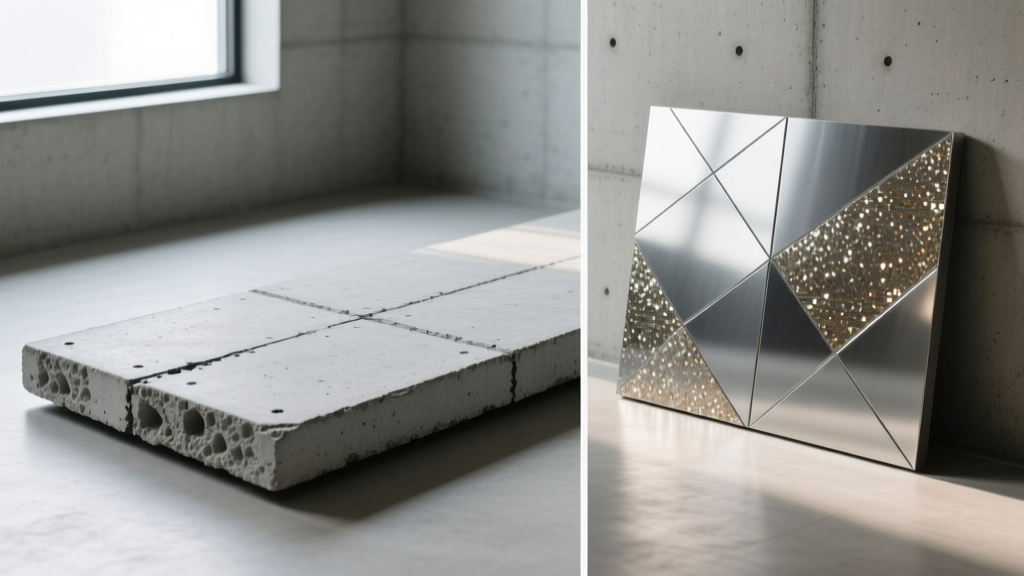
When architects, designers, and contractors weigh concrete words vs abstract design treatments, they are navigating a fundamental philosophical and structural divide in material specification. "Concrete words" in this context refers to literal, honest material expression—allowing the raw, structural nature of cement and aggregate to speak for itself through board-formed, exposed, or polished finishes. "Abstract" treatments, conversely, involve masking, altering, or mimicking other materials through decorative overlays, metallic epoxies, and microcement systems.
Choosing between these two approaches is not merely an aesthetic decision; it dictates the chemical composition of the slab, the required surface preparation, long-term maintenance costs, and the structural tolerances of the substrate. In 2026, as material science advances and supply chains for specialty resins stabilize, understanding the exact performance metrics of literal concrete versus abstract alternatives is critical for preventing catastrophic coating failures and budget overruns.
Literal Expression: Raw Architectural Concrete
Raw architectural concrete relies on the precise manipulation of Portland cement, aggregates, and formwork. There is no topical film to hide imperfections; the material's integrity is entirely visible.
Board-Formed and Exposed Aggregate Specifications
Board-formed concrete requires meticulous formwork engineering. Specifiers typically call for 1x6 rough-sawn Douglas Fir or cedar boards, arranged with tight butt joints to prevent grout loss. The concrete mix design must feature a low water-to-cement (w/c) ratio of 0.40 to 0.45 and a controlled slump of 4 to 5 inches to prevent segregation against the wood grain.
For exposed aggregate flatwork, the surface is treated with a chemical retarder (such as MasterFinish or equivalent) immediately after screeding. This delays the hydration of the surface paste by 1/16 to 1/4 inch. The next morning, the surface is washed with a pressure washer (minimum 2,500 PSI) to reveal the underlying 3/8-inch pea gravel or crushed basalt.
- Material Cost: $12 to $18 per square foot (installed).
- Compressive Strength: Typically specified at 4,000 to 5,000 PSI at 28 days.
- Maintenance: Requires reapplication of a penetrating silane/siloxane sealer every 3 to 5 years.
Abstract Alternatives: Overlays, Epoxies, and Microcement
Abstract flooring systems treat the concrete slab merely as a structural canvas. These systems alter the visual and tactile properties of the floor, creating geometric patterns, metallic swirls, or mimicking natural stone.
Metallic Epoxy and Polymer Overlays
Metallic epoxy systems utilize 100% solids, two-part resin formulations blended with metallic mica pigments. When poured, the low-viscosity resin self-levels, while the pigments create three-dimensional, abstract visual effects. Because these systems are non-porous and form a rigid topical film, they demand absolute substrate perfection.
Microcement offers a thinner, more flexible abstract alternative. Composed of polymer-modified cementitious compounds, microcement is troweled on in layers totaling just 2 to 3 millimeters thick. Unlike rigid epoxies, the acrylic polymers in microcement allow for slight flexural movement, making it suitable for overlaying existing tile or cracked slabs.
- Metallic Epoxy Cost: $15 to $25 per square foot.
- Microcement Cost: $18 to $30 per square foot.
- Thickness: Epoxy (1/8 inch / 3mm); Microcement (2-3mm).
Performance Matrix: Literal vs. Abstract Systems
The following matrix compares raw architectural concrete against popular abstract alternatives across critical performance metrics for commercial and high-end residential applications.
| Metric | Raw / Polished Concrete | Metallic Epoxy Overlay | Microcement Overlay |
|---|---|---|---|
| Moisture Tolerance | High (Breathable) | Very Low (Traps Vapor) | Moderate (Breathable) |
| UV Stability | Excellent | Poor (Yellows if Aromatic) | Good (With Polyaspartic Topcoat) |
| Impact Resistance | High (May chip) | Moderate (Can dent/gouge) | Low (Thin profile) |
| Chemical Resistance | Low (Stains from acids) | Excellent | Moderate (Depends on sealer) |
| Expected Lifespan | 50+ Years (Substrate life) | 10 to 15 Years | 10 to 20 Years |
The Moisture Trap: ASTM F2170 and Delamination Risks
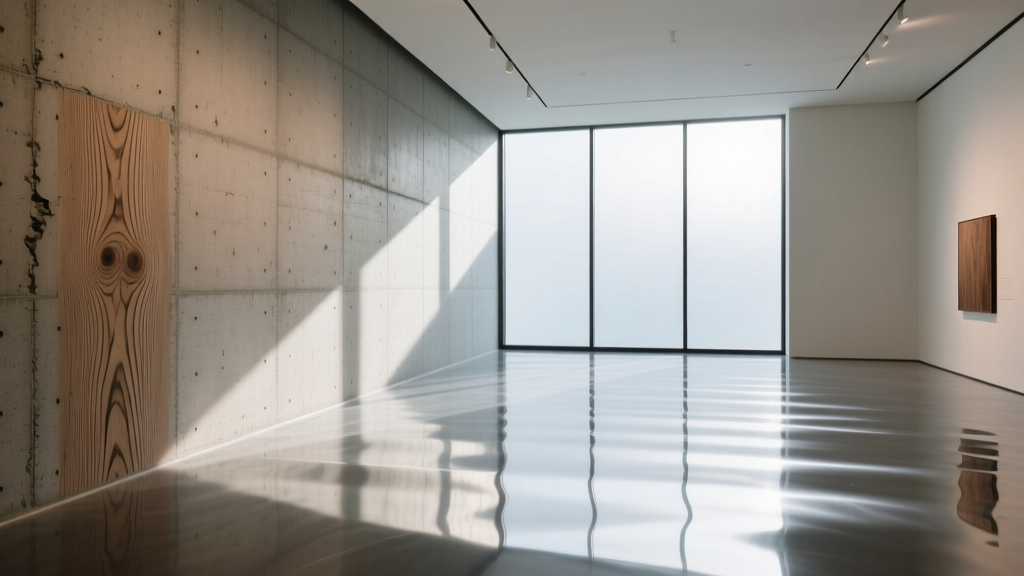
The most common point of failure when transitioning from literal concrete to abstract epoxy treatments is moisture vapor emission. Raw concrete is a porous, breathable material. When you encapsulate it with an abstract, impermeable epoxy coating, you create a vapor barrier. If hydrostatic pressure builds beneath the slab, the coating will blister, delaminate, and fail.
Never specify an abstract epoxy or urethane overlay without mandating ASTM F2170 in-situ relative humidity (RH) testing. The industry standard maximum moisture vapor emission rate (MVER) for epoxy installations is 3 to 5 lbs per 1,000 sq. ft. per 24 hours. If RH probes read above 75%, you must specify a moisture-mitigating epoxy primer (such as Sika MT Primer or MasterSeal) before applying the decorative topcoat, adding $3 to $5 per square foot to the project cost.
Raw polished concrete bypasses this issue entirely. The densification process (using lithium silicate hardeners) reacts with the free calcium hydroxide in the concrete to form calcium silicate hydrate (C-S-H) within the pores. This reduces porosity and increases surface hardness without creating a topical film that can trap vapor.
UV Degradation and Exterior Applications
When specifying materials for exterior patios, pool decks, or sunrooms, the distinction between concrete words and abstract treatments becomes a matter of chemical stability.
Standard metallic and flake epoxies utilize aromatic polyamine hardeners. When exposed to ultraviolet (UV) light, aromatic epoxies undergo a photochemical reaction called chalking, resulting in severe yellowing and loss of gloss within 6 to 12 months. To use an abstract resin exterior, specifiers must mandate aliphatic polyaspartic or aliphatic urethane topcoats, which contain UV stabilizers that prevent molecular breakdown.
Conversely, literal exposed aggregate or integrally colored architectural concrete contains inorganic iron-oxide pigments that are entirely immune to UV degradation. According to technical guidelines from the Portland Cement Association, integrally colored concrete will retain its hue for the structural life of the slab, provided it is sealed with a non-yellowing, breathable acrylic or siloxane sealer.
Decision Framework: Choosing Your Material Vocabulary
Selecting between raw concrete and abstract alternatives requires aligning the material's physical properties with the environmental demands of the space. Use the following framework to guide your specification:
Choose Literal Raw Concrete When:
- Moisture is Uncontrollable: The site has a high water table, or the slab is on-grade without a functioning vapor retarder beneath it.
- Heavy Rolling Loads are Present: The floor will support heavy pallet jacks, steel-wheeled carts, or industrial machinery that would gouge a 3mm epoxy or microcement overlay.
- Exterior UV Exposure is High: The application is an outdoor patio, driveway, or sun-drenched atrium where resin yellowing is unacceptable.
- Lifecycle Cost is the Priority: The client prefers a higher initial structural investment with near-zero replacement costs over a 50-year horizon.
Choose Abstract Alternatives When:
- Chemical Spills are Frequent: The space is a laboratory, commercial kitchen, or garage where battery acid, harsh solvents, or acidic foods are present. (Raw concrete will etch; 100% solids epoxy will not).
- Substrate Imperfections Must Be Hidden: You are renovating an existing, heavily patched, or spalled slab where grinding to a polished finish would expose ugly aggregate variations or old adhesive residues.
- Specific Aesthetic Mimicry is Required: The design calls for the exact look of marble, terrazzo, or seamless metallic art that cannot be achieved through natural cement hydration.
Summary
The debate of concrete words vs abstract finishes ultimately comes down to transparency versus transformation. Raw architectural concrete offers unmatched longevity, breathability, and structural honesty, provided the mix design and formwork are rigorously controlled. Abstract alternatives like metallic epoxies and microcement offer limitless aesthetic flexibility and superior chemical resistance, but they introduce strict moisture tolerances and finite lifespans. By specifying exact ASTM testing parameters, w/c ratios, and chemical formulations, contractors can ensure the chosen material vocabulary performs exactly as intended.
Written by
Priya KapoorPriya Kapoor is a real estate market analyst and construction economics researcher with expertise in housing affordability, development feasibility, and infrastructure investment. She holds a Master of Regional Planning from Cornell University and previously worked as a senior analyst at CBRE's Investment Properties group, where she modeled returns for $4B in mixed-use development pipelines. Priya now runs an independent research practice advising developers, municipalities, and REITs on construction cost forecasting and market timing. She publishes the quarterly "BuildMat Market Pulse" report tracking material price indices across 12 commodity categories. Based in Austin, TX, Priya serves on the board of Habitat for Humanity Austin and is a marathon runner.
More from Priya Kapoor
View all
Construction Cost
Cost to Build a 1600 Sq Ft Home in 2026: Full Breakdown
Accurate 2026 cost to build a 1600 sq ft home—material, labor, and regional pricing breakdowns included. Plan your budget with real-time estimates.
Aug 11, 2026

Wood & Lumber
Name the Types of Wood for Pressure Treatment and Preservation
Learn how to name the types of wood best suited for pressure treatment. Compare species treatability, chemical retention levels, and 2026 preservation costs.
Aug 4, 2026

Stone & Masonry
Stone Veneer Suppliers Lindenhurst: 2026 Cost Analysis
Analyze 2026 stone veneer costs in Lindenhurst, NY. Compare local supplier pricing, delivery fees, and Suffolk County installation labor rates.
Aug 4, 2026