Contact Cement Removal From Concrete: Cleaning Playbook
Discover the step-by-step maintenance playbook for safely removing stubborn contact cement residue from concrete floors without damaging the slab.
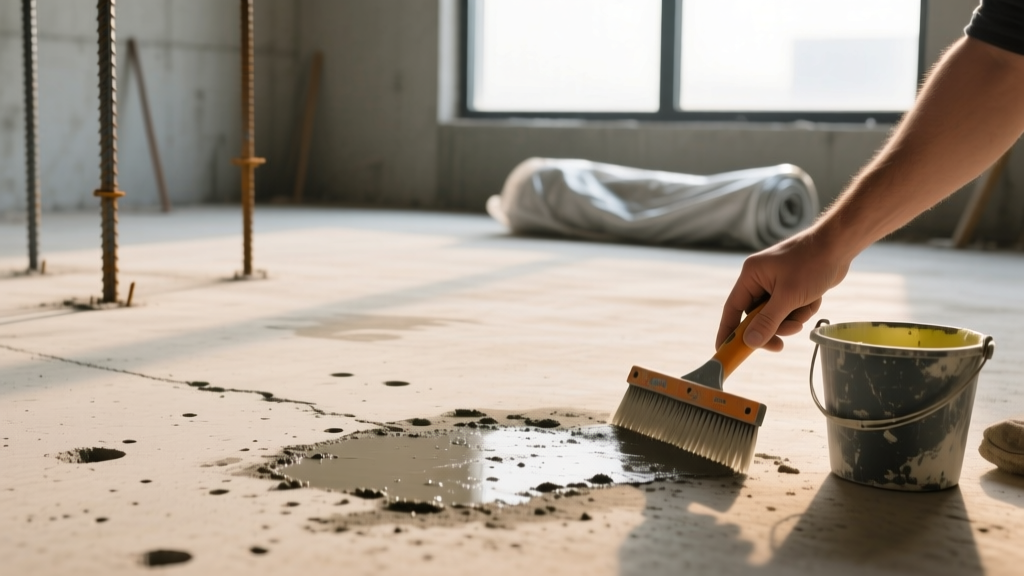
Understanding Contact Cement Chemistry on Concrete
Contact cement, primarily formulated from polychloroprene (neoprene) or water-based acrylics, creates an aggressive, immediate bond that makes it a staple for architectural laminates, wood veneers, and heavy-duty rubber flooring. However, when these materials are removed during renovations, the residual contact cement left on the concrete subfloor presents a severe maintenance challenge. Unlike standard pressure-sensitive adhesives, solvent-based contact cements contain volatile organic compounds (VOCs) like hexane and toluene that penetrate the concrete's capillary network up to 1/16 of an inch deep.
Standard floor strippers and alkaline cleaners are entirely ineffective against cross-linked neoprene. Attempting to install new moisture-cured urethanes or epoxy coatings over even trace amounts of contact cement residue will result in catastrophic adhesive failure, outgassing, and delamination. This playbook outlines the precise mechanical and chemical protocols required to safely extract contact cement from concrete slabs while maintaining strict compliance with ASTM F710 standards for concrete floor preparation.
The 4-Stage Removal Playbook
Complete extraction requires a phased approach. Relying solely on mechanical grinding will glaze the concrete, while relying solely on chemicals will leave a solvent-saturated slab.
Stage 1: Mechanical Scarification (Bulk Removal)
Begin by removing the top 80% of the adhesive film mechanically. Use a walk-behind concrete grinder equipped with a 30-grit metal-bond diamond cup wheel. Avoid carbide scrapers, which tend to smear the neoprene rather than fracture it.
Stage 2: Chemical Emulsification (Pore Extraction)
Once the bulk film is fractured, apply a soy-based or d-Limonene mastic remover to dissolve the adhesive trapped in the concrete pores. Products like Blue Bear 500MR or Sentinel 626 are engineered to break down polychloroprene without introducing toxic methylene chloride into the environment.
- Application Rate: 75 to 100 square feet per gallon.
- Dwell Time: 45 to 90 minutes. Do not let the chemical flash off (dry out).
- Pro-Tip: After rolling the chemical onto the slab, immediately cover the area with 6-mil polyethylene sheeting. This traps the VOCs, forces the emulsifier deep into the concrete capillaries, and reduces the required dwell time by up to 30%.
Stage 3: Agitation and Extraction
Do not rinse the slab with high-pressure water; this will drive the emulsified neoprene and solvents deeper into the slab. Instead, use a stiff-bristled mechanical scrubber to agitate the surface, then immediately extract the slurry using a commercial wet vacuum equipped with a squeegee wand. Repeat this extraction pass until the vacuum pulls clear liquid.
Stage 4: pH Neutralization and Slab Verification
Chemical strippers often leave the concrete highly alkaline (pH 11-13). Mop the floor with a neutralizing solution (such as a diluted phosphoric acid cleaner) to bring the surface pH back to the 7-9 range required by modern flooring adhesives. Allow the slab to dry for a minimum of 48 hours before testing.
Removal Method Comparison Matrix
| Method | Best Use Case | Avg. Cost (per sq. ft.) | Dust / VOC Risk | Slab Integrity Impact |
|---|---|---|---|---|
| Mechanical Grinding | Thick, multi-layer adhesive buildup | $0.85 - $1.25 | High Silica Dust | Minor surface profiling |
| Chemical Emulsifiers | Residual pore-penetrated contact cement | $1.50 - $2.25 | Moderate VOCs | None (if extracted properly) |
| Shot Blasting | Large commercial spaces, heavy scarring | $0.60 - $0.95 | High Silica Dust | Aggressive profiling (requires skim coat) |
| Infrared Thermal | Softening thick neoprene for hand scraping | $2.00 - $3.50 | High VOC Off-gassing | Risk of thermal shock spalling |
Common Failure Modes & Edge Cases
The "Ghosting" Phenomenon
If contact cement was applied with a notched trowel and not fully removed, the ridges can "ghost" through thin Luxury Vinyl Tile (LVT) or sheet goods. Even if the adhesive is chemically dead, the physical topography remains. Solution: After chemical extraction, apply a Portland cement-based self-leveling underlayment (SLU) or a skim coat of patching compound (e.g., Mapei Planitop) to erase the trowel ridge topography.
Solvent Trapping and RH Test Failures
Solvent-based contact cements contain hydrocarbons that can artificially skew Relative Humidity (RH) readings when tested via ASTM F2170 in-situ probes. The hydrocarbons interfere with the capacitive sensors in the RH sleeves. Solution: Always perform a Calcium Chloride test (ASTM F1869) alongside RH testing on slabs previously treated with contact cement to cross-verify moisture vapor emission rates (MVER).
Post-Cleaning Maintenance and Sealing
Once the contact cement is fully removed and the slab passes ASTM F710 moisture and pH criteria, the concrete is highly vulnerable to staining and dusting. If the floor is to remain exposed as an architectural finish, apply a penetrating lithium silicate densifier (such as Prosoco Consolideck LS). The densifier reacts with free lime in the concrete to form calcium silicate hydrate (C-S-H), permanently sealing the capillaries that previously harbored the contact cement solvents. This increases surface abrasion resistance by up to 40% and prevents future contaminants from penetrating the pore structure.
Frequently Asked Questions
Can I use acetone to clean contact cement off concrete?
No. While acetone dissolves neoprene, it is highly volatile and flammable. On a porous concrete slab, acetone will flash off before it can be extracted, leaving the dissolved adhesive smeared deeper into the pores. It also poses a severe explosion risk in enclosed commercial spaces without industrial ventilation.
How long must I wait after chemical stripping before applying epoxy?
You must wait a minimum of 72 hours, utilizing high-velocity air movers to facilitate off-gassing. Applying an impermeable epoxy coating over a slab that still contains trapped emulsifier solvents will cause the epoxy to blister and peel within weeks due to hydrostatic and osmotic pressure.