Cost Analysis: Compression Testing of Concrete Cylinders vs Cubes
Compare the true costs of compression testing of concrete cylinders vs cubes, including labor, capping, molds, and lab fees for 2026 projects.

The Core Dilemma: Cylinders (ASTM) vs. Cubes (EN/BS)
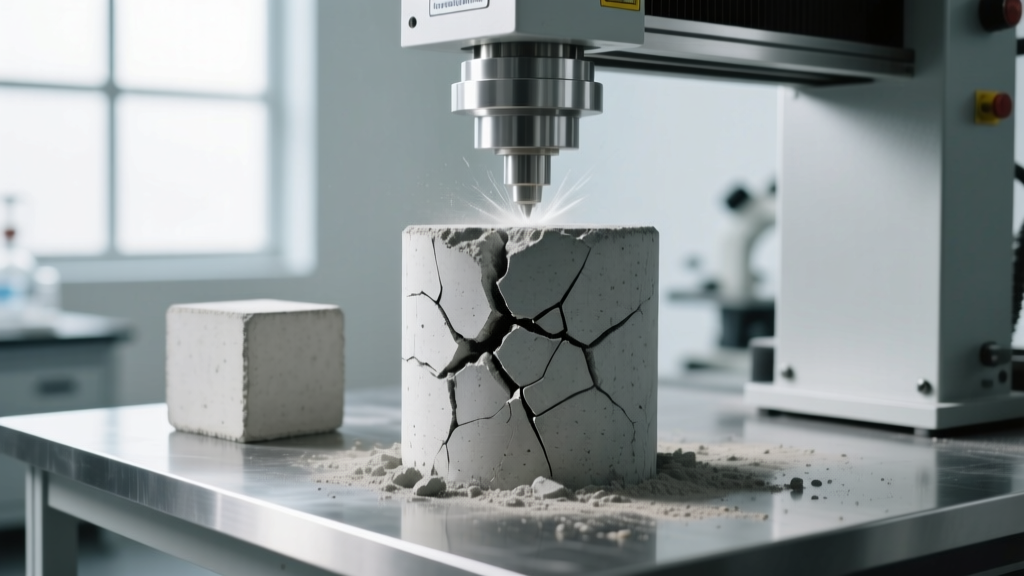
When evaluating the compressive strength of concrete, the geometry of the test specimen fundamentally alters both the structural reading and the project's bottom line. In the United States, the industry relies on cylindrical specimens governed by ASTM C39 (typically 6x12 inches or 4x8 inches). Conversely, European, Asian, and Middle Eastern markets predominantly utilize cubic specimens (150mm or 100mm) under EN 12390-3 and BS 1881 standards.
For international contractors, joint ventures, or projects specifying dual standards, understanding the true cost breakdown of compression testing of concrete cylinders vs cubes is critical. The divergence in cost is rarely found in the raw concrete itself; rather, it is driven by mold lifecycle, specimen preparation labor, capping consumables, and third-party laboratory fees.
- North America: 6x12 in. or 4x8 in. Cylinders (ASTM C39 / ACI 318)
- Europe / UK: 150mm or 100mm Cubes (EN 12390-3 / BS 1881-116)
- India / Middle East: 150mm Cubes (IS 516 / BS standards)
Direct Cost Breakdown: Equipment and Consumables
The initial capital expenditure and recurring consumable costs differ sharply between the two methods. Cylinders rely on single-use or limited-use plastic molds, while cubes utilize heavy, reusable steel or cast-iron molds.
| Item | Cylinder (6x12 in.) | Cube (150mm) | Cost Impact |
|---|---|---|---|
| Single Mold Unit | $2.75 - $3.50 (Plastic) | N/A (Sold in gangs) | Cylinders require continuous repurchasing. |
| Reusable Mold Setup | $140 (Steel 3-gang) | $180 - $240 (Steel 3-gang) | Cube molds are heavier and more expensive to machine. |
| Capping / Prep Materials | $95 / 50lb Sulfur or $165 Neoprene Pads | $0 (None required) | Cubes eliminate capping costs entirely. |
| Release Agent | Minimal (Plastic molds) | Required (Heavy mineral oil) | Negligible difference per test. |
While the reusable steel cube mold carries a higher upfront cost, the elimination of capping materials provides a massive long-term savings. According to the Portland Cement Association, proper specimen preparation is the most critical variable in achieving accurate compressive strength readings, making the cost of capping compounds a non-negotiable expense for cylinder testing.
Labor and Time Analysis: The Hidden Cost Driver
In 2026, with QA/QC technician labor rates averaging $45 to $65 per hour, the time required to prepare specimens for the compression machine dictates the true cost of testing. This is where the cube demonstrates overwhelming economic superiority.
The Capping Penalty for Cylinders
Because concrete is cast in a cylindrical mold, the top surface is hand-troweled and inherently uneven. If placed directly into a compression machine, stress concentrations will cause premature, inaccurate failure. Therefore, cylinders must be capped.
- Sulfur Mortar Capping: Requires melting sulfur in a specialized pot (energy cost and fume hood ventilation required per OSHA regulations). A technician must dip the cylinder, level it on a glass plate, and wait for curing. Time: 3 to 4 minutes per cylinder.
- Unbonded Neoprene Pads: Requires placing the cylinder between polyurethane sheets and neoprene pads inside a steel retainer. While faster than sulfur, pads degrade and must be replaced every 100-150 tests. Time: 1.5 to 2 minutes per cylinder.
Cube Efficiency
Cubes are cast against machined steel base plates and topped with flat steel cover plates. When stripped, the top and bottom surfaces are perfectly flat and parallel. Preparation time for testing: 0 minutes. The technician simply wipes the cube clean and places it in the machine. Over a 500-test project, switching from cylinders to cubes saves approximately 25 hours of dedicated labor, equating to over $1,200 in direct payroll savings.
Third-Party Laboratory Testing Fees
If you outsource your compression testing to an independent, accredited laboratory (e.g., AASHTO-accredited or ISO 17025 facilities), the pricing structure reflects the lab's internal labor and equipment wear.
| Service | Average 2026 Lab Fee (Cylinder) | Average 2026 Lab Fee (Cube) |
|---|---|---|
| Standard Break Test (7 or 28 days) | $18.00 - $28.00 | $14.00 - $22.00 |
| Capping Surcharge (if lab performs) | $5.00 - $8.00 per specimen | $0.00 |
| Specimen Disposal Fee | $2.50 (approx. 28 lbs) | $1.75 (approx. 18 lbs) |
Note: Disposal fees are weight-based. A 6x12 inch cylinder weighs roughly 28 lbs, while a 150mm cube weighs roughly 18 lbs. Over thousands of tests, the lighter cube reduces hazardous concrete waste hauling costs.
Technical Implications: Strength Conversion and Re-testing Risks
Cost analysis is incomplete without addressing the structural implications of the specimen geometry. Cubes consistently yield higher compressive strength readings than cylinders cast from the exact same batch. This is due to the lateral confinement effect provided by the friction of the testing machine's steel platens against the cube's shorter, wider geometry.
The Conversion Factor: For normal-strength concrete (up to 50 MPa / 7,000 psi), the cylinder strength is generally accepted as 80% of the cube strength (Cylinder = 0.80 × Cube). However, for High-Performance Concrete (HPC) exceeding 80 MPa (11,500 psi), this ratio drops significantly to between 0.65 and 0.70. Failing to apply the correct high-strength conversion factor can lead to costly, unnecessary structural redesigns or rejected pours.
Furthermore, cylinders are highly susceptible to "end-effect" failures if the capping is uneven, leading to invalid tests that require costly core drilling and re-testing. Cubes, lacking the capping variable, exhibit a lower rate of invalid testing anomalies, reducing the financial risk of secondary verification testing.
Decision Matrix: Which Specimen Should You Choose?
Use the following framework to determine the most cost-effective and compliant testing method for your specific project parameters.
Choose Cylinders When:
- The project is in North America and governed strictly by ACI 318 and local IBC codes.
- You are testing high-strength concrete (>10,000 psi) where ASTM C39 provides more conservative, code-accepted baseline data.
- Your on-site lab is already fully equipped with sulfur capping pots and fume extraction systems.
Choose Cubes When:
- The project is located in Europe, Asia, or the Middle East, or specifies EN/BS standards.
- You are conducting high-volume QA/QC testing and need to minimize technician labor hours and capping consumables.
- Your testing facility lacks the ventilation infrastructure required for melting sulfur capping compounds safely.
Actionable Cost-Saving Strategies for 2026
If your project specifications allow for flexibility, or if you are managing an internal QA laboratory, implement these strategies to optimize your testing budget:
- Transition to 4x8 Inch Cylinders: If you must use cylinders per American Concrete Institute (ACI) guidelines, switch from 6x12 to 4x8 inch molds. They use 55% less concrete, weigh only 12 lbs (slashing disposal fees), and require less capping compound, while still meeting ASTM C39 requirements for aggregates up to 1 inch in size.
- Invest in Unbonded Caps over Sulfur: While a neoprene pad and retainer set costs ~$165 upfront, it entirely eliminates the electricity costs of running a sulfur melting pot, removes the need for expensive fume hood maintenance, and drastically reduces technician exposure to sulfur dioxide fumes.
- Negotiate Lab Contracts by Weight: When outsourcing, negotiate flat-rate testing fees that include disposal. Because labs pay per-ton for concrete landfill tipping fees, offering to crush and recycle broken specimens on your own site can leverage a 10% to 15% discount on the per-break testing fee.
Written by
Marcus ChenMarcus Chen is a licensed structural engineer (PE) and building materials analyst with over 12 years of experience across residential, commercial, and industrial construction. He holds a Master of Science in Civil Engineering from UC Berkeley and spent six years at Thornton Tomasetti before transitioning to independent consulting and technical writing. Marcus specializes in material selection for seismic-prone regions, concrete reinforcement strategies, and lifecycle cost analysis. His work has been cited by the American Concrete Institute (ACI) and the Structural Engineers Association of California (SEAOC). When he is not on a job site or at his desk, you will find him hiking the Sierra Nevada or restoring a 1920s craftsman bungalow in Oakland, CA.
More from Marcus Chen
View all
Construction Cost
How Much Did the Eiffel Tower Cost to Build?
How much did the Eiffel Tower cost to build in 1889? We adjust for inflation and compare its budget to modern skyscraper construction.
Aug 4, 2026

Fire Resistance
What Is a Fire Resistant Material? Testing & Certification Guide
Discover what is a fire resistant material through ASTM and UL testing. Learn how fire ratings, certifications, and assemblies work in construction.
Aug 4, 2026

Construction Cost
How Much Did the Burj Khalifa Cost to Build?
How much did the Burj Khalifa cost to build? We break down the $1.5B project and extract 5 money-saving strategies for your next build.
Jul 30, 2026