Sanded Grout Durability: Lifespan Analysis and Failure Prevention
Analyze the true lifespan of sanded grout in tile installations. Discover key durability factors, common failure modes, and expert prevention strategies.
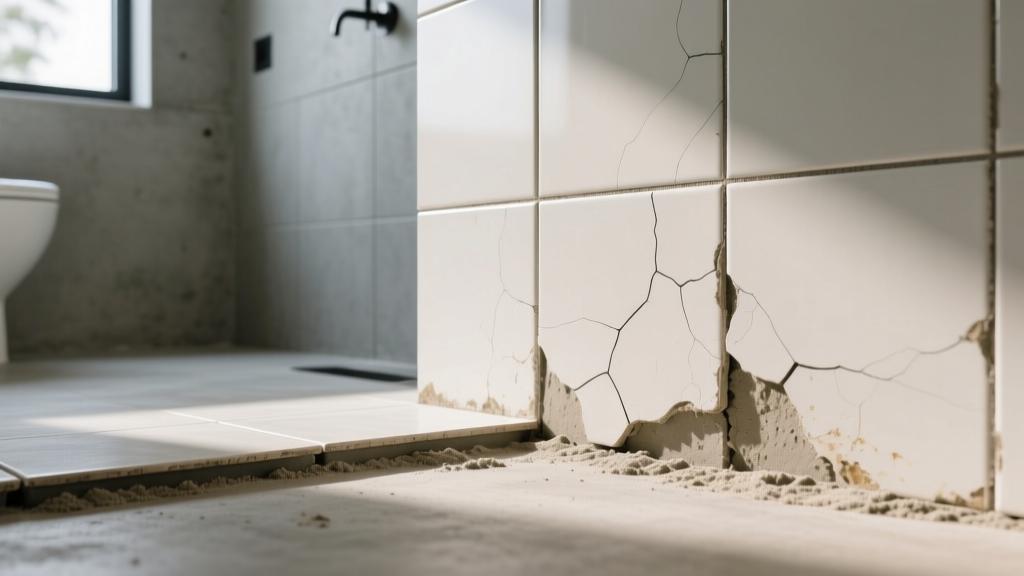
The Anatomy of Sanded Grout Durability
Sanded grout, classified under ANSI A118.6 as a cement-based mixture fortified with silica sand aggregates, is engineered specifically for tile joints ranging from 1/8-inch to 1/2-inch. While frequently treated as a mere aesthetic filler by DIYers, it functions as a critical structural component that absorbs compressive loads, limits tile edge chipping, and prevents lateral tile migration. The operational lifespan of sanded grout is highly variable: a poorly maintained residential shower floor may experience matrix failure in 5 to 7 years, whereas a properly mixed, sealed, and installed commercial lobby floor can exceed 50 years without major degradation.
The durability of the grout relies entirely on the formation of calcium silicate hydrate (C-S-H) bonds during the hydration process. The silica sand acts as a micro-aggregate, reducing volumetric shrinkage and increasing compressive strength compared to unsanded variants. However, because it remains a cementitious product, it is inherently porous (typically exhibiting 15% to 20% porosity) and vulnerable to specific environmental stressors.
Expected Lifespan by Application Environment
The longevity of sanded grout is dictated by its exposure profile. The matrix below outlines expected service life and the primary degradation vectors for standard installations.
| Application Environment | Expected Lifespan | Primary Degradation Vector | Maintenance Requirement |
|---|---|---|---|
| Wet Area (Shower Floor) | 10–15 Years | Constant moisture, acidic soaps, biofilm | Annual sealing, weekly pH-neutral cleaning |
| Dry Interior Floor (Residential) | 30–50+ Years | Abrasive foot traffic, UV degradation | Seal every 3–5 years |
| Exterior (Freeze-Thaw Climate) | 5–12 Years | Spalling from trapped moisture expansion | Biannual sealing, strict drainage |
| Commercial Kitchen | 7–10 Years | Lactic acids, heavy thermal cycling | Quarterly chemical-resistant sealing |
Primary Failure Modes and Micro-Level Causes
When sanded grout fails prematurely, it is rarely due to a defect in the manufactured powder. Instead, failure stems from installation errors, structural deflection, or chemical attacks. Understanding these micro-level causes is essential for lifespan maximization.
1. Efflorescence and Soluble Salt Migration
Efflorescence is frequently dismissed as a cosmetic nuisance, but it is a diagnostic indicator of water migration within the grout matrix. As water moves through the capillary pores of the cementitious grout, it dissolves soluble salts (primarily calcium hydroxide). When this water reaches the surface and evaporates, the calcium hydroxide reacts with atmospheric carbon dioxide to form calcium carbonate—a hard, white crystalline deposit. According to the Portland Cement Association, while efflorescence itself does not destroy the structural integrity of the cement, the continuous water migration required to produce it will eventually leach the matrix of its binding compounds, leading to friability and crumbling.
2. Micro-Cracking from Differential Deflection
Sanded grout possesses high compressive strength but exceptionally low tensile and flexural strength. The Tile Council of North America (TCNA) mandates that subfloors supporting tile installations must not deflect more than L/360 under live loads. If a wooden subfloor or improperly spaced joist system exceeds this deflection limit, the rigid grout matrix cannot stretch to accommodate the movement. This results in micro-fractures that run parallel to the tile edges. Once micro-cracks form, water infiltrates the sub-surface, accelerating freeze-thaw damage in exterior applications and causing subfloor rot in interior wet areas.
3. Shrinkage from Improper Water-Cement Ratios
Never add water to sanded grout that has begun to stiffen in the bucket (a practice known as re-tempering). Adding water after the initial C-S-H bonds have started to form permanently breaks those microscopic structures. This can reduce the final compressive strength of the grout by up to 40% and drastically increase volumetric shrinkage, guaranteeing premature cracking and powdering.
The water-cement (w/c) ratio is the single most critical variable in grout durability. Manufacturers specify exact water volumes to achieve optimal hydration. Adding excess water to make the grout "easier to spread" increases the capillary pore network as the excess water evaporates. This results in a weak, highly porous matrix that shrinks significantly upon curing, pulling away from the tile edges and creating voids where moisture and debris accumulate.
Advanced Sealing Protocols for Maximum Lifespan
Because cementitious sanded grout is porous, sealing is non-negotiable for lifespan extension. However, not all sealers perform equally. The choice of sealer dictates the maintenance cycle and the grout's resistance to staining.
- Penetrating Sealers (Silane/Siloxane): These are the industry standard for maximizing durability. They do not form a surface film; instead, they penetrate the capillary pores and chemically bond to the silica sand and cement, creating a hydrophobic barrier below the surface. Because they do not sit on top of the grout, they are immune to abrasive foot traffic wear. Expected lifespan: 3 to 7 years depending on traffic.
- Topical Sealers (Acrylic/Polyurethane): These form a physical membrane over the grout joint. While they offer excellent initial stain resistance and enhance color, they are highly susceptible to wear from foot traffic and UV degradation. They require stripping and reapplication every 1 to 2 years in high-traffic areas, making them a poor choice for long-term, low-maintenance durability.
- Fluorochemical Sealers: A premium subclass of penetrating sealers that offer both hydrophobic (water-repelling) and oleophobic (oil-repelling) properties. Essential for commercial kitchens or residential cooking areas where oil-based stains are a primary degradation vector.
Decision Matrix: When to Repair vs. Full Regrout
Maintaining sanded grout requires knowing when spot repairs are sufficient and when the entire matrix has reached the end of its service life. Use the following framework to make cost-effective maintenance decisions.
Scenario A: Spot Repair is Viable
If the grout exhibits isolated cracking (limited to 2-3 linear feet), minor surface pitting, or localized efflorescence, the overall matrix is likely intact.
- Rake out the damaged grout to a depth of at least 1/8-inch using a carbide-tipped grout saw.
- Vacuum the joint and wipe with a damp sponge to remove silica dust.
- Apply fresh sanded grout, ensuring it is packed tightly to eliminate air pockets.
- Re-seal the repaired area after a 72-hour cure time.
Scenario B: Full Regrout is Required
If the grout exhibits systemic failure—defined as widespread powdering (friability) when scratched with a key, cracking in more than 20% of the joints, or tiles that sound hollow when tapped (indicating bond failure alongside grout failure)—spot repairs will not suffice. The chemical integrity of the cementitious matrix has been compromised. In these cases, attempting to apply new grout over the old, degraded surface will result in delamination within months. Complete mechanical removal and reinstallation are required to restore the floor's structural and aesthetic integrity.
"The longevity of a tile installation is only as strong as its weakest component. While porcelain tiles may last a century, the cementitious grout binding them requires active chemical management and structural support to reach its maximum design life." — Industry Best Practices for Tile Assembly Maintenance.