Crushed Asphalt vs Crushed Concrete: Driveway & Base Guide
Compare crushed asphalt vs crushed concrete for driveways and base layers. Explore costs, drainage, compaction, and best uses for RAP and RCA materials.

Recycled Aggregates in Modern Hardscaping
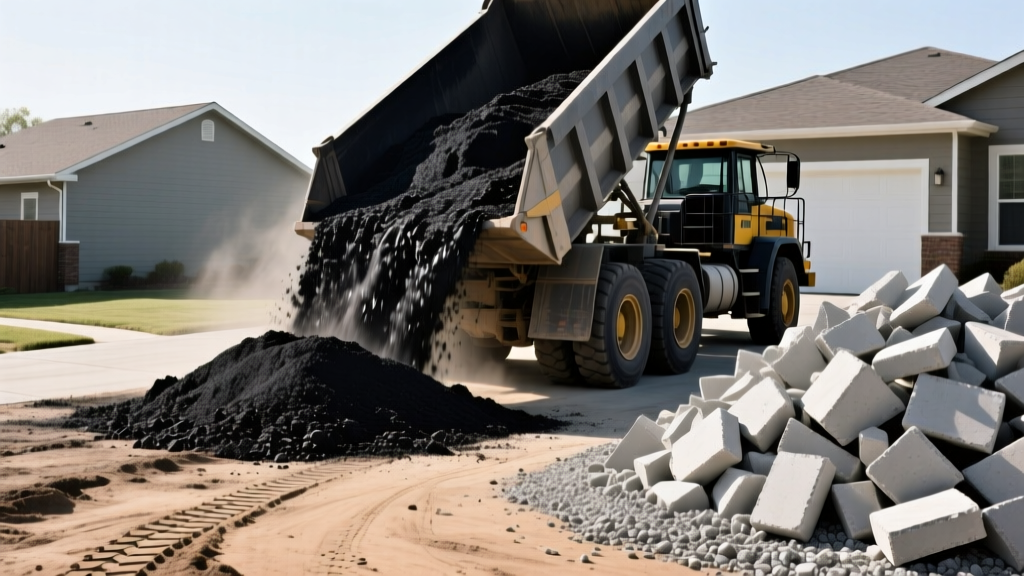
When specifying base materials or budget-friendly driveway surfaces, contractors and property owners frequently debate the merits of crushed asphalt vs crushed concrete. Both materials are byproducts of demolition and road milling operations, offering significant cost advantages over virgin aggregate. However, their chemical compositions, binding mechanics, and environmental impacts dictate entirely different installation protocols and long-term performance outcomes. Understanding the distinction between Reclaimed Asphalt Pavement (RAP) and Recycled Concrete Aggregate (RCA) is critical for preventing subgrade failures, managing site drainage, and avoiding aesthetic degradation.
Material Composition and Gradation Specifications
The fundamental difference between these materials lies in their binder matrix and residual chemical properties. Both are typically processed through impact crushers and screened to specific gradations, but their behavior under load and moisture varies drastically.
Reclaimed Asphalt Pavement (RAP)
Crushed asphalt, technically known as RAP, consists of milled or chunked asphalt pavement reclaimed from road resurfacing projects. According to the National Asphalt Pavement Association (NAPA), RAP retains the original bitumen binder (typically 3% to 7% by weight). When processed into a "3/4-inch minus" gradation—which includes the crushed stone, sand, and asphalt fines necessary for binding—RAP acts as a cold-mix asphalt. The residual bitumen reactivates under friction, moisture, and solar heat, allowing the material to compact into a semi-flexible, water-resistant mat.
Recycled Concrete Aggregate (RCA)
Crushed concrete, or RCA, is produced by crushing demolished concrete structures, sidewalks, and pavements. The U.S. Environmental Protection Agency (EPA) notes that RCA retains a thin layer of adhered cement mortar on the aggregate particles. This residual mortar makes RCA highly angular and porous. Unlike RAP, RCA relies entirely on mechanical interlock for stability. A 3/4-inch minus RCA gradation provides sharp, jagged edges that lock together tightly when compacted, creating a rigid, high-shear-strength base that behaves similarly to crushed limestone or granite.
Technical Comparison Matrix
The following matrix outlines the critical engineering and physical differences between 3/4-inch minus RAP and RCA for residential and light commercial applications.
| Property | Crushed Asphalt (RAP) | Crushed Concrete (RCA) |
|---|---|---|
| Binder Mechanism | Chemical (reactivated bitumen) | Mechanical (angular interlock) |
| Color | Dark gray to black | Light gray with exposed aggregate |
| Heat Sensitivity | Softens in extreme heat (>95°F) | Unaffected by high temperatures |
| pH Level / Runoff | Neutral (pH ~7.0) | Highly alkaline (pH 9.0 - 11.5) |
| Permeability | Low (semi-impermeable when compacted) | High (excellent free-draining base) |
| Optimal Moisture for Compaction | Damp (requires light watering to activate fines) | Optimal Moisture Content (OMC) similar to crushed stone |
| Tracking Potential | High (can track into garages if unsealed) | Low (locks in place, but sharp edges remain) |
Performance Dynamics in Driveway and Base Applications
Binding, Compaction, and Heat Sensitivity
When installing crushed asphalt as a finished driveway surface, compaction is a time-sensitive operation. The material must be laid while slightly damp and compacted immediately using a vibratory roller or a heavy walk-behind plate compactor. As the sun heats the dark material, the bitumen softens, allowing the fines to migrate and seal the surface. However, this heat sensitivity is a double-edged sword. In mid-summer climates where ambient temperatures exceed 95°F, a pure RAP driveway can soften, leading to rutting from heavy vehicle tires or stroller wheels. To mitigate this, contractors often apply a 1-inch top-dressing of angular stone dust or a cold-patch seal coat to lock the surface.
Conversely, RCA does not soften in heat. Its compaction relies on achieving maximum dry density. Because the adhered cement mortar is brittle, over-vibrating RCA with heavy machinery can fracture the particles, turning the aggregate into dust and reducing its load-bearing capacity. A static or low-amplitude vibratory roller is preferred for RCA to preserve the angular edges that provide structural interlock.
Drainage, Frost Heave, and Subgrade Interaction
RCA is the superior choice for a structural base layer beneath pavers, poured concrete, or hot-mix asphalt. Its high permeability allows water to drain freely through the profile, preventing hydrostatic pressure buildup and reducing the risk of frost heave in freezing climates. When using RCA as a base, a non-woven geotextile fabric should be placed between the subgrade and the aggregate to prevent clay migration into the porous RCA matrix.
RAP, once compacted and cured, forms a semi-impermeable barrier. While this makes it an excellent finished surface for shedding rainwater, it is a poor choice for a base layer beneath permeable pavers or in areas with high water tables. If water becomes trapped beneath a compacted RAP layer, it will saturate the subgrade, leading to catastrophic base failure and potholing.
2026 Cost Breakdown and Tonnage Estimates
Pricing for recycled aggregates fluctuates based on regional availability, proximity to recycling yards, and local landfill tipping fees. As of 2026, both materials offer substantial savings over virgin crushed stone (which typically ranges from $45 to $65 per ton).
- Crushed Asphalt (RAP): $16.00 to $26.00 per ton at the recycling facility.
- Crushed Concrete (RCA): $22.00 to $34.00 per ton at the recycling facility.
- Delivery: $80 to $150 per tri-axle load (approx. 20-22 tons), depending on mileage.
- Professional Installation (Grading & Compaction): $2.50 to $4.50 per square foot.
For a standard 12-foot by 50-foot residential driveway (600 sq ft) requiring a 4-inch compacted base, you will need approximately 35 tons of material. Choosing RAP over virgin gravel can reduce material costs by over 60%, though site preparation and compaction labor remain identical.
Environmental Impact and LEED Considerations
Both materials divert millions of tons of waste from landfills annually. Specifying RCA or RAP contributes directly to LEED v4.1 credits under the Construction and Demolition Waste Management and Sourcing of Raw Materials categories. However, site managers must be aware of the leaching potential. While RAP can occasionally leach trace amounts of polycyclic aromatic hydrocarbons (PAHs) from the bitumen, studies show these levels remain well below EPA drinking water thresholds once the material is compacted. RCA's primary environmental concern is the high pH of its stormwater runoff, which must be managed via bioswales or settling basins on commercial sites to protect local aquatic ecosystems.
Decision Framework: Specifying the Right Aggregate
Use the following criteria to determine which material fits your specific project parameters:
- Choose Crushed Asphalt (RAP) if:
- You are building a budget-friendly, finished rural or long rural driveway.
- You need a material that will naturally bind and seal against surface water runoff.
- The project is located in a heavily shaded area where solar heat won't cause the bitumen to soften and rut.
- You want to suppress dust; the bitumen in RAP naturally binds the fines, eliminating the need for chemical dust suppressants.
- Choose Crushed Concrete (RCA) if:
- You are installing a structural base layer for pavers, hot-mix asphalt, or poured concrete slabs.
- The site requires high permeability and French-drain-like water management.
- The driveway will be exposed to extreme summer heat where asphalt tracking and rutting are concerns.
- You need a rigid, high-shear-strength material for heavy equipment staging areas or commercial access roads.
Troubleshooting Common Installation Failures
Even experienced crews make errors when transitioning from virgin aggregate to recycled materials. Watch for these specific failure modes:
- The "Black Footprint" Effect (RAP): If crushed asphalt is not compacted with sufficient moisture, or if it is laid too late in the fall when solar heat is inadequate to cure the bitumen, the material will remain loose. Homeowners will track black bitumen stains into garages and onto carpets. Fix: Apply a 1/2-inch layer of limestone screenings over the RAP and roll it in to create a physical barrier.
- Rebar and Wire Mesh Contamination (RCA): Poorly processed crushed concrete often contains remnants of steel rebar or wire mesh. These metal fragments will rust, bleed orange stains onto the driveway surface, and puncture vehicle tires. Fix: Always specify "magnet-processed" RCA from your supplier, ensuring the material has passed under an electromagnetic separator belt at the crushing plant.
- Subgrade Pumping (Both): Laying either material directly over soft, uncompacted topsoil or wet clay will result in the aggregate sinking into the mud during freeze-thaw cycles. Fix: Excavate to stable subgrade, lay a 6-ounce non-woven geotextile separation fabric, and install a 2-inch choke layer of coarse 1.5-inch aggregate before applying the 3/4-inch minus surface layer.
Written by
Elena RodriguezElena Rodriguez is a civil engineer and technical writer specializing in concrete technology, masonry systems, and ASTM/ACI compliance. She earned her B.S. in Civil Engineering from Texas A&M University and spent a decade at a materials testing laboratory, performing over 2,000 concrete compressive strength tests and masonry prism evaluations. Elena is an ACI-certified Field Testing Technician (Grade I) and a member of ASTM Committee C12 on Natural Building Stone. She currently consults on forensic engineering cases involving concrete failures and moisture intrusion. Based in San Antonio, TX, Elena is a proud member of the Society of Women Engineers (SWE) and coaches her daughter's FIRST Robotics team.
More from Elena Rodriguez
View all
Walls & Panels
Cost Analysis: Light Gauge Steel Framing Advantages and Disadvantages
Evaluate light gauge steel framing advantages and disadvantages through a strict cost analysis lens, comparing material, labor, and lifecycle expenses.
Aug 4, 2026

Walls & Panels
Gypsum Board Types: Exact Specifications, Thickness & Dimensions
Compare standard, Type X, and moisture-resistant gypsum board types. Get exact specifications, thicknesses, dimensions, and ASTM standards for your project.
Aug 4, 2026

Fire Resistance
Best Fire-Resistant Outdoor Decking Materials: 2026 Buyer Guide
Discover the best fire-resistant outdoor decking materials for 2026. Compare Class A PVC, aluminum, and hardwood options for WUI compliance and safety.
Aug 4, 2026