What Type of Gravel Under Concrete Slab Ensures Long-Term Stability?
Discover what type of gravel under concrete slab projects prevents cracking. Compare #57, crusher run, and RCA for driveways, patios, and interior floors.
The Critical Role of the Subbase in Slab Performance
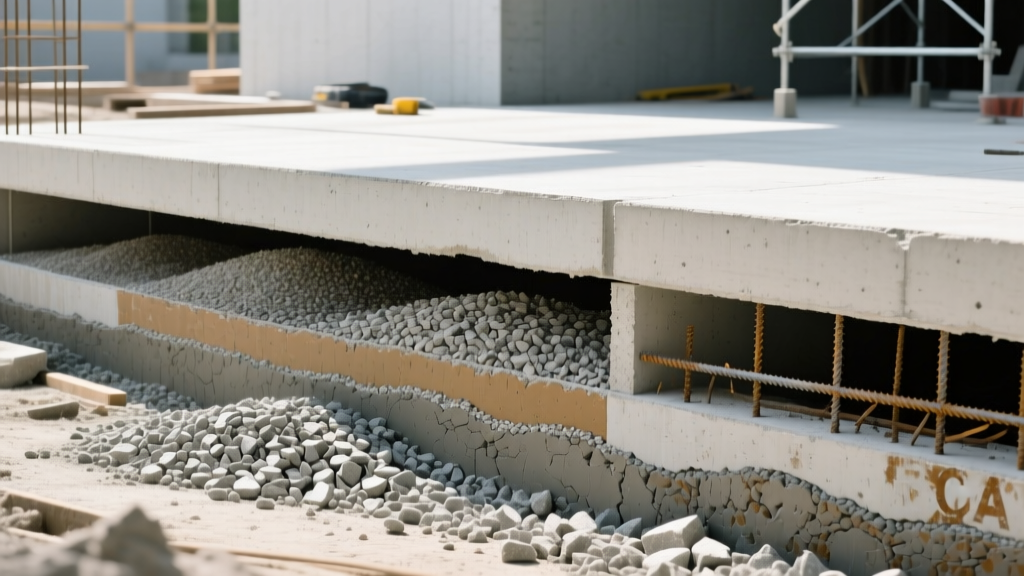
When determining what type of gravel under concrete slab installations will yield the best results, contractors and engineers must look beyond basic drainage. The subbase acts as the primary structural transition zone between the native soil (subgrade) and the rigid concrete above. A properly specified and compacted gravel base distributes dynamic loads, mitigates frost heave, and prevents capillary moisture migration.
According to the National Ready Mixed Concrete Association (NRMCA), the majority of slab-on-ground failures—including differential settling, corner cracking, and joint spalling—trace back to inadequate subbase preparation rather than the concrete mix design itself. Selecting the correct aggregate profile, gradation, and thickness is not a one-size-fits-all decision; it requires matching the gravel's mechanical properties to the specific environmental and load-bearing demands of the application.
Never use pea gravel or river rock under a structural concrete slab. Round stones lack angular faces and cannot mechanically interlock. Under the weight of wet concrete (approx. 150 lbs per cubic foot) and subsequent live loads, round gravel shifts and rolls, creating voids that lead to immediate slab cracking.
Application Showcase: Matching Gravel to the Slab's Purpose
Different construction scenarios impose unique stress profiles on the subbase. Here is how to specify gravel for three distinct applications in 2026.
Scenario A: Heavy-Duty Driveways and Garage Floors
Driveways and garage slabs endure high point loads from vehicle tires, particularly when tires are turned while stationary. This creates severe shear stress on the subbase.
- Recommended Material: Crusher Run (Dense Grade Aggregate / #411). This is a blend of 3/4-inch crushed stone and fine stone dust.
- Why it Works: The stone dust fills the voids between the larger angular stones. When compacted with a vibratory plate or roller, it achieves near-concrete rigidity (often exceeding 95% Standard Proctor density), providing an unyielding platform that prevents slab deflection.
- Specification: 6 to 8 inches of compacted thickness, installed in 3-inch lifts. Estimated 2026 material cost: $28 to $42 per ton.
Scenario B: Frost-Prone Patios and Exterior Walkways
In regions with deep freeze-thaw cycles, the primary enemy is frost heave. Water trapped in the subgrade freezes, expands, and pushes the slab upward unevenly.
- Recommended Material: #57 Crushed Stone (3/4-inch clean, angular washed stone).
- Why it Works: Unlike Crusher Run, #57 has no fine dust. This creates a highly porous, free-draining matrix that acts as a capillary break. Water drains rapidly through the voids rather than pooling and freezing beneath the slab.
- Specification: 8 to 12 inches of compacted thickness for frost-susceptible soils (like silts and clays). Must be paired with a non-woven geotextile fabric (e.g., Mirafi 500X) to prevent the native clay from migrating up into the gravel voids over time.
Scenario C: Interior Basement and Warehouse Slabs
Interior slabs are protected from frost but are highly vulnerable to moisture vapor transmission (MVT) and soil gas (radon) intrusion.
- Recommended Material: 3/4-inch clean crushed stone (#57) or Recycled Concrete Aggregate (RCA).
- Why it Works: The clean stone provides a passive radon venting layer and a capillary break. It also offers a perfectly level, firm surface to slide heavy rolls of vapor barrier without puncturing them.
- Specification: 4 to 6 inches of compacted gravel, topped with a minimum 15-mil polyethylene vapor retarder (meeting ASTM E1745 Class A standards) before pouring the concrete.
Gravel Type Comparison Matrix
Use this decision matrix to quickly identify the optimal aggregate for your specific project parameters.
| Gravel Type | Gradation / Size | Shape & Texture | Drainage Profile | Best Application |
|---|---|---|---|---|
| Crusher Run (DGA) | 3/4" down to dust | Angular, rough | Low (Impervious when compacted) | Driveways, heavy load pads |
| #57 Crushed Stone | 3/4" clean (washed) | Angular, rough | High (Excellent void ratio) | Frost-prone patios, interior basements |
| Recycled Concrete (RCA) | 3/4" minus | Angular, porous | Moderate | Commercial slabs, LEED projects |
| Pea Gravel | 3/8" rounded | Round, smooth | High (but shifts under load) | NONE (Do not use under slabs) |
Step-by-Step Subbase Preparation Framework
According to industry guidelines published in For Construction Pros, proper installation is just as critical as material selection. Follow this sequence to ensure structural integrity:
- Subgrade Excavation and Proof-Rolling: Excavate to the required depth (slab thickness + subbase thickness). Run a fully loaded dump truck or heavy skid steer over the native soil. If the tires sink more than 1 inch, the subgrade is too soft and must be undercut and replaced or stabilized with lime/cement.
- Geotextile Separation Layer: Roll out a non-woven geotextile fabric over the native soil. This prevents the gravel from punching down into soft clay and stops clay from migrating up into the gravel voids, which would destroy the capillary break.
- Placed in Lifts: Spread the gravel in maximum 4-inch layers (lifts). Attempting to compact 8 inches of gravel at once will result in a dense top layer and a spongy, uncompacted bottom layer.
- Moisture Conditioning: Lightly mist the gravel with water before compacting. Crusher run requires optimal moisture content (usually around 8-10%) for the stone dust to bind the larger aggregates together effectively.
- Mechanical Compaction: Use a vibratory smooth-drum roller or a heavy reversible plate compactor. Achieve a minimum 95% Standard Proctor density (verified via nuclear density gauge or sand cone test on commercial jobs).
Edge Cases and Failure Modes to Avoid
Even experienced crews make subbase errors that manifest as concrete failures months or years later. Watch for these specific edge cases:
- The 'Trenching' Effect: If plumbing or electrical trenches are dug through the compacted subbase after the fact, the backfill in those trenches will almost always settle over time. Fix: Backfill trenches with flowable fill (CLSM) or compact them in 2-inch lifts with a jumping jack tamper to match the surrounding subbase density.
- Organic Contamination: Tree roots, topsoil, or buried wood debris left under the subbase will eventually decompose, leaving literal holes beneath your slab. Fix: Ensure all organic material is stripped to clean, mineral subgrade before placing gravel.
- Edge Restraint Failure: Gravel at the perimeter of the slab can wash out or shift if not contained. Fix: Install rigid edge forms or compact the subbase 12 inches beyond the perimeter of the planned concrete pour to provide lateral confinement.
"A concrete slab is only as good as the ground it rests upon. Investing an extra $1,500 in subbase prep and geotextiles on a $20,000 driveway project will easily double the lifespan of the concrete and eliminate the need for costly mud-jacking repairs down the line." — Structural Flatwork Best Practices, ACI 302.1R Guidelines (Reference: American Concrete Institute)
Expert Sourcing and Specification Tips
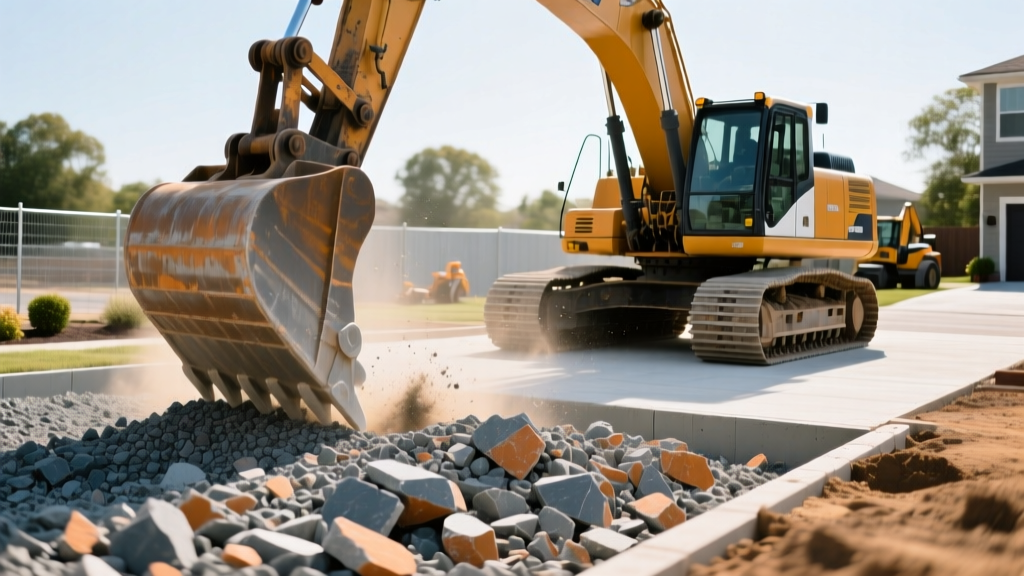
When ordering gravel from your local quarry or aggregate supplier in 2026, use precise terminology. Asking for 'driveway gravel' may get you a mix of rounded and angular stones. Instead, specify 'ASTM D448 Size #57 crushed limestone' or 'Dense Grade Aggregate (DGA) meeting state DOT base specifications'. Request a sieve analysis report if you are working on a commercial project to ensure the fines content in your Crusher Run does not exceed 10-12%, which can turn the base into mud during heavy rains before the concrete is poured.
Written by
David NakamuraDavid Nakamura is a licensed architect (AIA) and construction technology writer focused on sustainable building methods, mass timber engineering, and high-performance building envelopes. He holds a Master of Architecture from the University of Washington and is a certified Passive House Consultant (CPHC). David spent eight years at the Seattle firm Mithun, where he led the design of three LEED Platinum projects, before founding his own practice specializing in net-zero residential design. He serves on the editorial advisory board of GreenBuilder Magazine and has authored peer-reviewed papers on cross-laminated timber (CLT) connections for the Journal of Structural Engineering. In his spare time, David teaches woodworking at Pratt Fine Arts Center and kayaks the Puget Sound.
More from David Nakamura
View all
Construction Cost
Labor Cost to Build a Deck Per Sq Ft: 2026 Installation Guide
Discover the exact labor cost to build a deck per sq ft in 2026. This installation guide breaks down contractor rates, complexity factors, and hidden fees.
Aug 4, 2026

Construction Cost
How Much Does It Cost to Build a 3 Bedroom House? Financing Guide
Learn exactly how much it costs to build a 3 bedroom house and explore 2026 financing options, construction loan types, and budget frameworks for your build.
Aug 4, 2026

Construction Cost
Cost to Build a Tennis Court: 2026 Guide
How much does it cost to build a tennis court in 2026? Breakdowns for asphalt, concrete, and synthetic surfaces plus fencing and lighting.
Jul 30, 2026