Paint vs Stain Concrete: A Mix Design Compatibility Guide
Discover how concrete mix design impacts your choice between paint and stain. Compare costs, SCMs, porosity, and chemical reactivity for lasting finishes.
The Core Difference: Surface Film vs. Chemical Reaction
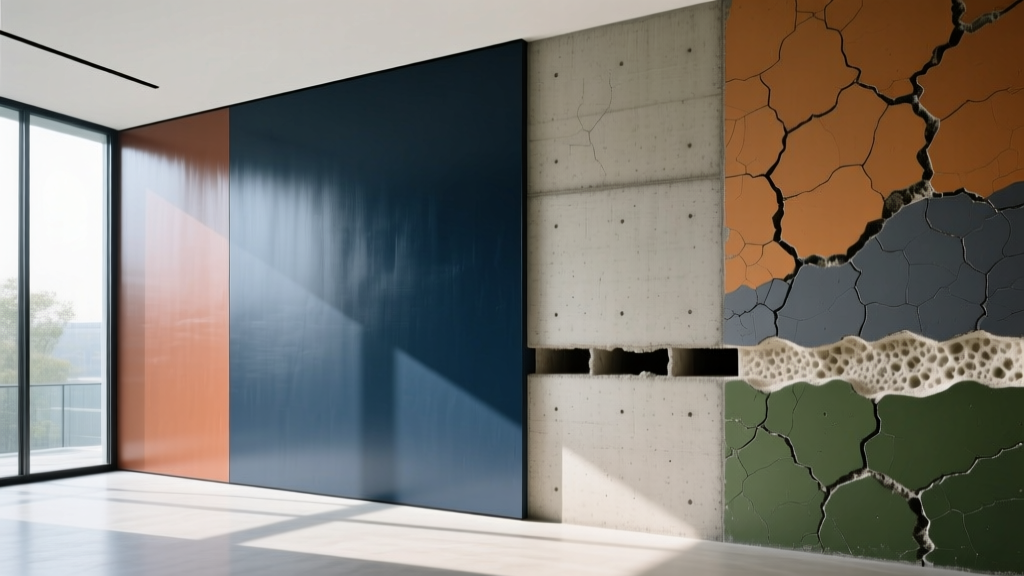
When evaluating paint vs stain concrete finishes, the decision extends far beyond aesthetics. The fundamental divergence lies in how each coating interacts with the cementitious matrix. Concrete paint forms a mechanical, film-forming barrier on the surface, relying on surface tension and micro-abrasion for adhesion. Concrete stain, specifically acid-based chemical stain, penetrates the capillary pores and reacts directly with the hydration byproducts within the paste.
Because of this mechanical versus chemical distinction, the underlying concrete mix design—specifically the water-cement ratio, supplementary cementitious materials (SCMs), and finishing techniques—dictates which product will perform reliably. Applying an acid stain to a high-fly-ash mix, for instance, will result in a patchy, failed application, whereas an epoxy paint applied to a slab with high moisture vapor emission will blister and delaminate within months.
How Concrete Mix Design Dictates Your Finish
According to the Portland Cement Association's mix design guidelines, modern concrete rarely consists of just Portland cement, water, and aggregate. The inclusion of SCMs to improve workability and reduce carbon footprint drastically alters surface chemistry.
Supplementary Cementitious Materials (SCMs)
Acid stains require free calcium hydroxide (lime) in the concrete pores to react with metallic salts and create permanent color. During the secondary hydration process, SCMs like fly ash, silica fume, and slag consume calcium hydroxide to form additional calcium silicate hydrate (C-S-H) gel. A mix design utilizing 30% to 50% fly ash replacement will have significantly less free lime available at the surface. Consequently, acid stains will fail to react, yielding pale, washed-out colors. For high-SCM mix designs, water-based acrylic stains (which act as penetrating dyes rather than chemical reactants) or opaque concrete paints are mandatory.
Water-Cement Ratio and Surface Porosity
A low water-cement (w/c) ratio (e.g., 0.40 or below) produces high-strength, dense concrete with low permeability. While excellent for structural integrity, this density restricts the penetration depth of chemical stains. Conversely, high w/c ratios (0.55+) leave a porous surface that readily absorbs stain but may cause film-forming paints to soak in unevenly, requiring multiple primer coats to achieve a uniform mil thickness.
Material Compatibility Matrix
| Mix Design Parameter | Acid Chemical Stain | Water-Based Acrylic Stain | 100% Solids Epoxy Paint | Acrylic Latex Paint |
|---|---|---|---|---|
| High Fly Ash/Slag (>25%) | Poor (Fails to react) | Excellent | Excellent | Good |
| Low w/c Ratio (<0.40) | Fair (Shallow penetration) | Good | Excellent | Good |
| Hard Troweled / Burnished | Poor (Pores sealed) | Poor | Good (If profiled) | Fair |
| High Moisture Vapor (MVER >5) | Excellent (Breathable) | Excellent | Poor (Will blister) | Fair (Risk of peeling) |
Acid Stain: Chemistry, Application, and Edge Cases
True acid stains consist of water, hydrochloric acid, and acid-soluble metallic salts. The acid etches the surface, allowing the metallic ions to react with the calcium hydroxide. The resulting color is permanently locked into the matrix. Products like Kemiko Stone Tone remain the industry standard for this chemical process.
- Cost: $0.20 to $0.50 per square foot for materials.
- Color Palette: Limited to earthy, variegated tones (browns, terracottas, soft blues, and greens). Bright reds or yellows are chemically impossible with acid stains.
- Edge Case - Over-Troweling: If a finishing crew uses a power trowel to burnish the surface, they push the aggregate down and seal the cement paste. This 'crust' prevents acid penetration. The surface must be mechanically abraded to open the pores before staining.
Concrete Paint: Epoxies, Acrylics, and Urethanes
When the mix design prevents chemical staining, or when solid, uniform colors are required, paint is the solution. The Concrete Surface Profile (CSP) must be matched to the paint's viscosity and adhesion requirements.
Acrylic Latex (Breathable Coatings)
Products like Sherwin-Williams Loxon Concrete & Masonry Coating are alkali-resistant, breathable acrylics. They allow moisture vapor to escape from the slab, making them ideal for exterior walkways, patios, and older slabs lacking sub-slab vapor barriers. They require a CSP 1 to 2 (light etching or sanding) and cost between $0.50 and $1.00 per square foot.
100% Solids Epoxy (High-Build Industrial Coatings)
Epoxies provide immense compressive strength and chemical resistance, ideal for garages and industrial floors. However, they are entirely non-breathable. Before applying an epoxy like Rust-Oleum RockSolid, you must conduct an ASTM F1869 Calcium Chloride test to measure the Moisture Vapor Emission Rate (MVER). If the MVER exceeds 3 to 5 lbs per 1,000 sq. ft. per 24 hours, the hydrostatic pressure will push the epoxy off the slab. Epoxies require aggressive mechanical profiling (shot blasting) to achieve a CSP 3 to 5, ensuring the thick resin locks into the concrete's micro-valleys.
Surface Preparation Protocols by Mix Type
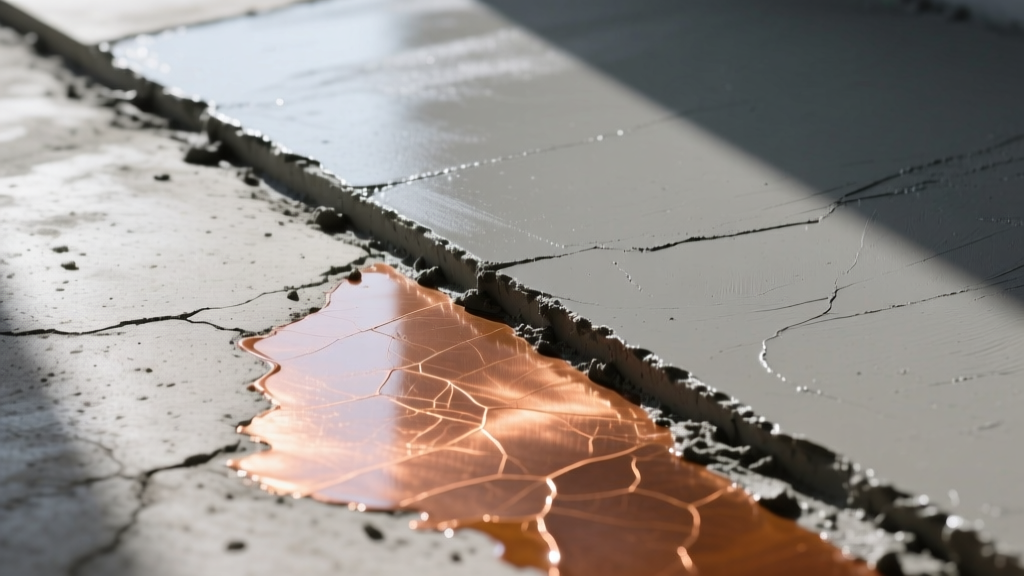
Regardless of choosing paint or stain, preparation dictates longevity. Relying on acid washing (muriatic acid) to prep a slab for paint is an outdated practice that frequently leaves residual salts, causing adhesion failure.
- Dense, High-Strength Mixes (4,000+ PSI): Acid etching is ineffective. You must use a planetary concrete grinder with 30-grit metal-bond diamonds or a shot blaster to physically fracture the surface and achieve a CSP 3+ for epoxy paints.
- Standard Porous Mixes (2,500 - 3,500 PSI): For acrylic stains or latex paints, a mild mechanical scarification or a specialized alkaline cleaner/degreaser followed by high-pressure washing is sufficient to open the pores without altering the surface flatness.
- Curing Compounds: If the slab was treated with a film-forming curing compound (common in commercial pours), it must be entirely removed via scarification. Neither stain nor paint will adhere to or penetrate a cured resin membrane.
Cost Breakdown and Long-Term ROI
While paint vs stain concrete comparisons often focus on initial material costs, lifecycle maintenance is the true metric of value.
Acid Stain + Polyurethane Sealer
Initial Cost: $1.50 - $2.50 / sq. ft. (installed)
Lifespan: 10-15+ years
Maintenance: Reapply sacrificial wax or topcoat every 2-3 years. The color itself will never fade or peel, as it is part of the concrete matrix.
Epoxy Paint System (Primer + Topcoat)
Initial Cost: $3.50 - $6.00 / sq. ft. (installed)
Lifespan: 5-10 years
Maintenance: Highly resistant to chemicals and stains, but UV exposure will cause ambering (yellowing) unless a UV-stable polyaspartic topcoat is applied. Eventually requires full mechanical removal and reapplication.
Ultimately, the choice between paint and stain is not merely decorative. By analyzing your concrete's SCM content, density, and moisture profile, you can select a coating system that works in harmony with the mix design rather than fighting against it. For further technical data on staining reactions and surface prep, consult the Concrete Network's comprehensive staining guidelines before finalizing your material specifications.
Written by
David NakamuraDavid Nakamura is a licensed architect (AIA) and construction technology writer focused on sustainable building methods, mass timber engineering, and high-performance building envelopes. He holds a Master of Architecture from the University of Washington and is a certified Passive House Consultant (CPHC). David spent eight years at the Seattle firm Mithun, where he led the design of three LEED Platinum projects, before founding his own practice specializing in net-zero residential design. He serves on the editorial advisory board of GreenBuilder Magazine and has authored peer-reviewed papers on cross-laminated timber (CLT) connections for the Journal of Structural Engineering. In his spare time, David teaches woodworking at Pratt Fine Arts Center and kayaks the Puget Sound.
More from David Nakamura
View all
Construction Cost
Labor Cost to Build a Deck Per Sq Ft: 2026 Installation Guide
Discover the exact labor cost to build a deck per sq ft in 2026. This installation guide breaks down contractor rates, complexity factors, and hidden fees.
Aug 4, 2026

Construction Cost
How Much Does It Cost to Build a 3 Bedroom House? Financing Guide
Learn exactly how much it costs to build a 3 bedroom house and explore 2026 financing options, construction loan types, and budget frameworks for your build.
Aug 4, 2026

Construction Cost
Cost to Build a Tennis Court: 2026 Guide
How much does it cost to build a tennis court in 2026? Breakdowns for asphalt, concrete, and synthetic surfaces plus fencing and lighting.
Jul 30, 2026