How to Install and Anchor a Cement Goose: Base Prep and Sealing
Learn the professional installation procedures for a cement goose, including concrete base preparation, epoxy anchoring, and siloxane sealing techniques.
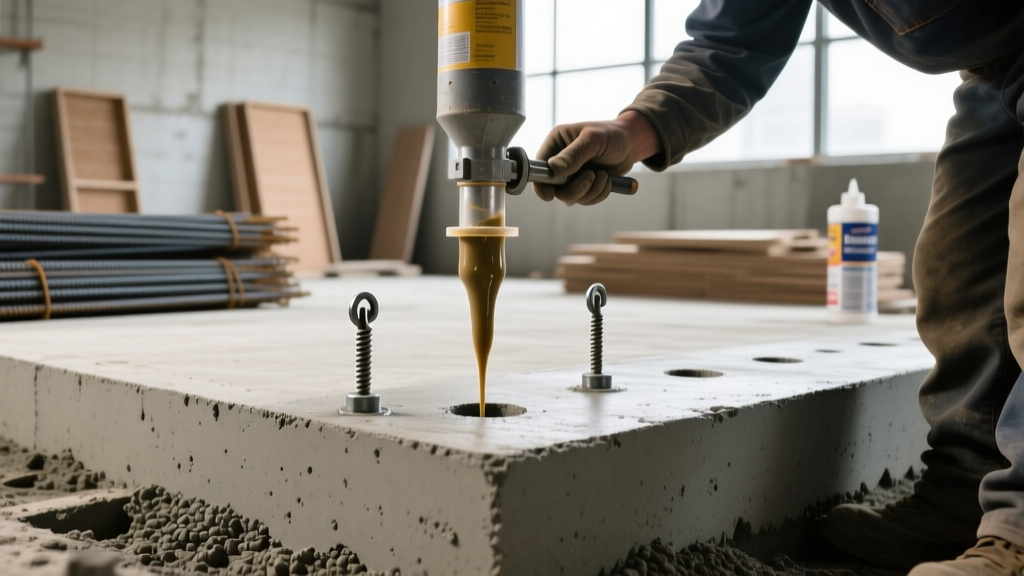
Structural Demands of Top-Heavy Precast Concrete Ornaments
Precast decorative concrete ornaments, particularly large-scale figurative pieces like a cement goose, present unique structural and environmental challenges that standard landscaping installations often ignore. Weighing anywhere from 80 to 150 pounds, these top-heavy precast structures possess a high center of gravity. When subjected to lateral wind shear, frost heave, or accidental impact, an improperly anchored ornament will tilt, crack at the base, or topple entirely. Furthermore, the dense, non-air-entrained concrete typically used in decorative casting is highly susceptible to freeze-thaw spalling and efflorescence if left unsealed. Proper installation requires treating the ornament not as mere lawn decor, but as a cantilevered structural element requiring rigorous subgrade preparation, mechanical anchoring, and chemical moisture management.
Subgrade Excavation and Concrete Pad Specifications
Setting a heavy precast concrete piece directly on soil or gravel guarantees failure within two to three freeze-thaw cycles due to differential settlement. A dedicated concrete pad is mandatory to distribute the point load and resist frost heave.
Excavation and Aggregate Base
- Excavate the footprint: Dig a hole 18 inches wider than the base of the ornament and 12 inches deep. This extends the pad beyond the ornament’s drip line, preventing water from pooling at the concrete-to-soil interface.
- Install geotextile fabric: Line the excavation with a non-woven geotextile separation fabric to prevent fine soil particles from migrating into the aggregate base.
- Compact the sub-base: Fill the bottom 6 inches with ASTM D448 #57 angular crushed stone. Compact the stone in 2-inch lifts using a plate compactor to achieve a minimum 95% Proctor density. Angular stone is critical; rounded river gravel will not lock together and will shift under load.
Pouring the Air-Entrained Concrete Pad
The pad itself should be a minimum of 4 inches thick, utilizing a 3,500 PSI concrete mix. According to the Portland Cement Association, exterior concrete flatwork in climates subject to freezing temperatures must be air-entrained. Specify a mix with 5% to 7% total air content. These microscopic air voids provide expansion chambers for freezing water, preventing the internal hydraulic pressure that causes surface scaling and cracking. Trowel the surface to a smooth, hard finish with a slight 1/8-inch-per-foot slope away from the center to promote rapid water runoff.
Mechanical Anchoring and Load Transfer
Once the concrete pad has cured for a minimum of 28 days, the cement goose must be mechanically fastened to the slab. Gravity alone is insufficient to counteract the leverage exerted by a 4-foot-tall ornamental figure in high winds. Epoxy anchors provide the highest pull-out strength and do not exert expansion forces that could crack the relatively thin base of the precast ornament.
Anchor Selection and Embedment Depth
For a standard 100-pound precast ornament, use 1/2-inch diameter stainless steel threaded rods (ASTM A153) set in a high-modulus, moisture-insensitive epoxy like Simpson Strong-Tie SET-3G. Drill corresponding holes into the base of the cement goose using a masonry hammer drill, taking care not to blow out the back side of the precast base.
| Anchor Diameter | Embedment Depth | Hole Diameter | Estimated Pull-Out Strength (3,500 PSI Concrete) |
|---|---|---|---|
| 3/8 inch | 4.5 inches | 7/16 inch | 2,800 lbs |
| 1/2 inch | 6.0 inches | 9/16 inch | 5,400 lbs |
| 5/8 inch | 7.5 inches | 11/16 inch | 8,100 lbs |
Inject the epoxy starting from the bottom of the hole to prevent air pockets. Insert the threaded rod with a slow, twisting motion. Once the epoxy cures (typically 4 to 24 hours depending on ambient temperature), set the cement goose over the protruding rods, apply a bedding layer of polyurethane construction adhesive to the bottom of the ornament base to prevent water infiltration, and secure with stainless steel washers and hex nuts.
Moisture Management and Penetrating Sealers
Decorative precast concrete is highly vulnerable to moisture ingress. The National Precast Concrete Association notes that the formwork used in casting ornamental pieces can trap bleed water, creating a network of capillary pores once the concrete cures. If water enters these pores and freezes, the resulting 9% volumetric expansion will cause the surface to delaminate and spall.
Silane/Siloxane vs. Film-Forming Acrylics
Never use film-forming acrylic sealers on exterior precast concrete ornaments. Acrylics create a non-breathable plastic film on the surface. When moisture inevitably migrates up through the concrete pad via capillary action, it becomes trapped behind the acrylic film. The resulting hydrostatic pressure causes the sealer to peel, turn white, and eventually strips the top layer of the concrete paste when it flakes off.
Instead, specify a penetrating silane/siloxane sealer. These reactive sealers penetrate up to 1/4 inch into the concrete matrix and chemically bond with the silica to form a hydrophobic resin within the pores. This allows the concrete to breathe (transmit water vapor) while repelling liquid water. Apply the sealer using a low-pressure pump sprayer at a rate of 150 to 200 square feet per gallon, ensuring the surface is saturated but not pooling. A second coat should be applied wet-on-wet within 10 minutes for maximum penetration.
Troubleshooting Common Precast Defects
Even with flawless installation, environmental factors can cause aesthetic and structural issues over time. Understanding the chemistry behind these defects allows for targeted remediation.
Efflorescence Removal
Efflorescence appears as a white, powdery deposit on the surface of the cement goose. It occurs when water-soluble calcium hydroxide (lime) within the concrete migrates to the surface and reacts with atmospheric carbon dioxide to form insoluble calcium carbonate.
- Dry brushing: For mild cases, use a stiff nylon brush to remove the deposits. Never use a wire brush, as steel bristles can break off, embed in the concrete, and rust.
- Chemical cleaning: For stubborn deposits, apply a specialized efflorescence cleaner (such as Prosoco SureKlean). Avoid raw muriatic acid, which can etch the precast surface and expose the aggregate, permanently altering the ornament’s texture and color.
Micro-Cracking at the Base
If hairline cracks appear at the junction where the cement goose meets the concrete pad, it indicates differential movement or inadequate bedding. Inject a low-viscosity, structural-grade epoxy into the crack to weld the concrete back together, followed by a bead of high-quality exterior polyurethane sealant at the joint to prevent future water intrusion. According to guidelines referenced by the National Park Service Preservation Brief on Concrete, addressing micro-cracks immediately is vital to prevent the ingress of chlorides and the subsequent corrosion of any internal armature or reinforcement.