Plastic Septic Tanks vs Concrete: Troubleshooting & Repair
Compare plastic septic tanks vs concrete for troubleshooting. Learn to diagnose cracks, floating, and deformation with expert repair protocols and costs.

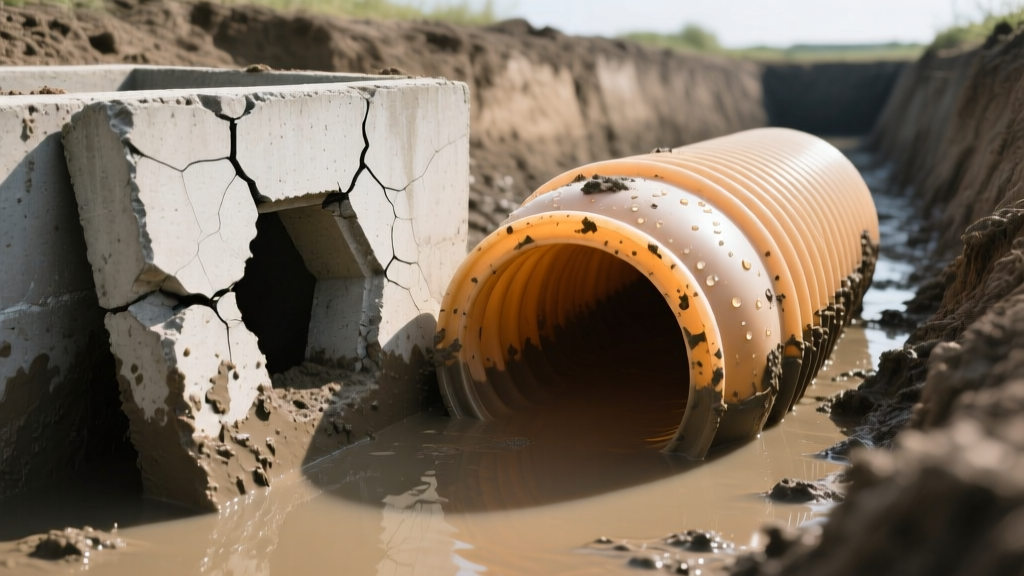
When a septic system fails, the troubleshooting protocol is entirely dictated by the tank's construction material. The debate over plastic septic tanks vs concrete often centers on installation costs, but from a maintenance and repair perspective, the two materials exhibit vastly different failure modes. Concrete tanks succumb to chemical corrosion and structural spalling, while polyethylene (plastic) tanks fail due to buoyancy, soil pressure deformation, and differential settlement. Understanding these material-specific vulnerabilities is critical for accurate diagnosis and cost-effective remediation.
Diagnostic Matrix: Identifying Material-Specific Failure Modes
Before excavating or pumping, surface-level symptoms can indicate whether your concrete or plastic tank is experiencing structural distress. Use this diagnostic matrix to pinpoint the root cause based on the tank material.
| Surface Symptom | Concrete Tank Cause | Plastic Tank Cause |
|---|---|---|
| Sewage backing up into house | Crumbling inlet baffle blocking flow | Inlet pipe sheared from tank settlement |
| Tank lid sitting at an angle | Riser ring mortar degradation | Uneven soil compaction causing tank tilt |
| Sudden surfacing of effluent | Hydrogen sulfide corrosion eating tank wall | Rib deformation reducing internal volume |
| Tank visibly protruding from ground | Frost heave on shallow risers | Hydrostatic buoyancy (tank 'floating') |
Concrete Septic Tank Troubleshooting & Repair
Precast concrete septic tanks, typically manufactured to ASTM C1765 standards using 4,000 to 5,000 PSI mixes, are incredibly strong in compression. However, their primary enemy is chemical, not physical.
Biogenic Sulfide Corrosion (Crown Corrosion)
The most common terminal failure in concrete tanks is biogenic sulfide corrosion. Anaerobic bacteria in the sludge layer produce hydrogen sulfide (H2S) gas. Above the waterline, Thiobacillus bacteria oxidize this gas into sulfuric acid (H2SO4), which reacts with the calcium hydroxide in the cement paste to form expansive gypsum. This causes the concrete ceiling (crown) to spall and crumble, eventually exposing the steel rebar to rapid rusting.
- Diagnosis: Inspect the underside of the tank lid and the upper walls using a mirror and flashlight through the access port. Look for exposed aggregate, white chalky deposits (efflorescence), or rust-stained spalling.
- Repair Protocol: Minor spalling can be patched using a polymer-modified, sulfate-resistant cementitious mortar (e.g., Quikrete Concrete Resurfender or equivalent structural patch). For severe crown corrosion where rebar is exposed, the tank lid and upper rings must be replaced. Attempting to patch structurally compromised concrete overhead is a severe safety hazard.
- Estimated Cost: $400–$800 for surface patching; $1,200–$2,500 for lid and riser ring replacement.
Baffle Deterioration & Effluent Filter Clogging
Integral concrete baffles frequently degrade due to the same acidic environment. When a concrete baffle crumbles, solids escape into the drainfield, causing catastrophic leach field failure.
- Pump the tank to expose the inlet and outlet pipes.
- Chip away the remaining degraded concrete baffle using a masonry chisel and mallet.
- Install a PVC Sanitary Tee (ASTM D2665 compliant) directly into the existing pipe penetration.
- Seal the penetration using a hydrophilic rubber gasket (e.g., O-Zona ring) or a two-part marine epoxy designed for wet concrete bonding.
- Drop in an effluent filter (1/8-inch or 1/16-inch slotted PVC) into the outlet tee to provide secondary solids retention.
Plastic (Polyethylene) Septic Tank Troubleshooting & Repair
Modern plastic tanks are rotationally molded from cross-linked polyethylene (XLPE) or high-density polyethylene (HDPE). They are immune to sulfide corrosion and rust, but their lightweight nature and flexible walls introduce unique structural vulnerabilities. According to the Environmental Protection Agency (EPA), proper site preparation is the single biggest factor in plastic tank longevity.
Hydrostatic Buoyancy (The 'Floating' Tank)
Archimedes' principle dictates that an empty or partially empty plastic tank displacing groundwater will experience an upward buoyant force. A 1,000-gallon HDPE tank weighs roughly 400 lbs empty, but displaces over 8,000 lbs of water when submerged in a high water table. During heavy rains or post-pump-out, unanchored plastic tanks can literally pop out of the ground, shearing the inlet and outlet plumbing.
- Diagnosis: The tank access riser is visibly tilted, protruding above grade, or the PVC inlet/outlet pipes show stress fractures near the tank wall.
- Repair Protocol: The tank must be excavated, pumped, and strapped to a newly poured concrete anchoring collar. The sheared pipes must be repaired using flexible Fernco rubber couplings to accommodate future minor settlement.
- Estimated Cost: $2,500–$4,500 for excavation, anchoring, and pipe realignment.
Rib Deformation and Wall Bulging
Plastic tanks rely on external soil pressure to counteract the internal hydrostatic pressure of the sewage. They are designed to be backfilled with clean, 3/4-inch crushed stone or pea gravel, which is mechanically tamped in 12-inch lifts. If a contractor backfills with native clay or fails to add water to the tank during backfilling to equalize pressure, the tank walls will bulge inward between the structural ribs.
- Diagnosis: Remote camera inspection reveals the internal walls bowing inward, reducing the tank's liquid capacity and potentially trapping scum layers.
- Repair Protocol: Unlike concrete, polyethylene cannot be effectively patched or structurally reinforced from the inside using epoxy or fiberglass. Plastic welding (heat fusion) requires bone-dry, clean conditions impossible to achieve inside an active septic environment. If deformation exceeds 10% of the internal diameter, the tank has reached structural failure and must be replaced.
Repair Cost & Longevity Comparison Matrix
When weighing plastic septic tanks vs concrete, understanding the long-term financial implications of their respective failure modes is essential for property owners and facility managers.
| Metric | Precast Concrete Tank | Polyethylene (Plastic) Tank |
|---|---|---|
| Expected Lifespan | 20 to 40 years (highly dependent on soil pH and H2S levels) | 30+ years (immune to chemical corrosion) |
| Most Common Repair | Baffle replacement / Effluent filter retrofit ($400–$800) | Pipe coupling repair due to settlement ($300–$600) |
| Catastrophic Failure Mode | Crown collapse / Rebar rust-jacking | Wall deformation / Buoyancy pop-out |
| Repairability Index | High (Concrete can be patched, sealed, and retrofitted) | Low (HDPE/XLPE cannot be reliably glued or welded in-situ) |
| Full Replacement Cost (2026 Avg) | $5,500–$8,000 (Heavy crane required for setting) | $4,500–$7,000 (Can be set with a standard backhoe) |
When to Repair vs. Replace: The 50% Rule
Troubleshooting a failing septic tank ultimately leads to a binary decision: repair or replace. Industry professionals utilize the 50% Rule to determine the most economically sound path.
If the estimated cost to structurally repair and stabilize the existing tank exceeds 50% of the cost to install a brand-new unit, replacement is the mandatory choice. Furthermore, if a plastic tank has suffered structural rib deformation, repair is virtually impossible, making replacement the only viable option regardless of cost.
For concrete tanks, if the structural integrity of the main chamber walls and floor is intact, replacing the lid, risers, and baffles is a highly cost-effective way to extend the system's life by another 15 years. However, if the floor of the concrete tank has cracked due to soil settlement—allowing groundwater infiltration and raw sewage exfiltration—the tank is environmentally compromised and must be decommissioned and crushed in place.
Expert Maintenance Protocols to Prevent Material Failure
Regardless of whether you are managing a concrete or plastic system, specific maintenance protocols will mitigate the inherent weaknesses of the material:
- For Concrete: Never use chemical drain cleaners (like sodium hydroxide or sulfuric acid-based gels). These chemicals rapidly accelerate the degradation of the concrete matrix and destroy the essential anaerobic bacteria. Use mechanical snaking or hydro-jetting for clogs.
- For Plastic: Always maintain a minimum liquid level. Do not pump the tank completely dry if a heavy rainstorm is forecasted, as the sudden loss of internal weight combined with rising external groundwater is the primary trigger for buoyancy failures.
- For Both: Divert all roof drains, sump pumps, and French drains away from the septic tank excavation zone. Saturation of the backfill material increases lateral soil pressure on plastic tanks and accelerates freeze-thaw spalling on concrete risers.
Written by
Priya KapoorPriya Kapoor is a real estate market analyst and construction economics researcher with expertise in housing affordability, development feasibility, and infrastructure investment. She holds a Master of Regional Planning from Cornell University and previously worked as a senior analyst at CBRE's Investment Properties group, where she modeled returns for $4B in mixed-use development pipelines. Priya now runs an independent research practice advising developers, municipalities, and REITs on construction cost forecasting and market timing. She publishes the quarterly "BuildMat Market Pulse" report tracking material price indices across 12 commodity categories. Based in Austin, TX, Priya serves on the board of Habitat for Humanity Austin and is a marathon runner.
More from Priya Kapoor
View all
Construction Cost
Cost to Build a 1600 Sq Ft Home in 2026: Full Breakdown
Accurate 2026 cost to build a 1600 sq ft home—material, labor, and regional pricing breakdowns included. Plan your budget with real-time estimates.
Aug 11, 2026

Wood & Lumber
Name the Types of Wood for Pressure Treatment and Preservation
Learn how to name the types of wood best suited for pressure treatment. Compare species treatability, chemical retention levels, and 2026 preservation costs.
Aug 4, 2026

Stone & Masonry
Stone Veneer Suppliers Lindenhurst: 2026 Cost Analysis
Analyze 2026 stone veneer costs in Lindenhurst, NY. Compare local supplier pricing, delivery fees, and Suffolk County installation labor rates.
Aug 4, 2026