Top Pro Brands for Cleaning Grout: 2026 Product Guide
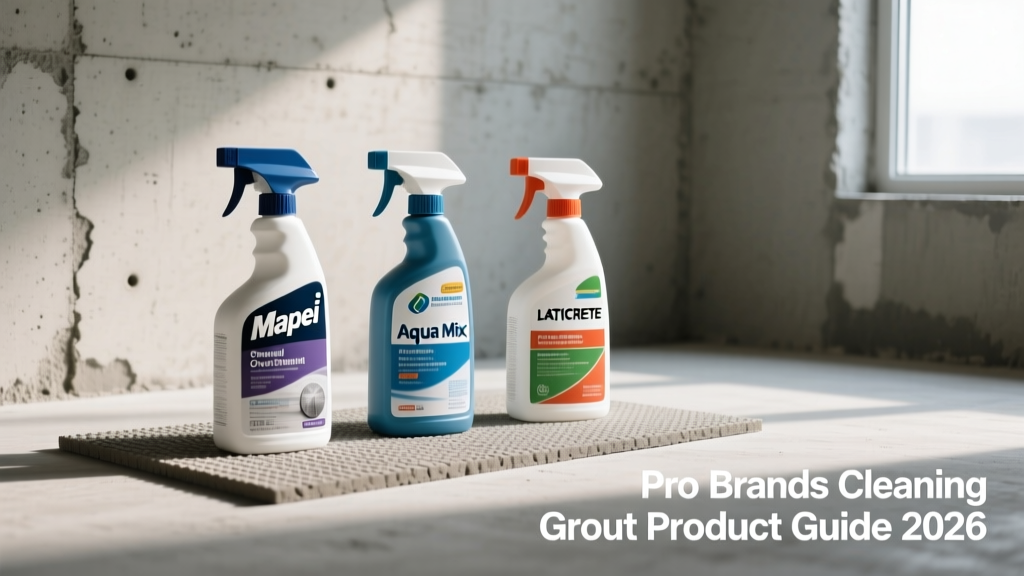
Compare top professional brands for cleaning grout in 2026. Deep dive into Mapei, Aqua Mix, and LATICRETE chemical formulations and application protocols.
The Chemistry of Grout Soiling: Why Household Cleaners Fail
Cementitious grout is essentially a porous concrete matrix composed of Portland cement, silica sand, and water-retention additives. Its high porosity makes it a magnet for organic soils, grease, and mineral deposits. When addressing cleaning grout in commercial or high-traffic residential settings, standard household cleaners (typically pH-neutral or mildly acidic bathroom sprays) fail to penetrate the capillary network of the grout joint. Furthermore, they lack the specific surfactant loads required to lift embedded particulates.
Professional restoration requires matching the chemical cleaner to the specific stain profile. Alkaline cleaners (pH 10–12) utilize saponification to convert fats and oils into water-soluble soaps, making them ideal for kitchen and shower floors. Acidic cleaners (pH 1–3) dissolve calcium carbonate, rust, and Portland cement haze, but will aggressively etch natural stone and degrade polymer-modified grouts if misapplied. Understanding this chemical distinction is the foundation of selecting the right professional product line.
Brand Deep-Dive: Mapei Ultracare Line
Mapei’s Ultracare series represents the industry standard for post-installation and maintenance cleaning. The line is strictly segmented by chemical function, preventing the cross-contamination issues common with 'all-in-one' consumer products.
Mapei Ultracare Heavy-Duty Stone, Tile & Grout Cleaner
This is a highly concentrated alkaline degreaser (pH ~12) formulated with advanced chelating agents. It is designed for removing organic stains, cooking grease, and soap scum from heavily soiled cementitious grout.
- Dilution: 1:3 for severe grease buildup; 1:10 for routine heavy maintenance.
- Dwell Time: 5 to 10 minutes. Do not allow the solution to dry on the surface.
- Cost (2026): Approximately $48 per gallon (concentrate).
Mapei Ultracare Acidic Cleaner
Formulated with a buffered phosphoric acid blend (pH ~2), this product is strictly intended for post-installation removal of cementitious grout haze, efflorescence, and hard water scaling. It is safe for porcelain and ceramic but will permanently etch marble, limestone, and travertine.
Brand Deep-Dive: Custom Building Products (Aqua Mix)
The Aqua Mix product line by Custom Building Products categorizes its cleaners by maintenance phase, offering highly targeted solutions for both restoration and daily upkeep.
Aqua Mix Grout Deep Clean
A staple for restoration contractors, this alkaline-based cleaner utilizes high-foaming surfactants that keep soil suspended in the liquid phase, preventing it from redepositing into the grout pores during agitation. It is particularly effective on polymer-modified grouts (like Polyblend) where harsh acids would break down the latex binders.
Aqua Mix Grout Haze Clean-Up
A mild, buffered acid solution designed specifically for the 24-to-72-hour post-installation window. Unlike heavy muriatic acid blends, this formulation includes corrosion inhibitors to protect metal trims and stainless steel Schluter profiles commonly used in modern shower builds.
Brand Deep-Dive: LATICRETE Maintenance Solutions
LATICRETE approaches cleaning from the perspective of their high-performance epoxy and urethane grout lines (e.g., SPECTRALOCK). Epoxy grout is virtually impervious to water, meaning stains sit on the surface rather than penetrating. However, epoxy haze is notoriously difficult to remove once cured.
The LATICRETE Epoxy Haze Remover is a specialized solvent-based cleaner designed to break the molecular bond of uncured or semi-cured epoxy residue. For routine maintenance of SPECTRALOCK, LATICRETE recommends standard alkaline degreasers, as acidic cleaners offer zero benefit on non-cementitious, stain-proof surfaces.
According to guidelines published by the National Tile Contractors Association (NTCA), improper maintenance and the use of unapproved acidic cleaners on polymer-modified and epoxy grouts is a leading cause of premature joint degradation and voided manufacturer warranties.
Professional Product Comparison Matrix
The following matrix outlines the primary professional formulations for cleaning grout, detailing their chemical profiles and optimal use cases.
| Product | Brand | pH Level | Target Stain Type | Dilution |
|---|---|---|---|---|
| Ultracare Heavy-Duty | Mapei | 12 | Organic, Grease, Soap Scum | 1:3 to 1:10 |
| Ultracare Acidic Cleaner | Mapei | 2 | Cement Haze, Efflorescence | 1:1 to 1:3 |
| Grout Deep Clean | Aqua Mix | 11 | Embedded Dirt, Polymer Soils | 1:4 |
| Epoxy Haze Remover | LATICRETE | N/A (Solvent) | Epoxy Resin Haze | Ready-to-Use |
The 4-Step Professional Extraction Protocol
According to Mapei's official cleaning and maintenance guidelines, the chemical is only half the equation. Mechanical agitation and proper extraction dictate the final result. Follow this protocol to prevent soil redeposition.
- Dry Extraction & Pre-Wetting: Vacuum the floor thoroughly to remove loose abrasive grit. Pre-wet the grout lines with clean water. Why? Cementitious grout acts like a sponge. If you apply concentrated cleaner to dry grout, the grout will absorb the dirty chemical deep into its pores. Pre-wetting fills the capillaries with clean water, forcing the cleaning solution to stay near the surface where the stain resides.
- Application & Dwell: Apply the appropriately pH-matched cleaner. Allow it to dwell for 5 to 10 minutes. Keep the surface wet; mist with water if it begins to dry.
- Mechanical Agitation: Scrub using a stiff nylon-bristled deck brush or a specialized grout brush. Never use wire brushes or steel wool, which will leave behind metallic fibers that rust and permanently stain the grout.
- Wet-Vac Extraction: Do not use a traditional string mop to rinse. A mop merely pushes dirty water around and forces it back into the grout joints. Use a commercial wet-vacuum to extract the suspended soil, then rinse with clean water and extract again.
Common Failure Modes and Edge Cases
Even with professional-grade chemicals, specific edge cases can lead to catastrophic failures if not anticipated.
- Efflorescence Misdiagnosis: White, powdery deposits on grout are often misdiagnosed as soap scum. This is efflorescence (soluble salts migrating to the surface). Alkaline cleaners will not remove it; it requires an acidic cleaner and, more importantly, addressing the underlying moisture intrusion causing the salt migration.
- Sealer Stripping: Heavy-duty alkaline cleaners (pH 12+) will strip topical acrylic and water-based penetrating sealers. If the grout was previously sealed with a topical coating, expect to re-seal the grout after a deep alkaline cleaning.
- Color Leaching in Pigmented Grouts: Low-quality, heavily pigmented cementitious grouts can leach color when exposed to prolonged acidic dwell times. Always perform a 2-square-foot test patch in an inconspicuous area before applying acidic cleaners to custom-colored grout installations.
Selecting the correct brand and chemical formulation for cleaning grout requires a precise understanding of the grout matrix and the stain chemistry. By abandoning consumer-grade 'all-purpose' sprays in favor of targeted professional lines like Mapei Ultracare and Aqua Mix, contractors and facility managers can restore heavily soiled installations without compromising the structural integrity of the grout joint.